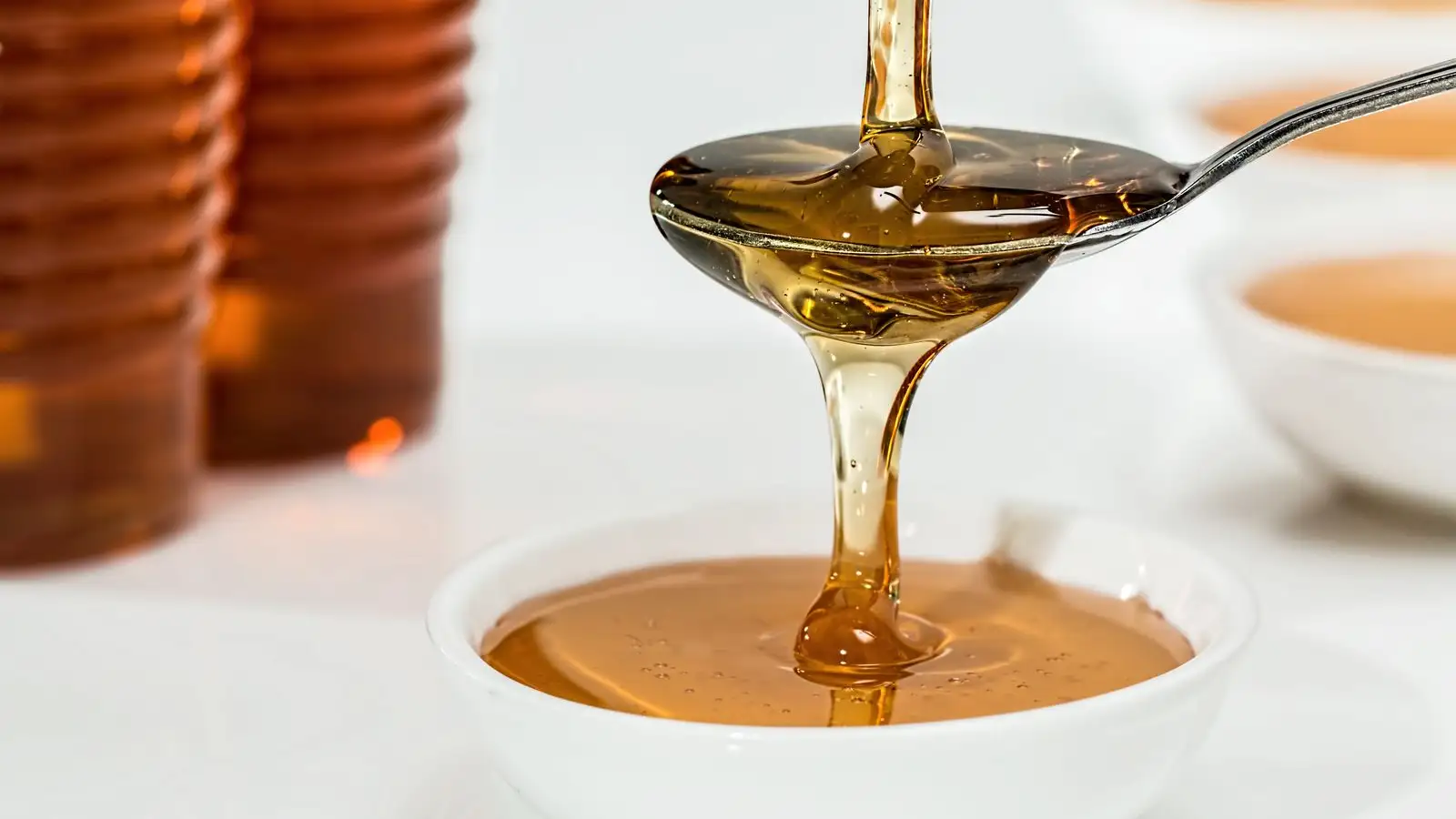
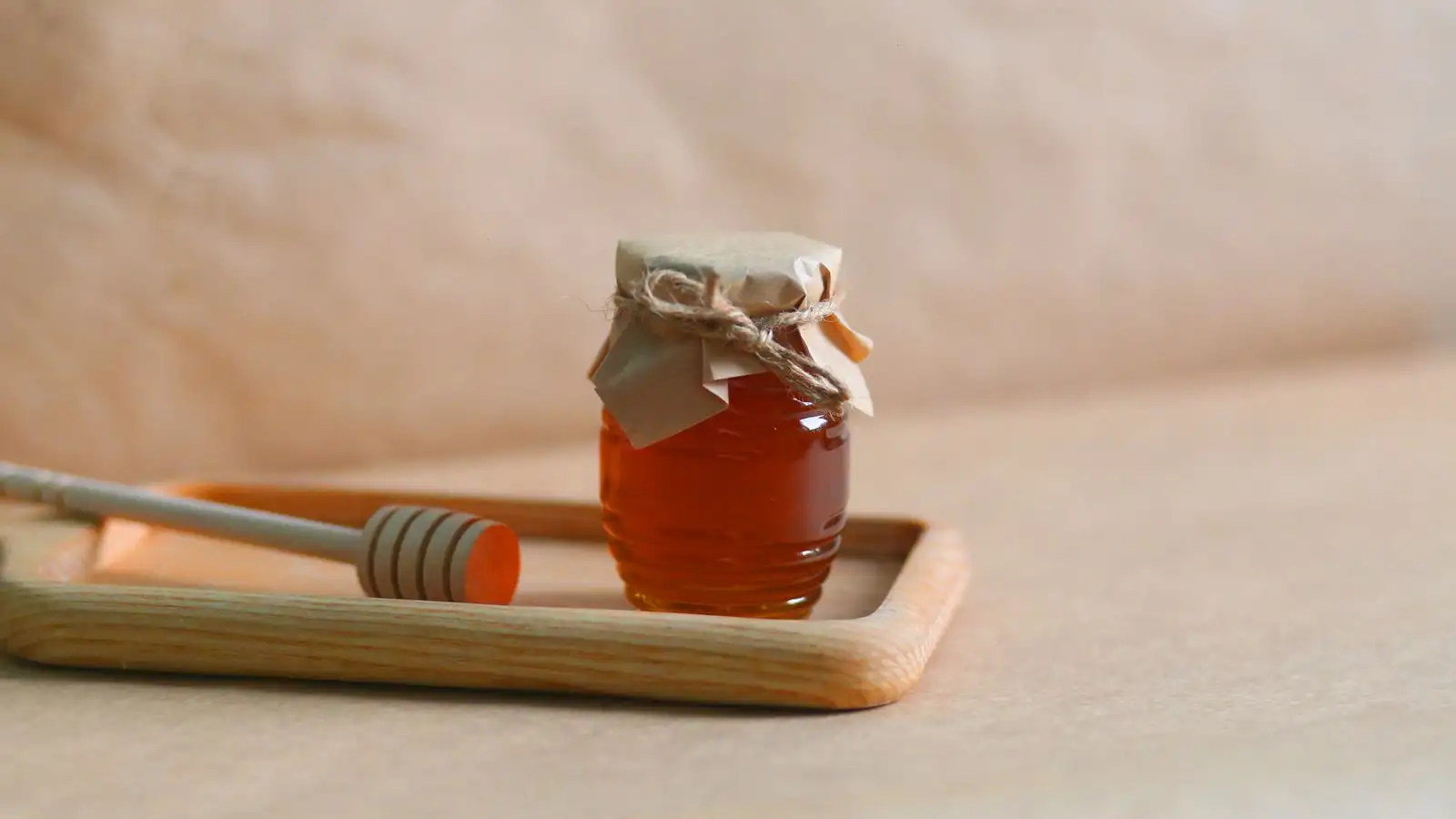
Treat manuka honey as a seasoning rather than a sweetener. Cut the amount to roughly half of what a recipe calls for in any other honey, give it something to push against — salt, acid, fat, or char — and add it late, so the earthy, faintly bitter note sits on the surface of the dish instead of soaking through it. What's being balanced here is bitterness as much as sweetness, and heat does not tone it down.
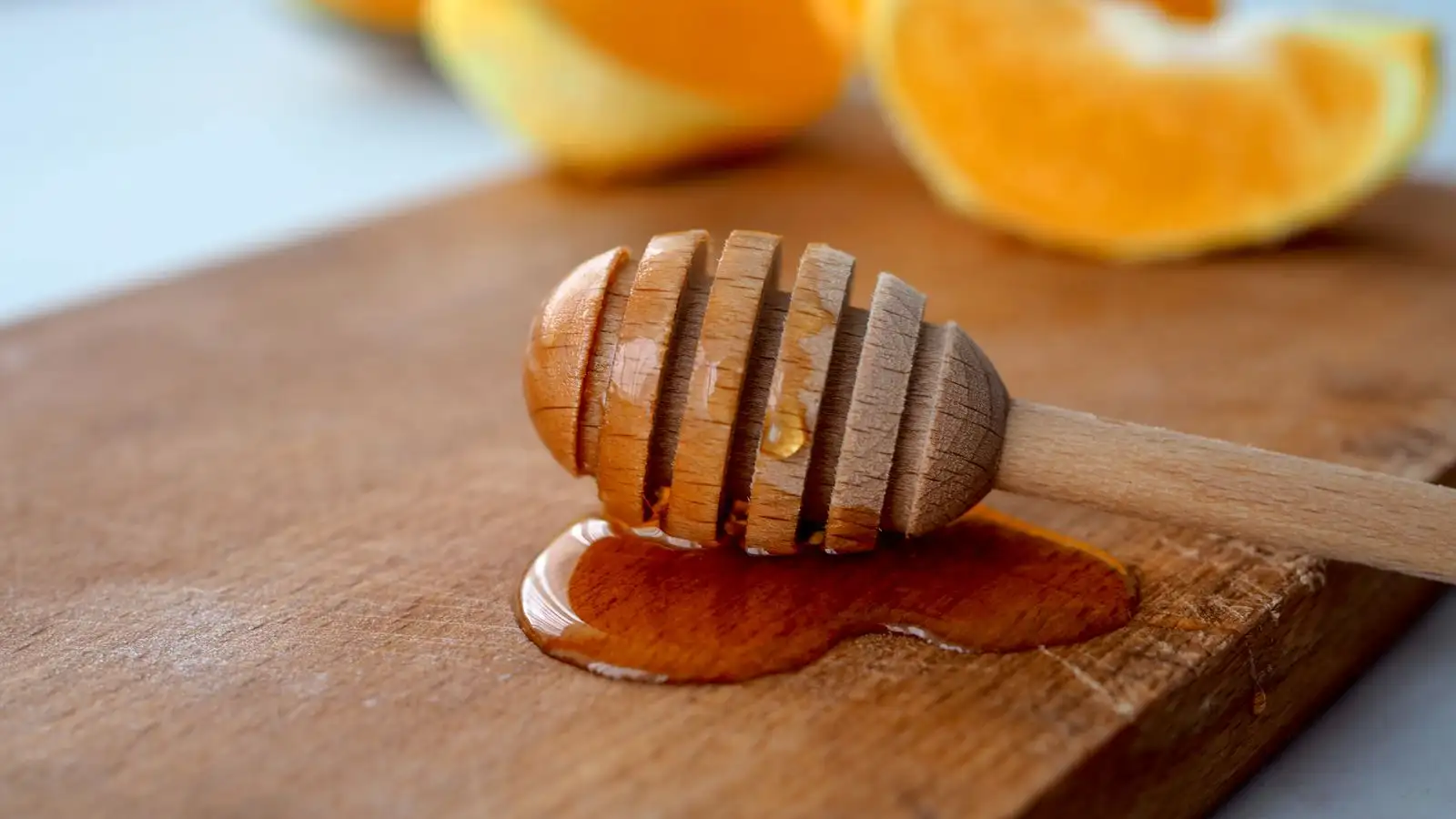
I keep my jar on the top shelf behind the molasses, which tells you how often I reach past it. The first time I cooked with manuka I did what the recipe said and put a quarter cup into a salmon glaze — the same amount I'd have used with a clover honey. It looked right. Glossy, dark, smelled good in the pan. Then we ate it, and the salmon tasted like it had been glazed with a cough drop. Not sweet. Medicinal.
What stayed with me wasn't that it was bad. It was that the honey hadn't gone anywhere. I cooked that glaze down for eight or ten minutes, which is normally long enough to settle a honey down, and it came off the heat with exactly the intensity it went on with.
That's the part most advice about manuka skips. Its floral top notes are volatile — they simmer and bake off like any other honey's. But the bitter, damp, bark-like part registers on the tongue rather than in the nose, and heat doesn't touch it. You can't cook manuka into submission. You can only build a dish with somewhere for that note to land.
The bitterness is the part that survives cooking
Before anything else, taste it the way you'd taste a stock you're about to season. Take a half teaspoon and swallow it. The sweetness clears in about ten seconds. What's left for the next minute is the flavor you're actually cooking with, and it's the same flavor that will come back at you from the plate after dinner.
Once I started tasting for the tail instead of the front, the quantity question answered itself. The amount that tastes like barely enough off the spoon is the amount that reads as just right in the finished dish. The amount that tastes good off the spoon is already too much.
So the working rule in my kitchen is half. One tablespoon where the recipe says two. A teaspoon where it says a tablespoon. I'd rather add a little more at the end than try to walk a dish back from saturated.
Marinades and glazes: use half, land it late
A marinade is a balance sheet. Sweet on one side; salt, acid, and aromatics on the other. Manuka is heavy on the sweet-bitter side, so I load the other side hard.
For about a pound and a half of chicken thighs, salmon fillets, or a small pork loin, this is what I build: one tablespoon of manuka, three tablespoons of soy or tamari, one tablespoon of rice vinegar or lime juice, two grated cloves of garlic, a thumb of ginger, and more black pepper than feels reasonable. The soy does the salt work, the vinegar does the acid work, and between them the honey reads as depth rather than as dessert.
I let it sit 30 minutes to two hours. Longer isn't better here — past the two-hour mark the salt has done everything it's going to do, and the honey's aroma doesn't get any deeper.
Application matters as much as the ratio. When a recipe says baste throughout, I don't. Brushing honey on early cooks the flavor into the meat; brushing it on in the last few minutes keeps it on the surface, where you can decide how much of it you're getting in each bite.
And watch the broiler. Honey sugars start caramelizing up around 230°F and turn from lacquered to acrid fast. With a mild honey that acrid note has nothing to hide behind. With manuka, you've added a burnt bitter on top of a resinous bitter — a two-for-one nobody asked for. Two minutes under the broiler, standing there, is my limit.
Dressings: dissolve the honey into the acid first
Viscosity is the practical problem in a salad dressing. Cold oil and cold vinegar will not pull a spoonful of manuka apart. It sinks and sits in a slug at the bottom of the jar no matter how long you shake it.
The fix is order of operations. Whisk the honey into the vinegar or lemon juice by itself first, and keep whisking until the mixture goes from cloudy to clear — that takes 20 to 30 seconds of real work with a small whisk. Only then stream in the oil.
For ratio, I use one part honey to three or four parts acid, which is more acid than a lot of dressing recipes call for. Balsamic is my default pairing. It has enough of its own sweetness and enough bite to hold up against the honey instead of being flattened by it. Sherry vinegar and red wine vinegar work the same way. A spoonful of Dijon or a good pinch of salt does real work in that direction too — it gives the bitterness something to sit against rather than letting it ring out alone.
Baking, granola, and the swap that doesn't work
Straight substitution is where I'd tell you to be selective rather than clever. Trading manuka into a light yellow cake or a delicate quick bread doesn't make it better. It makes it taste like a cake with something slightly wrong with it.
Two mechanical adjustments when I do bake with it. Honey carries roughly 18 to 20 percent water, so for every cup of sugar I replace, I pull back about a quarter cup of liquid, and I drop the oven 25°F because honey browns faster than granulated sugar. Those are the easy corrections.
The harder one is flavor. In the oven, manuka's aromatic top notes bake off like any honey's. What's left is the bitter base plus whatever the recipe already brings. So the recipe has to have a place for that note before you open the jar. Dark rye. Gingerbread built on molasses with black pepper and cardamom. Anything with brown butter or dark chocolate. If molasses is already in the ingredient list, that's a good sign — it has its own bitter edge and the two get along.
Where I skip it entirely: anywhere the honey is only supposed to be the sweetener. Cornbread. A plain sponge. A glaze for a fruit tart.
Granola and energy bars are their own case, because there the honey is doing structural work. Manuka is genuinely good at it — thick enough that a batch clumps and holds without much else holding it together. The trap is using it as the only sweetener. Do that and every bite tastes like the honey, and by day two in the jar the whole batch tastes faintly medicinal.
So I split it. Half manuka, half something neutral — a mild honey, brown rice syrup, or maple. You keep the binding and a background of the flavor, and the oats and nuts stay in the room.
Where a drizzle beats a stir
The easiest way to use manuka well is not to cook it at all. Roasted Brussels sprouts with real char on them, blistered carrots, roasted squash — pull the pan out, give it a minute, then drizzle. The char and the salt do the balancing and the honey just lands on top.
Aged cheese is the pairing I'd keep if I could only keep one. Sharp cheddar, blue, a shard of parmesan. The fat coats your tongue and the honey's bitterness cuts straight through it, and neither one has to give ground.
Grilled or roasted meat, rested and sliced, with a thin thread of honey across the cut surface and flaky salt over that. Not enough to glaze the whole thing. Enough that some bites get it and some don't.
How much, exactly
- Marinade for 1 to 1.5 pounds of protein: 1 tablespoon
- Dressing for four servings: 1 teaspoon to 1 tablespoon, depending on the acid
- Glaze for a whole chicken or a pork loin: 2 tablespoons, cut with stock, vinegar, or citrus
- Granola, 4 cups of oats: 1/4 cup total sweetener, half of it manuka
- Finishing drizzle, per plate: 1/2 teaspoon
That last column is the other reason to be stingy with it. A jar costs several times what a supermarket honey costs, and if you're using it as background sweetener, you're paying a premium for a flavor nobody at the table can name. Save it for the dishes where it is the point — the ones where someone asks what's in it.
The habit that ties all of this together is boring and it's the only one that really matters: taste before you commit. Taste the marinade before the meat goes in. Taste the dressing before the greens. Taste a spoonful of the batter. If the raw mixture already tastes like a lot of honey, it will taste like more once the water cooks out and the bitter base concentrates. If it tastes like it's missing something, that something is almost always salt or acid, not more honey.
If you can still taste the manuka as clearly in the second bite as the first, you used too much. That's the whole test.