Dark honey isn't better honey. Its color is a working shortcut — a fast read on flavor weight, aroma, and how a jar behaves in a hot pan — and that is all it is. Pale honey tends to stand back and let other ingredients lead. Dark honey tends to step forward with a maltier, sometimes faintly bitter edge, and to show browning sooner. Both of those are tendencies rather than rules, and the exceptions are sharp enough to catch you in the middle of a recipe.
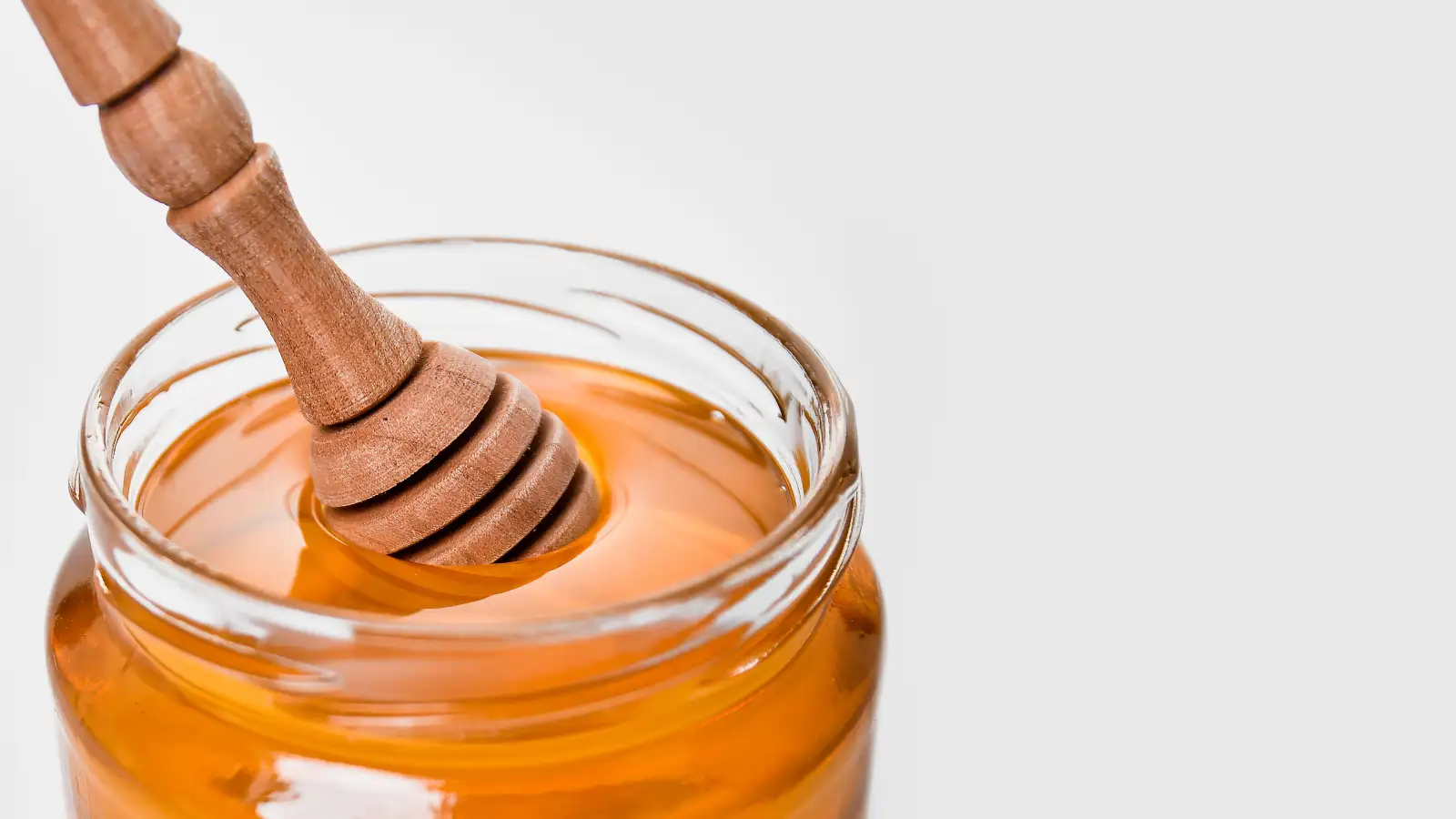
I keep three jars within arm's reach of the stove, and not one of them is there because it's the darkest or the lightest. One is a nearly water-white clover. One is a middle amber wildflower blend. One is a dark buckwheat that smells like a damp cellar floor and molasses at the same time. When I reach for one, I am not reaching for quality. I am reaching for a job.
That shift in thinking is the whole thing. Color stops being a scoreboard the moment you start asking what the honey is supposed to do in the dish.
The read I make before the jar is even open
Honey's shade comes from plant pigments and trace compounds the bees carried in with the nectar. Nothing more glamorous than that. It runs the full range, from honeys so pale they look like light corn syrup to deep amber that goes almost black in a thick jar.
So the first thing I do is hold the jar up to the window. Not to grade it — to guess what's coming. The second thing I do is unscrew the lid and smell it, and honestly, that tells me more than the color does. Clover and acacia smell like almost nothing, just a faint waxy sweetness. Buckwheat smells like wet leaves and burnt sugar. That smell predicts how the honey will behave in a batter better than any shade chart.
Then a taste off the tip of a spoon. Strong, layered, faintly savory — that jar is going into something that can take it. Thin, soft, floral — that jar is going somewhere it won't be noticed on purpose.
What the three broad shades tend to do
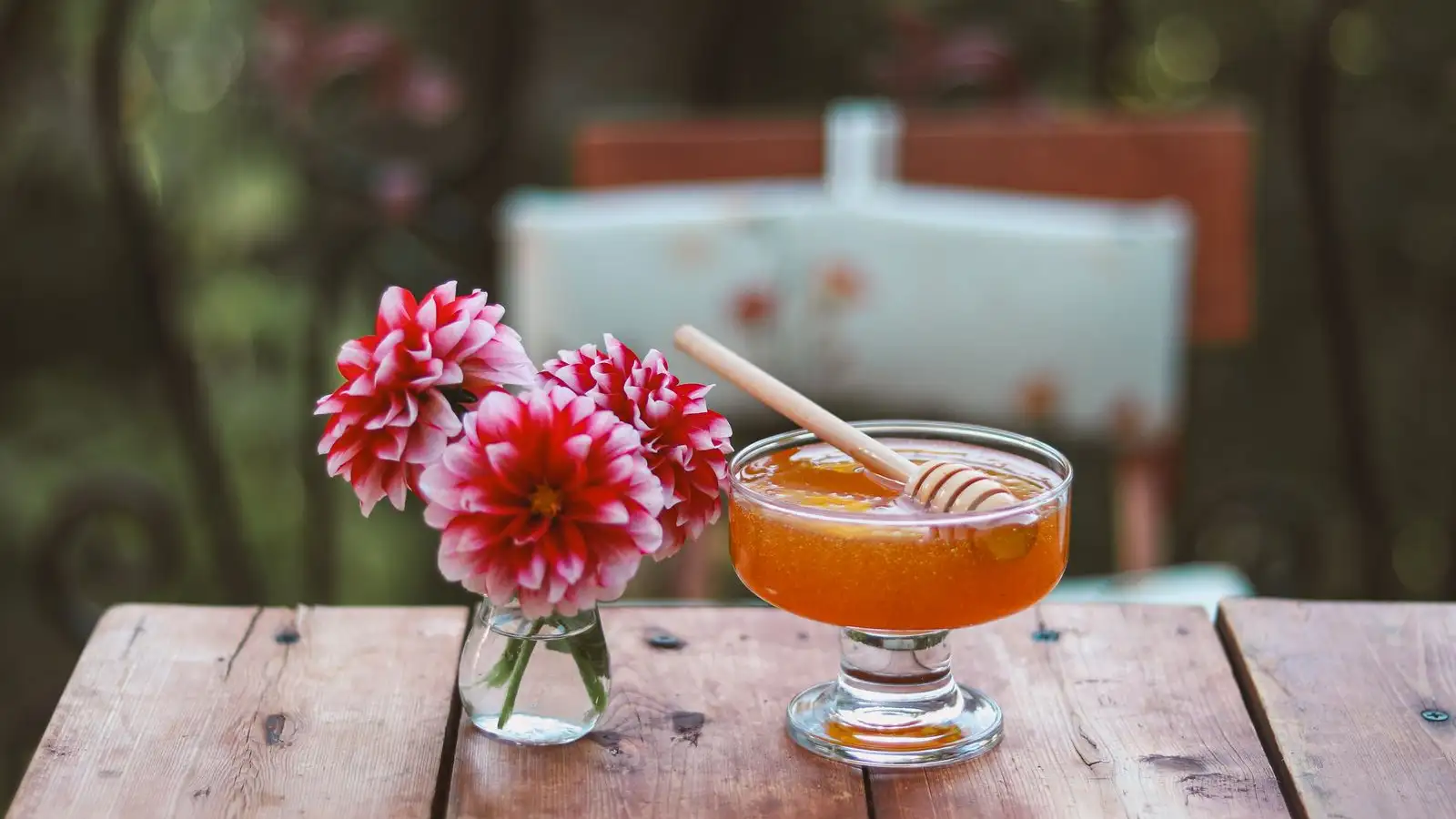
Pale honeys — clover, acacia, fireweed, orange blossom — read mild and floral. In a sponge cake, a delicate vinaigrette, or a cup of tea, they keep other flavors in front, which is exactly what you want when the honey isn't the point. Orange blossom is the odd one out; it's pale but perfumed enough to announce itself.
Mid-amber honeys are the ones I use most, because they split the difference. Enough body to hold up in a glaze or a salad dressing, not so much that they bulldoze a dessert.
Dark honeys — buckwheat, chestnut, avocado, late-season wildflower — taste stronger. Malty, sometimes a little bitter on the back end, occasionally almost molasses-like. In a sauce or a spice-heavy bake, they don't disappear. Gingerbread made with buckwheat tastes like gingerbread made with buckwheat. The same recipe with clover tastes like a softer, sweeter cousin of the same thing.
The browning part nobody warns you about
Honey browns earlier than an equal weight of granulated sugar. It brings fructose and glucose plus a little nitrogen-bearing material, so you get caramelization and Maillard browning running at the same time. I can't give you the exact reaction rates — I'm not a food chemist and I'm not going to pretend — but I can tell you the pan does not care about my credentials. Honey goes dark fast.
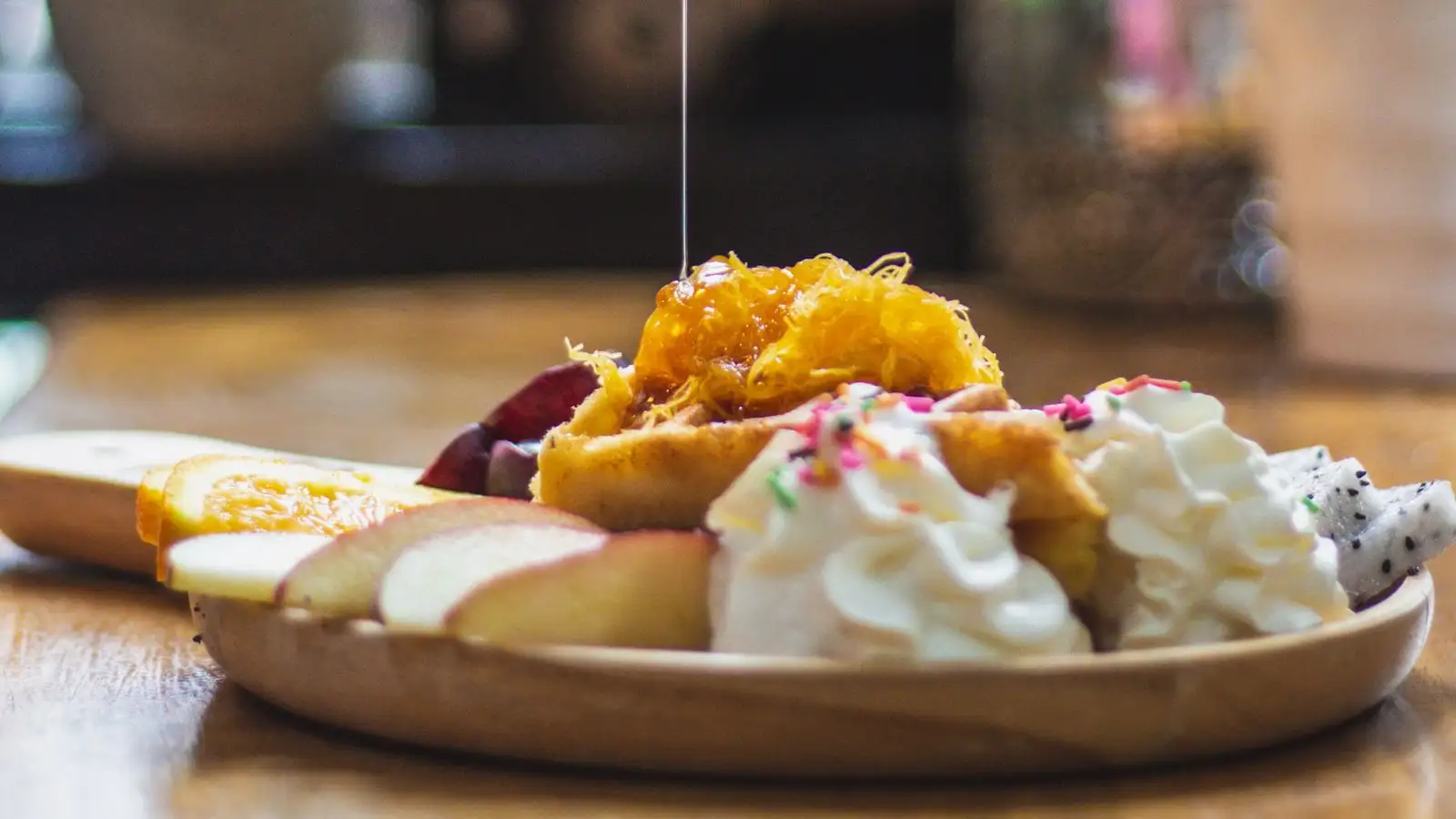
Here's the practical trap with dark honey: it's already halfway there. A spoonful of buckwheat in a hot skillet goes to the color of dark caramel while you're still reaching for the spatula. It may not actually be burning any faster than clover would — it just looks done earlier, which means you stop trusting your eyes and start going by smell and by how the glaze moves off the spoon. With pale honey you get a clear visual ramp. With dark honey you get a cliff.
Two fixes I use constantly: drop the oven 25 degrees when I'm baking with honey instead of sugar, and pull anything glazed out a minute or two before it looks ready. Honey also holds moisture, so baked goods stay soft longer and edges set a little later than you expect. If I'm swapping honey in for sugar by volume, I cut back the liquid in the recipe and remember honey is sweeter per spoonful, so I usually use less than the sugar amount called for.
Where the shortcut breaks down
Tupelo is the one I bring up first, because it wrecks the clean version of this rule. It's unusually pale — sometimes nearly colorless — and it delivers a distinct, lasting flavor that hangs around long after you swallow. Pale does not mean bland. Anyone who has cooked with tupelo knows that.
The rule breaks in the other direction too. Some dark jars are dark and dull. I've bought late-season wildflower blends that were the color of strong tea and tasted like almost nothing, flat and slightly cooked. Color told me nothing useful there. And honeydew honeys, which come from tree sap rather than blossoms, run dark and resinous — good in a braise, strange on a biscuit.
Then there's drift. Heat and long storage darken honey over time as the sugars react, and the aroma shifts with it — it flattens out, loses the bright top notes. A jar of pale clover that sat on the shelf for two years is noticeably deeper than it was at harvest. So if you're tasting a jar and comparing it to what you remember, you may be comparing it to a version of itself that no longer exists. Stirring a crystallized jar over warm water brings it back to pourable, but it won't bring back the aroma it had fresh.
Varietal, origin, moisture, and handling tell a cook more than shade does. Moisture especially — a honey harvested too wet can ferment, and no color on the label will warn you. That's a handling question, not a shade question.
What I actually do at the stove
My working rules, in the order I use them:
If honey is the point of the dish — biscuits, a cheese board, tea, toast — I pick by flavor and ignore color completely. I want the jar I'd eat off the spoon.
If something else is the point — a delicate cake, poached pears, an herby vinaigrette — I go pale and let the honey be a background sweetness.
If the dish is spice-heavy, smoke-heavy, or savory — barbecue sauce, gingerbread, glazed carrots with cumin, a ham brine — I go dark. Those flavors can carry a strong honey without being buried.
If the pan is hot and I can't watch it, I go pale, because I can at least see what's happening.
And when a jar confuses me — dark but thin-tasting, or pale but loud — I stop reasoning from the color and just taste it. The jar tells you what it will do. It never tells you how good it is.