Two jars of the same honey varietal can taste like two different foods, and the reason is that a varietal name describes a nectar source, not a recipe. Soil and climate decide which nectar plants actually thrive around the hive, local weather decides when those plants bloom and how much nectar they give, and the wild herbs, shrubs, and trees within foraging distance fill in the background. The basic sugars stay broadly similar from one region to the next. The aroma and the intensity do not. The fastest way to see this for yourself is to taste two jars side by side, and it takes nothing more than two spoons.
The counter, two spoons, and one uncomfortable minute
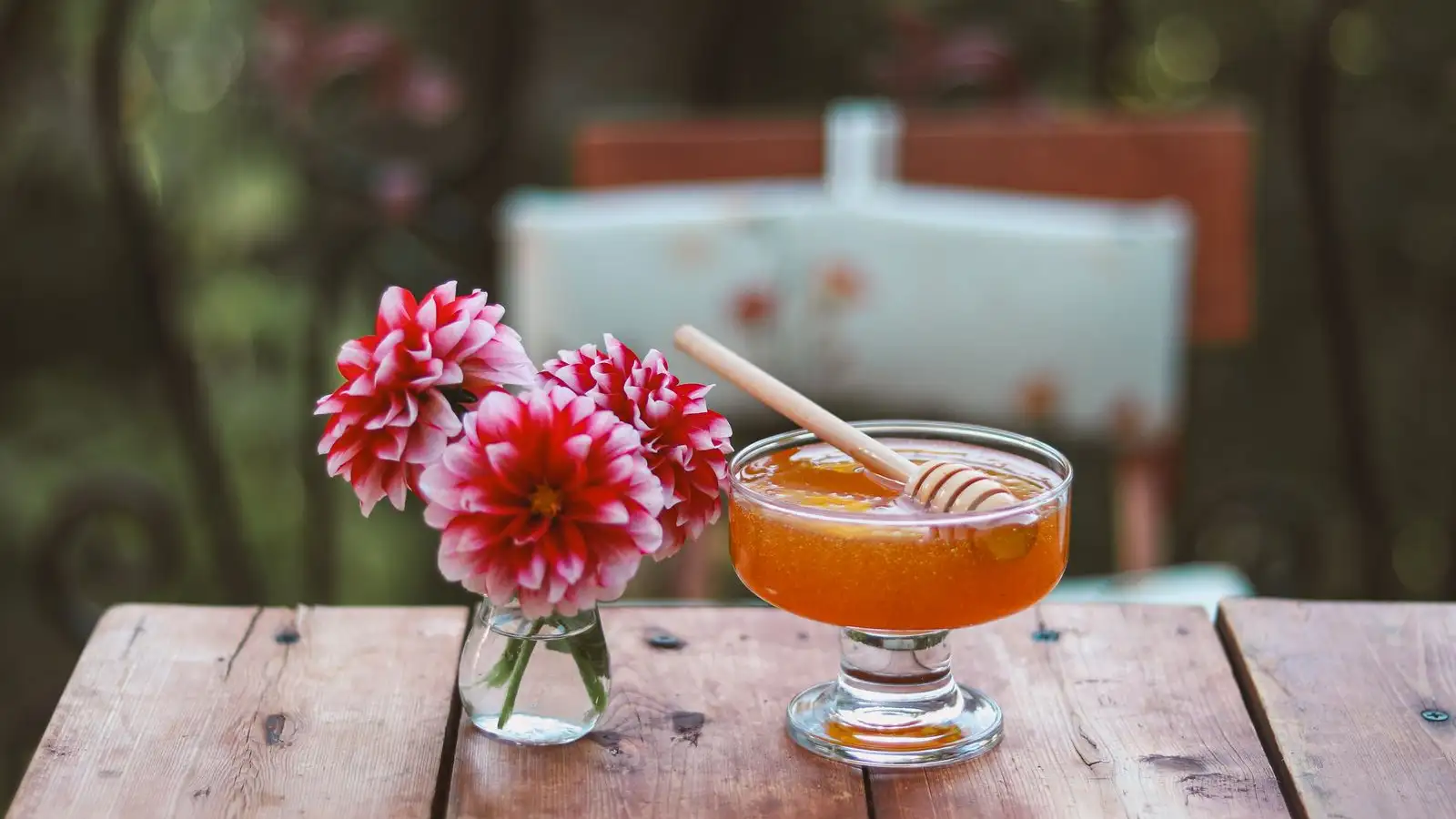
Here is the set-up I use, and it hasn't changed in years. Clear counter. Two jars of the same varietal — say both are labeled orange blossom, one from a grower a few states over, one from a stand I stopped at on a drive. Two clean spoons, one per jar, so nothing carries over. A glass of warm water between them, not cold, because cold water numbs the back of the palate and you will miss the finish. No bread, no cheese, no coffee, no fruit. Anything with fat or acid in it rewrites what happens next.
Open the first jar and smell from a few inches up. With orange blossom, what usually comes off the surface is light — a soft floral edge, something in the direction of citrus peel, sometimes a faint waxy note. Then bring your nose down close to the surface and smell again. That second pass is where the intensity lives, and it is often nothing like the first.
Now the spoon. A quarter teaspoon, no more. Let it sit on your tongue for a few seconds before you swallow, and pay attention to where it lands and how long it hangs around after. Some jars flash bright and vanish. Some sit heavy and stay. Then warm water, a real rinse, and a few breaths of plain air before the next jar, because the first honey is still sitting on your palate whether you think it is or not.
Repeat with jar two.
Now the part that actually teaches you something. Go back to jar one. It will not taste the way it did four minutes ago. The second pass reads it against a reference it didn't have before, and the difference that felt vague on the first pass — one jar rounder, one sharper, one with a longer tail — turns into something you can describe out loud. That is the whole method. No refractometer, no lab sheet. Two spoons and the willingness to go back to jar one.
What a varietal name is actually promising
When a jar says orange blossom, or sage, or tupelo, it is claiming a predominant nectar source, not a formula. A colony works a radius of roughly a couple of miles, and the mix it brings home is whatever is blooming in that radius on those days. If a strong share of it is the named flower, the honey reads as that flower. The rest is the neighborhood, and the neighborhood is different in every region.
Labeling rules for varietal names are looser than most people assume, which is one more reason your nose is a better instrument than the front of the jar. Two honeys can carry the same word and be working from noticeably different blends.
Bloom timing is the knob nobody talks about
A cool, wet spring pushes bloom later and stretches it out. A hot, dry stretch can shorten it and cut nectar flow. A beekeeper pulling supers before peak bloom gets something lighter and less distinctive; pulling after peak gets something darker and more assertive. Same hive, same field, same year — different jar. Weather during the bloom itself matters too. Rain on the flowers means bees stay in, and the nectar that does come back is different from what a dry, warm week produces.
This is why two jars of the same varietal from the same region, different years, can disagree with each other. When you compare regions, you are comparing a flower plus a calendar plus a season, all at once.
Soil decides who is in the neighborhood
I have never seen a convincing demonstration that soil minerals pass straight through into nectar as flavor. What soil clearly does is decide the plant community. Drainage, pH, slope, and how much water hangs around determine which nectar plants establish, how densely they bloom, and how long they stay productive. Change the soil and you change the cast of characters around the hive, even when the headliner flower is the same species.
That is the honest version of terroir in honey. It is less about the ground flavored the nectar and more about the ground choosing the guest list.
Background notes from everything else in range
Wild herbs, roadside shrubs, hedgerow trees, backyard gardens, and whatever else is in range all get into the mix at some percentage. Those contributions are what separate one region's version of a varietal from another's. They show up as the lower register — a resinous edge, a green note, a faint bitterness at the back, a longer or shorter finish. You rarely identify them by name. You notice them as the reason two jars with the same word on the label do not line up.
Landscape names wearing a varietal's clothes
Some regional honeys are not named for a flower at all. They are named for a place. Chestnut honey from parts of Italy is a grove, not a petal. Tupelo honey is tied to stands along one U.S. river basin, and outside that basin the same tree does not produce the same jar. These names are shorthand for a whole landscape — the trees, the understory, the soil, the timing — and that is exactly why they travel badly. The word moves. The landscape does not.
What stays the same, and why it matters
The sugar side is steadier than the aroma side. The glucose-to-fructose ratio that drives crystallization tends to land in a similar band for a given varietal no matter where it was made, and moisture is held in a comparable range by good beekeeping. So a spec sheet can look nearly identical for two jars that smell and taste nothing alike. This is the single best argument for tasting instead of reading: the numbers agree, the nose does not.
Where side-by-side tasting can mislead you
One jar against one jar is a weak sample. A single jar is one hive, one harvest window, one season, sometimes one beekeeper's pull date. If you compare two jars and one is simply a better-made honey, you have learned something about craft, not about region.
Storage and age muddy it too. Heat exposure, a long summer in a warm cabinet, and time on the shelf all flatten aroma. Crystallization changes texture noticeably and it changes perceived flavor somewhat, mostly by slowing how fast the honey releases on the palate. If one jar is grainy and the other is liquid, you are partly tasting texture, not origin.
And your own palate is a variable you cannot remove. The first jar always has an advantage or a disadvantage depending on what you ate in the last hour. Rinse properly, space the tastes out, and taste each one twice.
If you want the cleanest comparison you can get at home: same varietal, two regions, same vessel type, same spoon, same room temperature, tasted twice through, warm water between. Write down three words for jar one and three for jar two, aroma first, then intensity, then how long the finish lasts. Put the notes away for a day and taste them again. The words that survive are the real differences.
That is the whole point. The jar is a snapshot of a place and a season, not a fixed product. Two spoons on a clean counter will tell you more about that than any label ever will.