Raw honey contains glucose oxidase, an enzyme that stays dormant in its thick, low-moisture state. Once water is introduced—by stirring a spoonful into tea or applying it to a wound—the enzyme activates and steadily releases hydrogen peroxide, the same antiseptic compound found in first-aid products. Pasteurization heats honey to a point that denatures glucose oxidase, permanently eliminating this antimicrobial pathway.
What Happens When Raw Honey Hits Warm Tea
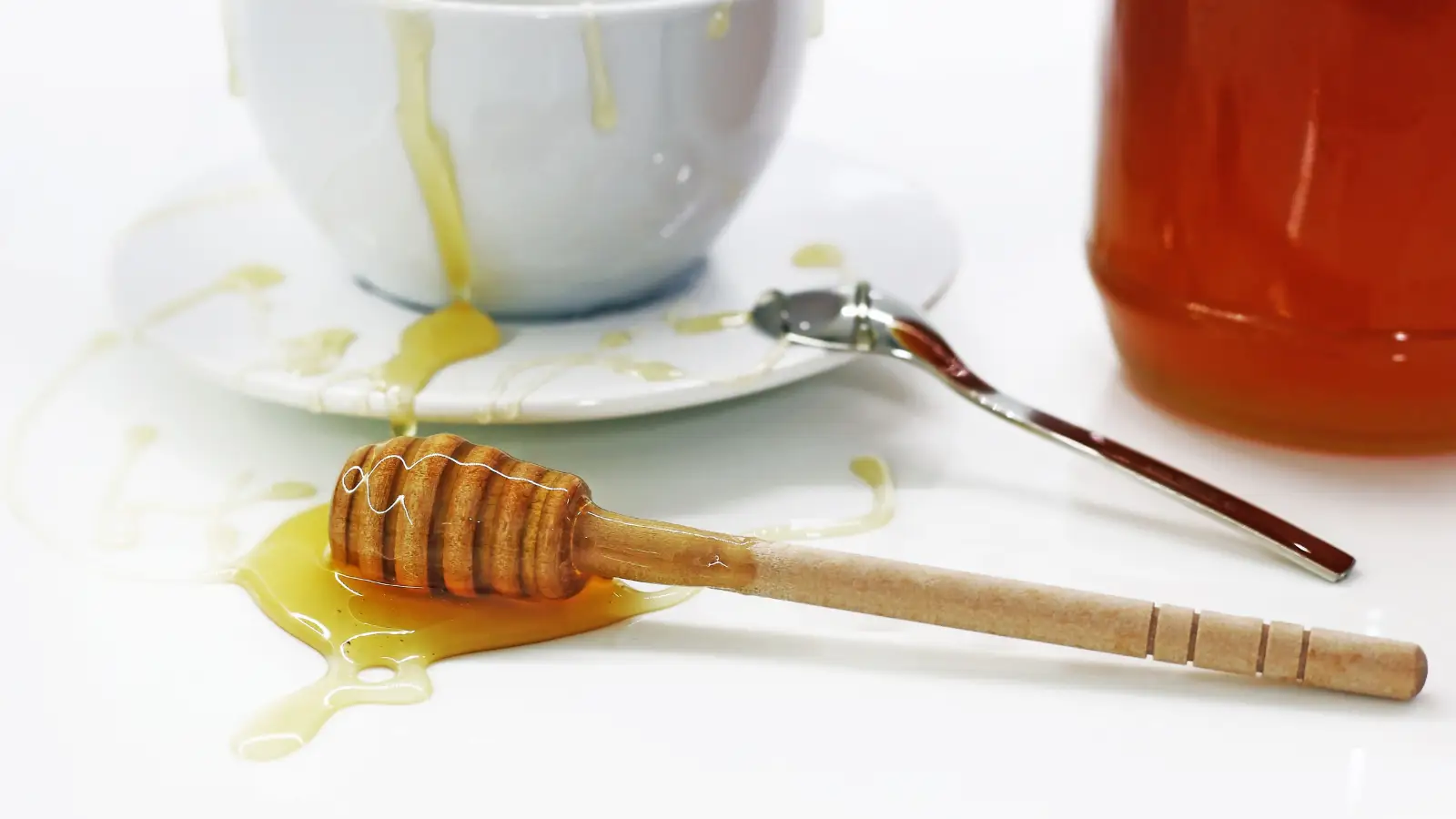
A person with a scratchy throat pours hot water over a tea bag, steeps it until drinkable, then stirs in a teaspoon of raw honey. The honey thins and disappears into the liquid. At that moment, its glucose oxidase encounters enough water to become active. The enzyme had been preserved in the honey’s thick sugar matrix—inactive but intact. Now it begins converting the honey’s own glucose into a slow, sustained output of hydrogen peroxide.
This reaction does not happen in the jar. It requires dilution. The peroxide release is modest and self-limiting, strong enough to suppress bacteria on mucous membranes yet mild enough not to irritate tissue. And it stops if the honey is heated past a specific threshold before it ever reaches the cup.
The Three Stages of the Reaction
The Enzyme Preserved in Suspension
Bees deposit glucose oxidase into nectar as they process it into honey. In fully ripened raw honey, the water content sits below 18%, and the pH hovers around 3.5–4.0. Those conditions lock the enzyme in place. It cannot react because there is not enough free water. The enzyme remains stable in this suspended state, provided the honey is stored cool and never heated.
Dilution Removes the Brakes
When water, saliva, or wound fluid mixes with honey, the local water activity rises enough to free the enzyme. The pH also shifts slightly upward, and glucose oxidase becomes fully functional. It uses dissolved oxygen to oxidize glucose, yielding gluconic acid and hydrogen peroxide. Gluconic acid further drops the pH, which helps preserve the area, while hydrogen peroxide accumulates in minute concentrations—typically 1–2 mmol/L, well below the levels that damage human cells but enough to disrupt bacterial cell walls.
Heat Denatures the Protein Irreversibly
Glucose oxidase is a folded protein, and heat above approximately 104°F (40°C) begins to unravel its structure. Commercial pasteurization, which often reaches 145°F (63°C) or higher, destroys it completely. Even a quick simmer on the stove can do the same. Once the enzyme’s shape is lost, it cannot refold to its active form. The honey may still taste sweet and retain other compounds, but the hydrogen peroxide pathway is finished.
Practical Situations Where the Enzyme Matters
Using Raw Honey for a Sore Throat
Stirring raw honey into warm—not scalding—tea lets the activated enzyme contact the throat lining. The hydrogen peroxide then provides ongoing, low-level antimicrobial action. For this to work, the tea must be cool enough to sip without burning; if the liquid is too hot for a finger, it’s too hot for the enzyme.
Applying Raw Honey to a Minor Cut
A dab of raw honey on a small scrape mixes with wound moisture, diluting the honey and triggering the peroxide release. This cleans the area without the harshness of alcohol or iodine. The osmotic pull of the honey adds another layer, drawing fluid away and making the environment less hospitable to bacteria. Medical-grade honey dressings rely on this same glucose oxidase mechanism, just controlled and sterilized.
Cooking Destroys the Benefit
Baking honey into bread, glazing it on roasts, or adding it to simmering sauces all subject the honey to temperatures that destroy glucose oxidase. The resulting food keeps honey’s flavor and some heat-stable antioxidants, but any antimicrobial effect tied to hydrogen peroxide is gone. To preserve both taste and bioactivity, add raw honey after cooking, once the dish has cooled to a safe temperature—below 100°F (38°C) is a practical rule.
Why “All Honey Kills Germs” Is a Flawed Belief
Most honey on store shelves has been heated and filtered, which removes pollen and destroys glucose oxidase. Labels like “pure” or “100% honey” do not indicate raw status. The hydrogen peroxide pathway exists only in honey that has never been heated above hive temperature—roughly 95°F (35°C). Even raw honey can lose its enzyme if stored in a hot environment or stirred into steaming liquid. The antimicrobial secret isn’t in the jar; it’s in the handling.
Frequently Asked Questions About Raw Honey and Its Antimicrobial Activity
Does adding raw honey to hot tea destroy the enzyme?
Yes, if the tea is too hot. Water temperatures above 104°F (40°C) start denaturing glucose oxidase. The tea must be lukewarm to preserve the enzyme’s activity. A practical test: if you can hold your finger in the liquid for a few seconds without discomfort, the honey’s enzyme likely survives.
Can pasteurized honey still fight bacteria?
Pasteurized honey retains osmotic properties—it can draw fluid from wounds—but it cannot generate hydrogen peroxide through glucose oxidase. Its direct antimicrobial power is significantly lower than that of raw, unheated honey.
Does manuka honey rely on the same enzyme?
Manuka honey has an additional, heat-stable antimicrobial compound: methylglyoxal (MGO). However, raw manuka still contains glucose oxidase. Pasteurization can destroy that enzyme while leaving MGO intact. So manuka’s peroxide activity depends on whether it was heated, just like any other honey.
How do I know if my honey is truly raw and contains active glucose oxidase?
Check the label for “raw,” “unfiltered,” or “unpasteurized.” Creamy, opaque honey is more likely to be minimally processed, but appearance alone isn’t reliable. The best approach is to buy from a beekeeper who confirms the honey was never heated above hive temperature. A home test—dissolving a spoonful in lukewarm water and looking for clarity—can indicate processing but doesn’t directly measure enzyme activity.
The glucose oxidase system is simple: it stays quiet until diluted, and it breaks under heat. A cup of tea can show both sides. If the honey is raw and the water warm, the reaction starts. If the water is too hot, the benefit ends before it ever touched your throat.