Honey color is a useful first clue about flavor, but it is not a reliable predictor of intensity. A dark amber honey can taste mild and rounded, and a water-white honey can carry a sharp, perfumed aroma that dominates a cup of tea. For cooking, the only dependable test is to taste the honey you are about to use—on a spoon, in the actual recipe, or both—rather than assuming darker means stronger.
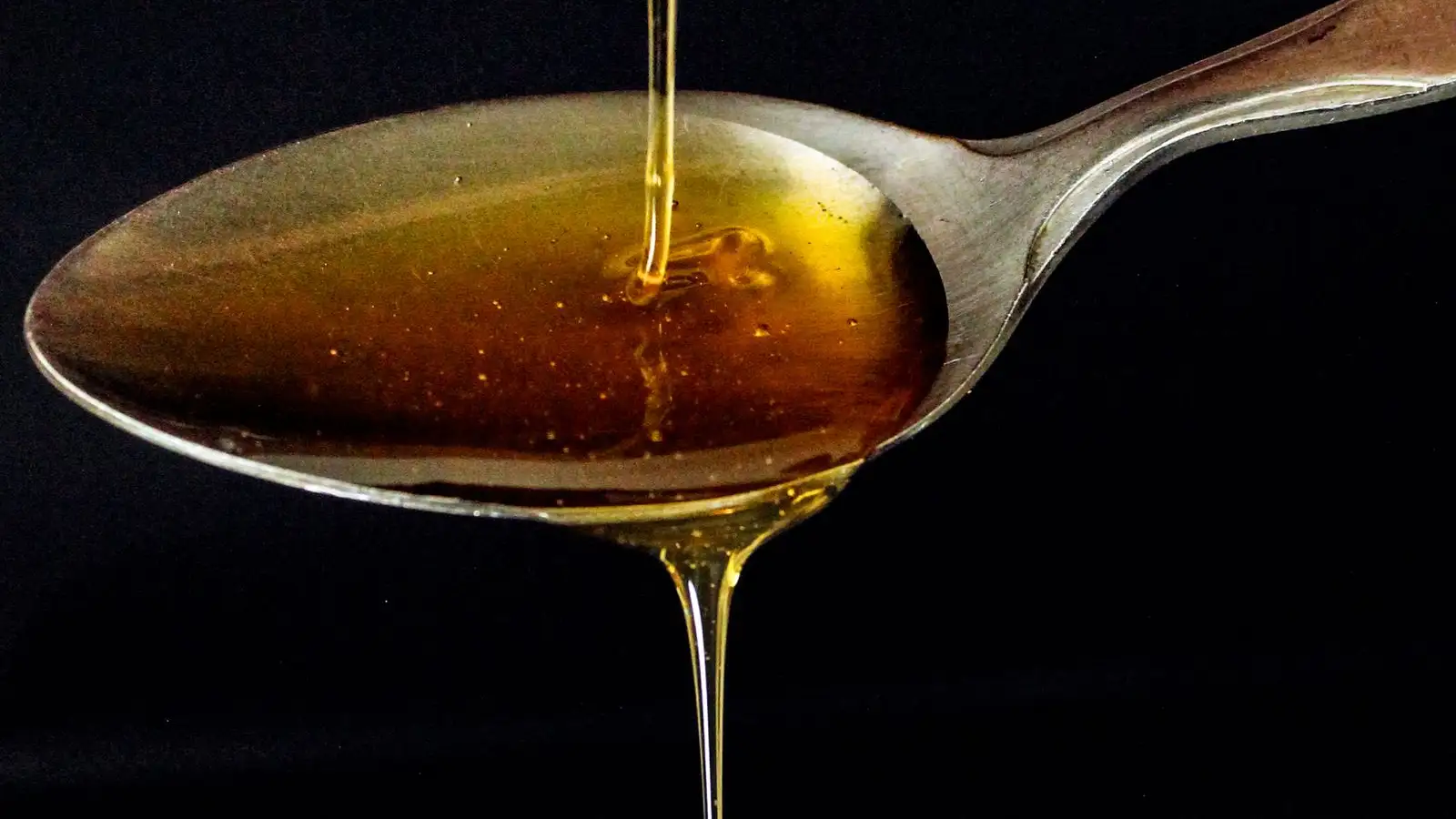
I keep a row of jars on the counter, and after enough batches of vinaigrette, glazed carrots, and yogurt bowls, I stopped trusting the shade in the jar. I still use color as a first cue—it is hard not to—but I treat it the way I treat the smell of a melon. It suggests something. It does not announce the whole truth.
The moment that changed my habit was a lemon-mustard vinaigrette for a butter lettuce salad. I had a dark amber honey, the kind that looks like it belongs in a barbecue sauce. I assumed it would give the dressing a nice backbone. I whisked it in, tasted, and the salad disappeared under a wave of molasses-like heaviness. The honey was not bad. It was just louder than the lettuce, the lemon, and the mustard combined. The next day I made the same dressing with a pale, almost clear honey. That one was so quiet I had to add twice as much to notice it. Two jars, opposite colors, and neither behaved the way the shortcut said they would.
That is the part people miss: color and flavor intensity are correlated, not welded together. The relationship is a tendency, and tendencies have exceptions. When you are choosing honey for a recipe, the exceptions are the whole game.
The Pfund scale measures light, not loudness
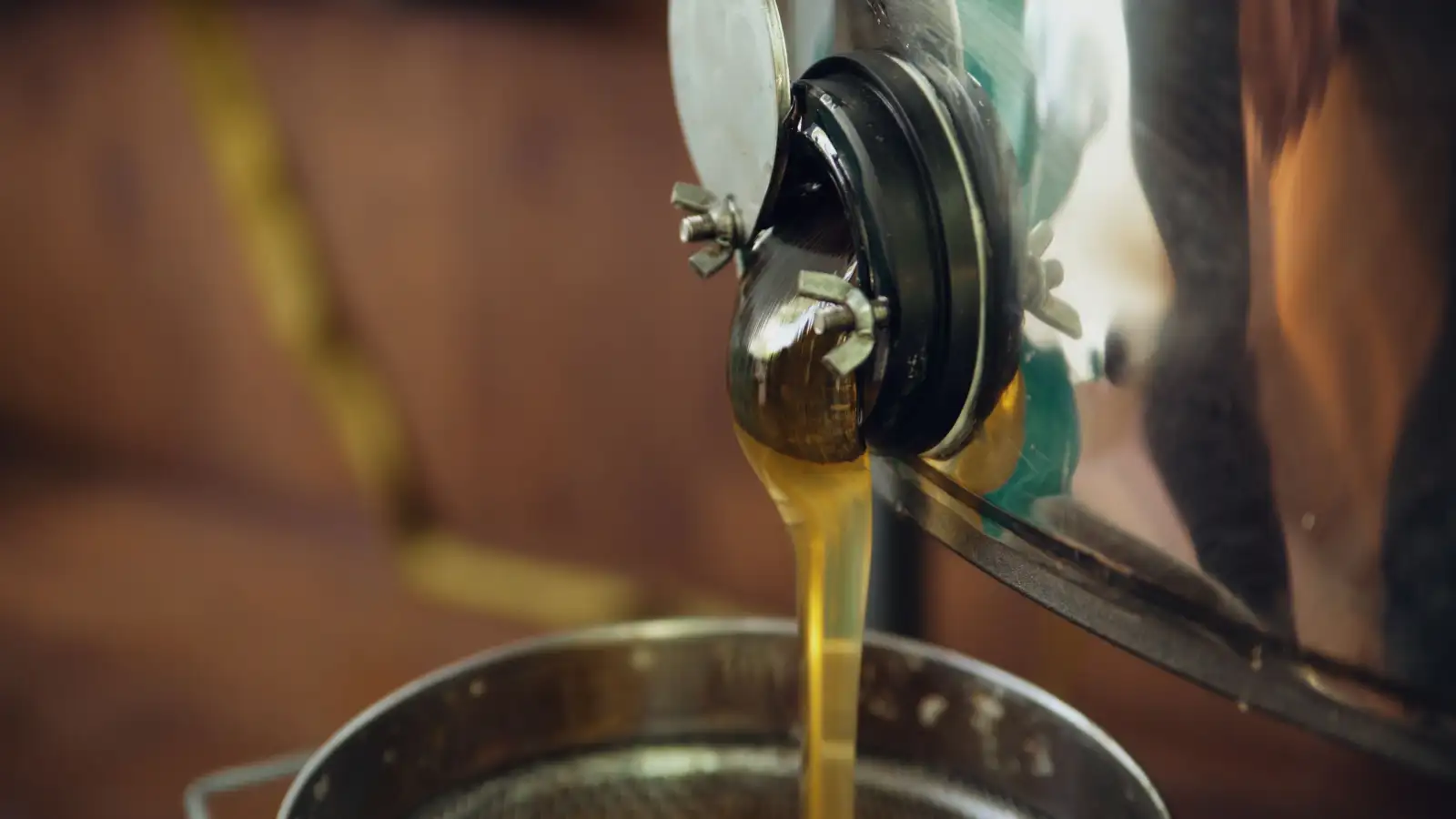
Commercial honey color is graded on the Pfund scale, which runs from water white through extra light amber, light amber, amber, and dark amber. The measurement is about light transmission. It tells you how much light passes through the honey. It does not tell you how much volatile aroma is in the jar.
Floral source, mineral content, and storage or processing conditions all push color one way or another. Honey that has been heated or stored warm can darken. Crystallization can make a jar look lighter or cloudier. None of that guarantees a flavor change. A honey can darken in the jar and still taste nearly the same as it did when it was pale. A honey can stay light and still carry a loud aroma.
I learned to separate the two questions. Color answers, 'What will this look like in a glass jar or a bowl?' Taste answers, 'What will this do to my food?'
The exceptions are not rare
Tupelo and acacia are usually mild, and they often are. But 'usually' is doing a lot of work. I have had light honeys with a sharp mint edge. I have had light honeys that smelled like orange blossom and took over a cup of chamomile. I have had dark honeys that tasted like warm caramel and not much else—gentle, rounded, easy to miss in a sauce.
So when someone tells you dark honey is always stronger, they are describing a pattern, not a rule. The pattern is real. Darker honeys often have more robust, mineral, molasses, or malted notes. But a dark color can also come from storage, from processing, or from a floral source that does not taste the way it looks. A light color can come from a floral source that is quiet, or from one that is bright and perfumed.
If you want to choose honey for a recipe, taste it. If you cannot taste it, use color as a first guess and then adjust. That is not a failure of knowledge. That is cooking.
What goes wrong in the kitchen
Delicate dishes are where dark honey tends to overstay its welcome. I think of panna cotta, plain yogurt, a cup of chamomile tea, a vinaigrette for butter lettuce, a glaze for white fish. A dark honey can flatten those. It can taste heavier than the dish wants. It can make the whole plate taste like honey instead of letting the honey be a note inside the plate.
Robust sauces are where light honey can disappear. In a chili, a barbecue sauce, a dark braise, or a coffee rub, a pale honey can vanish. You add more and more, and the sauce still tastes flat. A dark honey can hold its own against smoke, tomato, vinegar, and chile. But not always. I have had dark honeys that were mild enough to get lost in a chili, and light honeys that were loud enough to cut through one.
The recipe is the context. The same honey that ruins a delicate salad can be perfect in a pot of beans. The same honey that disappears in barbecue sauce can be exactly what you want in a cup of tea.
How I taste before I commit
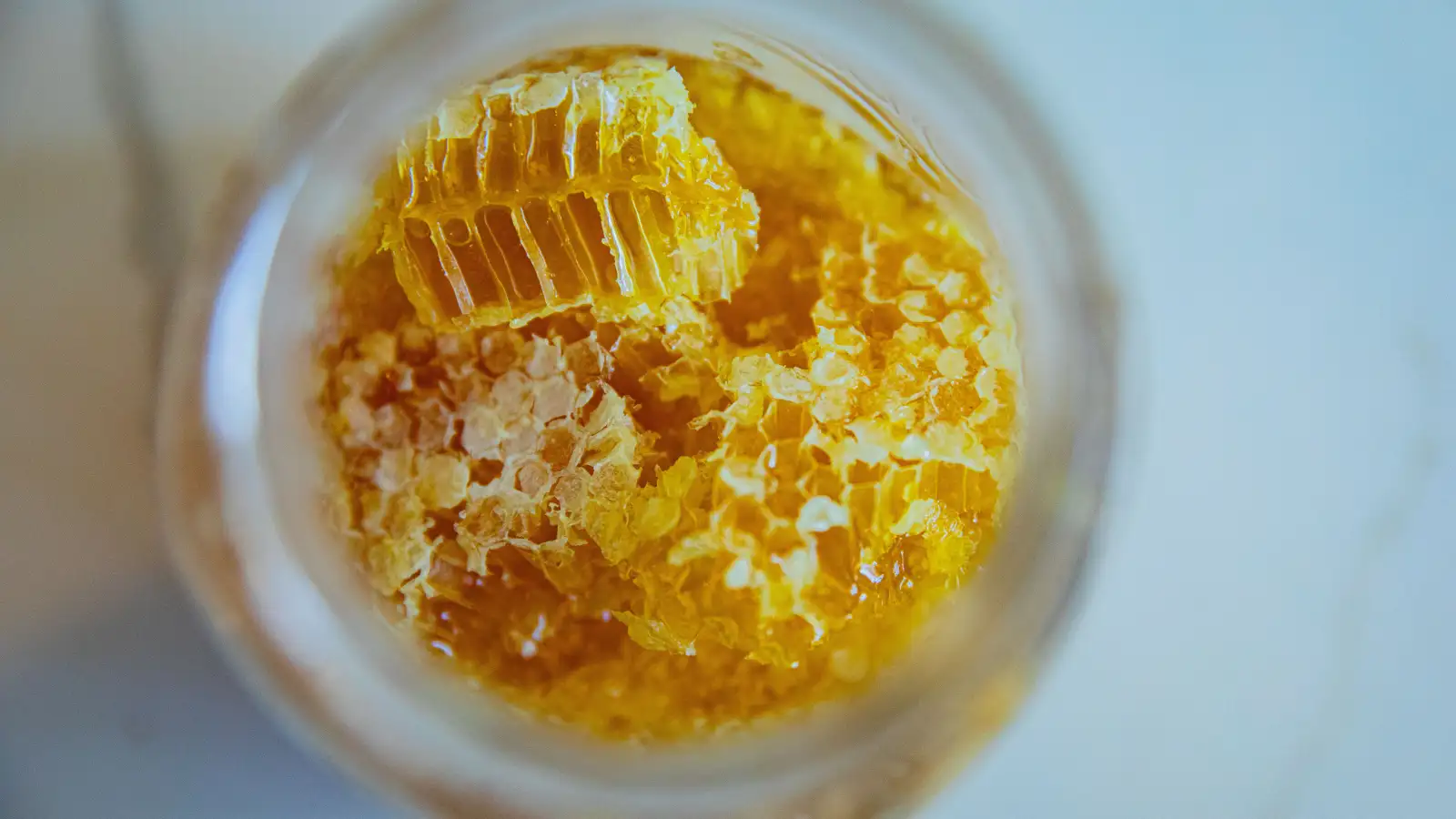
I put a small dab of honey in a white ramekin. White helps me see the color, but I do not let it decide. I smell it first. Then I taste a tiny amount on a spoon. I wait a few seconds. Aroma often shows up after the first sweet hit.
Then I taste it in the context I plan to use it. A spoonful of yogurt. A splash of tea. A bit of the sauce before the honey goes in, and a bit after. I do not need a full recipe test. A small sample tells me more than any color chart.
If I am choosing between two jars, I taste them side by side. I rinse the spoon between tastes. I try them at the same temperature, because warm honey tastes different from cold honey. I pay attention to the finish. Does the flavor fade quickly, or does it stay? Does it taste like flowers, fruit, malt, molasses, or just sweetness? That finish is what will show up in the food.
What color still tells me
Color is not useless. It is a fast, cheap cue. If I am at a farmers market and the vendor offers a sample, I might start with the darker jar if I am making a robust sauce and the lighter jar if I am making a delicate dessert. But I still taste before I buy a large jar. I still ask what the honey was harvested from. A dark fall wildflower and a dark buckwheat are not the same, and a light tupelo and a light acacia are not the same either.
Storage also matters. Honey that has been sitting in a warm kitchen for a year can look darker than it did when it was fresh. That color change does not automatically mean the flavor got stronger. It might mean the honey has aged, crystallized, or been heated. The only way to know is to taste it.
So I keep the Pfund scale in my head as a rough map, not a verdict. Dark amber usually means more robust. Water white usually means more delicate. But 'usually' is not 'always,' and a jar is not a recipe. The spoon is the test. The food is the final judge.