The glucose-to-fructose ratio is the best single predictor of how fast a jar of honey will set. Honey whose glucose runs ahead of its fructose — canola, dandelion, and most clover — crystallizes within weeks to a few months and usually goes firm. Honey whose fructose runs well ahead — acacia and tupelo are the two clearest examples — can stay pourable for years. Room temperature and whatever seed crystals are already in the jar move the clock, sometimes by a lot, but they move it on top of that ratio rather than overriding it.
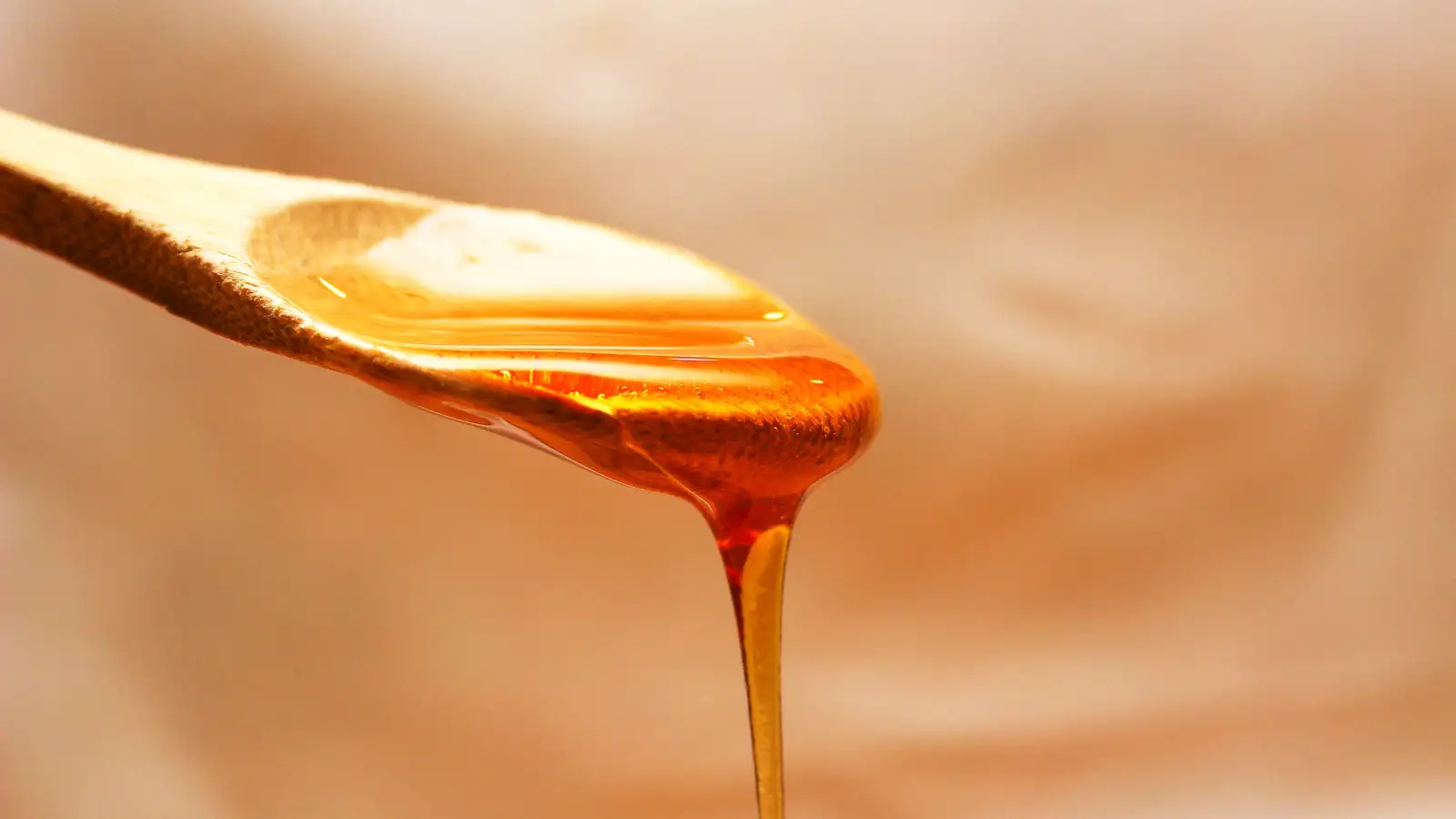
I keep two jars on the same shelf specifically to watch this happen. One is canola from a farm stand twenty minutes up the road. The other is tupelo, bought in Florida and rationed out a spoon at a time. Same cupboard, same air, same age. By February the canola is a pale solid brick and I am digging at it with the back of a spoon. The tupelo pours the following July like it was bottled that morning.
Nothing was done differently to either jar. That is the whole point.
Why glucose is the only fraction that really moves
Honey is a supersaturated sugar solution, and glucose is the part that comes out of it. Fructose is far more soluble and mostly stays in the liquid. So the ratio works like a countdown: the more glucose sitting above fructose, the more oversaturated that glucose is, and the sooner it starts dropping out as solid crystals.
There is a second-order effect worth knowing, because it explains why a set jar feels like it stalls. As glucose leaves the solution, the liquid that remains gets proportionally richer in fructose. That fructose-heavy liquid resists further crystallization, so the process partly brakes itself. A jar that has been solid for a year has a thin layer of liquid on top that is close to pure fructose — and that layer is the slowest-setting honey in the whole jar.
What the ratio looks like across floral sources
The exact numbers swing with season, region, and whatever else the bees were working that month, so treat these as typical ranges rather than fixed values. The ordering is what holds.
| Floral source | Rough glucose-to-fructose | What I'd expect on the shelf |
|---|---|---|
| Canola / rapeseed | glucose clearly ahead, on the order of 1.2–1.4 | solid within weeks, firm, often smooth |
| Dandelion, aster, most clover | close to even, often slightly under 1 | set within a few months to a year |
| Wildflower / mixed | all over the place, hovering near 1 | genuinely unpredictable jar to jar |
| Sage | fructose ahead, somewhere around 0.8 | many months, often a year or more |
| Acacia | fructose well ahead, around 0.7 | years, frequently never |
| Tupelo | fructose far ahead, around 0.6 | years; the reference standard for staying liquid |
A clover from one year is not a clover from another, and a labeled wildflower can be almost anything. When someone tells me their honey crystallized in three weeks and their neighbor's identical-looking jar is still liquid after two years, this table is usually the reason.
You can audit a shelf without opening anything
Crystals are denser than liquid honey, so they settle. Tilt a clear jar toward a window and look at the bottom third. A jar on its way to setting shows a pale, hazy band down there while the top is still clear and glossy. That band is the leading edge. If the whole jar is transparent and you can read the label through the far side of the glass, you have months. If there is a soft opaque layer you can swirl but not fully melt back into the liquid, you are looking at days to weeks.
While you are at it, look for seeds. Pollen grains, dust, and any stray crystal carried over on a spoon that touched a set jar all give the glucose somewhere to start. That is why two jars of the same honey, bought the same day, set at different times. The one with a head start always wins.
Temperature is a throttle, not the engine
The fastest crystallization band sits around the mid-50s Fahrenheit, roughly 13 to 14 degrees Celsius. That is a cellar, an unheated garage in early spring, a lower cabinet against an exterior wall in winter.
Two things slow it down, and people usually only know about one. A steady warm room, say above 75°F, slows it because crystals dissolve back about as fast as they form. A refrigerator slows it too, in the high 30s, because cold honey is thick and crystals have a hard time growing through something that viscous. So the fridge and the warm pantry both keep honey liquid, for opposite reasons, and the dangerous zone for a liquid honey is the cool middle.
This is the part where the ratio and the thermometer argue. A canola jar will set in a warm kitchen eventually; it just takes longer. A tupelo jar in a 55°F basement can pick up a faint haze at the bottom after a couple of years. The ratio sets the destination. Temperature sets the arrival time.
Where the ratio stops being enough
Right around a glucose-to-fructose of 1.0, the jar's fate is honestly up in the air. Same floral source, same year, two jars, different endings — because one had a seed crystal and sat in a cool basement and the other sat on a counter at 78°F with nothing to start on. For mixed wildflower honey I will not make a prediction about an individual jar. I will only give odds, and I say so.
Water content is the other variable worth naming. The same ratio in a drier honey means more oversaturation, so it sets sooner. Two jars can share a ratio and still not share a schedule.
Creamy and grainy are a different question entirely
The ratio decides whether and when. It does not decide texture. That comes down to how many crystals start and how fast they grow. Many nuclei growing at a cool, steady temperature produce many small crystals, which reads as smooth and spreadable. Few nuclei growing slowly produce fewer, larger crystals, which reads as coarse and sandy on the tongue.
So a fast-setting canola that goes solid in three weeks usually ends up creamy. A slow clover that finally gives in around two stray crystals can turn out gritty. Same chemistry, different grain.
Buying for the behavior you want
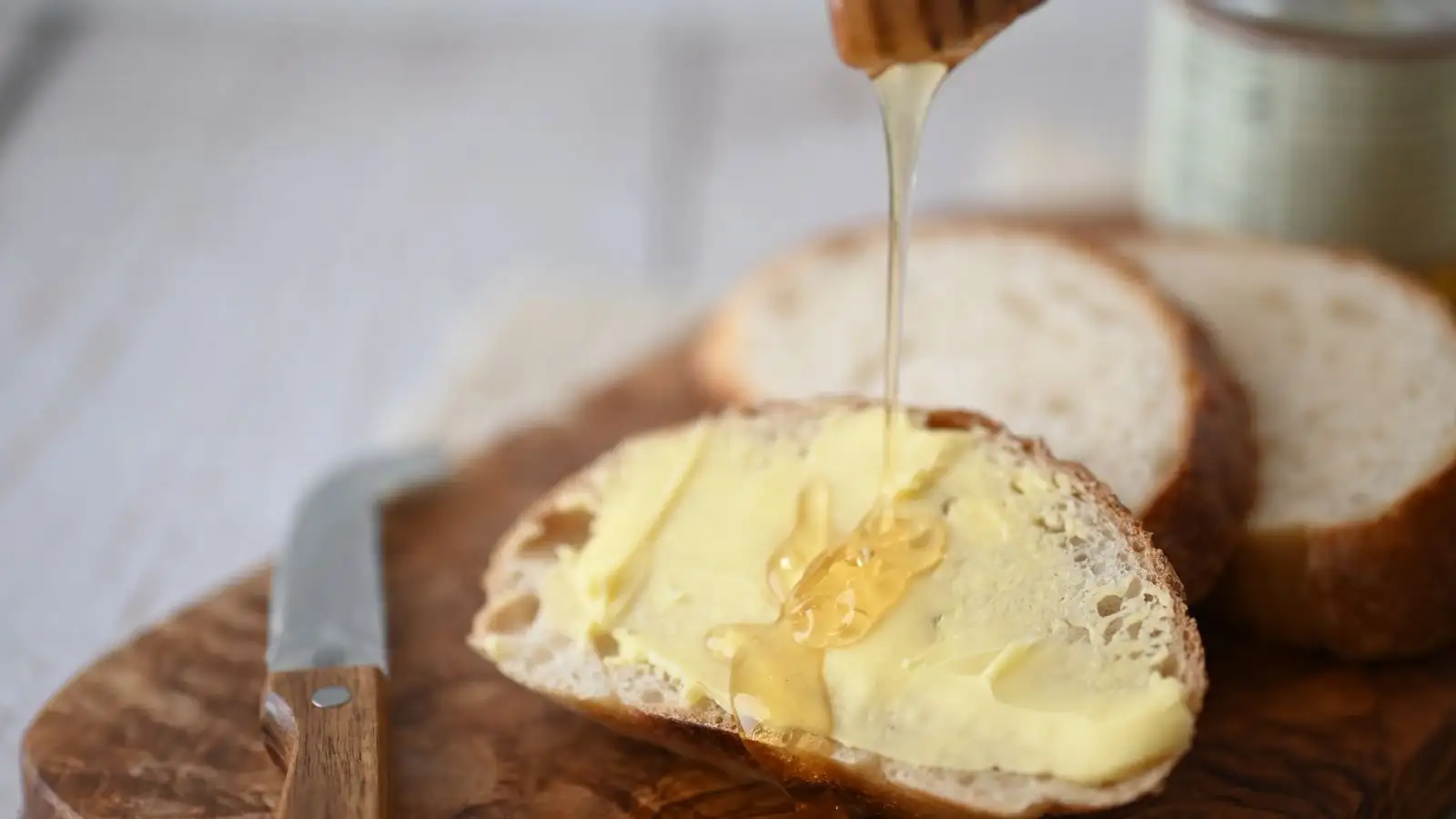
Once the ratio is in your head, the shelf stops being a lottery. If I want a jar I can spread straight onto toast with a knife, I buy canola, dandelion, or a clover I know runs glucose-heavy. If I want something that will drizzle over yogurt and vanish into tea for years, I buy acacia or tupelo and accept the price. Most people buy honey first and find out what it does second.
And the set jar is not a lesser jar. It is the same sugars in a different physical arrangement — nothing added, nothing removed, nothing wrong with it. The set is reversible with gentle warmth if you want it liquid again, and the whole thing is a physical rearrangement rather than a change in what is in the glass.
The only thing a crystallized honey does that a liquid one cannot is sit on toast without running off the edge. That is worth knowing before you reach for the jar.