A varietal honey tastes different from year to year because it is a crop, not a recipe. The same plant species produces nectar that shifts with rainfall, temperature, and bloom timing, and the soil underneath the plant changes the aromatic compounds that give the honey its varietal character in the first place. Rain and warmth decide when the bloom opens and how long it lasts; the bloom decides which flowers the bees work and whether the nectar comes from the first flush or the tail end of it; the soil decides what the flower smells like before a bee ever touches it. A jar with the same name on the label in two different years is two different harvests that happen to share a name.
I keep four jars of orange blossom honey on the bottom shelf of my pantry, each with the year written on the lid in blue masking tape. Same aisle, same label, three of them from the same brand. Line them up and color alone tells you they aren't the same thing: pale straw, amber with a green edge in the light, and one gone darker than the rest after two summers sitting near a warm wall.
Cap off, and the difference gets bigger than color. The oldest smells like orange peel and beeswax. The newest smells like honeysuckle with something sharper under it, closer to grapefruit pith. The spoon finishes the argument: one runs off in a thin ribbon, one piles up and holds its shape, and one has gone grainy in the bottom third of the jar with no sign of stopping.
For years I read differences like that as a defect. I assumed the store had changed suppliers, or that I'd grabbed a blend by mistake. Then I started writing the year on the lid, and after three or four seasons the pattern was impossible to miss. The honey wasn't drifting. The year was. What I was tasting was weather, timing, and dirt, filtered through a bee.
The bloom opens on its own schedule, not the label's
Every spring the bloom opens when it opens. A mild winter and a warm, dry March can push a citrus bloom early and compress it into a short, intense window, all of it at once, then done. A cool, wet spring stretches the same bloom across weeks. Bees work both versions. They don't work them the same way, because a flower isn't putting out the same nectar on day three that it puts out on day twenty.
The same logic runs through any single-source honey: tupelo, blackberry, sage, sourwood. Which days the bees got, and how many of them there were, is baked into the jar. This is the first reason two years taste different, and it has nothing to do with anyone doing anything differently.
Two groves, two different honeys, one variety name
Soil is the part you can taste without knowing you're tasting it. Minerals and local growing conditions shape the aromatic compounds in the nectar, and those compounds are most of what we call varietal character. Two patches of the same plant species on different ground, one sandy and quick-draining, one heavier and holding moisture, can hand the bees nectar that reads differently in the glass. Same species, same bees, same year, different dirt.
I noticed this before I could explain it. There was a stretch where every jar I bought from one part of the state smelled rounder and softer to me, and jars from another part tasted brighter and more pointed, and I kept blaming my own mood until I realized the two groups weren't the same honey. They were the same variety.
Early and late pulls from the same bloom
Honey taken early in a bloom and honey taken at the end of the same bloom are not the same substance. The early-pulled honey tends to carry more moisture and a different sugar balance; it's thinner, it runs, and it can sit in the jar for a long time before it sets. Honey from the tail of the bloom tends to be denser, and denser honey granulates faster, sometimes within a couple of months, sometimes sooner.
That's why "this year's jar is already grainy" and "last year's jar never set" aren't contradictions. They can be the same variety at two different points in the same season. If you've ever opened a jar you loved and found it candied while the one beside it stayed liquid, you've run into this.
Color is the worst thing to compare
The first thing anyone does with two jars is hold them up to the window. It's also the least useful comparison. Color comes from the mineral and pigment content of the nectar, and it deepens with heat and time, so a jar that spent two summers on a shelf near an oven will look darker than a fresher jar of the same honey from the same source. When I line up my four orange blossom jars, the darkest one isn't the oldest crop. It's the one that got cooked.
If you want to compare two years honestly, keep color out of it until the end. Judge aroma, body, and set first. Color is the last thing I look at, and mostly out of curiosity.
What I smell for
Cap off, let the jar sit for thirty seconds, then smell. I'm looking for two things: the main note, and what's underneath it. A citrus honey usually has that orange-blossom top note; what changes year to year is the second layer, the beeswax or green herb or something almost like tea. That second layer is where the season shows up first.
What I watch for in the body
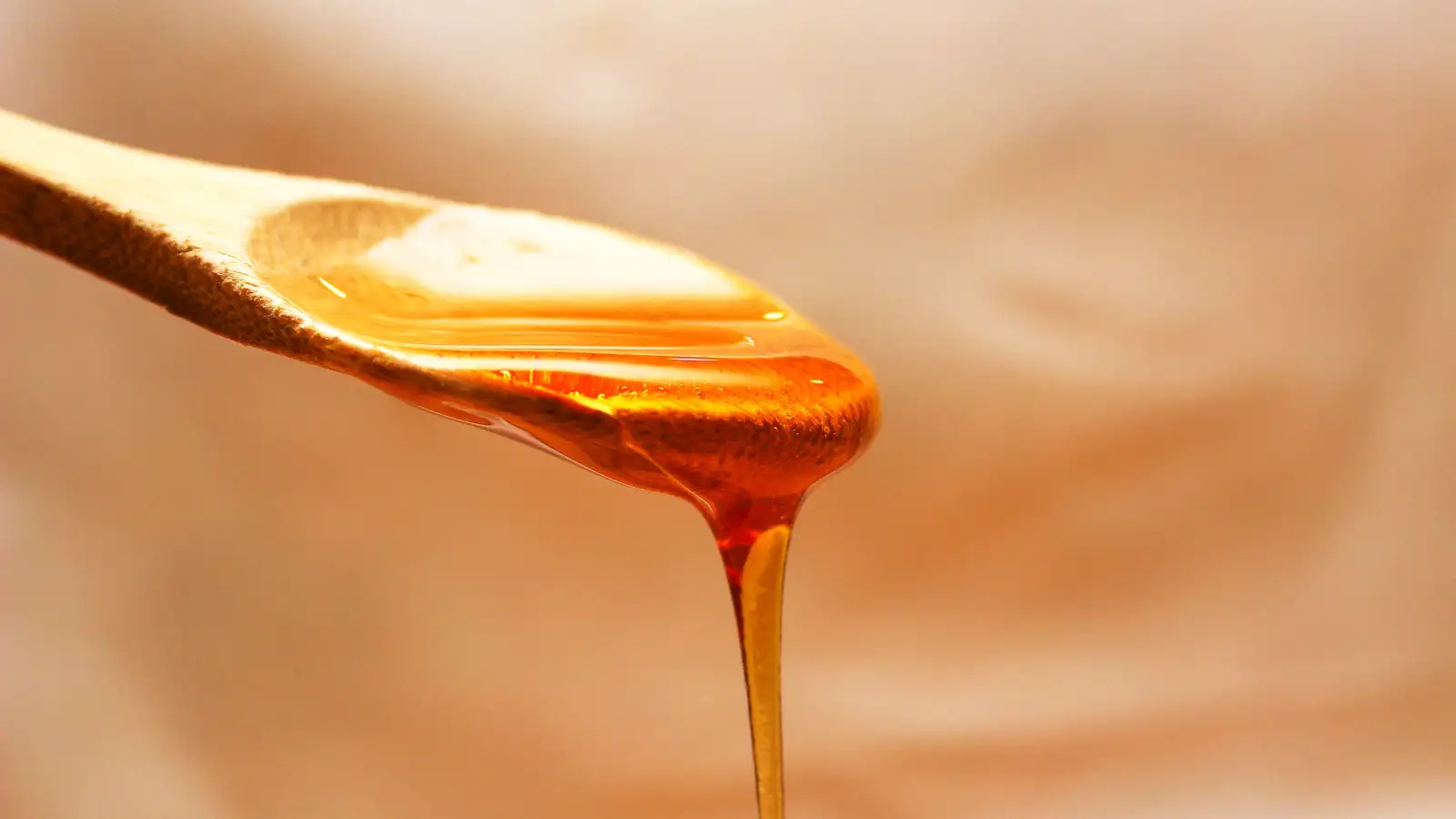
Tip the jar. A thin ribbon that breaks quickly and leaves no trace on the glass is one honey. A slower, thicker stream that folds on itself is another. Neither is a defect. They're descriptions of how much water the nectar carried and what the sugar balance looked like when it came out of the comb.
How it sets
Set is the most honest measure of all, because it takes days or weeks and you can't rush it. I keep a small amount from each jar in a separate little glass, lid off, and watch it. One will start to cloud at the bottom and stiffen; another will still pour after a month. Over a few years you build a picture of how a given variety behaves where you live, and the year-to-year wobble becomes the interesting part instead of the confusing part.
A varietal name is a dominant source, not a purity claim
Orange blossom honey is named for the nectar source that dominates it. It isn't a promise that nothing else went in. When the citrus is heavy, bees may barely touch anything else. When the citrus bloom is thin or short, bees work whatever else is open nearby at the same time, and some of that ends up in the same jar. That's normal, and it's part of why a jar can carry a note one year that you've never smelled in that variety before.
It also means the label is a useful category, not a precise specification. The name tells you what the honey is mostly made of. It doesn't tell you what kind of spring it had.
What changed in how I buy
I still buy the same varieties. I just stopped expecting them to match. Now I buy the current year when I can, write the year on the lid, and keep a jar back so I have something to compare against next spring. When a new jar tastes unfamiliar, the first question I ask isn't whether something went wrong. It's what kind of spring that region had. Rain, bloom timing, soil. Usually one of the three explains it.
The honey on my shelf isn't a flavor I'm buying. It's a season in a jar, and the season is different every year. That's the part I've come to like.