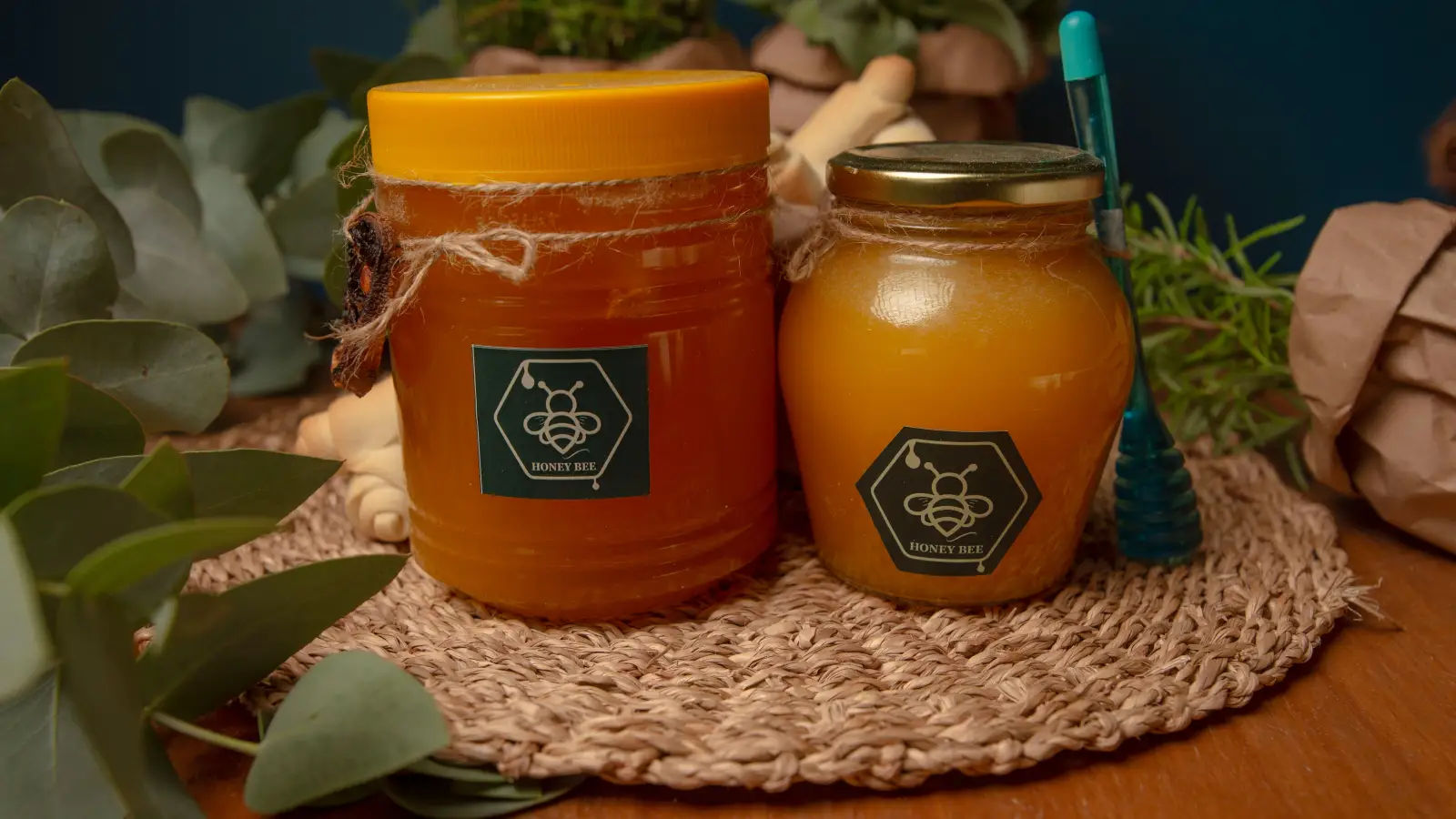
Organic honey and raw honey describe two separate attributes of the jar you're holding. Organic refers to how the bees and the land were managed—whether synthetic pesticides, antibiotics, and GMOs were kept out of the hive and foraging area. Raw describes what happened (or didn't happen) after the honey was extracted: no heat above natural hive temperature, no fine filtration that removes pollen. Because these are independent categories, any given honey can be organic and raw, organic but pasteurized, raw but not organic, or neither.
Organic vs. Raw: What Each Label Actually Covers
| Scenario | Winner | One-Line Reason |
|---|---|---|
| Avoiding pesticide residues | Organic honey | Only certified organic guarantees no synthetic pesticides or antibiotics were used in the hive environment. |
| Preserving enzymes and pollen | Raw honey | Raw honey is never heated beyond hive temperature, so diastase, glucose oxidase, and pollen survive intact. |
| Getting the least processed honey | Raw honey | An organic honey can still be pasteurized and ultra-filtered; the raw label is the only processing guarantee. |
| Using honey for seasonal allergies | Raw local honey | Local pollen—the kind raw honey contains—is what matters; organic status doesn't address pollen content or origin. |
| Following a strict organic lifestyle | Organic honey | If your standard is certified organic production for everything you eat, only the organic label satisfies that requirement. |
When Pesticide Residues Are Your Top Concern
If the motivation for skipping conventional honey is primarily to reduce dietary exposure to synthetic agrochemicals, organic honey is the logical choice. The USDA organic standard prohibits synthetic pesticides, herbicides, and miticides in and around the hive, and it mandates that the foraging radius be free from these inputs. It's worth noting that organic certification does not test for zero residue; it certifies that prohibited substances were not applied. Drift from neighboring conventional farms can still occur, which is why some beekeepers add extra buffer distances. Still, of the two labels, only organic provides any enforceable standard for pre-harvest practices.
The tradeoff is that many organic honeys are subsequently pasteurized and filtered to extend shelf life. That inactivates diastase and removes the pollen some buyers associate with raw honey's benefits. You get a documented production standard, not necessarily an unprocessed product.
When Active Enzymes and Pollen Matter Most
If the enzymes, pollen grains, and delicate aromatics are the whole point, raw honey qualifies. The core requirement is that the honey never exceeds hive temperature (roughly 95°F/35°C) and is strained only coarsely—no pressure filtration. In this form, hydrogen peroxide–producing enzymes like glucose oxidase remain active, and the pollen load stays suspended in the honey.
The important caveat: raw tells you nothing about agricultural inputs. Bees routinely forage across property lines, so even a hive managed without synthetic miticides can bring back nectar contaminated by pesticides from conventional fields a few miles away. Raw guarantees processing integrity; it does not guarantee a pristine forage environment. You accept that risk if the enzymatic profile is what you're after.
When You Want the Absolute Least Processed Honey
Here, raw wins without qualification. Processing is exactly what the raw label forbids. A certified organic honey can still be flash-heated to 160°F and pressure-filtered to remove all particulates—rendering it organic in name alone while erasing the structural evidence of its origin. Raw honey, by definition, skips that entire sequence.
The optimal choice in this scenario is honey labeled both raw and organic, which captures the farming and the processing guarantee simultaneously. If forced to pick only one attribute, raw keeps the contents of the jar closer to what the colony actually produced.
When Local Allergy Relief Is the Goal
The practice of taking a daily spoonful of local honey to desensitize oneself to regional pollen hinges entirely on the presence of that pollen. Raw local honey is the only form that contains it in detectable amounts. The "local" part is not regulated, so proximity must be verified with the seller, but the raw aspect is binary: if the honey isn't raw, the pollen has been removed or degraded.
By choosing raw over organic here, you're trading the assurance of pesticide-free forage for the physical presence of local pollen. Many small-scale beekeepers who sell raw honey follow organic principles but skip certification altogether. Whether that trade works depends on your trust in the beekeeper's practices.
When a Certified Organic Lifestyle Is Non-Negotiable
If organic certification is a household rule—for environmental consistency, health philosophy, or trust in third-party verification—then only organic honey fits. The processing question becomes secondary. You're prioritizing the agricultural system, not the post-harvest handling.
The concession is that organic-does-not-imply-raw. You may get a pasteurized product. Some brands offer raw organic honey; checking for both words on the label is the only way to avoid that compromise.
What the Organic–Raw Distinction Doesn't Change
Stop spending comparison energy where the two labels produce effectively identical results:
- Flavor: Honey's taste character is overwhelmingly driven by the nectar source. Eucalyptus honey tastes of eucalyptus, lavender of lavender, regardless of whether it's organic or raw. The label doesn't shift the dominant flavor chemicals.
- Antimicrobial action: Both raw and organic honey suppress microbial growth through high osmolarity and low pH. Raw honey adds a small amount of enzymatic hydrogen peroxide, but the practical antiseptic function in cooking or as a dressing is comparable.
- Sugar and calories: Nutritionally, all honey hovers around 80% sugars with trace minerals. The difference in mineral content between raw and filtered organic honey is not meaningful for daily intake.
- Heated applications: In any cooking or baking scenario where the honey gets heated above 100°F, the enzyme advantage of raw disappears entirely, and organic brings no special heat tolerance. The choice becomes interchangeable.
When One Label Is Instantly Out of the Question
Some requirements remove one label from consideration immediately:
- You need a liquid honey that stays pourable for a year without refrigeration. → Raw honey's pollen and enzyme load accelerates crystallization; it can turn grainy within weeks. Pasteurized honey, including organic, resists crystal formation for much longer.
- You demand documented compliance with pesticide-free production. → Only organic certification provides audited standards for what substances were or weren't used. A "raw" jar gives you no verifiable chain of custody for agricultural inputs.
- You have a diagnosed pollen allergy and require a honey with minimal allergenic risk. → Raw honey contains intact pollen grains; severe reactions are possible. Filtered organic honey from which most pollen has been removed is lower risk, though never zero risk.
- You absolutely want the enzymatic and pollen content preserved. → If "raw" doesn't appear on the jar, assume the honey has been heated and filtered. Organic offers no protection here; a pasteurized organic honey is the wrong tool for that job.
Why the Price Tag Differs
Organic honey costs more on average. Certification enforces a land-use buffer—often a 3‑mile radius free of conventional agriculture and other contamination sources—and requires organic-approved varroa treatments that are less cost-effective than synthetic miticides. Annual audits, paperwork, and the managerial burden of organic colony management add further expense. All of that reaches the retail price.
Raw honey escapes that certification overhead. A beekeeper can produce it simply by omitting heat and fine filtration, so it covers a broad price range. Paradoxically, small-batch raw honey from a carefully managed apiary sometimes sells for more than mass-market organic honey, driven by scarcity and sensory quality rather than certification status.
Frequently Asked Questions
Is raw honey automatically organic?
No. Raw refers only to post-extraction handling. The bees could have foraged on land treated with synthetic pesticides. Organic certification is a separate, audited process.
Does organic honey mean it hasn't been heated?
Not necessarily. Many organic honeys are pasteurized to delay crystallization and eliminate yeast. If the jar doesn't also say "raw," assume some level of heat treatment.
How can I tell if a honey is both raw and organic?
Look for the words "raw" and "certified organic" (often accompanied by the USDA organic seal) together. Either label alone covers only one half of the equation.
Is one healthier than the other?
They target different health metrics. Raw preserves enzymes and pollen that some studies suggest may have mild benefits. Organic reduces exposure to synthetic pesticide residues. They are not substitutes; they address distinct concerns.
For most shoppers, the core distinction comes down to processing: if you want honey as close as possible to what the bees produced, raw is the deciding label. Ask yourself: are you choosing based on the inputs before harvest, or the handling after it?