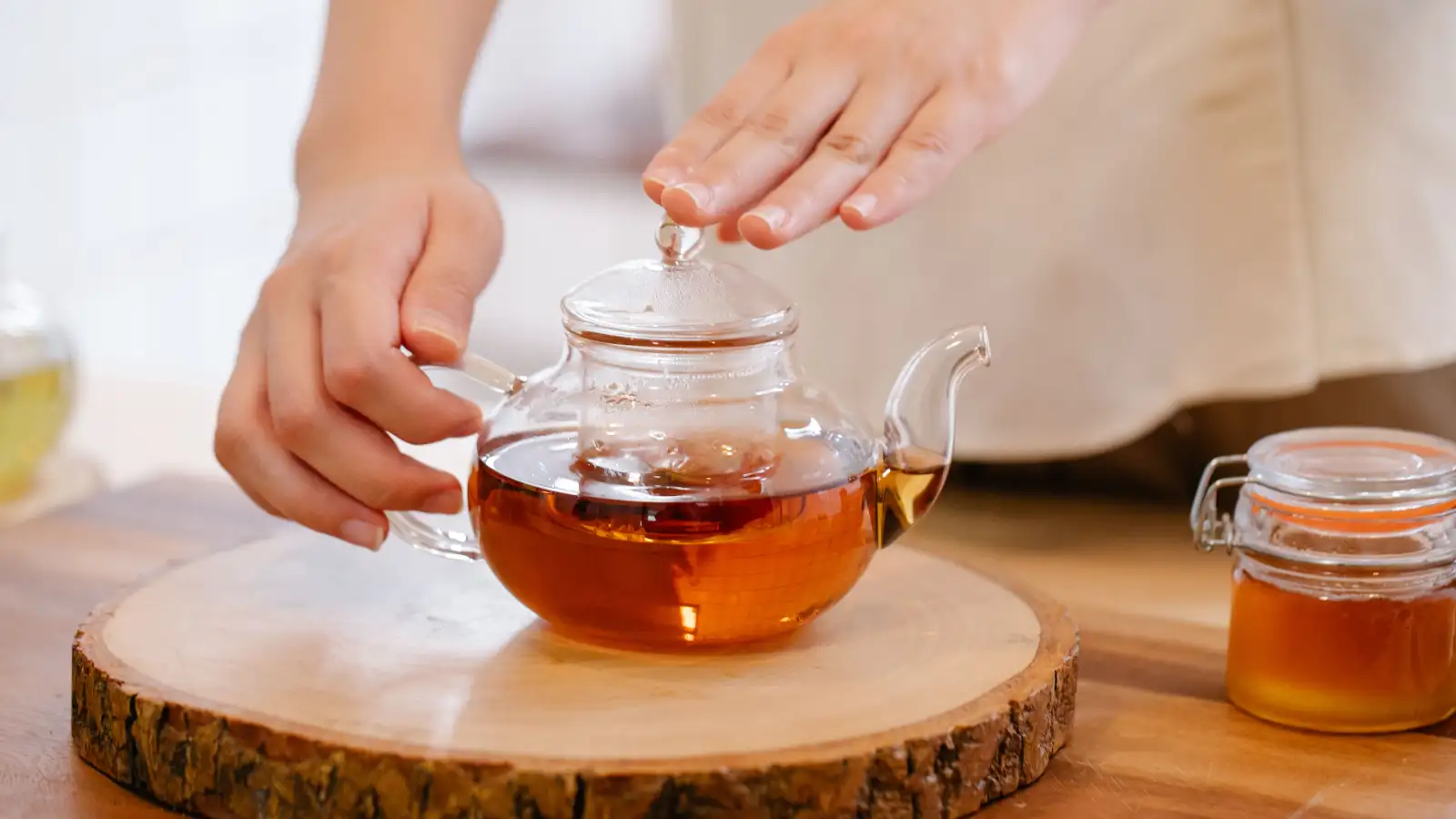
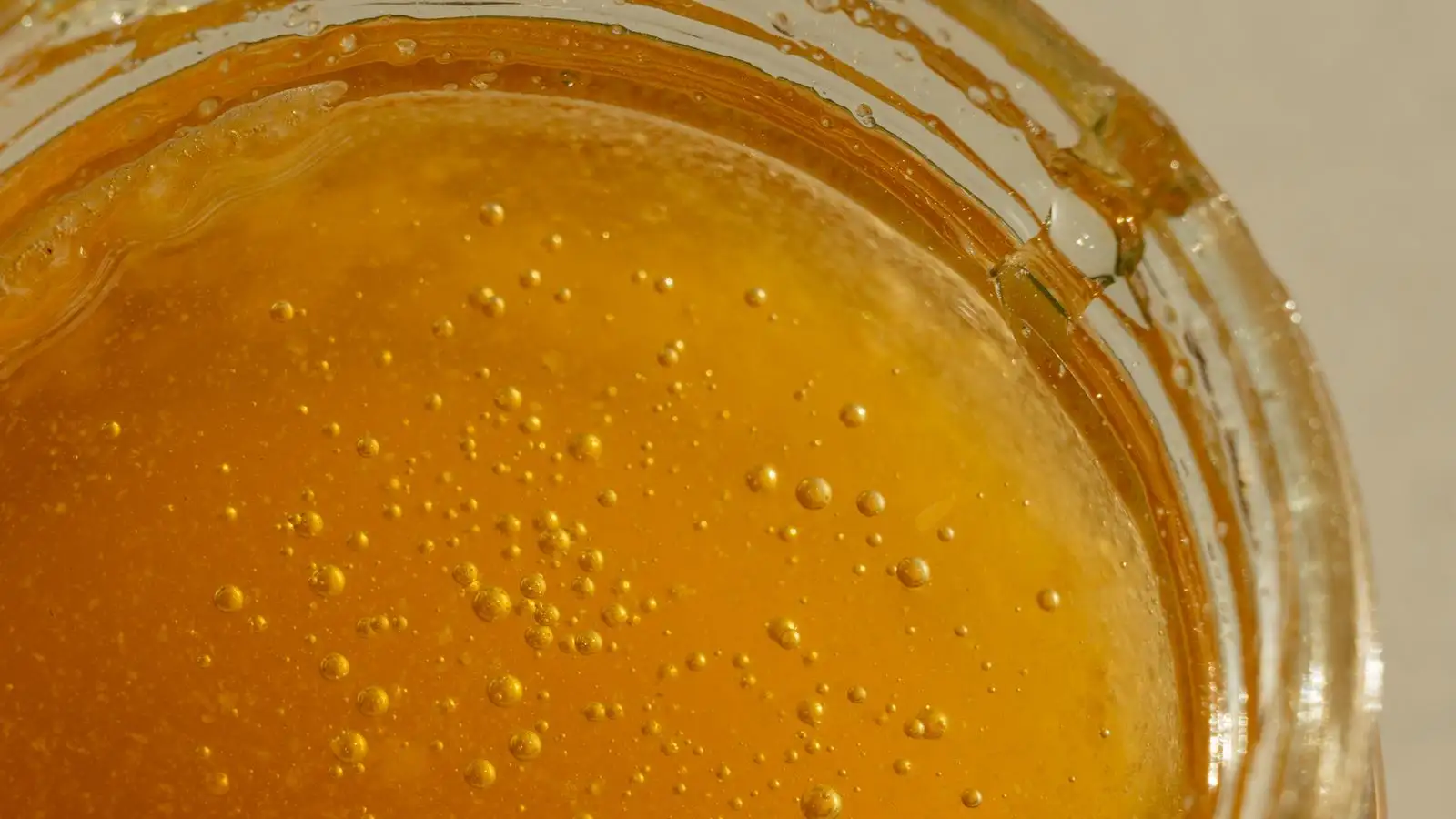
At 350°F, the distance between raw honey and pasteurized honey closes within the first few minutes of the bake. Heat strips the same light aromatics out of both jars, both deliver the same water and the same sugar profile to the batter, both push a crust dark faster than granulated sugar would, and both give baking soda something to react with. What still separates one cake from another when the timer goes off is not how the honey was handled before it went into the bowl. It is which flowers the bees were working.
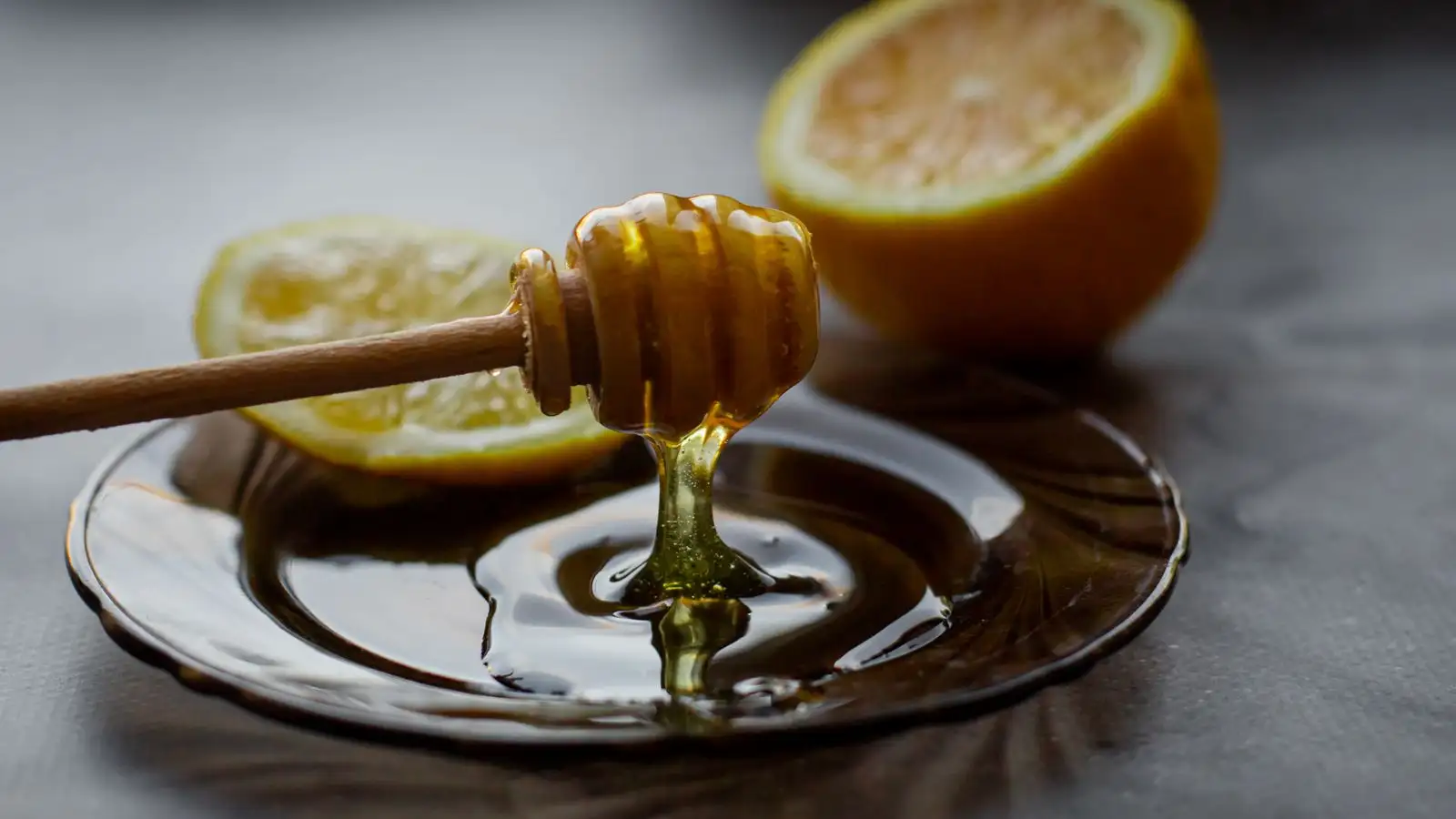
I keep two jars on the counter for exactly this reason, and the difference between them is obvious before either one reaches a bowl. The raw wildflower has crystallized two-thirds of the way up, so it scoops like wet sand and needs a few minutes in a bowl of warm tap water before it will level in a measuring cup. The pasteurized clover pours like corn syrup, clean and slow. It smells like almost nothing. The raw jar smells like a hayfield in July. That smell is the thing I am about to spend twenty-five minutes tearing apart, and I know it every single time.
What goes in the bowl
Honey gets weighed, not scooped. Crystallized honey holds air pockets, and a cup of it can run short by a couple of tablespoons depending on how it was packed. Two hundred ten grams on the scale is two hundred ten grams whether the jar is firm or fluid. If the honey is solid enough that a spoon stands up in it, I set the jar in warm water and wait. Not hot water. There is no reason to cook it twice before it goes in the oven.
After that, the two bowls are indistinguishable. Same flour, same butter, same eggs, same 350°F, same rack position, same 8-inch pans. What I watch for is not which one tastes more like honey an hour later. It's where the two of them start to separate, because they don't separate where most people expect.
The oven takes the top notes, and it does not care which jar they came from
Here's the part that took me a while to see clearly. The honey in a batter is never actually at 350°F. It's dissolved in a wet crumb, and as long as there's free water in there, the interior stalls near the boiling point no matter what the oven dial says. That plateau is the reason honey flavor survives baking at all. It's also the reason the raw-versus-pasteurized question dies so early.
What does not survive is the light stuff: the fresh-cut-clover top notes, the citrus edge in an orange blossom, the grassy lift in a spring wildflower. Those compounds are volatile. They leave during mixing, they leave while the batter sits on the counter, and they leave hard in the first ten minutes of the bake, well before the crumb sets. The jar's processing history has nothing to do with it. Pasteurization is a gentle warm-up compared to what the oven does, and once the batter is in the pan, both jars are on the same side of the same cliff.
So the two cakes come out looking like siblings. Same rise, same dome, same shade of amber across the top. If I handed you a slice of each with no labels, on a first bake with a mild honey, you would not find the seam. That isn't a knock on raw honey. It's just what heat does to delicate aromatics, and it happens the same way whether or not anyone warmed the honey before you did.
Where the crumb still gives things away
Three things push back against that sameness, and only one of them is about the flower.
The first is moisture. Honey is roughly seventeen percent water and it is aggressively hygroscopic, so it grabs water and holds onto it. A honey cake or a honey-enriched loaf stays tender a day or two longer than the same recipe built on granulated sugar, and the crumb feels slightly denser and stickier in a way I actually want in a sandwich loaf. This has nothing to do with raw versus pasteurized. It's sugar chemistry, and it shows up in both bowls identically. The practical side is that honey brings its own liquid, so I pull back about a quarter cup of the milk or water per cup of honey, and I judge the batter by feel rather than by the clock.
The second is browning. Honey runs heavy on fructose, and fructose starts caramelizing somewhere around 230°F, well under where glucose goes. Add the trace proteins and amino acids that come along with it and you get Maillard browning stacked on top of that. The result is a crust that darkens noticeably faster than a sugar version of the same recipe, sometimes before the center has set. Again, identical in both jars, because pasteurization doesn't rearrange the sugar profile. When I want a pale top on a honey-heavy cake, I drop the oven 25°F and tent with foil around the twenty-minute mark. Darker honeys with more mineral content brown harder still, and that tracks with color more than with any word on the label.
The third is lift. Honey is mildly acidic, usually hovering around pH 4, and that acid is what makes honey and baking soda such a reliable pair in a recipe. The soda needs acid to produce gas, honey supplies it, and the reaction starts the moment the two meet in the wet ingredients. Honey batters want to go into the pan and into the oven without dawdling. It also means lift is not a raw-versus-pasteurized story, because the acidity survives pasteurization just fine. Both jars foam the same.
The one place raw might matter, and why I don't count on it
Raw honey carries wild yeasts that sit dormant in the jar because the sugar concentration keeps them inactive. In a quick batter, that's nothing. They don't have time. But in a long, slow ferment, a honey bread or a honey-enriched dough that sits overnight, there's a live-culture question that a pasteurized jar simply doesn't have. I've baked it both ways and I've never been able to taste a difference I could defend. The commercial yeast in the dough overwhelms whatever the honey brings, and honey's wild yeasts are slow and fussy. So I treat this as a real possibility I don't build a recipe around, not a selling point.
What actually makes it through: the flower
Here is the split that matters. Processing differences get erased by heat. Varietal differences do not.
A buckwheat honey goes into a gingerbread and you can still find it at the back of your tongue after the crumb has cooled, dark and almost molasses-like. Chestnut holds on. A dark wildflower blend from a hedgerow holds on. A pale clover or acacia, lovely straight off the spoon, goes into a 350°F oven and comes out as generic sweetness with a faint caramel edge. It isn't gone because it was pasteurized. It's gone because there was never much there to begin with, and the oven finished the job.
That is why I stopped shopping for honey by processing method and started shopping by variety. If I'm baking, I want a honey assertive enough to survive twenty-five minutes of heat, and the darker, stronger honeys are the ones that do. If the raw jar in my cabinet happens to be a buckwheat, it goes into the cake without a second thought, and it performs. If the raw jar is a delicate spring wildflower, I save it for toast and yogurt and finish the cake with something else.
The other side of that coin: if all I have is a pasteurized clover, a honey cake is not ruined. It's just a cake that tastes like brown sugar and butter, which is not a bad place to land. What I won't do anymore is pay a premium for a showy raw honey and then bake its best qualities away. That isn't a compromise. It's just knowing which half of the jar the oven can actually reach.