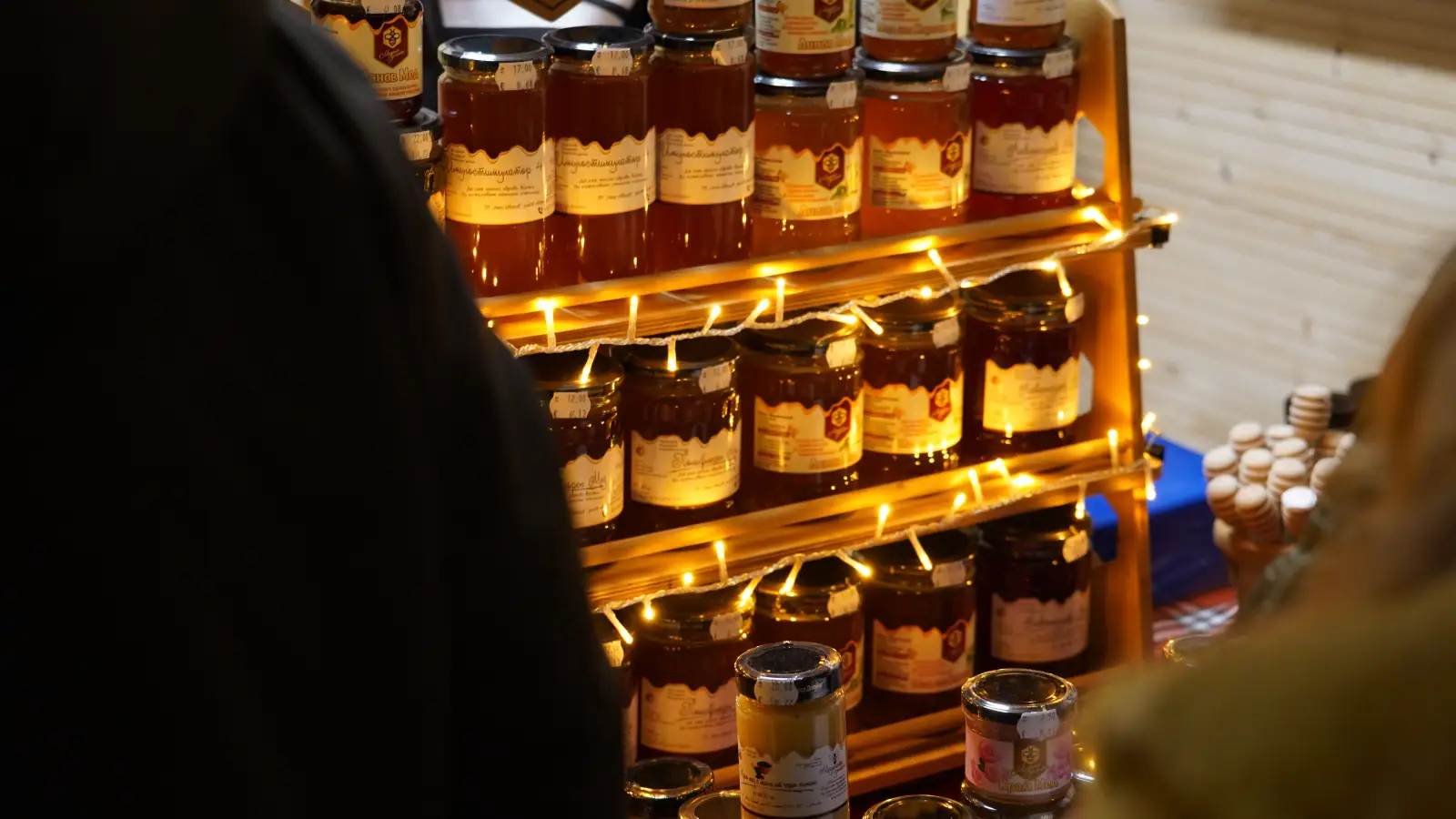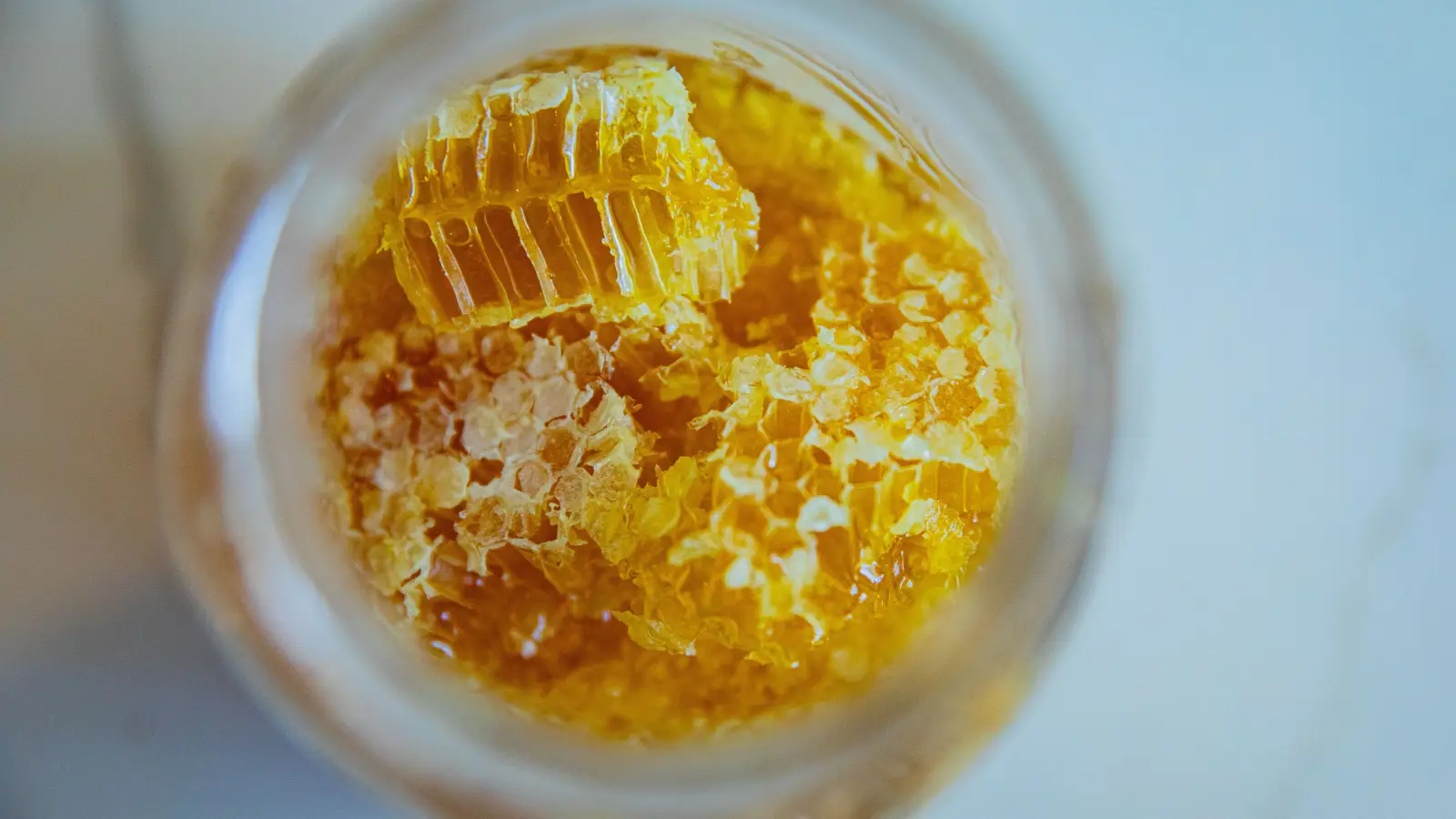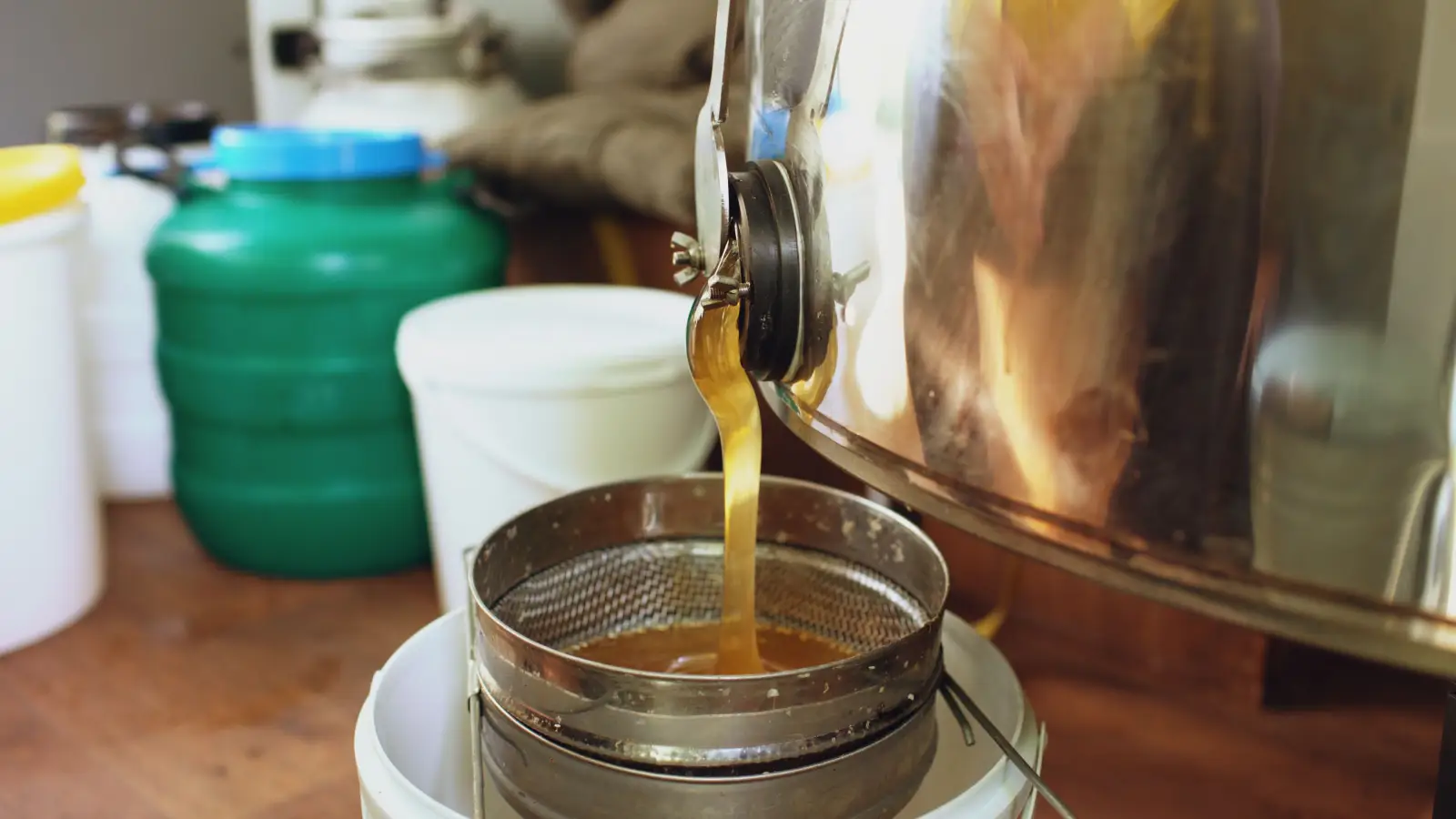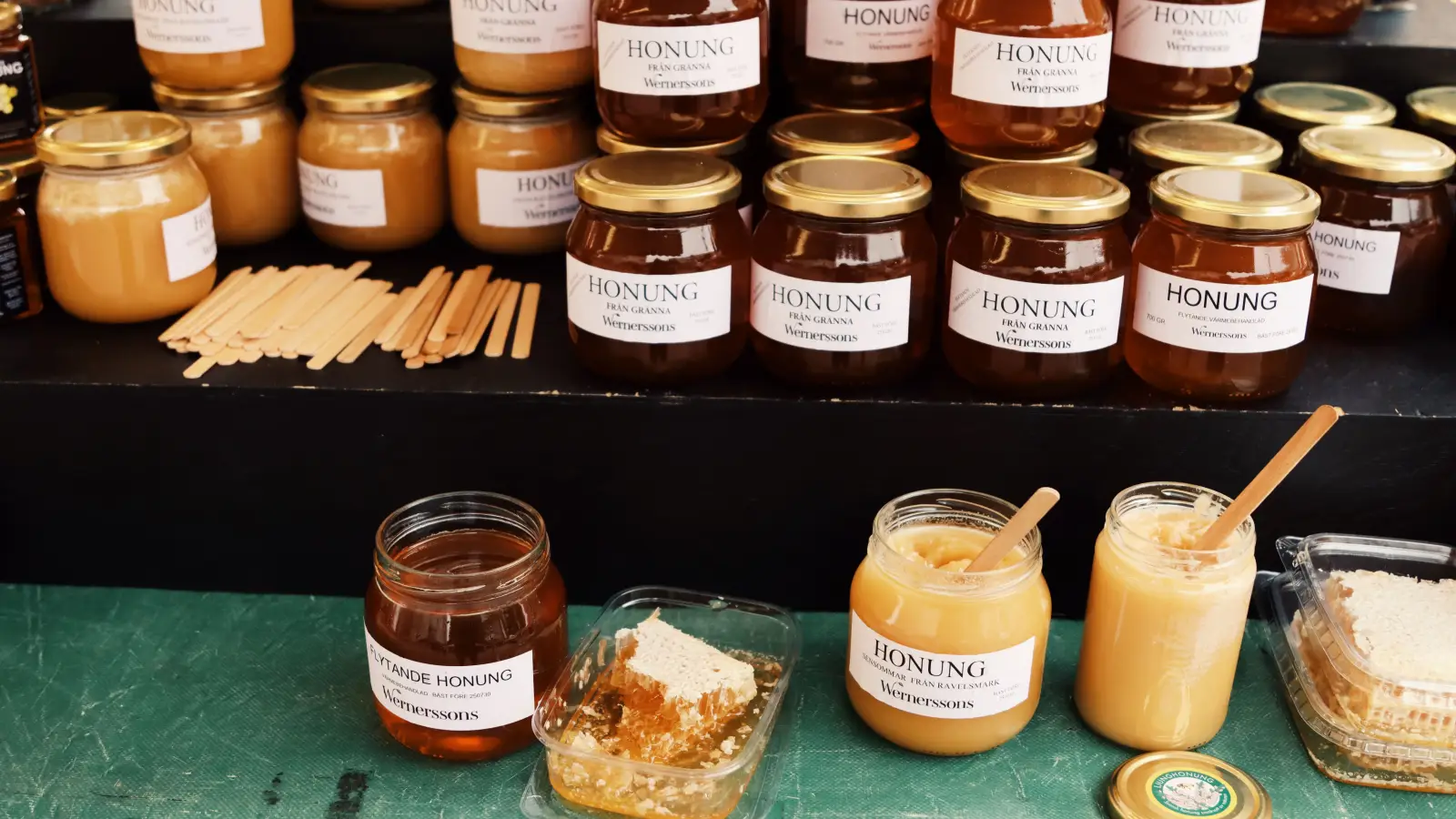
The jar honey sits in is not just a vessel—it is part of the preservation system, and the wrong material will cost you flavor. Honey’s low water activity (around 0.6) prevents microbial growth, but that same property makes it exceptionally good at absorbing volatile organic compounds from its surroundings. Glass is inert and impermeable; plastic, even food-grade plastic, has microscopic free volume between polymer chains that allows odor molecules to migrate into the honey over time. The practical result: a floral varietal honey stored in a plastic squeeze bottle for several weeks can lose its high aromatic notes and take on a faint synthetic edge.
Glass containers do not simply look better on a shelf. They keep honey’s flavor intact because they block the diffusion pathway that plastic cannot close. Once you understand the material problem, you stop asking “is this container food-safe?” and start asking “is it flavor-safe?” Food-grade certification addresses toxicity, not sensory integrity.
Where You Begin Shapes What You Learn First
A person opens a jar of expensive orange blossom honey and finds the taste oddly flat. The route here runs through diagnosing whether the container introduced off-flavors during shipping or on the retailer’s shelf. The focus is on testing the honey in glass to isolate the source of the problem, then salvaging what remains by transferring it.
A person is building a long-term pantry and knows that honey stored near onions, coffee, or cleaning products in a warm kitchen needs a robust barrier. The route emphasizes selecting a jar-and-seal combination that will perform over many months, not just weeks, and testing that seal before committing a large batch.
A person receives a decorative honey pot—ceramic with a cork, or a plastic bear with a snap lid—and questions whether it is truly safe to keep honey in it. The route clarifies the difference between decorative materials and effective long-term storage, so the honey can be eaten soon or moved to a proper container.
A person keeps the same honey bottle on the counter for a year and notices the last spoonfuls taste nothing like the first. The route explains how ambient kitchen vapors—coffee, frying oil, even the plastic lining under a metal lid—can seep in, and what a simple switch to glass prevents.
How Plastic Fails as a Honey Container at the Material Level
This stage works to replace the assumption that food-grade plastic is safe for flavor with a clear understanding of what happens inside the polymer when it sits next to honey. The goal is to know, not just accept, the reason glass outperforms plastic.
Honey’s hygroscopic nature means it draws not only moisture but also airborne aroma compounds into itself. Plastic containers, at the molecular scale, are networks of polymer strands with gaps—free volume—where small molecules can move. Limonene from a citrus cleaner, acetic acid from vinegar, or residual styrene from the plastic’s own manufacturing can all diffuse into honey when the container is stored in a normal kitchen. The migration is slow but cumulative. Food-grade certification only verifies that the plastic’s base material and additives are non-toxic at certain extraction thresholds; it does not test for odor sorption from the environment.
Concrete step: put a light, floral honey—acacia or linden works well—into two containers, one glass with a tight lid and one food-grade PET squeeze bottle. Store them on the same shelf in a kitchen where cooking happens daily. After three days, taste each sample blind. The honey from plastic will almost always show a muted top note or a faint chemical sweetness. That detected difference is the observable proof that the mechanism is real and not theoretical.
A person is ready to move on when they can state why honey’s water activity makes odor absorption a practical concern, and they have personally confirmed that food-grade does not mean flavor-neutral.
Choosing a Jar-and-Seal System for Your Storage Timeline
Knowing glass is the right material is only the beginning. An inadequately sealed glass jar can still let odors in, and a jar with a narrow neck makes crystallized honey difficult to remove without heating—which itself accelerates any chemical interaction if the honey was originally in plastic. This stage matches container type to how long the honey must be stored and in what environment.
For honey used within a month, a clean glass jar with a one-piece metal screw lid that has an intact plastisol liner works. The plastisol compresses against the rim when tightened, forming an effective air and vapor seal. Avoid lids where the liner is cracked, peeling, or missing—metal in direct contact with honey’s mild acidity can corrode slowly and impart a metallic taste. For storage of three months to a year, a jar with a rubber gasket and a wire bail (the “Fido” or “Le Parfait” style) gives a more consistent barrier. Rubber gaskets compress more evenly than screw-thread liners and resist vapor permeation when the jar is properly clamped.
Wide-mouth jars are a practical choice for honey because crystallization is normal. A wide opening lets a spoon scoop out the thickened honey without forcing the whole jar to be warmed. Warming in a water bath is acceptable with glass, but never with plastic—heat accelerates molecular diffusion and can push more volatile compounds into the honey from the container wall.
Observable proof of progress: a person can look at their shelf and immediately sort jars into “short-term, checked and safe” and “long-term, verified seal.” No cork, no unlined metal caps, no snap-on plastic lids remain in use for honey storage.
Ready to advance when honey stored for at least six months in their selected jar, tasted next to a fresh sample from the same batch, shows no detectable loss of varietal character.
Catching Flavor Problems Before They Ruin the Whole Jar
This stage provides a systematic check to use every time a honey jar is opened after sitting for weeks or months. The aim is to spot the first signs of odor ingress and act before the entire contents are affected.
First, smell the jar immediately after opening, before any utensil goes in. The initial burst of aroma should be sweet, floral, or herbal, depending on the variety. Any note of cardboard, plastic, or stale air is a warning. Second, taste a small amount from the surface and then dig deeper. Off-flavors from a poor seal or a compromised lid often concentrate near the top, where the honey contacts the headspace and the lid liner. A noticeable difference between the top layer and the middle indicates that the container is allowing migration.
To confirm that the container is the source, transfer a portion to a small glass jar with a proven good seal. Let it sit in a neutral spot—a closed cupboard away from cooking fumes—for 24 hours. Taste it again. If the off-note has faded or disappeared, the original container was the problem and the honey itself has not permanently changed. The volatile contaminants can dissipate from honey as readily as they entered, given a clean environment.
Observable sign: the person can reliably distinguish between tainted honey and honey that has simply crystallized or aged naturally. They know the transfer test and use it when something seems off.
Ready to move on after identifying at least one container in their kitchen that was subtly altering honey flavor and either discarding it or repurposing it for something where flavor transfer does not matter.
Readiness Signs Recap
- The person can explain the role of honey’s low water activity in odor absorption and has tasted a clear difference between glass-stored and plastic-stored honey.
- They can inspect their jars and correctly separate those suited for long-term storage from those for short-term use, having removed any with problematic seals.
- Honey stored for half a year or more tastes identical to a fresh control sample.
- A consistent sensory routine—smell, taste surface, taste middle—is used whenever a stored jar is opened.
- At least one problem container has been identified and addressed.
What Not to Worry About Yet
Crystallization is not caused by container choice. It is a natural process most rapid around 57°F and dependent on pollen content and sugar ratios. The container only becomes relevant if a person plans to reliquefy the honey—always transfer to glass before warming, never heat in plastic.
Ultraviolet light degradation is rarely the binding constraint for home storage. While strong sunlight can gradually reduce some enzymes and antioxidants, indoor ambient lighting is not strong enough to cause noticeable change over weeks or months. Amber glass only becomes necessary for honey deliberately aged over a year in a brightly sunlit spot. Focus first on sealing against odors.
Vacuum sealing is unnecessary for a home kitchen. A jar with a mechanically sound lid—plastisol-lined screw cap or rubber gasket clamp—provides all the vapor and air isolation needed to keep honey’s moisture content stable and its flavor intact. High-vacuum packaging matters only for commercial long-distance distribution.
Frequently Asked Questions
Can food-grade plastic honey containers make honey taste like plastic? Yes, over time. PET and HDPE are safe for short contact but not odor-proof. Volatile residues from manufacturing or absorbed kitchen smells can migrate into the honey, especially if the bottle is warm or stored for many weeks. The taste is often subtle—a synthetic sweet note that flattens delicate floral aromas—and becomes obvious only in a direct comparison with glass-stored honey.
What is the best container for preserving honey’s original flavor? A glass jar with an intact, non-reactive seal. A canning jar with a new plastisol-lined lid, or a jar with a rubber gasket and wire bail, both work. The glass body is impermeable; the seal is the only potential entry point and must be in good condition. For multi-year storage, dark glass adds a small extra margin of protection but is not as critical as the seal.
Do metal lids affect honey flavor? Only if the protective liner fails. Honey’s acidity (pH 3.4–6.1) can slowly corrode bare metal, releasing metallic notes. A lid with intact plastisol or enamel coating prevents contact. Check lids for rust spots or pinholes; if the liner is compromised, replace the lid.
How long can honey stay in a plastic squeeze bottle before flavor suffers? In a cool, odor-free environment, a few weeks is generally safe. Once the bottle has been opened repeatedly, the airspace changes and the plastic may have absorbed ambient odors from prior storage. For a premium variety meant to be enjoyed over time, transfer to glass immediately. The risk remains low for honey that will be finished within a month and kept in a dark, cool cupboard.
Is plastic wrap an acceptable temporary seal for a honey jar? No. Plastic wrap is thin, highly permeable, and presents a large surface area of polymer directly against the headspace, which can actually speed up odor transfer. Use a proper lid—even the original snap-on cap if its seal is tight—to maintain a real barrier.
What You Have When You Get There, and the First Step
Reaching the end goal means taking a jar of honey that has been on the shelf for many months, opening it, and getting the same aroma and flavor profile that was there on day one—clean, varietally distinct, free of any off-note. The storage system works and does not need constant monitoring. For the most common starting situation—someone who suspects their plastic-bottled honey has already lost some character—the immediate action is to decant the honey into a clean glass jar with a new, properly sealed lid, store it away from heat and strong kitchen odors, and taste it again after 48 hours. The recovery is often noticeable and removes any doubt about why the jar material matters.