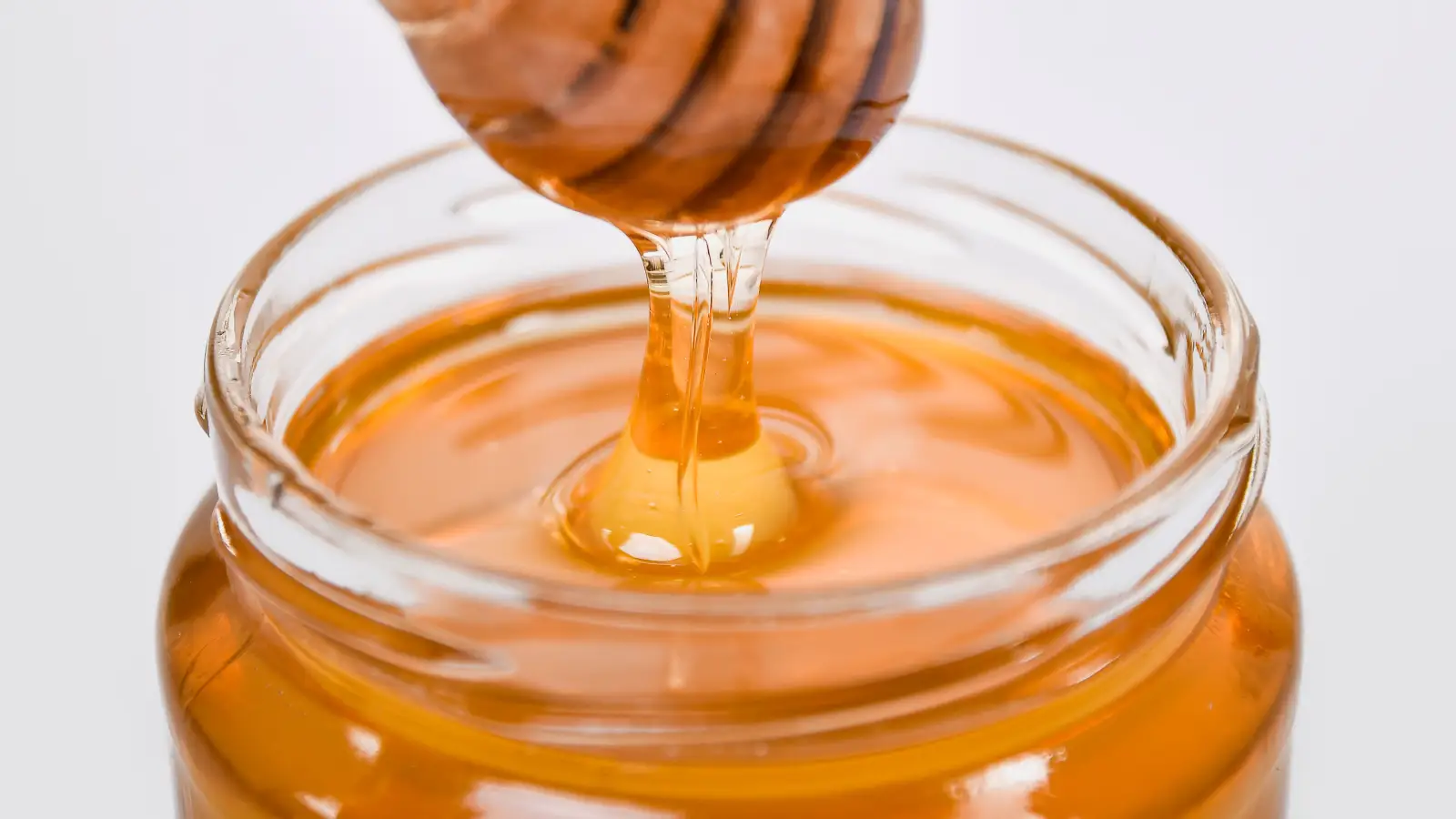
A cough that won’t let up can drain your energy — and if over-the-counter syrups leave you foggy or frustrated, honey is worth a careful look. A spoonful can calm that throat-scratching sensation at least as well as many drugstore cough suppressants, without the drowsiness. But it’s not a shortcut to healing: the relief is temporary, and the science shows honey helps you rest, not recover faster.
That honest, moderate take is exactly what the clinical evidence supports — and what helps you use honey well. Here, we’ll walk through how honey works, how the studies stack up against common cough medicines, and the practical steps that keep you and your family safe.
Where You’re Coming From: Three Situations That Bring People to Honey
- Your cough has been hanging around for days, and it’s exhausting. You’ll find out how honey can quiet that tickle while you rest, and how it really compares to the cough syrups you’ve been using.
- You’re a parent looking for a gentler way to help a child sleep through a cough. This path zeroes in on what the pediatric research says, the firm age rule, and the right dose.
- You like to see proof before you try something. You’ll go through the mechanisms and the head-to-head comparisons so your decision rests on more than hope.
How Honey Calms Your Throat and Eases a Cough
The Soothing Layer It Leaves Behind
Honey’s thick, sticky texture coats the irritated lining of your throat. That physical film dampens the tickle that sets off a cough — much like a comforting blanket. It doesn’t rely on a drug; the relief comes from consistency alone. This is the same reason a warm tea with honey feels so settling, but even by itself, honey clings longer and more evenly than many watery cough syrups.
The Gentle Antimicrobial Guard
Real honey is more than sugar. It carries enzymes that, when diluted, release tiny amounts of hydrogen peroxide. Combine that with a naturally low pH and high osmolarity, and you get an environment where many germs can’t easily multiply. For a viral cough, that doesn’t kill the virus, but if your throat is sore or raw, a mild antimicrobial presence can help keep things from getting worse. Still, honey never claims to cure the infection behind the cough — it’s support, not a fix.
This understanding is your first quiet milestone. Once you can picture how honey coats the throat and adds that gentle antimicrobial buffer, you’re ready to see how those properties play out in real studies.
The Reality Check: What Research Says About Honey Compared to Cold Medicine
The Nighttime Studies Parents Talk About
Several clinical trials have put honey side by side with dextromethorphan (DM) — the cough suppressant in many OTC syrups — and with diphenhydramine, an antihistamine used in some nighttime formulas. In a well-known trial, parents reported that honey eased their child’s cough frequency and severity better than DM, and improved sleep for everyone in the house. A separate study saw similar patterns when honey went up against a placebo and against diphenhydramine — often matching or bettering the medicine.
Why the Findings Need a Careful Reading
Those studies are encouraging, but they have edges. Most measured what parents noticed — not an objective cough meter. The groups were modest, usually fewer than 200 children. The focus was limited to nighttime coughing; daytime relief and how fast the cold ended didn’t get much attention. Honey won’t cut the length of a cold. And when it outperformed OTC options, the margin was often slim — something that gets lost when the story turns into “honey is a cure.”
Your second milestone: you aren’t just aware that honey can help — you know the context, the scale, and what the research didn’t prove. That clear-eyed view is what keeps honey a useful tool, not a fairy tale.
Picking the Right Honey and Using It Without Worry
What Kind of Honey Makes Sense
The research tended to use darker honeys — buckwheat, eucalyptus, or citrus varieties — which pack more phenolic compounds and show stronger antimicrobial punch in lab tests. That doesn’t mean a jar of light clover honey is pointless; any genuine honey will give you that protective coating. But if you want to mirror the studies, a darker, full-flavored honey is a practical choice. Manuka honey is famous for its antimicrobial strength, yet for an everyday cough, the added cost may not translate into noticeably better comfort — ordinary honey does the job.
How to Take It, Step by Step
For adults and children over 1 year old: 1 to 2 teaspoons (5–10 mL) straight from a spoon, about 30 minutes before bed. You can stir it into warm water or tea, but a plain spoonful delivers the most direct coating. For children ages 1 through 5, a single teaspoon is enough; for older children and adults, go with 2 teaspoons. Never give honey to a baby under 12 months — even pasteurized honey carries a risk of infant botulism.
When It’s Time to Step Back
If the cough hangs on past three weeks, brings a high fever, wheezing, or trouble breathing, or produces colored mucus, get medical advice. Honey is for the everyday nuisance, not for warning signs. And if you’re managing diabetes, check in with your doctor before adding honey to your night — a small dose still counts as carbohydrate.
Your third milestone: you’ve chosen a honey that fits your needs, you know the right amount, and you’re clear on the safety boundaries. That’s when you can reach for the jar with real confidence.
Three Signs You’re Prepared to Use Honey for a Cough
- You can explain how honey’s coating and mild antimicrobial qualities support comfort without confusing that for a cure.
- You’ve looked at the evidence and can talk about honey’s performance against DM or diphenhydramine, and you’re comfortable that the relief is modest and temporary.
- You have a specific honey in mind, a dose matched to age, and a firm understanding of when not to use it (infants, lingering symptoms, diabetes concerns).
Worries That Can Wait: Common Fears That Rarely Need Immediate Attention
“Will a teaspoon of honey throw off my blood sugar?”
For a healthy adult, one teaspoon holds about 5–6 grams of sugar — a minor amount your body handles without a problem. The concern becomes relevant only if you have diabetes or prediabetes; in that case, a chat with your doctor clears the way.
“Is raw honey dangerous for me?”
Among healthy adults and older children, raw honey rarely causes trouble. The real risk — botulism spores — applies exclusively to infants under 12 months, whose digestive systems aren’t ready yet. For everyone else, pasteurized honey is the go-to for safety and shelf life, but a carefully sourced raw honey is generally fine. If your immune system is compromised, though, pasteurized is the smarter pick.
“Could honey mess with my medications?”
No meaningful interactions are on record. Honey is a food, not a medicine. Even so, if you take warfarin or similar blood thinners, very large amounts of honey (far beyond a teaspoon) could, in theory, add a slight effect, but at cough-soothing doses it’s not worth worrying about.
“Isn’t honey just sugar? Wouldn’t plain syrup do the same?”
Honey’s makeup is mostly sugars, but it also delivers trace enzymes, antioxidants, and organic acids that give it antimicrobial and anti-inflammatory traits that table sugar simply lacks. The coating action comes from viscosity, but those extra compounds likely explain why honey outperforms a sugar solution in studies.
Frequently Asked Questions
How quickly does honey work for a cough?
Most people feel its soothing action within minutes because the coating starts right away. The cough-calming effect usually peaks around 30 minutes later and can last a couple of hours — which is why a bedtime dose is the most common approach.
Can I mix honey with lemon or ginger for a better effect?
Yes. Lemon and ginger haven’t been tested alone in these studies, but warm lemon water with honey adds hydration and may help loosen mucus. Just keep in mind that the lemon isn’t likely to boost the clinical cough relief beyond what honey already provides.
Does honey work for a dry cough and a wet cough?
Honey is most helpful for a dry, scratchy cough because the coating dulls the tickle. For a wet, productive cough, it can still comfort but it won’t clear mucus — and suppressing a cough that’s moving congestion out of your lungs isn’t always a good idea.
How long can I safely use honey for a cough?
Nightly use through a typical cold — up to about a week — is fine. If the cough sticks around longer than that, see a doctor to rule out anything deeper. Leaning on honey indefinitely can hide warning signs.
Can I give my 10-month-old just a tiny taste of honey?
No. The botulism risk for babies under 12 months is absolute, even with pasteurized honey. Wait until after the first birthday.
You’ve moved from “I just want the coughing to stop” to a clear, evidence-informed picture of what honey can and can’t do, complete with safe, practical know-how. If a nagging cough is keeping you up tonight, the simplest starting action is a spoonful of dark honey 30 minutes before bed — with the understanding that it’s comfort you’re after, not a cure.