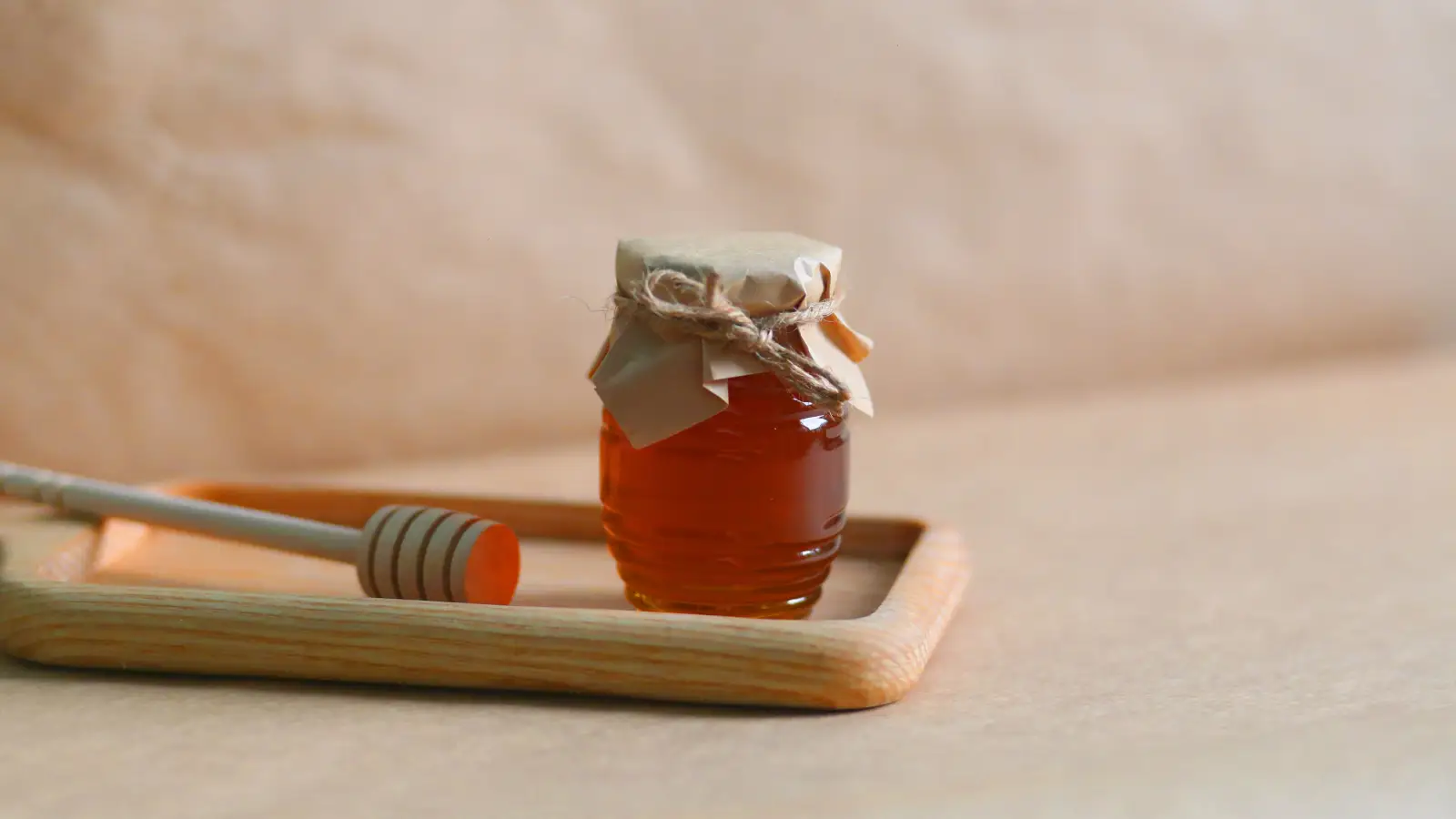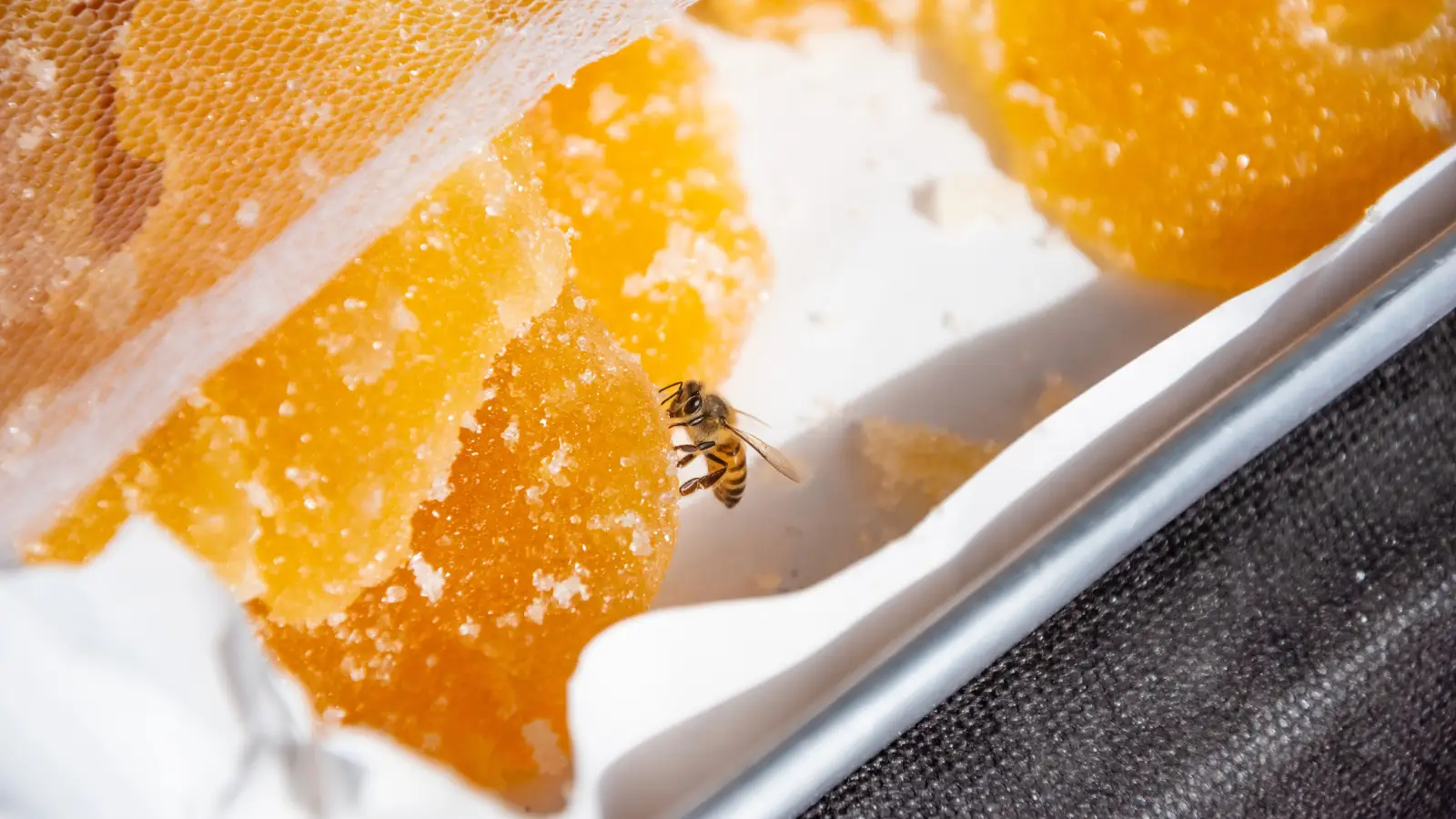
If you’ve opened your honey jar to find it grainy, solid, or streaked with white, it’s natural to worry that it’s spoiled. It isn’t. Crystallization is simply glucose separating from the liquid honey—a physical change, not a sign of decay. The honey is completely safe, and you can return it to a smooth, pourable state with careful warming.
What Your Crystallized Honey Looks Like—and What It Means
Which of these matches what you see?
- The entire jar is solid or uniformly grainy. Jump to the section on fully solidified honey.
- You notice white streaks or a distinct gritty layer at the bottom. Head to the part about uneven crystallization.
- The honey is cloudy but still flows. That’s early crystallization; read on below.
- The jar has separated into a clear liquid on top and a dense, solid mass below. That’s a more extreme physical separation; the section on layered honey explains it.
Each of these is a harmless stage of the same process. The right fix depends on which one you’re dealing with.
When the Entire Jar Is Solid and Grainy
Why This Happens
Honey is a supersaturated sugar solution. Over time, glucose molecules come out of solution and form crystals. This speeds up when honey is stored below about 57°F (14°C). Some floral sources—clover, alfalfa, canola—have a higher glucose ratio, so they crystallize fast. Others, like tupelo or acacia, stay liquid for months. It’s all a matter of the flowers the bees visited.
How to Confirm It’s Not Spoiled
Scoop out a small amount and smell it. Crystallized honey keeps its sweet, floral aroma. A sharp, sour, or yeasty smell, or any foam or bubbles, signals fermentation—a different issue. Fermented honey will taste alcoholic or vinegary and should be discarded. Grainy honey that smells normal is safe.
The Safe Way to Return It to Liquid
Place the sealed jar in a bowl of warm water—between 95°F and 105°F (35°C–40°C) is ideal. Anything warmer can degrade heat‑sensitive enzymes and delicate flavor notes. Stir gently every 10–15 minutes. For a completely solid jar, expect 30–60 minutes. Avoid the microwave, which overheats spots unevenly, and never boil the jar.
What to Expect After Re-Liquefying
The honey will become clear and pourable, though it may look slightly lighter when warm. It will eventually recrystallize—sometimes within weeks—if stored cool. That’s normal. Repeat the warming as needed.
When You See White Streaks or a Gritty Layer at the Bottom
Why This Happens
Crystals often start where the jar is coolest—along the bottom or sides. The white streaks are glucose crystals that formed first and settled. Raw, unfiltered honey is especially prone to this, because tiny pollen particles can act as seeds for crystals.
How to Confirm It’s Not Spoiled
Stir the honey. If the gritty part smells and tastes normal (maybe a little sweeter from concentrated sugars), it’s fine. Fermentation would give off odors all through the jar, not only near the crystals.
The Safe Way to Return It to Liquid
Use the same warm‑water bath, but stir more often with a clean chopstick or butter knife to help the liquid melt the crystal layer. As the jar warms evenly, the streak dissolves.
What to Expect After Re-Liquefying
It should recombine smoothly. A thin layer of foam on top is just air bubbles from stirring, not spoilage.
When the Honey Looks Cloudy but Still Pours
Why This Happens
Cloudiness without solid grains is the earliest stage of crystallization: millions of microscopic glucose crystals are forming but haven’t locked together. This opaque look is often mistaken for fermentation, but it’s harmless.
How to Confirm It’s Not Spoiled
Look closely: no bubbles, no foam, no alcohol scent. Cloudy honey still smells sweet. Fermentation needs visible activity—fine bubbles, a frothy cap.
The Safe Way to Return It to Liquid
A shorter warm‑water bath—15 to 20 minutes at about 100°F—dissolves the microcrystals. Gently swirl the jar instead of stirring aggressively.
What to Expect After Re-Liquefying
The honey turns clear and glossy. This quick fix may buy a few extra weeks before it clouds again.
When the Jar Has Separated Into Two Layers
Why This Happens
Temperature swings—cold nights cooling the pantry—can trigger partial crystallization while some liquid stays runny. The denser crystal mass sinks, leaving a clear layer on top. This is physical separation, not spoilage.
How to Confirm It’s Not Spoiled
Check for fermentation signs: persistent tiny bubbles, yeasty or sour smell, sharp alcohol taste. If those are absent and both layers smell like normal honey, it’s simply crystals separating from liquid.
The Safe Way to Return It to Liquid
Warm the jar as with solid honey. Once the crystal layer softens, stir carefully to blend the two consistencies. It may take up to 45 minutes. Keep the temperature under 105°F.
What to Expect After Re-Liquefying
The honey will be uniform again. A faint haze or few residual grains are harmless and vanish with a little more warmth.
The One Gentle Fix That Works for Every Type of Crystallization
No matter which form of crystallization you have, the warm‑water bath reliably reverses it. Place the sealed jar in water heated to no more than 105°F (40°C). If you don’t have a thermometer, test the water against your wrist—it should feel comfortably warm, never hot. Leave it until the honey is fully liquid, stirring occasionally.
This works because gentle heat melts sugar crystals without harming the enzymes that give raw honey its value. An honest caveat: this fix is about texture and clarity. If your honey is truly fermented—with active bubbling, an alcohol odor, or a sour taste—warm water won’t make it safe. That’s a separate spoilage issue, unrelated to crystallization.
Simple Storage Habits That Keep Your Honey Smooth
Crystallization happens to all honey eventually, but storage can speed it up or slow it down. Keep honey at a steady room temperature between 60°F and 70°F (15°C–21°C). Avoid the refrigerator—cold dramatically accelerates crystal formation. A cupboard away from the stove and sunlight works well. Seal the lid tightly after each use; moisture that enters can encourage fermentation, though it doesn’t directly cause crystals.
If you’ve re‑liquefied the honey, store it at the warmer end of that range and use it within a few months. Remember, crystallization is a sign of real, minimally processed honey—not a flaw.
Answers to Common Honey Crystallization Questions
Can I microwave crystallized honey?
Microwave heating is uneven and can create hot spots that destroy delicate enzymes and flavor compounds. A warm‑water bath is safer and just as effective.
Does crystallized honey mean it’s fake or adulterated?
Quite the opposite. Real, raw honey crystallizes readily. Many commercial honeys are finely filtered and heated to delay crystallization, so they stay liquid longer. Clouding and grains are signals of authenticity, especially in varietals like clover or wildflower.
How can I tell if my cloudy honey is fermented instead of crystallized?
Fermented honey shows active signs: a white or beige foam on top, persistent tiny bubbles, and a sour, yeasty, or alcoholic aroma. Cloudy but inactive honey that smells sweet is crystallizing. Trust your nose—fermentation is hard not to notice.
Will heating honey destroy its health benefits?
High heat can degrade diastase and other enzymes, and caramelize sugars, dulling flavor. Gentle warming below 105°F, as described here, preserves practically all those benefits. That’s why a water bath is recommended, not boiling.
Can I still use crystallized honey in recipes?
Yes, especially in baking or cooking where it will be heated. Measure by weight or let it dissolve gently with other liquid ingredients. The granular texture disappears in the finished dish.
When Gentle Warming Isn’t Enough
If you’ve followed the warm‑water method and the honey still has a sharp off‑smell, tastes sour, or shows active bubbling after returning to liquid, you may be dealing with fermented honey, not just crystallized honey. Before doing anything else, note the odor (yeasty? alcoholic?), check for persistent foam, and taste a tiny amount—fizzing or a vinegar tang means fermentation. In that case, discard the jar; fermented honey can contain unwanted yeasts and alcohol. If you’re uncertain, contact the beekeeper or producer—they can advise whether that particular floral variety ferments quickly. In all other situations, gentle warming will fix the texture, and your honey is perfectly fine.