The word 'raw' on a honey label is a marketing promise the FDA never made. No U.S. regulation defines it, no agency verifies it, and the benefits it implies—living enzymes, bountiful pollen, zero processing—often survive the very moderate heat that commercial honey actually receives. In many situations, the jar that worries less about the raw label actually comes out ahead, not behind.
The Raw Label Across Five Real-World Scenarios
| If You… | Which Type Wins | One-Line Reason |
|---|---|---|
| Mainly want active enzymes and pollen | Raw honey, marginally | Most enzymes laugh off hive‑level warmth; pollen content varies regardless of any label. |
| Are buying for someone with a compromised immune system | Processed honey | Gentle heat knocks down stray bacteria without turning honey into something lifeless. |
| Hate crystallized honey and want it to stay liquid | Processed honey | Filtration removes the seed particles that raw honey leaves in. |
| Are chasing the most distinct floral flavor | The producer, not the word 'raw' | A careful low‑temperature packer can outclass a carelessly handled raw jar any afternoon. |
| Are worried about pesticide and antibiotic residues | Neither | Contaminants trace back to the bees' flight path, not to the word on the label. |
When You Mainly Want Active Enzymes and Pollen
Enzyme activity is the headliner for raw honey advocates. Yet the enzymes honey naturally carries—diastase, invertase, glucose oxidase—evolved inside a hive where summer temperatures routinely sit at 35°C (95°F). Subjecting honey to a quick 40–50°C (104–122°F) warm cycle to make it flow and bottle knocks enzyme levels down by a percentage so small that a beekeeper who travels from hot-country apiaries to cool packing rooms would consider the loss trivial. The real killer of enzyme lore is storage time and a hot car trunk, not a flash of pasteurization.
Pollen is another phantom benefit. Straining can leave behind almost none or a visible cloud, depending entirely on the beekeeper’s equipment, not the adjective 'raw'. One batch labeled raw may be nearly clear; another, unlabeled, may hold more pollen simply because the producer skipped a fine mesh. Tracking enzymes and pollen by label alone is chasing a ghost.
When You're Feeding Someone with a Weakened Immune System
Food safety doesn't blink first. Raw honey, by its uncontrolled nature, hasn't passed through a kill step. The risk isn't from thriving bacteria—honey's low moisture and acidity see to that—but from the odd spore of Clostridium botulinum or a stray yeast cell that a compromised system might fumble. A light commercial pasteurization sweeps out those nibbling risks without rendering the honey nutritionally empty. Processed honey from a monitored facility is the evident choice here, and no amount of raw-label romance changes that arithmetic.
When You Hate Crystallized Honey
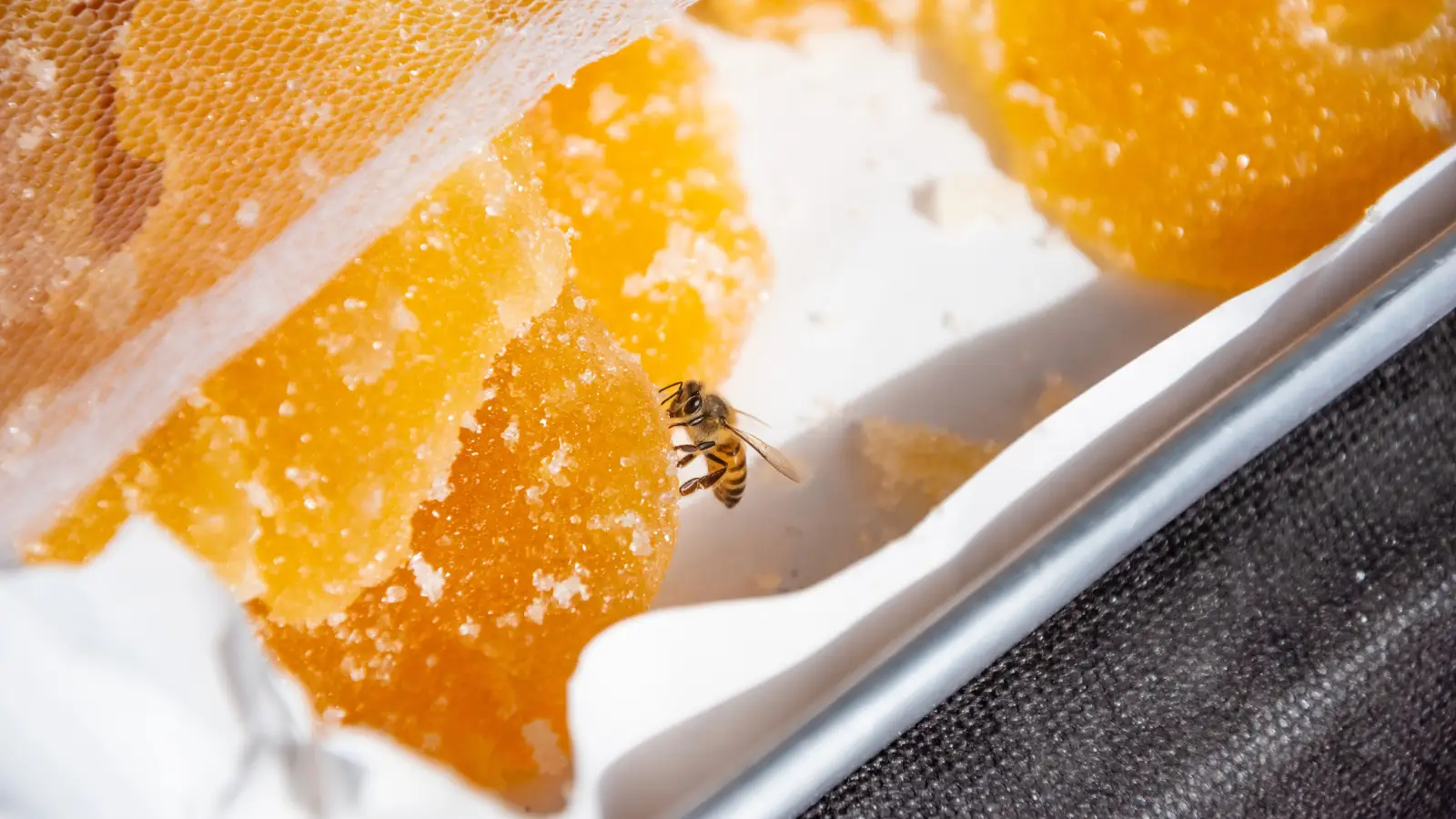
Crystallization is honey's natural rebound to its saturated sugar state. Tiny specks—pollen grains, wax fragments, even dust—invite the first crystal to nucleate. Raw honey, carrying the beehive's particulate signature, sets up faster. Filtered honey, flash-heated to dissolve existing crystals and then bottled without those seeds, stays liquid for many months longer. If a drippy, clear texture matters more to you than a theoretical enzyme edge, processed honey hands you exactly what you want. The trade-off is real: you lose a pinch of enzymatic activity but win a year of pourable calm.
When You're Chasing a Distinct Floral Flavor
Volatile aromatics—the orange blossom, the leatherwood, the lavender—are the most fragile passengers in any honey. They flee from high heat, but they also flee from time and careless storage. A raw honey left in a sunlit shop window can finish tasting flatter than a processed honey heated gently for just long enough to bottle and then promptly cooled. The skill of the apiarist and packer dwarfs any label promise. A beekeeper who understands the temperature ceiling below which a floral fingerprint stays intact puts more jasmine on the tongue than a raw stamp ever could.
When You're Worried About Pesticides and Antibiotics
The label 'raw' says nothing about what the bees bumped into across their foraging miles. It passes no judgment on varroa mite treatments, on neonicotinoid-laced orchards, on antibiotic traces from hive disease management. A processed honey carrying a third-party organic certification undergoes genuinely stricter oversight than an uncertified raw jar. If residue fears keep you up at night, chase the certification seal, not the buzzword.
Where Raw and Processed Honey Are Nearly Identical
Some differences exist mostly in blog comments. Drop these from your comparison checklist:
- Sugar composition: Both sit at roughly 80% sugars, predominantly fructose and glucose. Heat doesn't transform them into something sinister.
- Basic antibacterial power: Hydrogen peroxide activity, the same mechanism that made honey a wound dressing, depends on the glucose oxidase enzyme. Commercial heating stays shy of the 60°C (140°F) mark that would disable it, so both raw and processed honey retain this practical benefit.
- Mineral and vitamin traces: The smidgen of potassium, calcium, or B vitamins honey contains sails through moderate heat unchanged. Neither version is a nutrient fountain.
- Calories: About 60 per tablespoon, no asterisk needed.
Non-Negotiables: Cases That Instantly Rule One Out
If You Have a Severe Pollen Allergy
Raw honey can hold unlabeled cargo of ragweed, grass, or tree pollen—enough, in a sensitized person, to set off oral itching or worse. Processed honey filters this risk out. A serious pollen allergy flips the switch instantly: processed only.
If a Religious or Cultural Practice Requires Unheated Honey
Some traditions, such as Ayurveda, treat any application of heat as a no-go. Here the raw label alone won't be enough—you need the beekeeper's explicit confirmation that extraction and bottling happened without warming beyond ambient. Verify, don't assume.
If You're Feeding an Infant (Under 1 Year)
All honey—raw, processed, organic, cosmic—can harbor botulism spores that an infant's gut can't disarm. This is a zero-honey rule, not a raw-versus-processed debate. No label changes it.
Pricing Realities: What That Extra $5 Buys
Raw honey often runs 30–100% above its processed sibling. That premium purchases the word on the label, the boutique positioning, sometimes smaller-batch handling—and that's largely it. In every scenario where processed honey tied or won, the raw surcharge becomes pure overpayment. Even where raw holds a marginal edge, the cost rarely aligns with the size of the benefit.
Raw Honey Questions Buyers Frequently Ask
Does heating honey make it toxic?
No. The notion arises from ancient Ayurvedic cautions about cooked honey forming 'ama', but modern food science finds no toxic transformation at commercial processing temperatures. Cook it as high as you like, and it remains sugar and water and floral echoes, not poison.
Can raw honey cure my seasonal allergies?
Almost certainly no. The pollen in honey is chiefly from insect-pollinated blooms, not the wind‑scattered grass and weed pollens that trigger sneezing fits. And the dose per spoonful is absurdly small for immunotherapy. Allergists don't hand out honey as a prescription.
Is all raw honey unpasteurized?
In spirit, yes. In law, no. Without a federal definition, a beekeeper who warms honey to 40°C for easier bottling can still slap 'raw' on the jar. The word is a vibe, not a process standard.
Does raw honey have more vitamins?
The difference in vitamin content is too small to matter. Honey's vitamin profile is trace to begin with, and heat doesn't erase those traces. If vitamins are the goal, reach for produce, not a honey jar.
The Bottom Line
For drizzling, sweetening, and baking, processed honey does the job every bit as well and often for less money. The single question that cuts through the noise: Am I buying this for the live enzymes and pollen, or for the taste, the texture, and the sweetness? If the answer is the second, the beekeeper's name matters far more than the four‑letter word on the front.