A honey spoilage assessment is not a sniff‑and‑guess. The checklist food safety auditors and chemists use verifies five measurable signals: a vinegar or nail polish remover odor, active fizzing, liquid separation, crystalline patterns that point to fermentation, and a pH drop below 3.4. Work through each step and you’ll have a clear keep‑or‑toss verdict—no uncertainty.
Home cooks often stop at a general “off” smell, but honey’s biology means spoilage announces itself through specific sensory routes first: a cutting vinegar tang, not a vague stale note; a carpet of fine, persistent bubbles, not just a few isolated pockets; and a wet, gritty crystal sludge that differs from the dry, even granulation of normal crystallized honey. This checklist locks onto those concrete indicators so you make the call fast and correctly, every time.
The Inspection Kit: What to Grab Before You Start
Gather these items. They translate what your senses pick up into a firm yes or no.
- A clean, dry spoon – for stirring and sampling. Using a contaminated spoon introduces yeast; use a fresh one.
- A clear glass jar or white saucer – pour a small amount and inspect against a light background.
- A flashlight or bright natural light – backlight the honey to expose fine bubbles or haziness.
- pH test strips (range 2.8–4.5) or a digital pH meter – the only way to chemically lock in fermentation. Strips are cheap and precise enough for home use.
- A notebook or printed checklist – write your observations. This removes second‑guessing when a borderline sign surfaces.
- Aroma reference – know the original scent of that honey variety. Clover, orange blossom, and buckwheat smell distinct. A fresh jar of the same type gives the best side‑by‑side check.
The Spoilage Test Sequence: From the Seal to the Spoon
Run these checks in order. A single positive isn’t necessarily a failure, but a cluster means trouble.
1. Inspect the Jar’s Integrity and Lid
Turn the jar and examine it. A bulging lid—no matter how slight—means internal gas from yeast, and the honey must be discarded without tasting. Sticky drips down the side can be harmless if they came from a past pour; wipe them, then proceed.
2. Sniff for the Two Acids That Signal Trouble
Open the jar and take a short, cautious inhale. Fermentation generates acetic acid (vinegar) and lactic acid (sour, yogurt‑like). Even a faint vinegar note is a strong spoilage indicator. Some heavy honeys—chestnut, manuka—have a pungent, earthy bite that isn’t spoilage. If you’re on the fence, push forward to the bubble and pH tests; the numbers decide.
3. Inspect for Active Bubbling and Froth
Tilt the jar slowly. Fine, uniform bubbles like champagne that rise and pop are active CO₂—fermentation is happening. A few large bubbles stuck at the top from pouring are irrelevant. If a layer of tiny bubbles spreads across the surface, the honey is spoiled. Don’t shake the jar; shaking creates foam that only confuses the read.
4. Decode the Crystallization Pattern
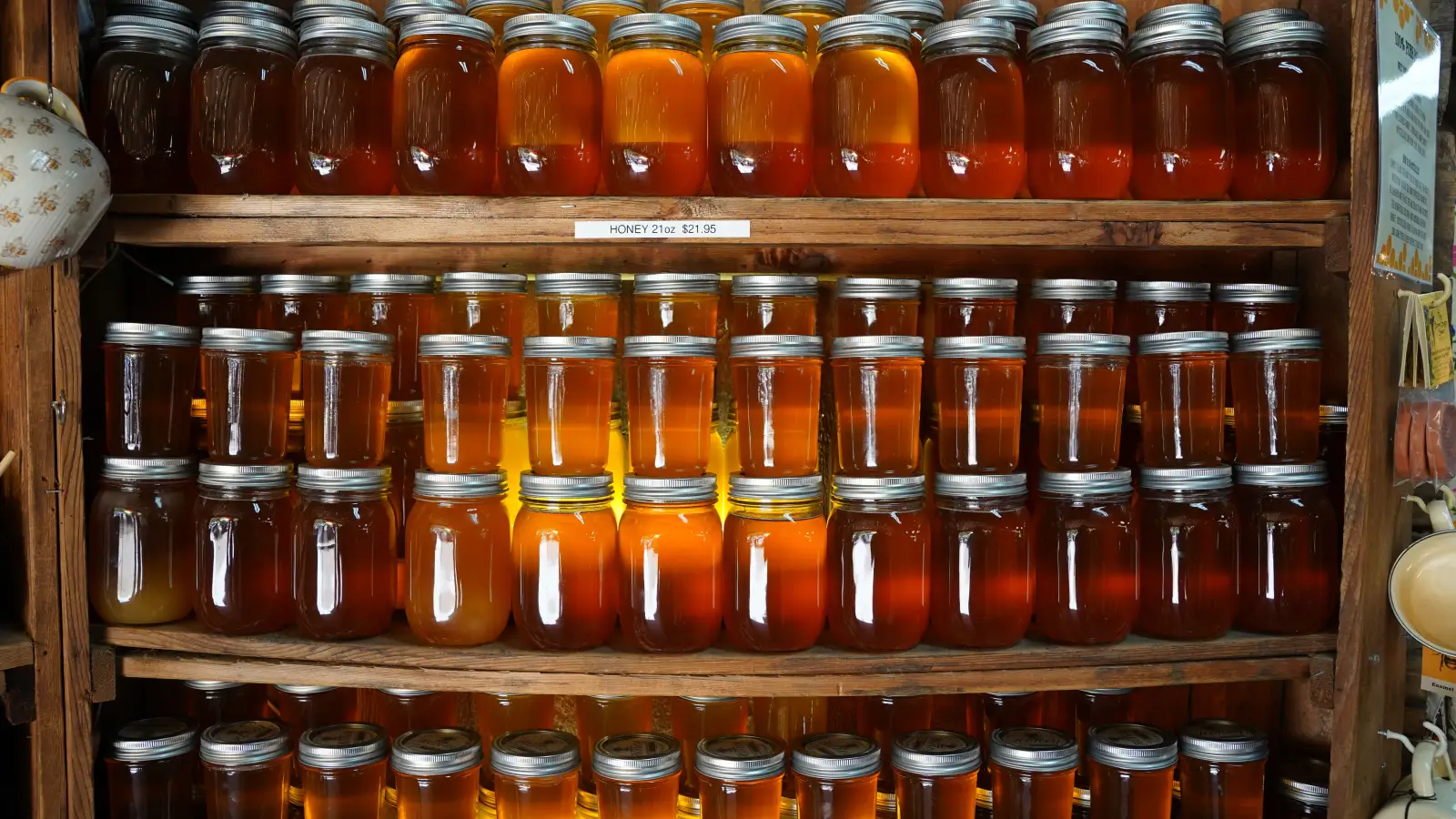
All pure honey crystallizes. The pattern is what tells you the risk. Normal crystals are dry, smooth, and even; the honey firms up and lightens in color. Dangerous crystals are wet, gritty, and clumped at the bottom with a thin liquid layer above. Spongy, cauliflower‑lumps or a sudden increase in runniness around the crystals signal moisture gathering and yeast activation.
5. Stir and Assess the Body: Separation and Graininess
Push the clean spoon through. Healthy crystallized honey resists evenly; fermenting honey has loose pockets of thin liquid. A distinct watery top layer is a red flag—it pools the moisture yeast needs. Taste a tiny bit only if all other signs are absent; spoilage registers as sour or alcoholic, not just sweet.
6. Confirm with a pH Test (The Chemical Anchor)
Dip a pH strip into the honey—use the 2.8–4.5 range because fresh honey usually sits between 3.4 and 6.1 depending on the flower source. A reading below 3.4 in a previously normal jar means spoilage—fermenting honey produces more acid. If you never measured the original pH, treat any reading below 3.2 as spoilage, period. Let the strip sit 60 seconds and read the color without wiping; the residue holds the acid you’re measuring.
Common Mistakes That Can Mask Real Spoilage
These misreads catch people even when they’re paying attention.
Confusing Aged Aroma for Fermentation Odor
Old honey can pick up a stale, waxy, cardboard‑like note—that’s oxidation, not fermentation. Fermentation smells sharp, acidic, yeasty. If you’re in doubt, rely on the bubble and pH checks. Oxidation never fizzes or drops pH.
Overlooking Fine, Even Bubbles While Fixating on Large Foam
Spoilage often comes as a steady sheet of pinhead‑sized bubbles, not as a dramatic foam cap. A few large bubbles from stirring are normal; a dense, fine bubble film that doesn’t disappear after a minute is a problem.
Writing Off Grainy Crystals Entirely as Safe
Crystallization is natural, but when graininess comes with a yeasty smell, visible liquid separation, or fizz, it’s not safe. One plausible scenario: a jar of raw clover honey stored in a warm laundry room for months developed widespread gritty crystals and a faint dough‑like odor. The owner assumed it was just crystallized and used it in tea. Mild stomach upset followed from the ethanol and CO₂ produced by yeast. The rule: if grainy crystals are the only sign, the honey is fine; paired with anything else, discard it.
Trusting a Printed Date Over This Checklist
Honey can last decades in perfect storage, but the “best by” date reveals nothing about moisture exposure, a dirty spoon, or a warm spell after opening. Let the five sensory checks override any date.
Quick Answers to Common Honey Safety Questions
Does honey actually expire?
Honey doesn’t expire if it stays sealed and dry, but it can ferment when moisture penetrates or when raw honey contained high water content from extraction. Fermented honey is spoiled; discard it.
What does fermented honey smell like?
Sharp and sour—vinegar, overripe fruit, yeasty bread dough. Some people note a nail‑polish‑remover scent. That smell means fermentation.
Is crystallized honey still safe to eat?
If the crystals are dry, firm, and the honey has no sour odor, bubbles, or separation, yes—that’s natural. Crystals plus any other spoilage sign makes the jar unsafe.
Can I just scrape off the top layer and use the rest?
No, if you see active bubbling or smell vinegar. Fermentation permeates the entire contents. Surface scraping only works for harmless foam or dust—never for a suspected spoiled batch.
How can I prevent honey from fermenting?
Keep the jar sealed when not in use, never insert a wet spoon, and store in a cool, dark place. In humid climates, refrigerating high‑moisture raw honey can help, though it accelerates crystallization.
Your Next Move After the Checklist
You’ve run every check—visual, smell, crystal, pH—and have a definitive answer. If the honey passed, store it at room temperature in a tightly closed jar out of direct light to preserve its character. When safe crystallization bothers your texture preference, place the closed jar in a water bath no hotter than 100 °F (38 °C); anything hotter destroys flavor and enzymes. If the jar failed any step, seal it and throw it out. Cooking won’t fix fermented honey; the off‑flavors and ethanol remain. Going forward, test a new jar with this same protocol to set a freshness baseline from day one.