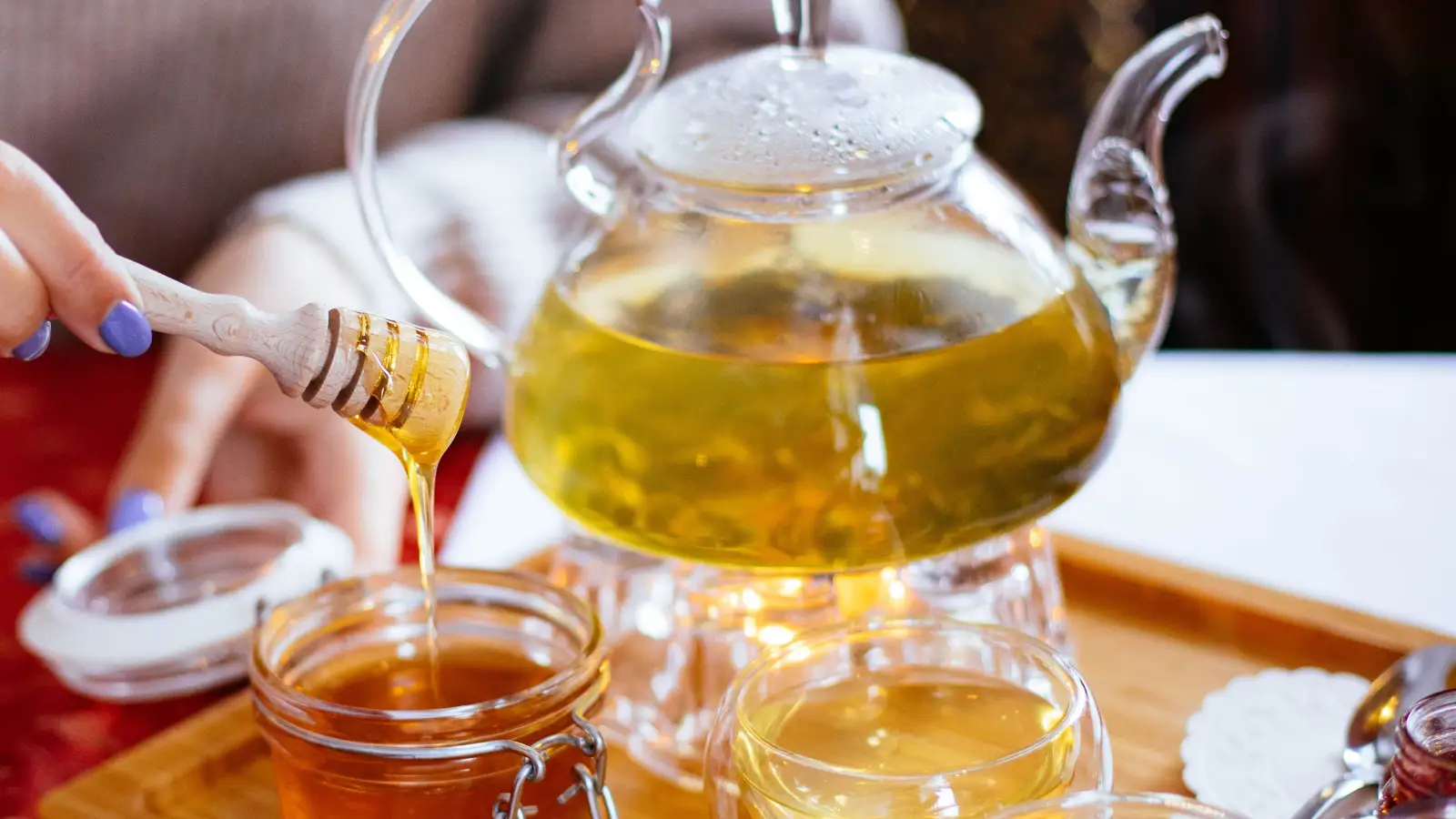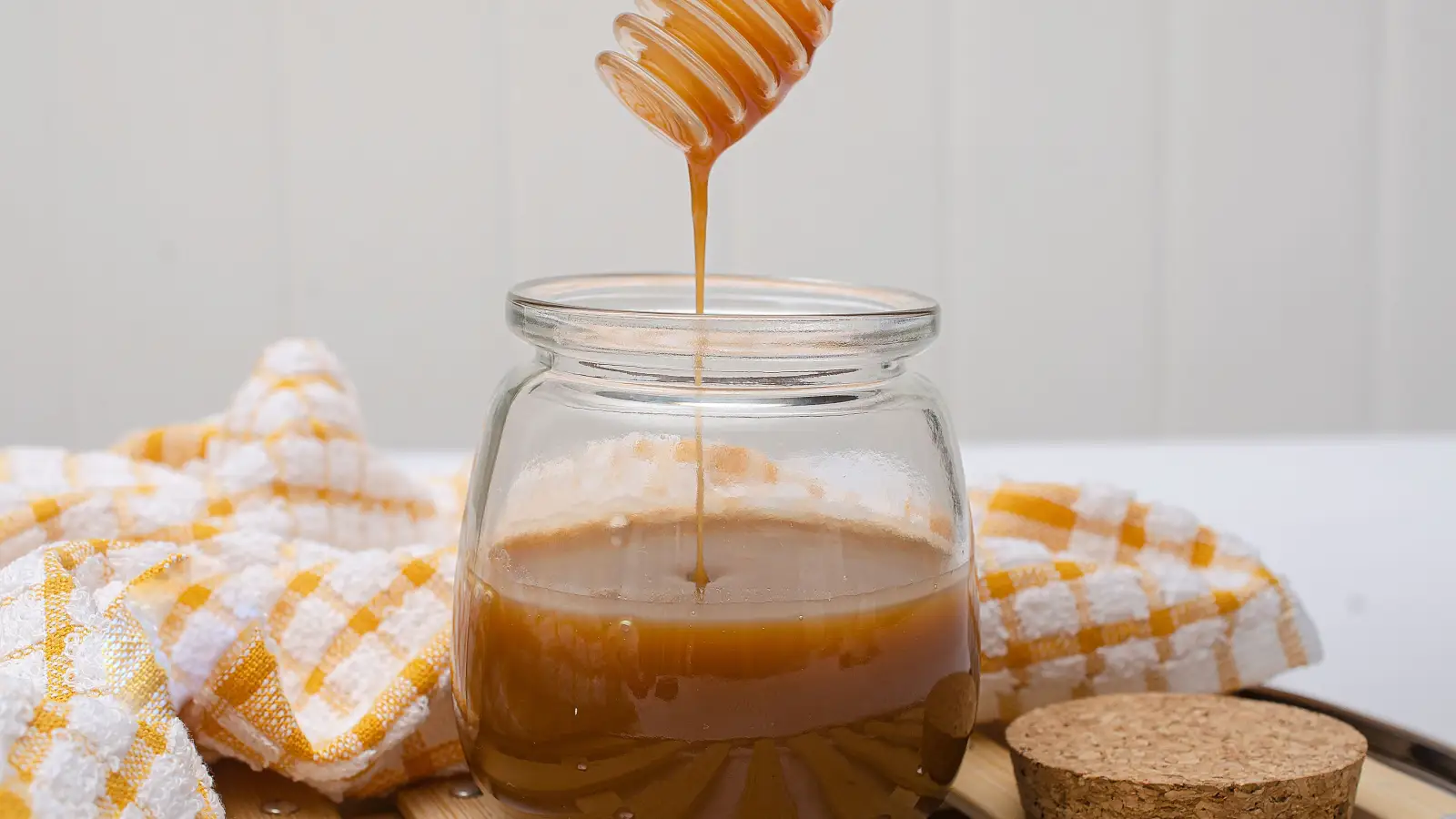
Honey becomes a reliable home remedy only when you work with its chemistry, not against it. Three measurable properties make it predictable: a sugar-driven osmotic effect that draws moisture from irritated tissue, a slow-release hydrogen peroxide system active only in raw honey, and anti-inflammatory compounds that help calm surface irritation. Every effective use depends on how well you activate these three mechanisms. This guide lays out a decision protocol based on exactly those properties, so you are not guessing.
The Three Mechanisms That Give Honey Its Soothing Power
Honey’s usefulness in home care does not rest on tradition. It rests on specific, well-understood chemical behaviors.
Osmolarity. At roughly 80% sugar, honey contains very little unbound water. Placed on a moist surface—like the lining of a scratchy throat—it creates an osmotic gradient that pulls water out of the surrounding tissue. This action coats the surface with a viscous layer that reduces friction and helps relieve the sensation of dryness. The same low-water environment makes it hard for many bacteria and yeasts to survive, though this is a supportive effect, not a sterilizing one.
Hydrogen peroxide. Raw honey contains the enzyme glucose oxidase, added by bees during nectar processing. When honey is diluted—by saliva, mucus, or lukewarm water—glucose oxidase converts glucose into gluconic acid and hydrogen peroxide. The release is gradual, producing a mild, sustained level of peroxide that can disrupt microbial cell walls without damaging delicate mucous membranes. This mechanism is absent in most commercial honey, because pasteurization and hot filtration denature the enzyme. The cutoff is clear: sustained heating above about 40°C (104°F) destroys glucose oxidase. If a honey has been heated above that mark, it will not generate hydrogen peroxide, regardless of its label.
Anti-inflammatory compounds. Honey carries flavonoids, phenolic acids, and other plant substances from the floral sources the bees visited. These compounds can locally moderate the body’s inflammatory response. Darker honeys—buckwheat, chestnut, and manuka among them—tend to have higher concentrations, but even a standard raw wildflower honey offers a measurable amount. The effect is not a painkiller; it is a gentle suppression of the chemical signals that cause redness and swelling on irritated surfaces.
Once you know these three properties, you stop using honey as a folk cure and start using it as a tool with controllable levers.
A Decision Framework Built on Honey’s Chemistry
Each mechanism above translates directly into a step you control. Following them in order ensures you get the full benefit and know where the limits are.
Step 1: Choose a Honey That Can Still Produce Hydrogen Peroxide
This is the most common failure point. The honey must be raw—never heated above hive temperature. Raw honey typically appears cloudy, may contain visible pollen grains, and will crystallize over time. Labels reading “raw,” “unpasteurized,” or “cold-extracted” are what to look for. “Pure honey” or “100% honey” without the raw designation almost always means the product has been heated enough to stay liquid indefinitely, and its glucose oxidase is gone. The peroxide mechanism is then missing; you are left with sugar water and a discounted osmotic effect.
Manuka honey offers an additional non-peroxide antimicrobial component called methylglyoxal, which survives some heating. It is effective but expensive and not required for typical home uses. A well-sourced raw wildflower or clover honey will produce enough hydrogen peroxide for most mild irritations.
Done well: you have a jar labeled raw, stored at room temperature below 25°C (77°F), and you know it has not been liquified on a stovetop or in a microwave.
Step 2: Apply Honey in a Way That Maximizes Osmotic Contact
Osmosis requires sustained contact. If you swallow honey quickly or chase it with liquid, you lose the coating effect. The hydrogen peroxide release also needs time; glucose oxidase activates upon dilution but does not work instantaneously.
For a sore throat or dry cough, take half a teaspoon to one full teaspoon and let it dissolve slowly in the mouth, allowing the honey to spread over the back of the throat. Do not drink anything for at least 10–15 minutes afterward. If mixing into a warm beverage, use water no hotter than around 40°C (104°F)—comfortable to sip—and drink it slowly so the honey contacts the throat repeatedly. For a minor mouth sore, dab a small amount directly onto the spot and let it sit. For a superficial skin scrape (not a deep wound or a burn), clean the area, apply a thin honey layer, and cover with a bandage to maintain moisture and contact.
Done well: the honey stays in place long enough to produce a noticeable, lasting soothing sensation, not just a flash of sweetness.
Step 3: Read the Body’s Signals—Not Just the Symptom Relief
Honey soothes; it does not cure. A viral sore throat will follow its own course; honey may reduce irritation while the immune system clears the virus. A bacterial infection like strep throat will not respond to honey alone and requires antibiotics. The protocol’s third step is to monitor for signs that the problem exceeds honey’s scope.
Begin with a clear baseline: a scratchy throat, a mild cough, or a small irritated spot. Use the honey as described. Noticeable improvement within 24–48 hours—less discomfort, fewer cough episodes—suggests the condition was mild and self-limiting. If symptoms hold steady for two days without relief, the cause may be something honey cannot address. If they worsen—fever over 38°C (100.4°F), increasing pain, pus, swelling, or spreading redness—discontinue honey and seek medical care immediately. Any use in children under 12 months is off the table because of botulism risk.
Done well: you have a clear before-and-after understanding and a predetermined point at which you will stop and call a doctor. You never push through a worsening condition with more honey.
Putting the Protocol into Practice: Soothing a Sore Throat from Start to Finish
A person wakes with a dry, scratchy throat and occasional cough. There is no fever, no difficulty swallowing, just persistent irritation. The three steps apply directly.
They check the pantry and find a jar of raw wildflower honey—cloudy, partially crystallized, unheated. Step one satisfied. They take half a teaspoon and let it slowly melt across the tongue and throat, deliberately not rinsing. After a few minutes, the surface feels moist and less abrasive. This is repeated three times that day: mid-morning, mid-afternoon, and before bed. Step two maintained.
By the next morning, the throat feels smoother; coughing has reduced. No fever has appeared. They continue for another 24 hours but note that if pain or fever had increased at any point, they would stop and contact a doctor. Step three kept in view. In this scenario, the three mechanisms all had room to operate, and the relief was predictable.
Three Ways People Undermine Honey’s Mechanisms (And What It Costs)
Most complaints that “honey didn’t work” trace to a broken protocol, not a failure of the substance.
Using Heat-Treated Honey That Has Lost Its Enzyme Punch
A large share of the honey sold in supermarkets is pasteurized and filtered to stay liquid on the shelf. This product is sweet and has a slight osmotic effect, but it produces no hydrogen peroxide. Someone using it for a sore throat gets a brief sugar coating and not much more. Switching to raw honey that meets the temperature threshold is the single most impactful change.
Rinsing Away the Remedy Before It Works
A common pattern is to take a spoonful of honey, swallow it quickly, and follow it with water or tea. Contact time is too short for osmotic coating or hydrogen peroxide release. The same applies to stirring honey into a boiling-hot drink—the heat destroys the enzyme before it ever reaches the throat. The protocol demands patience: let it dissolve and sit.
Expecting Honey to Do What Only Antibiotics Can
The most serious error is using honey for a bacterial infection that needs medical treatment. A sore throat from strep, for example, can become dangerous if antibiotics are delayed while honey is tried repeatedly. The signals are not subtle: persistent fever, swollen lymph nodes, white patches on the tonsils. The protocol always includes a hard stop and a doctor visit when those signs appear.
At a Glance: The Honey Remedy Protocol
| Stage | Goal | Key Action |
|---|---|---|
| Choose | Activate hydrogen peroxide | Use raw, unheated honey stored cool |
| Apply | Maximize osmotic contact | Let honey dissolve slowly; do not rinse immediately |
| Read | Distinguish soothing from curing | Track symptoms; get medical help if worsening |
Common Questions About Using Honey as a Remedy
Can I use honey if I have diabetes?
Honey is a sugar blend and will raise blood glucose. A person with diabetes should consult their physician before using any honey as a remedy. If approved, it must be counted within daily carbohydrate intake. The therapeutic benefits do not eliminate the sugar load.
Does honey help with seasonal allergies?
The claim is that raw local honey contains trace pollen that might desensitize the immune system over time. The evidence is weak and inconsistent. Allergy management should follow medical advice, not a honey jar.
Is it safe to give honey to children under 1 year?
No. Honey can harbor Clostridium botulinum spores, and an infant’s digestive system cannot prevent them from germinating. Botulism is rare but can be fatal in babies. Keep all honey—raw or otherwise—away from infants.
What is the difference between raw honey and regular honey?
Raw honey is strained but not finely filtered and has not been heated beyond hive temperature (roughly 35–40°C). Regular honey is often pasteurized and filtered to remove pollen, enzymes, and particles, which keeps it clear and liquid but destroys glucose oxidase. The hydrogen peroxide mechanism survives only in raw forms.
How should I store honey so it keeps its beneficial properties?
Store in a sealed container at room temperature (ideally between 15–25°C), away from direct sunlight and moisture. Do not refrigerate; cold accelerates crystallization without preserving enzyme activity. Raw honey can last for years if kept sealed, though hydrogen peroxide potency may decline slightly over extended time.
Working With Honey’s Chemistry, Not Against It
The protocol is as simple as its mechanisms: choose raw, apply slowly, read the response. For someone starting today, the most immediate action is to examine what is already in the kitchen. If the label does not say “raw,” that jar is missing the hydrogen peroxide half of the equation. Replace it with a raw honey stored at room temperature. Then, at the first sign of a scratchy throat, use a half teaspoon and let it dissolve, noting how the sensation changes over a day. That aligns the remedy with the chemistry, and it turns an old folk belief into a reliable, limited, and safe tool.