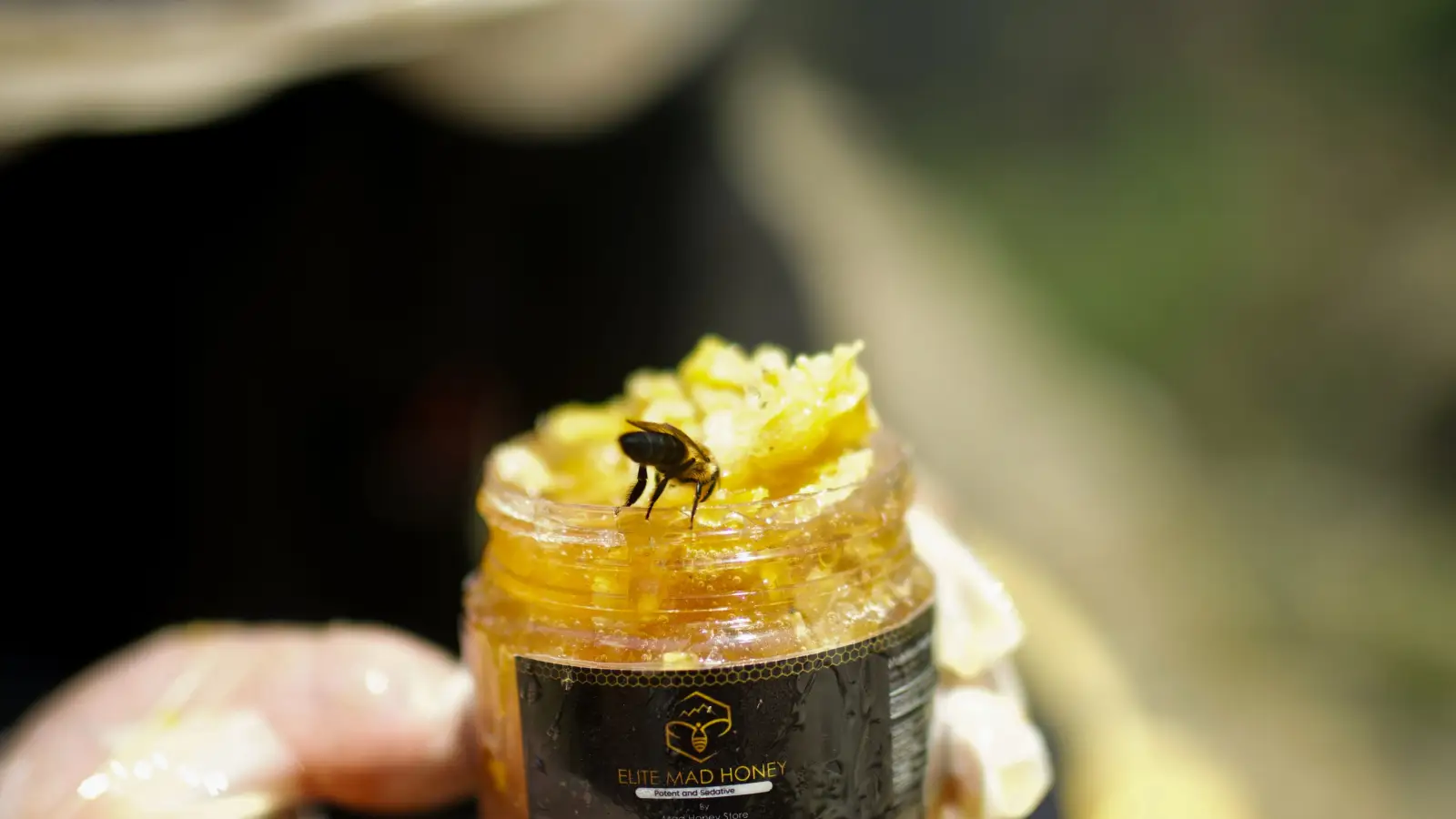
That grainy, solid honey in your pantry isn't spoiled. It still holds the enzymes and aromatic complexity you paid for. The problem is the microwave. One zap may look harmless, but uneven heating can push spots past 160°F before the jar even feels warm to your hand. That's not reheating — that's pasteurization. The fix is simpler and costs nothing more than a thermometer and a bowl: a water bath held at exactly 104°F, the natural temperature inside a beehive. At that warmth, glucose crystals dissolve steadily while diastase, invertase, and other fragile compounds stay intact.
What You're Actually Trying to Do
You want pourable raw honey — not honey that's been thermally stripped. The situation that usually triggers this is a jar of crystal-locked honey that's impossible to spoon or drizzle, often after being stored in a cool spot below 50°F. The target is to melt those crystals without letting the honey's internal temperature climb above about 110°F. Stay in that window, and the honey behaves like it just left the hive.
The Straightforward Method in 6 Steps
- Transfer the crystallized honey into a glass jar with a secure lid.
- Heat water in a pot to precisely 104°F, checked with a probe thermometer.
- Pull the pot off the heat and lower the jar in, water below the lid.
- Gently stir the honey every 10 to 15 minutes with a dry spoon.
- When no crystals remain and the honey is uniformly clear, remove the jar.
- Dry it off, seal, and store at room temperature.
Keeping the Heat Where It Belongs: A Step-by-Step Breakdown
Get the Honey into the Right Container
Scoop the solidified honey into a glass jar. Skip plastic — it can deform under warmth and it won't transfer heat evenly. Leave an inch of space at the top. If the honey is rock-hard, let it sit at room temperature for an hour first; forcing a knife through it risks chipping the glass.
Build a Stable 104°F Bath
Choose a pot deep enough to surround the jar but shallow enough that water won't reach the lid. Clip a digital or candy thermometer inside, its tip floating mid-water, not touching metal. Heat the water on low, stirring a few times to even out the temperature. The instant the display reads 104°F, kill the flame. If it overshoots to 107°F or so, drop an ice cube in to pull it back, then remove the cube.
A sous vide stick set to 104°F eliminates the watching; that's the most precise home method available.
Submerge the Jar and Keep the Warmth Steady
Place the sealed jar into the water. The water line should stop at the jar's shoulder. If buoyancy makes it bob, rest a small ramekin on the lid. Leave the pot off the burner. The retained heat will hold the temperature for the 30 to 90 minutes typical for this process. Check the water with the thermometer every quarter hour. If it slides below 100°F, set the pot back over the lowest flame for 20 seconds, then remove.
Stir and Observe the Clarity
Open the jar every 10 to 15 minutes and stir with a dry spoon. Moisture inside the jar invites fermentation later, so keep the spoon bone-dry. Stirring distributes the warmth and breaks up the crystal lattice. You'll see the honey clear first at the glass edge, then inward. If after an hour chunks persist, the bath likely ran a touch low or the jar was too dense. Extend the time — not the temperature. Gentle persistence dissolves glucose monohydrate crystals without enzyme damage.
Pull It Out and Store It
When the honey is completely transparent and free of grain, lift the jar with a towel. Dry the lid and threads carefully. Let it cool on the counter to room temperature, then tighten the lid and tuck it into a cupboard away from direct light. Crystallization will happen again — raw honey does that — but keeping the jar above 60°F delays it.
Checkpoints: Evidence the Honey Stays Raw
- The water bath never broke 104°F for the whole session.
- No steam, no bubbles, no hot water sizzle near the jar.
- The honey's color didn't darken; it stayed its original amber or pale tone.
- The aroma is unchanged — no caramel, no cooked-sugar notes.
- A small taste confirms the same bright, sharp floral finish, not a flat cooked sweetness.
Common Questions About Warming Crystallized Honey
Can I just use the microwave on defrost?
Even defrost mode produces hotspots. A 30-second burst can spike a pocket to 150°F while the rest sits at 90°F. That one pocket loses its enzymes and volatile aromatics instantly. The honey won't show signs of cooking, but the damage is done.
What temperature irreversibly kills the beneficial enzymes?
Enzyme degradation begins around 118°F, but the real cliff sits near 122°F for sustained exposure. Commercial pasteurization holds honey at 140°F and above, which erases diastase and invertase. A 104°F bath keeps a generous buffer.
How often can raw honey be re-liquefied?
Three to four cycles is a practical limit. Each warming slightly shifts sugar distribution and can accelerate the next crystallization. Beyond that, the texture turns perpetually grainy, but the honey remains safe and raw.
Does this process alter the flavor?
At 104°F, no. Volatile aromatics stay put. Expose honey to higher temps and you'll notice a flattening — the delicate top notes disappear, leaving a one-dimensional sweetness. That's most noticeable after microwaving.
When the Honey Doesn't Clear: Triage
It re-crystalized within a day
Some micro-crystals likely survived. Re-warm at 104°F, stirring more often, and hold it at temperature for a full hour past the point it looks clear. Also, move the jar to a warmer storage spot — chilly pantries set off rapid re-granulation.
The honey picked up a cooked or caramel taste
Heat crept too high. The honey is safe for baking or cooking, but its raw benefits are null. Before the next attempt, test the thermometer: put it in boiling water (212°F at sea level) and adjust if the reading is off.
Water got inside the jar
If just a few drops blended in, stir and use the honey within two weeks to avoid fermentation. A visible water layer means it's better to discard and start fresh.
A 104°F water bath returns raw honey to liquid form, all its enzymes and volatiles still active. The logical next task is figuring out storage conditions that slow crystallization, so you reach for the saucepan less often.