Ask a lab whether raw honey outperforms the processed stuff, and the answer is a qualified yes. Diastase and invertase are more active, phenolic content edges up a couple of percentage points, and total antioxidant capacity often lands about 3% higher per tablespoon. That’s a statistically measurable difference. Ask whether that 3% matters at the breakfast table, and the answer shifts: for most ways people actually eat honey, it doesn’t. The data reveal a gap that exists but rarely justifies the price premium on its own.
Raw vs. Processed: A Scenario-by-Scenario Breakdown
| Scenario | Winner | Why |
|---|---|---|
| Sweetening coffee or tea daily | Processed honey | Nearly identical sweetness and calories; cost savings add up over time. |
| Maximizing antioxidant intake per spoonful | Raw honey | Slightly higher phenolic content, but the boost per serving is tiny. |
| Baking or cooking at high heat | Processed honey | Heat destroys the very enzymes you pay extra for in raw; no functional difference. |
| Making a DIY face mask or fermented honey garlic | Raw honey | Live enzymes and potential antimicrobial factors are essential for these uses. |
| Concerned about digestive discomfort from honey | Neither (nearly identical) | Enzymes don’t survive stomach acid; both contain similar sugars and trace pollen. |
You’re Sweetening Your Morning Coffee or Tea
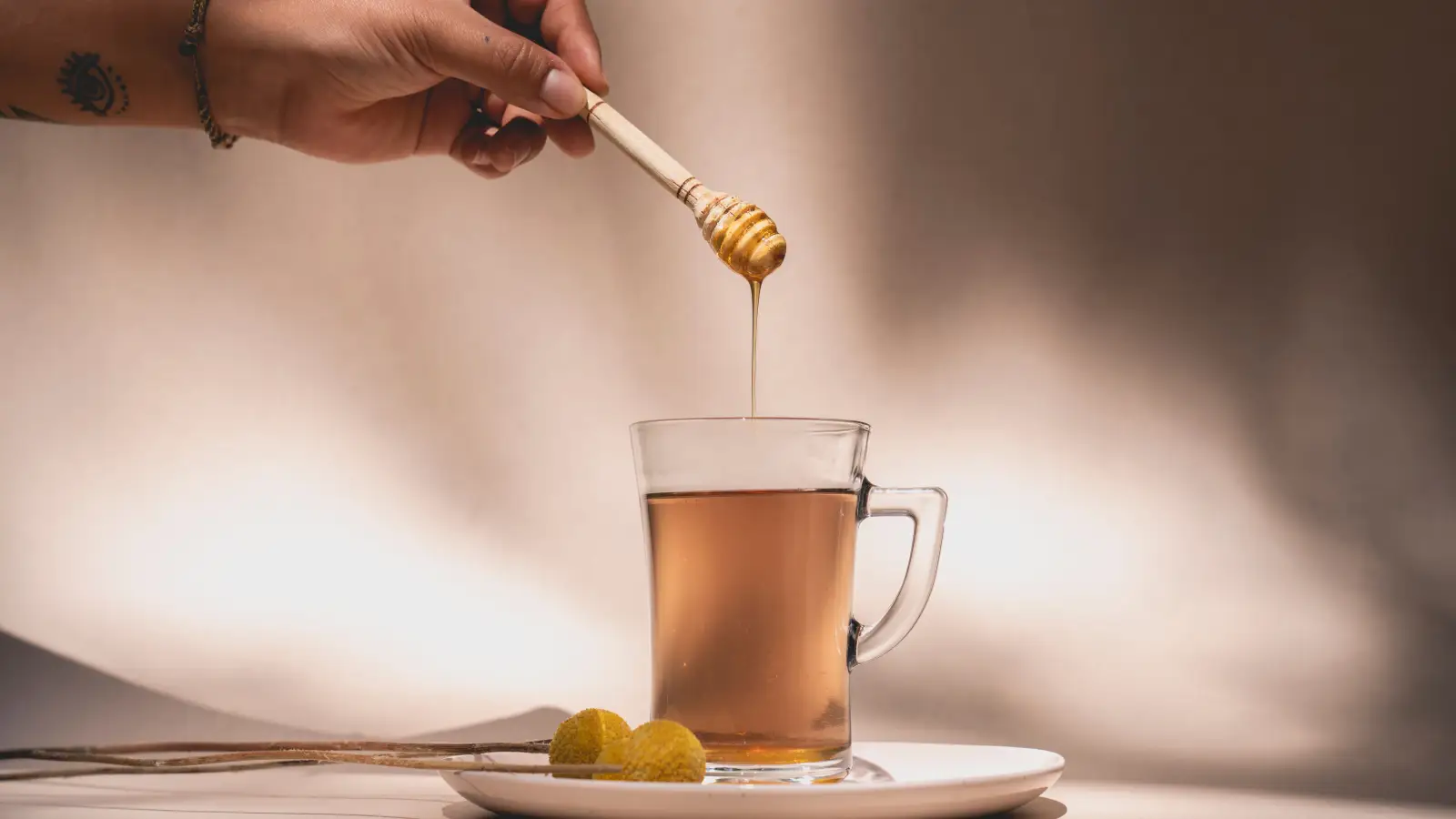
Hot water strips away the advantage that lab instruments detect. Diastase and invertase denature within a few minutes once the temperature climbs past 140°F, so the extra pennies you paid for enzyme-rich raw honey dissolve into the cup along with the sweetener. What remains is a sugar solution nearly identical to processed honey—same calories, same glucose-to-fructose profile, same functional sweetness. Processed honey usually costs less, pours cleanly, and stays liquid far longer. The trade-off is that you won’t capture the slight phenolic edge, but those compounds are largely heat-stable, so even that nugget survives partial heating and becomes indistinguishable once you’re adding a teaspoon to a full mug of tea. For daily sipping, the lab numbers don’t translate into a mouthful of measurable health.
You Want Every Last Milligram of Antioxidants
If honey is your intentional antioxidant booster—the spoonful you take for its perceived functional value rather than its sweetness—raw honey is the technically correct choice. Peer-reviewed studies consistently measure higher diastase numbers, more intact invertase, and a bump in total phenolic content that often works out to a 3% advantage in antioxidant capacity. That’s real, and a chromatograph would show it. But the person eating that honey is probably getting enough flavonoids from the apple they had at lunch or the onions in their dinner. The gap is so narrow that swapping one daily cup of green tea for coffee would likely swamp the entire year’s antioxidant margin from choosing raw over processed. Opting for raw here means accepting faster crystallization, a higher unit cost, and a shelf life that demands a little more attention—all for a difference that, nutritionally, sits just above the noise floor.
You’re Baking or Cooking at High Heat
In a 350°F oven, a honey’s enzyme pedigree evaporates in seconds. Diastase and invertase are proteins; they unfold and become inert at temperatures well below baking heat. Whether you use raw or processed, the contribution to your banana bread or barbecue glaze is the same: moisture retention, browning via the Maillard reaction, and a predictable sweetness. No recipe relies on residual honey enzyme activity to function. The modest phenolic difference, already tiny in the jar, gets diluted across an entire batch of muffins to the point of irrelevance. Paying extra for raw honey in this context is paying for a trait that never makes it to the fork.
You’re Crafting a DIY Skincare Recipe or Fermented Honey
Here the lab numbers finally align with a practical requirement. A cold-stirred face mask that counts on glucose oxidase for mild exfoliation, or a fermented honey-garlic tonic that leans on invertase to split sucrose into fermentable monosaccharides, needs those enzymes alive. Processed honey—especially the ultra-filtered, high-heat variety—has enzyme activity that’s barely detectable. Raw honey is the only option that works. The trade-off is that you’ll be using small quantities, so the higher price per pound doesn’t sting as much, but you do need to store it carefully to avoid premature fermentation or extreme crystallization. For occasional small batches, the cost is justified because the outcome depends on a variable that processing erases.
When the Lab Difference Fades in Your Kitchen
A long list of attributes sits squarely in the “too close to matter” zone for raw versus processed honey:
- Calories and sugar content. Both deliver roughly 60 calories and 17 grams of sugar per tablespoon, with the same glucose‑to‑fructose ratio. Lab tests confirm no meaningful deviation.
- Glycemic impact. Neither variety offers a meaningful reduction in blood sugar spike compared to the other; the honey’s floral source matters far more than processing.
- Vitamins and minerals. Both contain only trace amounts—tiny fractions of the daily value for B vitamins, vitamin C, calcium, and iron. Lab tests show no consistent, meaningful difference after processing.
- Digestive enzyme benefit. Diastase and invertase are plant‑ and bee‑derived enzymes that function inside the hive or the jar. Stomach acid denatures them rapidly; they don’t aid human digestion in any significant way.
- Flavor complexity in hot applications. When honey is melted into a sauce or stirred into a hot latte, the volatile aroma compounds that distinguish a raw, minimally filtered honey vanish alongside the enzymes.
Stop weighing these aspects. If someone is trying to sell you on raw honey because of its superior vitamin profile or lower blood sugar response, that claim isn’t anchored in the lab data.
The Non‑Negotiables: When Only Raw or Only Processed Will Do
Certain requirements instantly rule out one option:
- Raw honey becomes a problem when you need long‑term liquid stability. If you keep a squeeze bottle on the counter and can’t stand the grainy texture of crystallized honey, raw honey’s natural tendency to granulate within weeks (or even days, depending on the variety) makes it a non‑starter. Processed honey is heated to dissolve existing crystals and delay recrystallization, so it pours smoothly for months.
- Processed honey fails when live enzyme activity is the whole point. Any unpasteurized, cold‑process skincare recipe, a mead must that relies on honey’s own enzymes for starch conversion, or a fermented probiotic mix requires the diastase and invertase that processing destroys. If the label says “pasteurized” or “ultra‑filtered,” it’s not suitable.
Beyond these hard limits, most everyday uses fall into the middle ground where the modest 3% edge is either irrelevant or just one factor among many.
The Cost of That 3% Edge: When Price Tips the Scale
Raw honey consistently costs more—often $6 to $10 per pound versus $3 to $5 for a standard processed clover or wildflower honey. Over a year, a household that uses a pound a month for tea, toast, and occasional baking will spend an extra $36 to $120 for the raw option. Meanwhile, the measurable nutritional gain amounts to a few extra milligrams of phenolic compounds per month, a quantity easily replaced by eating one additional blueberry every few days.
For the “maximum antioxidant” scenario, that calculus might be acceptable as an intentional splurge. For the daily sweetener or kitchen workhorse, it’s a steep premium that the lab tests don’t support. The pricing reality is what turns the 3% edge from an interesting data point into a consumer decision: is the incremental benefit worth the higher monthly grocery bill?
Quick Questions About Raw vs. Processed Honey
Does raw honey contain significantly more vitamins than processed honey?
No. Both raw and processed honey contain only trace amounts of vitamins. Any small differences disappear in the context of a normal diet, where few people rely on honey as a vitamin source.
Will the enzymes in raw honey survive my stomach and help digestion?
No. Stomach acid denatures diastase and invertase rapidly. The enzymes’ activity is relevant only in the jar or in a cold‑prepared recipe, not inside your body.
Can I add raw honey to hot tea without destroying its benefits?
You can, but the heat will degrade the enzymes within minutes, leaving the modest phenolic advantage largely intact. If you prize the antioxidants, you still get them; if you’re paying extra for the enzymes, hot tea wastes that investment.
Is processed honey nutritionally worthless?
Not at all. It provides the same quick‑acting carbohydrate energy, similar trace minerals, and the same core sugars. The difference lies in the tiny bioactive fraction that lab tests highlight, not in the bulk nutritional value.
Making Your Choice: When That 3% Edge Matters
For the most common scenario—using honey as a daily sweetener—processed honey wins on cost, convenience, and practical nutritional equivalence. The single question to ask yourself is this: is the incremental antioxidant boost from raw honey, which lab tests put in the low single digits per serving, worth the higher price and the effort of managing crystallization for the way you actually use honey?