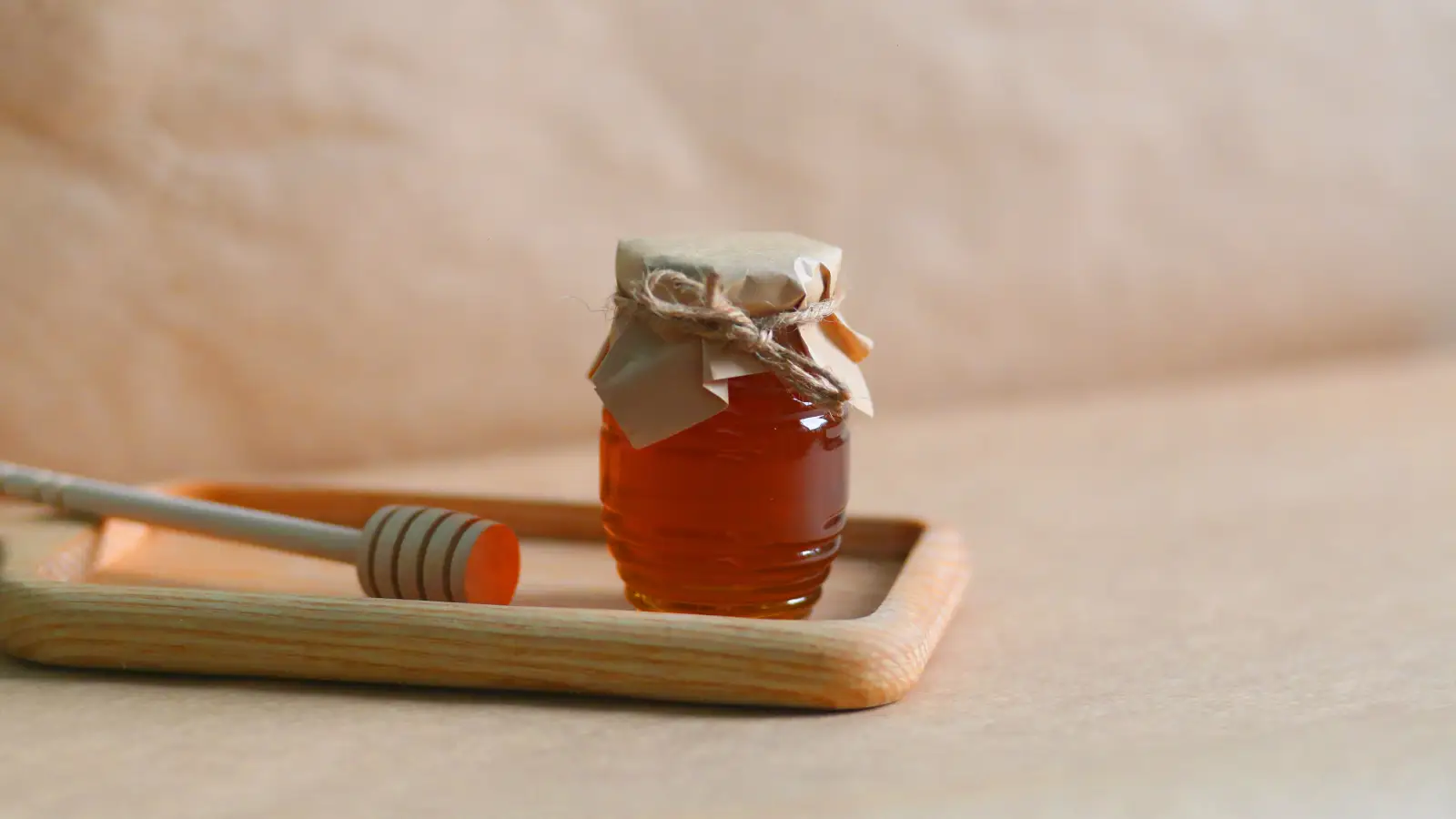
Honey turns grainy not from spoilage, but because your kitchen’s temperature swings force glucose molecules out of solution. A simple three-part method stops this: use an airtight container, keep the honey in a spot with steady temperature day and night, and warm it gently only when needed. Apply all three and the honey stays pourable for a full year without lost quality.
Storing honey in “a cool dark place” fails when that place warms up every afternoon or whenever the oven runs. Those swings are what drive crystallization within weeks. The steps below address that root cause directly — airtight seals, monitored temperature stability, and a low-heat rewarming protocol that protects enzymes.
Your Current Honey Storage Situation
A starting point determines which part of the method matters most right now. Match your situation:
- The jar on the counter near the stove turned solid after a month. Your route: move the honey into an airtight container immediately, relocate it to a cooler spot that doesn’t swing with cooking heat, and use a gentle water bath to reliquify the batch you already have.
- You just bought a large jar of raw, unfiltered honey and want to avoid crystallization from day one. Your route: transfer the honey straight into an airtight container, pick a pantry shelf you can monitor with a thermometer, and learn the warming steps now so you’re ready later.
- You microwaved a crystallized jar and ended up with hot, flat-tasting liquid. Your route: stop using high heat entirely. Adopt the low-temperature water-bath method below, and if the jar you overheated has lost its floral notes, start fresh with a new batch following the full three-step protocol.
- Your kitchen goes through big temperature swings every day, even in the pantry. Your route: first, find the most stable interior closet or cabinet away from exterior walls and appliances. If that isn’t enough, buffer the honey inside a small cooler or insulated bag to dampen the swings until you can improve the location.
Step 1: Pick the Container That Locks Out Trouble
This stage stops moisture shifts and oxidation that speed up crystallization. Honey pulls water from the air; a poor seal lets humidity in, raising the risk of fermentation and grain formation. Air exchange also gives glucose molecules the opportunity to organize into crystals.
What to Do
- Use an airtight container with a silicone gasket. OXO Good Grips POP containers are reliable because the seal presses down with clear physical feedback. A glass jar with a rubber-sealed clamp lid works the same way.
- Size matters: leave at most an inch of headspace above the honey. A larger air pocket creates more room for moisture exchange.
- Before sealing, wipe the rim completely dry. Even a faint smear of honey can compromise the seal.
What You’ll See When You’re Ready to Move On
- The lid button stays depressed, and you feel firm resistance when trying to lift it.
- After 48 hours, no condensation appears on the inside walls of the container.
- The honey’s surface stays level, with no watery layer forming on top.
Step 2: Pin Down a Steady Temperature Spot
The target is a spot that holds between 50°F and 65°F, with a daily swing under 5°F. A shelf next to an exterior wall can shift 15°F or more overnight, and those repeated shifts force crystals to form and dissolve unevenly, building up large, gritty grains.
What to Do
- Place a small digital thermometer that records highs and lows on the shelf you’re testing. Check it morning and evening for a full week.
- Keep the container away from cabinets above dishwashers, next to refrigerator vents, or in the path of heating ducts.
- If the whole kitchen swings widely, put the honey inside an insulated lunch bag or a small cooler. The internal temperature will change much more slowly.
- When you see readings like 58°F at 8 a.m. and 62°F by late afternoon, you’ve found a stable enough zone.
What You’ll See When You’re Ready to Move On
- The recorded range stays between 50°F and 65°F, and the difference between the daily low and high is less than 5°F for seven consecutive days.
- When you bring the container into a warmer room, no condensation or sweat forms on the outside — a sign the honey hasn’t been cycling through dew-point shifts.
Step 3: Warm Honey Back Without Destroying It
Even with careful storage, most raw honey will eventually show a few crystals. Gentle warming melts them without damaging the enzymes, aromatic compounds, or color. The non-negotiable rule: keep the honey below 100°F.
What to Do
- Submerge the sealed container in a bowl or pot of warm water. Use water between 95°F and 100°F — hot to the touch but not uncomfortable on the wrist.
- Stir the honey gently with a dry spoon every 10 minutes. Replace the water if it cools significantly.
- Do not microwave, simmer on the stove, or use boiling water. Microwaves create hot spots that degrade flavor even at low power settings, and high heat darkens honey and strips its floral notes.
- A sous vide circulator set to 98°F works if you already have one, but the water-bath method is sufficient.
What You’ll See When You’re Ready to Move On
- The honey becomes fully liquid in 30–45 minutes and pours smoothly, with no crunchy texture.
- The container feels only slightly warm — similar to a cup of coffee left untouched for several minutes.
- The original floral aroma remains; there is no caramel or burnt smell.
Checkpoints: Signs You’re Ready to Move Forward
These are the observable readiness cues from each stage, in order:
- The container lid seals tight; no internal condensation after 48 hours.
- Your pantry thermometer shows a temperature range between 50°F and 65°F, with a daily swing below 5°F for a full week.
- The honey warms to liquid under 100°F and retains its original scent.
What You Don’t Need to Worry About Yet
Some concerns can wait until you’ve mastered the basic three steps.
- Refrigeration for longevity. Refrigeration accelerates crystallization sharply. Only chill honey intentionally if you’re making creamed honey, which is a separate task.
- Plastic versus glass. Food-grade plastic containers like OXO are safe for a one-year window. Glass is inert and better for multi-year storage, but at the 12-month mark, either material works if the seal is airtight.
- Raw versus pasteurized honey. Raw honey crystallizes faster because pollen particles provide seed crystals. The same three-step method applies to both types; pasteurized honey simply stays liquid longer.
- Microwave as a shortcut. Some people try low-power microwave bursts with frequent stirring. In a pinch that can work, but the risk of local overheating is real, and it’s easy to overshoot. Stick to the water bath until you’ve had a full year of stable results with this method.
Common Honey Storage Questions
Why does my honey crystallize so quickly?
Honey naturally contains glucose, which is less soluble than fructose. When the temperature fluctuates, glucose molecules separate and form crystals. A stable environment slows this process but doesn’t halt it permanently.
Is crystallized honey safe to eat?
Yes. Crystallized honey hasn’t spoiled; it’s simply changed texture. You can use it as a spread or gently warm it back to liquid using the steps above.
Can I prevent crystallization completely?
No method prevents it forever. All honey will eventually crystallize if stored long enough. The goal is to maintain pourability for a practical shelf-life — here, 12 months — without damaging the honey.
How do I know if my honey has fermented?
Fermented honey smells sour or yeasty, develops bubbles, and turns thin. This happens when moisture content rises above roughly 18.6%. The airtight container step stops the honey from pulling in extra humidity, which sharply cuts the risk.
What if I don’t have an OXO container?
Any container with a reliable silicone gasket and a secure lid works. Look for one that passes the “press and release” test: push the lid down, then check that it holds tight with no give. Glass jars with rubber-sealed clamp lids are a solid alternative.
After 12 months using this method, your honey will pour from the jar as smoothly as the day you opened it, without any grainy texture or off-flavors. If you just bought a large jar of raw honey, start by transferring it into an airtight container today.