A jar labeled “wildflower honey” says almost nothing useful. Beekeepers who pay attention understand that every batch is a biochemical fingerprint of a specific flowering period and terrain—the exact set of nectar sources that were open when the bees flew. Color, aroma, how fast the sugars set into crystals months later: none of it is an accident. It’s a direct read of which plants were dominant and for how long.
A Snapshot in a Jar: Three Forces That Make One Batch Unlike Another
Three forces align to make one wildflower honey irreproducible. The first is the floral calendar: blooms shift weekly, and a hive foraging in early April collects a different nectar profile than the same hive two weeks later. The second is the landscape—soil composition, drainage, elevation, what actually grows there determines what the bees can reach. The third is the beekeeper’s timing: waiting a few extra days to pull frames can swap one plant’s sugars for another’s and produce a noticeably different honey. These forces together explain why treating all wildflower honey as a generic polyfloral erases the information the bees collected.
The Framework: Reading the Biochemical Calendar
Beekeepers who want to preserve the detail in a wildflower crop follow a sequence of stages, from bloom to jar, that respects the honey as a record rather than a commodity. Each stage below moves closer to the finished product while answering one specific question about what’s actually in that jar.
Stage 1: The Nectar Window—Which Blooms Set the Chemical Blueprint
Wildflower honey starts with a nectar window: the set of plant species releasing nectar at the same time within foraging range of the hive. A colony working a spring flow in central Texas might gather from bluebonnet, horsemint, and wild verbena; another hive half a mile closer to a creek adds buttonbush and smartweed. The proportions of fructose, glucose, sucrose, pollen grains, and volatile aromatics differ between those two honey lots because the plant mix was different, not because the bees behaved differently.
These ratios govern everything downstream: sweetness perception, granulation speed, and which floral notes survive extraction. At this stage, a beekeeper who tracks bloom calendars and pollen loads on returning foragers can often predict the dominant source before uncapping a single frame. Done well means the floral sources are varied enough to produce a layered, complex honey rather than a monofloral product trying to pass as wildflower.
Stage 2: Capping and Harvest—Choosing the Peak Complexity Point
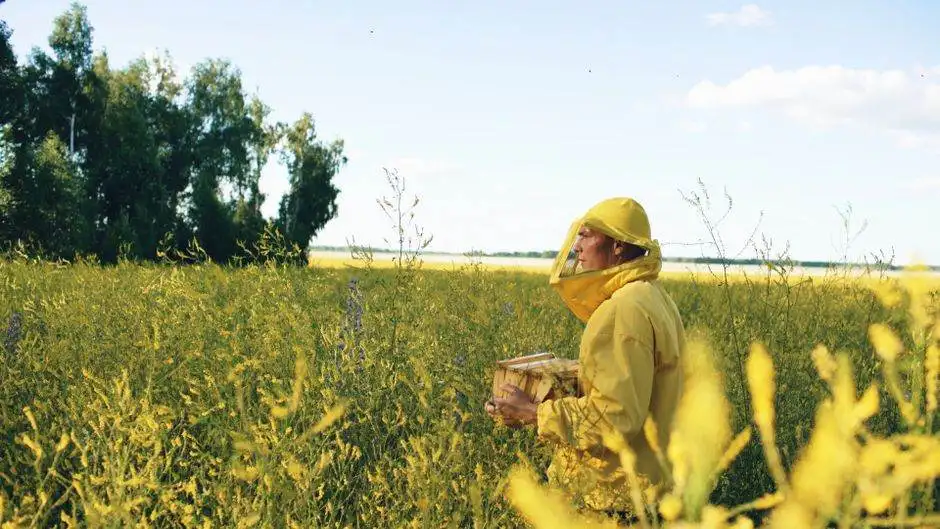
Nectar becomes honey inside the hive as enzymes break down sucrose and worker bees evaporate moisture until the water content falls below about 18%. Cells get sealed with wax only when the honey is ripe. Beekeepers extract only when at least 90% of the cells on a frame are capped—not just to avoid fermentation, but because that’s when the full volatile spectrum from that nectar mix is intact. Pulling frames too early traps uncured nectar that will thin the honey and spoil. Waiting too long, especially in a dearth, risks the bees consuming the most interesting sugars, leaving a flatter product.
Done correctly, the honey leaves the hive with its high notes preserved and its moisture safely low—no dilution, no off-notes from unripe nectar.
Stage 3: Gentle Extraction—Preserving the Snapshot
Once frames leave the hive, heat and fine filtration are the quickest ways to erase the biochemical record. A beekeeper handling wildflower honey for clarity and depth extracts at ambient temperature or with only slight warming—never above 95°F (35°C). The process uses an uncapping knife, centrifugal force, and a simple straining screen that catches wax particles and debris but allows pollen grains and microscopic particulates through. No pasteurization. No pressure filtration.
Pollen is the honey’s botanical ID; removing it strips out the only verifiable trace of the ecosystem the bees worked. It also removes the seed material that gives raw wildflower honey its fine, creamy granulation when it eventually crystallizes. Done well, the extracted honey is cloudy, aromatic, and biologically active.
Stage 4: Reading the Honey’s Physical Record
In the jar, the honey’s color, crystallization behavior, and flavor profile act as a log. Color alone often signals dominant floral types: paler honeys associate with clovers and alfalfa, darker ones with buckwheat, goldenrod, or late-season shrubs. Granulation speed and texture reveal the glucose-to-water balance. A honey that sets into smooth, spreadable crystals within two months had a high glucose fraction, typical of sources like aster, dandelion, or wild mustard. A honey that stays liquid for a year carries more fructose, common in flows dominated by sage or black locust.
Tasting with intent—front sweetness, mid-palate floral lift, back-end bitterness or warmth—turns those physical markers into a full sensory report of the nectar window. One spoonful becomes a time capsule.
A Spring Harvest in Hill Country: The Framework in Action
Take a small apiary in the Texas Hill Country during early April. The nectar window opens with bluebonnet and Indian paintbrush dominating. Within two weeks, horsemint and wild verbena enter the flow. The beekeeper checks caps and pulls honey supers when 92% of cells are sealed. Extraction happens at 78°F; the honey passes through a coarse mesh followed by a medium mesh—nothing fine enough to catch pollen. The result is a pale gold honey with a faint greenish tint, thick but fluid, carrying a minty-herbal top note from horsemint and a vanilla-soft undertone from paintbrush. Eight weeks later, the jar contains a fine crystalline paste—the predictable outcome of glucose-rich nectar from verbena and paintbrush. That jar holds a precise, unrepeatable record of a specific hillside across three weeks.
Where the Snapshot Gets Blurred
Harvesting Without Verifying Ripeness
Pulling frames when only half the cells are capped—often because the frames feel heavy—produces honey with too much water. That honey ferments in the jar within weeks. A bubbling, sour-smelling batch is a wasted record, not a usable product. The cap is the signal; weight is guesswork.
Over-Processing After Extraction
Heating honey beyond 140°F to keep it runny and speed bottling destroys volatile aromatics and denatures enzymes. Passing it through fine pressure filters removes the pollen that would tie the honey to its floral sources. The result is a visually perfect, shelf-stable liquid that communicates nothing about where it came from. Processing a wildflower honey like this is equivalent to developing a photograph and then bleaching the print.
Treating Wildflower as a Monolith
Assuming all wildflower honeys taste similar ignores the seasonal and geographic data the bees encoded. A jar from a spring bloom and another from an autumn aster-goldenrod flow can differ as sharply as a dry white wine differs from molasses. Collapsing that range into a single mental category turns a rich category into a commodity, and the taster gains no insight into what the spoon is actually holding.
Quick Reference: The Four-Stage Snapshot Framework
| Stage | Goal | Key Action |
|---|---|---|
| Nectar Window | Identify floral mix that will define flavor, color, granulation | Monitor bloom calendar and incoming pollen loads |
| Harvest Timing | Capture honey at peak aroma complexity with safe moisture | Wait for 90%+ capped cells before pulling frames |
| Gentle Extraction | Preserve pollen, aromatics, and natural crystallization | Extract at ambient temp; strain, don’t filter |
| Reading the Jar | Interpret color, crystallization, taste as ecosystem record | Observe granulation speed, texture, and layered flavor |
FAQ
Is wildflower honey healthier than single-origin varietal honey?
Wildflower honey’s nutritional edge is diversity—more plant sources can mean a broader spread of pollen types and phytonutrients, which may correlate with a wider antioxidant profile. Still, that depends entirely on the specific flowers present, not on the “wildflower” label. A varietal honey from a polyphenol-rich source like manuka can outstrip a drab wildflower in certain measures.
Why does some wildflower honey crystallize quickly while other jars stay liquid for months?
Crystallization speed is controlled by the glucose-to-fructose ratio and the water content. Glucose-rich nectars from aster, dandelion, or clover granulate quickly; fructose-dominant nectars from sage, tupelo, or black locust resist granulation. Fast crystallization isn’t a defect—it’s a physical trace of the bloom composition.
How should I store wildflower honey to preserve its unique flavor and texture?
Keep it in a tightly sealed glass jar at 65°F to 75°F, out of direct light. Refrigeration speeds granulation and dulls volatile aromatics. If the honey crystallizes and a liquid state is preferred, warm it gently in a water bath no hotter than 100°F—never microwave or boil.
Can I use wildflower honey in baking, or will the unique flavors be lost?
Wildflower honey can be used in baking, but prolonged heat strips away the delicate floral volatiles that make the honey interesting. Use the most aromatic, raw batch only where it won’t be cooked long—glazes, dressings, no-bake desserts. For high-heat baking, a sturdy, milder honey prevents waste of a complex jar.
What to Do Next with Your Next Jar
The framework runs from bloom to spoon: know the nectar window, trust the cap, protect the pollen, read the jar. Start by obtaining two wildflower honeys from distinct seasons or regions and compare them side by side—color first, then aroma, then crystallization texture. The differences aren’t flaws; they’re the reason the jar matters.