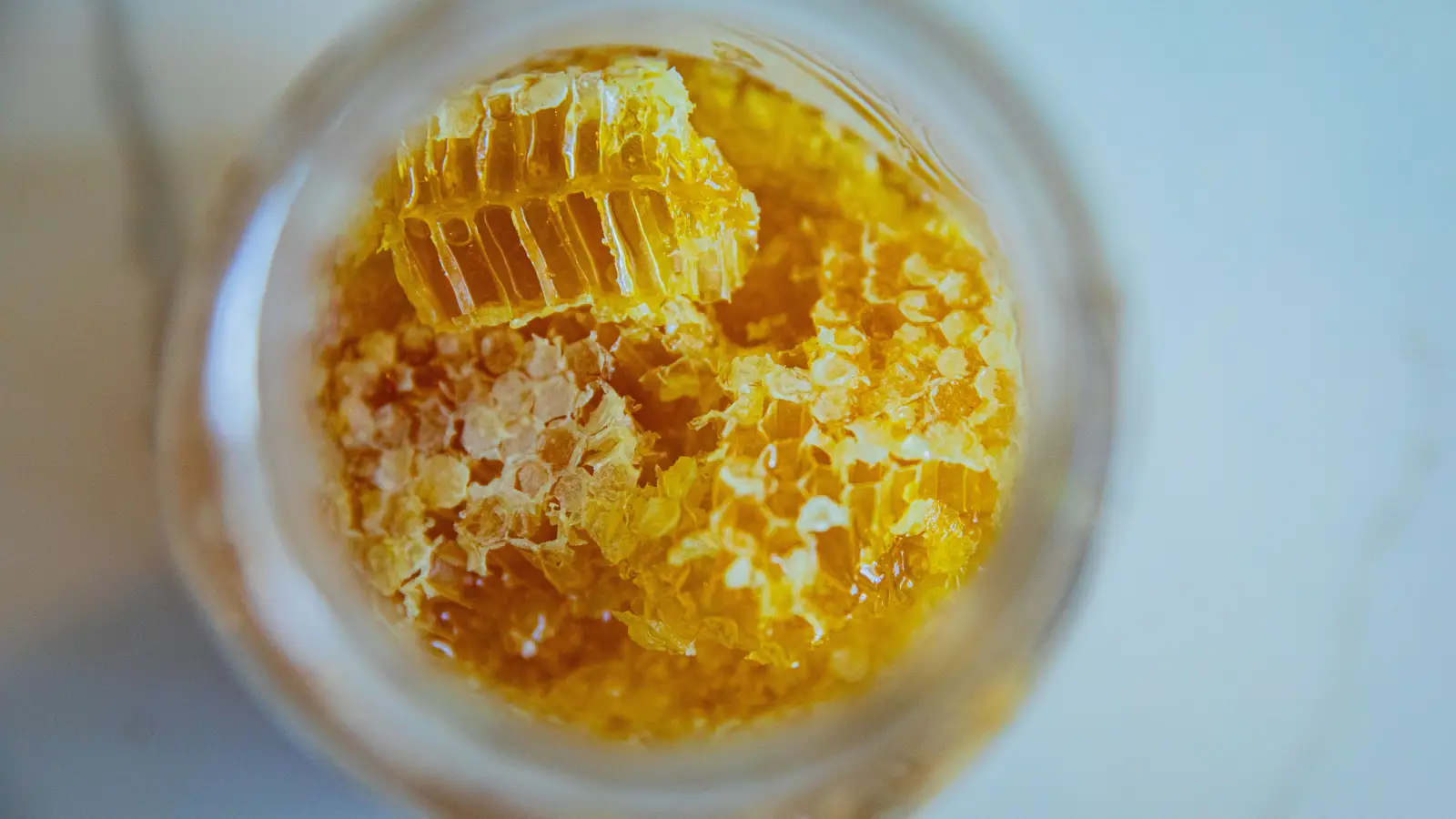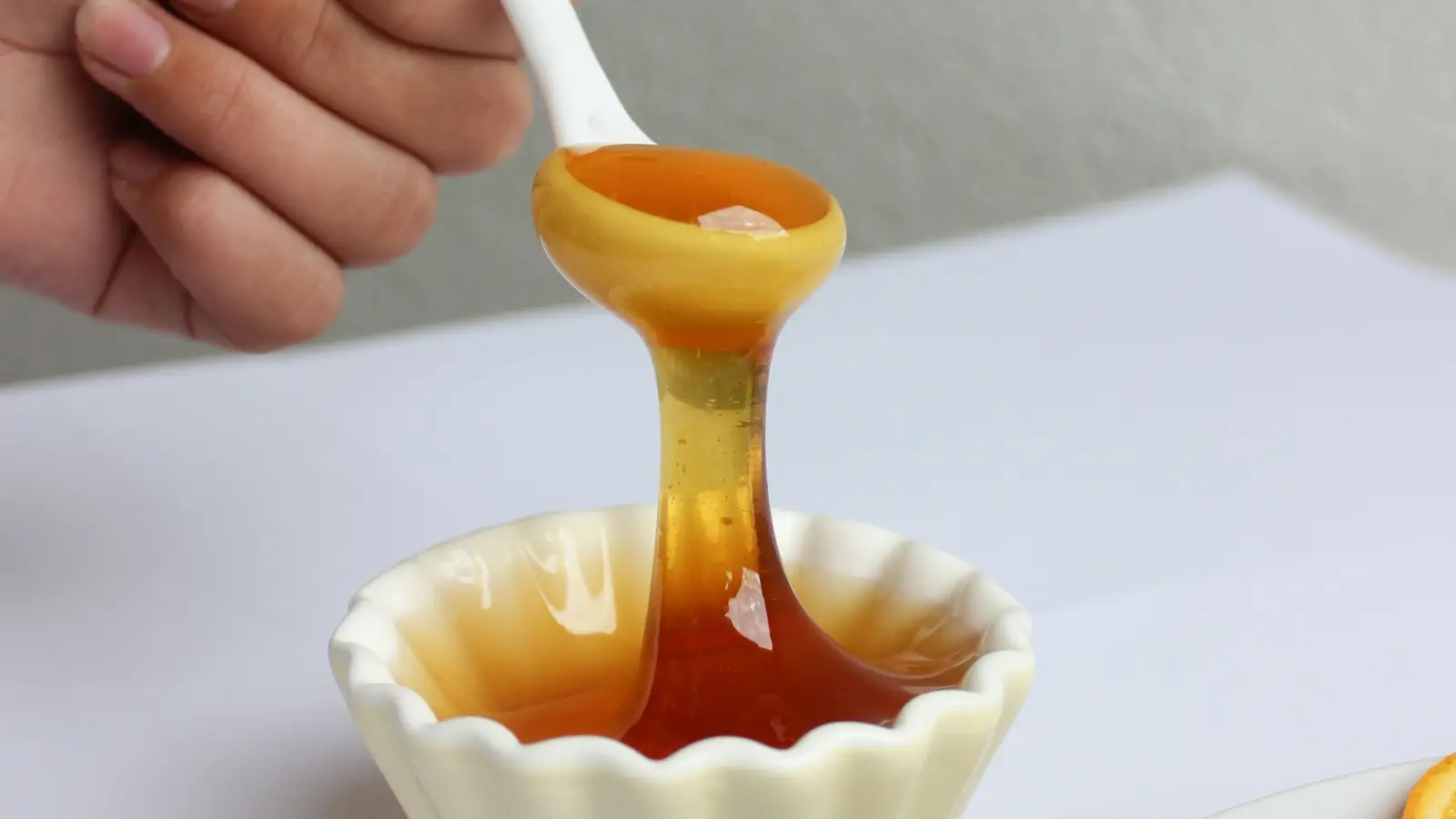
One tablespoon of raw honey provides approximately 64 calories, 17 grams of carbohydrate (as fructose and glucose), and negligible amounts of vitamins and minerals. Its only meaningful difference from table sugar at this serving size is a set of heat-sensitive enzymes—invertase, glucose oxidase, and diastase—that remain active only if the honey has not been heated or heavily filtered. For someone trying to judge whether honey is a superfood, the facts are straightforward: the micronutrient contribution is too small to matter, and the sugar load is almost identical to white sugar.
What One Tablespoon Actually Adds in Real Numbers
USDA data show that a 21-gram tablespoon supplies about 64 calories and 17 grams of sugar. The vitamin and mineral levels listed on labels—calcium, potassium, vitamin C—all sit below 1% of daily values. Calling honey a source of those nutrients is misleading; you would need to consume dozens of tablespoons to reach meaningful amounts.
Where the numbers stop telling the whole story is the enzymatic activity. Bees add invertase to nectar to split sucrose, and they deposit glucose oxidase, which slowly generates hydrogen peroxide. A spoonful of raw, unheated honey holds these proteins. Processed honey—pasteurized or aggressively filtered—loses most enzyme activity. The nutrition label cannot tell you whether those enzymes are still intact.
The Enzyme Effect: How a Spoonful Works
Invertase: Breaking Down Sucrose
Invertase continues hydrolyzing sucrose into glucose and fructose after harvest. A tablespoon of raw honey still contains active invertase, which partially predigests the sugar. This helps explain why some people find raw honey less likely to cause stomach discomfort than plain sugar, though the effect is modest.
Glucose Oxidase: A Slow-Release Antibacterial Barrier
Glucose oxidase reacts with glucose and water to produce gluconic acid and hydrogen peroxide. When raw honey mixes with body fluids—as on a sore throat—the enzyme generates a low, sustained level of peroxide for hours. This reaction stops once the honey dries or if the enzyme has been denatured by heat. It provides a mild, temporary antimicrobial effect, not a cure.
Diastase and Catalase: Supporting the Hive’s Chemistry
Diastase breaks down starch, a process with essentially zero nutritional relevance in the human digestive tract. Catalase protects honey from oxidative damage. Both enzymes are used as quality markers: a higher diastase number indicates less heat treatment. In a tablespoon, they contribute nothing directly to human health but signal whether the honey has been handled gently.
Where a Tablespoon of Honey's Enzymes Matter — and Where They Don't
When the Enzymes Are Still Active
Enzyme activity matters only when the honey is raw and used at low temperatures. Taking a spoonful of unheated honey straight from the jar to coat a sore throat, or stirring it into lukewarm water, allows glucose oxidase to produce hydrogen peroxide for several hours. Some individuals also report that raw honey eases the digestion of a heavy meal, likely because invertase predigests residual sucrose. These effects are mild and require the honey never to have been heated above about 40°C (104°F).
When Heat and Processing Have Already Done Their Damage
Honey that has been pasteurized—heated to 70°C (158°F) or higher—or stored hot loses all measurable enzyme activity. The tablespoon poured into hot tea or baked into goods contributes only sugar and water. Commercially filtered honey may also have enzymes stripped away. In these forms, the spoonful offers no nutritional advantage over any other caloric sweetener.
How This Spoonful Links to Larger Nutrition Ideas
- Simple Sugars (sibling relationship): Honey’s sugar profile—roughly half fructose and half glucose—is chemically similar to high-fructose corn syrup, though its fructose fraction is lower and varies by floral source.
- Glycemic Index (parent concept): With a glycemic index averaging around 58, a tablespoon of honey raises blood sugar slightly less rapidly than pure glucose but on par with white sugar, so it offers no meaningful advantage for blood sugar control.
- Prebiotic Activity (sibling): Research identifies oligosaccharides in certain honeys that feed beneficial gut bacteria, but the amount in a single tablespoon falls far short of what’s needed to influence gut flora.
- Antioxidant Capacity (sibling): Darker honeys contain phenolic compounds and flavonoids that act as antioxidants, yet a tablespoon delivers only a fraction of the antioxidants found in a serving of berries or tea.
Questions That Keep Coming Up About a Tablespoon of Honey
How many calories exactly does a tablespoon of honey add?
A level U.S. tablespoon of honey (21 grams) contains approximately 64 calories. That figure can vary slightly depending on moisture content and floral source, but 64 calories is a reliable benchmark used in food labeling.
Does honey contain any vitamins or minerals worth counting?
No. While honey provides trace amounts of vitamin C, calcium, iron, and potassium, the quantities in a tablespoon are below 1% of the recommended daily intake for nearly every nutrient. You would need to eat heavily unrealistic amounts to meet any vitamin need through honey alone.
Is honey a healthier sweetener than white sugar when you compare a tablespoon of each?
From a calorie and sugar perspective, they’re nearly identical. Honey has a slightly lower glycemic index on average and contains enzymes and trace compounds not found in sugar, but for someone monitoring blood sugar or total energy intake, swapping one for the other makes only a marginal difference. The health advantage of honey only appears in specific contexts—like using raw honey for a sore throat—not as an everyday substitute.
Does local raw honey relieve seasonal allergies?
The evidence is thin. The theory—that bees transfer local pollen into honey and that small oral exposures desensitize the immune system—has not been confirmed by rigorous studies. Most allergy-causing pollen is airborne and not the type bees collect. While many people anecdotally report benefit, a tablespoon of honey is unlikely to replace standard allergy treatment.
After the Spoonful: What Comes Next
Once the nutritional profile of a tablespoon is clear—mostly sugar plus a few heat-fragile enzymes—the practical question becomes how to choose and store honey so those enzymes survive. Understanding raw honey sourcing, temperature control, and label reading turns that spoonful from a generic sweetener into something with a measurable, though limited, functional role.