Most jars labeled “unfiltered” promise more than the label explains. Inside, unfiltered honey holds onto pollen, propolis specks, and enzymes that standard processing removes—components that current research connects to antioxidant, antimicrobial, and prebiotic functions. However, on a US label, “unfiltered” signals only that a specific filtration step was skipped; it does not confirm that all those compounds are still active. Knowing which pieces survive and why they matter is what turns a label claim into an informed choice.
What “Unfiltered” Means Under US Label Practices
No federal regulation sets a hard definition for “unfiltered,” but USDA and National Honey Board guidance treats it as honey that has not gone through pressure filtration capable of removing most pollen grains, fine propolis particles, or air bubbles. The typical clear honey on grocery shelves has been forced through diatomaceous earth or micro‑filters to strip out anything that might nucleate crystals or create visible haze. That step removes almost all pollen and the compounds attached to it.
Unfiltered honey may pass through a coarse strainer that catches only large wax chunks and bee parts, leaving microscopic solids behind. It does not automatically mean “raw.” An unfiltered honey can still be warmed to about 120°F during bottling, enough to disable the most heat‑sensitive enzymes, even though the pollen and propolis remain. The label “unfiltered” reports on one mechanical choice, not the thermal history. To get the full set of bioactives, the combined presence of “unfiltered” and “raw” on a label—or a direct answer from a producer—is necessary.
Pollen: The Micronutrient Package That Filtration Strips Out
Pollen grains in honey supply a measurable fraction of protein, typically 0.2–0.6% of total weight, along with lipids, B‑vitamins, and minerals like potassium and magnesium. The more functionally relevant role of pollen, though, is as a carrier of polyphenols and flavonoids. When honey is tested for antioxidant capacity, a substantial portion of the phenolic acids detected is bound to pollen particles. Ultra‑filtration pulls those particles out, and antioxidant values can drop by 20–30% depending on the original pollen load.
The idea that local, pollen‑rich honey eases seasonal allergies gets repeated frequently, but the data are weak. Small studies have produced conflicting results, and allergy specialists do not endorse honey for immunotherapy. The anti‑inflammatory activity of pollen’s polyphenolic fraction is better documented in cell and animal experiments, where it has been shown to reduce oxidative stress indicators. The consumer‑relevant point remains straightforward: unfiltered honey provides a broader range of plant‑based phytochemicals than a crystal‑clear alternative, though the exact profile depends on the flowers the bees visited.
Propolis Particles: Incidental Additives with Documented Activity
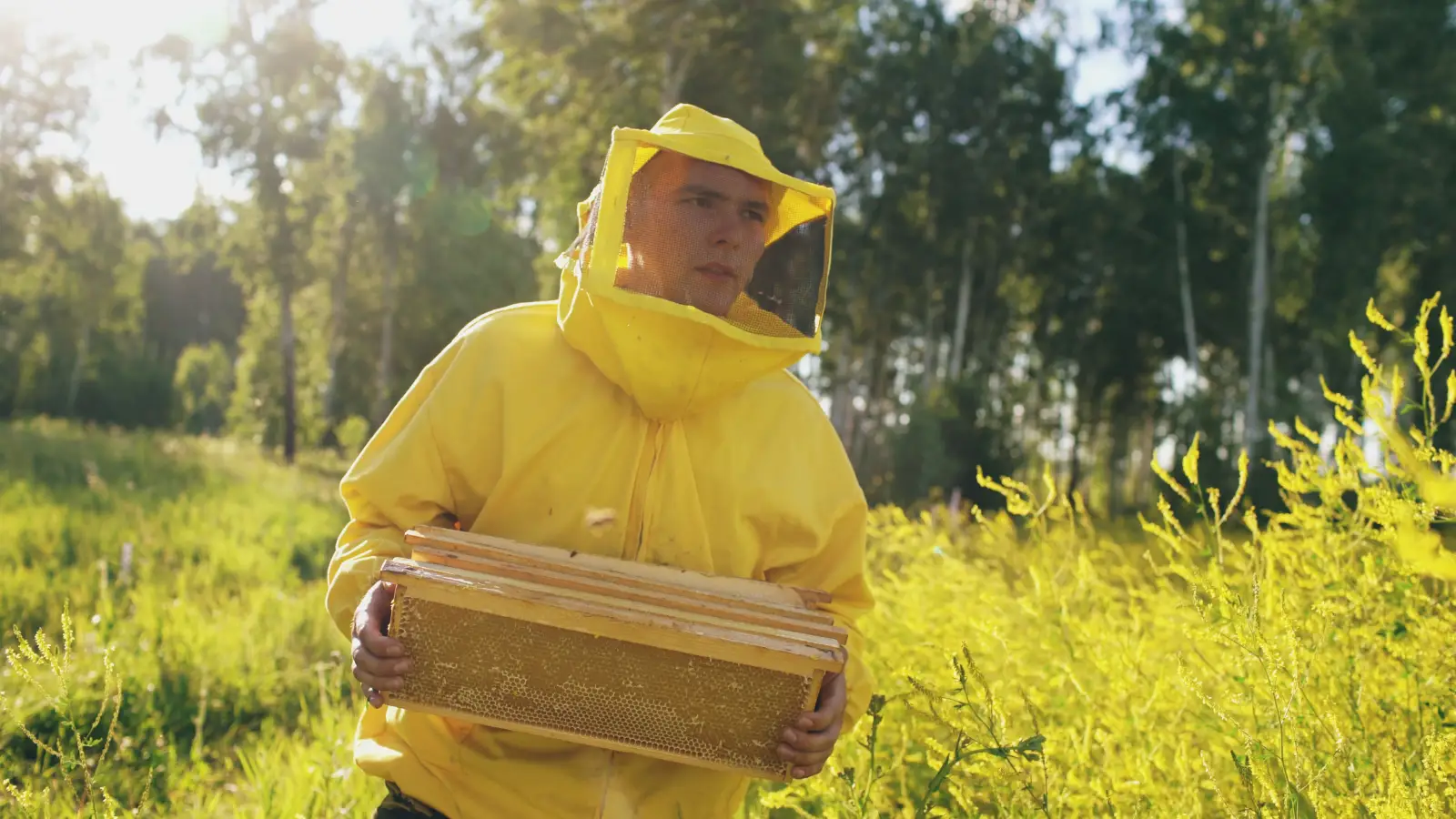
Propolis is the resinous material bees collect from tree buds and sap to sterilize and seal the hive. During extraction, tiny specks inevitably mix into the honey. Filtration removes them; unfiltered honey retains them as a faint haze or sediment.
Propolis contains bioactive molecules like caffeic acid phenethyl ester (CAPE) and pinocembrin, which have shown antimicrobial, anti‑inflammatory, and antioxidant effects in laboratory studies. Its relevance to gut health is also supported by evidence that propolis can shift microbiota composition in favor of Bifidobacterium and Lactobacillus while suppressing certain pathogens. A review of honey’s prebiotic mechanisms noted that propolis residues in unpasteurized, unfiltered honey likely contribute to these microflora effects alongside the honey’s own oligosaccharides. The concentration is low compared to a targeted propolis extract, but it comes inside a whole‑food matrix that may improve absorption. Filtration discards a functional trace compound with growing research support.
How Incidental Propolis Differs from Supplement Extracts
Propolis sold as a capsule or tincture is processed for standardized potency. The propolis in unfiltered honey is incidental and varies by hive environment and floral source. It is not a substitute for a concentrated supplement, but regular intake through a minimally processed food may provide a subtle, cumulative contribution.
Enzymes That Persist When Heat Is Avoided
Honey contains active enzymes that bees introduce during nectar conversion. Invertase splits sucrose into glucose and fructose; diastase (amylase) continues starch breakdown; glucose oxidase enables sustained hydrogen peroxide production when honey is diluted. That peroxide‑generating system underlies much of honey’s topical antimicrobial action and may play a role in the gut.
The limitation is heat. Glucose oxidase begins to denature above approximately 104°F, and even diastase and invertase decline with prolonged warming. An unfiltered honey that has been heated to packaging temperatures may still contain pollen and propolis but will have lost significant enzymatic function. If the goal is the full range of enzyme‑based activity, the honey must also be raw and minimally warmed.
Other Overlooked Particles: Bee Bread, Wax, and Yeasts
Unfiltered honey often contains fragments of bee bread—fermented pollen from the comb—and tiny wax pieces. Bee bread is more bioavailable than raw pollen, with increased B‑vitamin levels and lactic acid bacteria that can persist in spore form. These bacteria might offer a mild probiotic contribution, though the counts are far below those in fermented foods.
Wax particles are inert but affect texture, lending a slight creaminess as honey crystallizes. Yeast spores from nectar also remain more frequently in unfiltered honey. When the moisture content stays below 18.6%, these yeasts pose no spoilage risk. Above that threshold, fermentation can occur, but properly ripened unfiltered honey is stable. Moisture control is a quality discipline that industrial filtration and pasteurization can mask, but that raw, unfiltered honey must achieve naturally.
Antioxidant and Prebiotic Potential: What the Data Actually Show
Darker, unfiltered honeys consistently outperform light, filtered ones in total phenolic content and oxygen radical absorbance capacity (ORAC) assays. In a comparative analysis, filtration reduced total phenolic acids by 20–30%, a drop that matched the pollen density of the starting honey. These compounds are not a panacea, but consuming plant‑derived polyphenols as part of a varied diet aligns with long‑term health recommendations.
The Prebiotic Mechanism
Honey delivers oligosaccharides and polyphenols that bypass digestion in the upper gut, reaching the colon where gut bacteria can ferment them. In vitro experiments repeatedly show increased Bifidobacterium and Lactobacillus populations after honey incubation. Unfiltered honey may amplify this effect through additional fermentable material from pollen cell walls and propolis compounds. Human trials are rare, however, and the prebiotic impact is modest compared to established fibers like inulin. It is best regarded as a secondary benefit, not a primary reason to consume honey.
The Floral Variability Factor
No two unfiltered honeys are chemically identical. Buckwheat honey can register antioxidant values several times higher than clover honey, purely based on its pollen profile. The “unfiltered” label says nothing about floral origin, so those who want maximum functional benefit should seek darker, more robust varieties and confirm minimal processing.
Selecting, Storing, and Using Unfiltered Honey
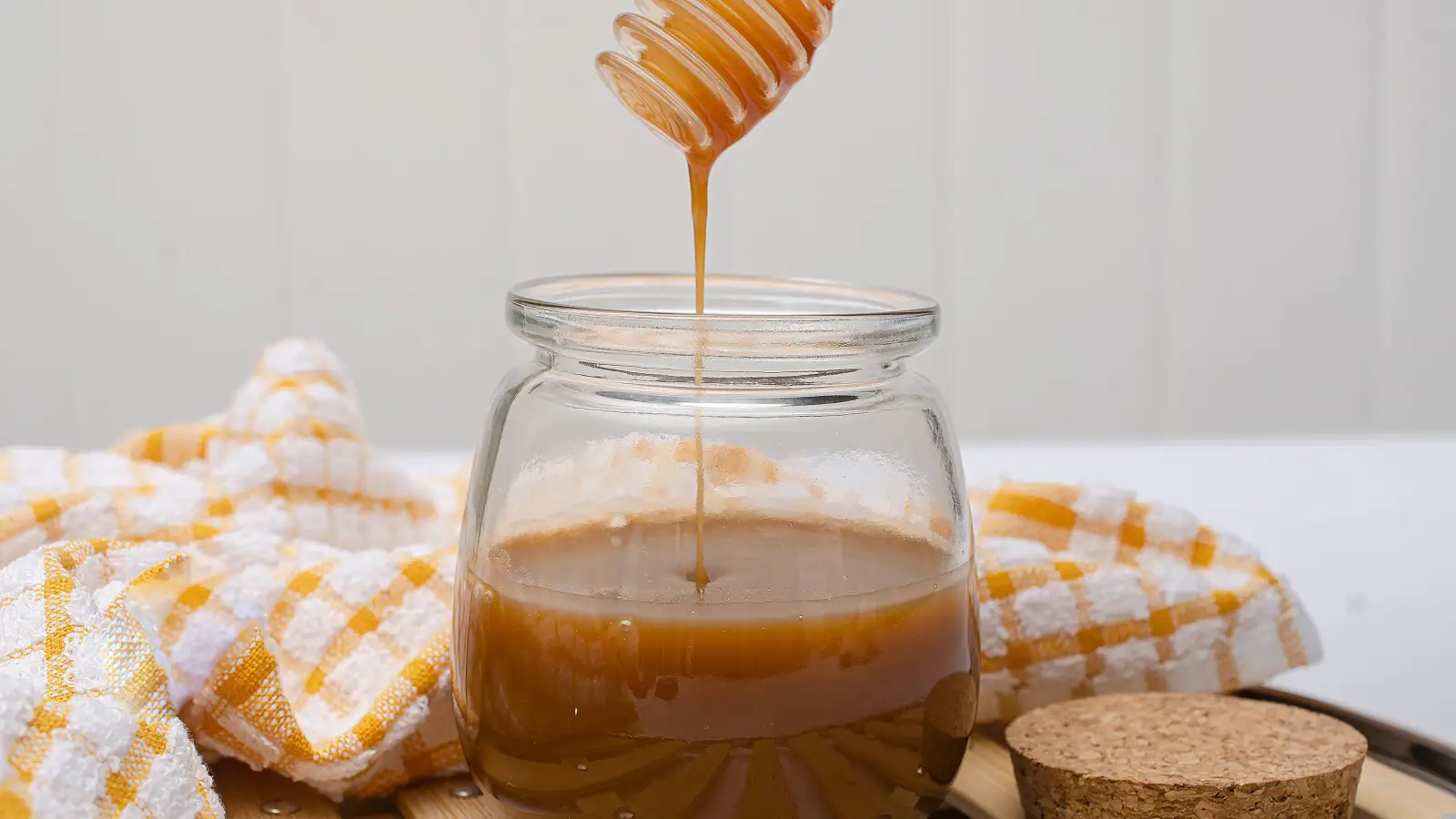
Appearance gives the first clue. Unfiltered honey is cloudy, often with a visible haze or sediment at the bottom—mainly pollen and propolis. Crystallization sets in faster than with filtered honey because those particles provide nucleation sites. That is a normal physical change, not spoilage. To liquify, place the jar in warm water not exceeding 104°F; a microwave is too aggressive and can create hot spots that destroy enzymes.
On the label, look for “unfiltered” combined with “raw,” “unheated,” or “cold‑packed.” Words like “pure” and “natural” have no legal teeth regarding processing. Small‑batch local producers who skip pressure filtration altogether tend to offer the most particle‑dense honey. Price reflects the extra care: true raw, unfiltered honey costs more than mass‑market alternatives.
Store honey at room temperature in a sealed container away from light. Always use a dry utensil; even a small amount of moisture from a wet spoon can raise water activity enough to start fermentation.
Key Takeaways
- Unfiltered honey retains pollen, propolis particles, and enzymes that filtered honey lacks; these contribute to antioxidant, antimicrobial, and potential prebiotic activity.
- The US label term “unfiltered” describes a mechanical step alone; it does not indicate the honey is raw or enzyme‑intact.
- Pollen supplies polyphenols and trace nutrients; propolis adds antimicrobial flavonoids; glucose oxidase produces hydrogen peroxide upon dilution.
- Prebiotic effects are supported by in vitro data but human evidence remains limited.
- Cloudiness and rapid crystallization are normal signs of minimal processing, not defects.
Frequently Asked Questions
Is unfiltered honey the same as raw honey?
No. Unfiltered means no fine filtration; raw means no harsh heating. A honey can be unfiltered but heated, or raw but lightly filtered. Both terms together give the best assurance of enzyme retention.
Does unfiltered honey expire?
Not in a safety sense, if stored dry and sealed. If the water content rises above about 18.6%, natural yeasts can ferment the honey, causing sourness and foam. That is a quality defect, not a health hazard.
Can unfiltered honey help with seasonal allergies?
The research does not confirm a reliable effect. The trace pollen levels in honey are insufficient to induce clinically meaningful desensitization, and allergy guidelines do not recommend it.
Why does my unfiltered honey look cloudy or solid?
Cloudiness is from suspended pollen, propolis, and sometimes bee bread particles. Solid, crystallized honey results from those particles accelerating crystal formation. Both are normal and safe.
Is unfiltered honey safe for infants?
No. All honey, regardless of processing, may contain Clostridium botulinum spores that can cause infant botulism. Do not give honey to children under 12 months.
The Information Standard Labels Leave Out
Unfiltered honey is not a different product from filtered honey in a merely cosmetic sense—it has a measurably different chemical profile. The pollen, propolis particles, and enzymes that remain are the same ones that laboratory studies repeatedly link to antioxidant, antimicrobial, and prebiotic activity. Labels rarely explain this, so the responsibility falls on the buyer to look past marketing and check both the visible cloudiness and any accompanying terms like “raw.” One practical test: buy a jar directly from a producer who can describe the handling process, then compare it side by side with a clear filtered honey. The difference in flavor, crystallization behavior, and texture will reveal what the label omits.