Honey begins fermenting when its moisture content climbs above 18.6%, a critical point where water activity (Aw) reaches 0.60 and dormant osmophilic yeasts become metabolically active. That number is neither mysterious nor arbitrary — it marks the biological boundary where the sugar-water balance shifts enough to let a handful of yeast species switch from inert passengers to active spoilers. Walk into any serious beekeeping operation after a humid harvest, and you’ll see refractometers being pulled out precisely to make sure the line hasn’t been crossed.
Where the 18.6% Figure Comes From
The threshold originates from a very specific physical reality: most honeys manage to keep their water activity below 0.60 because the enormous concentration of glucose and fructose chemically ties up water molecules. Below that Aw, osmophilic yeasts — primarily Zygosaccharomyces rouxii and its relatives — are unable to absorb enough free water to drive metabolism. They reside as spores or quiescent cells, perfectly harmless. The 18.6% moisture figure is the empirical generalization of where, across a wide range of floral sources, the sugar dilution pushes Aw to roughly 0.60. It is not a precise constant; a honey with an unusually high fructose content might reach that Aw at a slightly different moisture. But for field use, it’s a consistent enough target to serve as the go/no-go mark.
What the number solves is an instrumentation problem. A water activity meter costs far more than a good refractometer and requires calibration most beekeepers would rather skip. So the trade-off is accepted: measure an analog (moisture percentage) and infer the true risk factor (Aw) from a well-researched boundary. This is why 18.6% gets printed on honey regulations and best-practice guides — it moves the science into a format that can be checked inside a honey house with a drop of light.
None of this changes that 18.6% is a probabilistic fence, not an on/off switch. Crystallization, for example, can force moisture into the remaining liquid fraction, creating microscopic pockets well above the threshold even if the bulk reading looks safe. Conversely, a very clean honey with extremely low initial yeast cells and stored cold might sit at 19% moisture for months without obvious fermentation. Treat 18.6% as the point where the probability of spoilage becomes high enough to act, not as a law of nature.
The Osmophilic Yeast Awakening Process
How Water Activity Opens the Gate
Water activity is not simply “water content”; it’s a measure of the energy state of water — how much of it is free to participate in biological reactions. Honey’s sugar matrix, through hydrogen bonding, immobilizes most of its moisture. At an Aw of 0.60, the ratio of free water to bound water crosses a threshold where yeast cells can finally acquire the minimum number of water molecules needed to rehydrate enzymes and initiate glycolysis. Before that crossing, the osmotic stress is too great, and the cells stay metabolically frozen.
What Happens at 18.6% Moisture
A refractometer reading of 18.6% indicates that the sugars have been diluted enough that, in a representative honey, Aw has edged past 0.60. This dilution typically comes from nectar that wasn’t fully ripened inside the hive, absorption of ambient humidity during extraction or bottling, or uneven warming that releases water from crystallized sugars. The reading itself is a snapshot; if the honey was mixed well, the entire batch is at similar risk.
The Yeast Feeding Cycle Begins
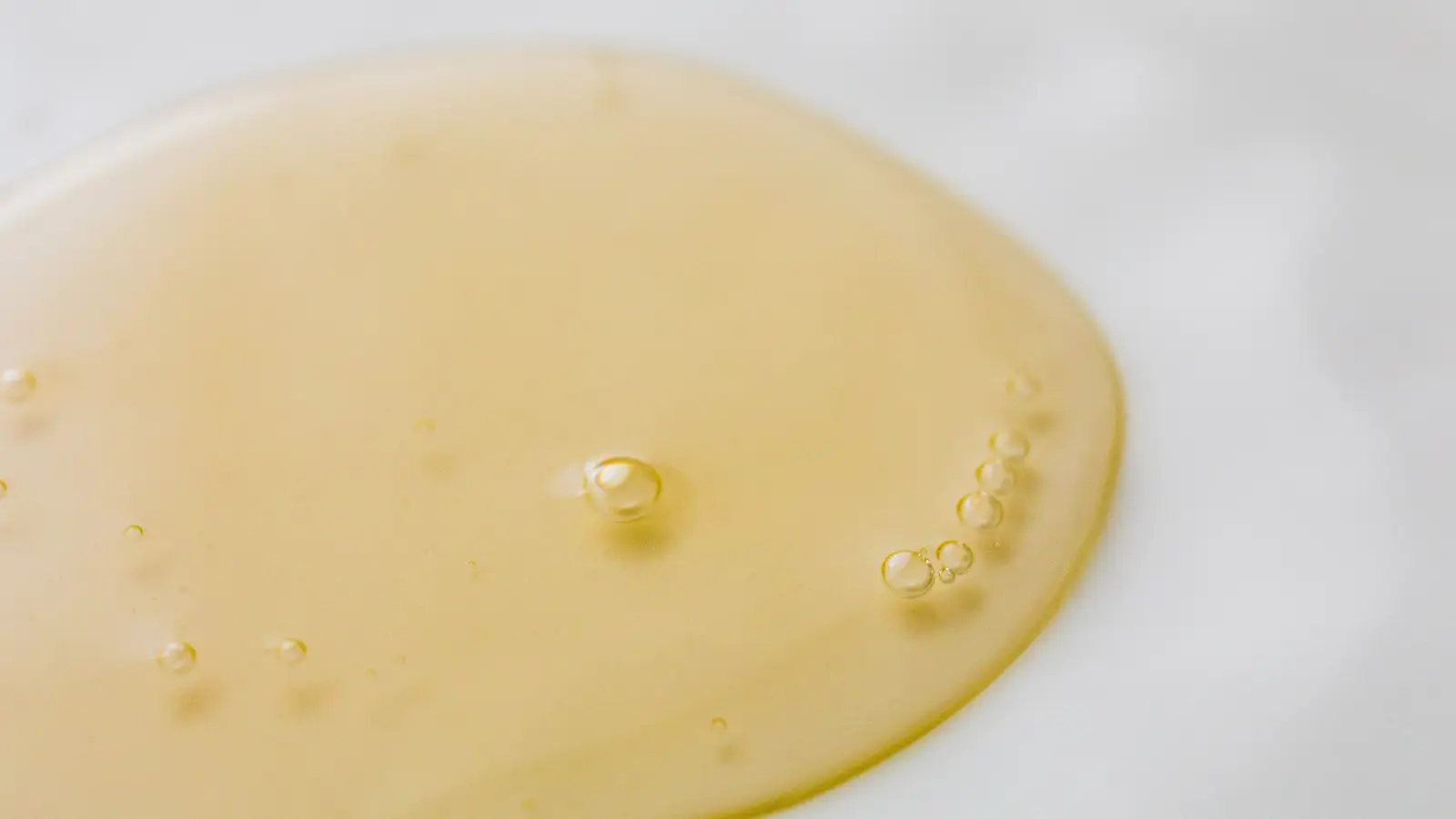
Once Aw permits, the osmophilic yeasts activate. They import sugars, ferment them via the Crabtree-positive pathway into ethanol and CO₂, and multiply slowly. The carbon dioxide creates foam or tiny bubbles; the ethanol contributes a sharp, off note. If acetic acid bacteria are also present — often introduced from the hive environment — they oxidize ethanol to acetic acid, producing the unmistakable sourness of spoiled honey. Fermentation releases additional water as a metabolic byproduct, which further raises Aw and accelerates the process. This feedback loop is why a jar that barely exceeds 18.6% can degrade rapidly once the reaction gains momentum.
When 18.6% Is a Red Flag vs. When It’s Not
When Honey Moisture Demands Attention
The 18.6% line is most relevant when the honey will be held unpasteurized at room temperature for more than a few weeks. A beekeeper working in a region with high relative humidity during the flow — the southeastern U.S., many tropical honey zones, or coastal areas — routinely faces harvest moisture above 18.6% and must dry it down before storage. Unfiltered raw honey, which retains all its natural yeast loads, has no barrier once water activity climbs, and comb honey is particularly tricky because the wax capping can trap pockets of moisture if the bees did not fully dehydrate each cell. Commercial packers who blend drum lots also worry about single high-moisture batches dragging the whole blend into the fermentation zone. Light, low-phenolic honeys like alfalfa or clover offer less antimicrobial buffering and thus have the smallest margin for error.
When the 18.6% Rule Can Be Safely Ignored
Pasteurization changes the rules entirely — a heat treatment that exceeds yeast thermal death points (usually around 60 °C for a few seconds) kills the spoilage organisms, making the moisture level a quality parameter but not a fermentation trigger. Refrigeration works, too: at temperatures below about 10 °C, the metabolic rate of osmophilic yeasts is so slow that months can pass without noticeable activity. Extremely fine filtration that removes most yeast-carrying pollen also reduces the risk, though absolute sterility is rare. Varietal exceptions exist; manuka honey, with its methylglyoxal content, and certain high-fructose honeys that resist fermentation longer don’t nullify the threshold, but they inflate the safe window. The key insight is that the 18.6% danger signal addresses the interplay of moisture and yeast: remove the yeasts, chill the environment, or accept a much shorter shelf life, and you’re managing around the rule.
Related Measurements That Explain Fermentation Risk
- Water activity (Aw): The thermodynamic metric that directly controls whether osmophilic yeasts can function; 0.60 is the biochemical threshold for activation.
- Hygroscopicity: Honey’s capacity to absorb moisture from the air, meaning that in a humid pantry, a jar can creep past 18.6% without anyone adding liquid.
- Refractometry: The field method that estimates moisture content by bending light; a value above 18.6% flags a likely fermentation risk.
- Pasteurization: Heat treatment that eliminates yeast cells, rendering the 18.6% threshold irrelevant for fermentation — though not for overall quality.
Now that the 18.6% boundary is clear, the next logical question is how to measure honey moisture with a refractometer and, when the reading is too high, what practical steps — controlled dehumidification, gentle warming, blending with drier honey — can bring a batch back below the safety line before the yeast feeding cycle starts.