That jar of honey foaming on your shelf is fermenting because its moisture content crossed a threshold—roughly 18–20%. Below that line, wild yeasts sit dormant. Above it, they wake up and turn sugar into alcohol and acid. Recognizing this boundary and how to enforce it is the difference between a timeless pantry staple and a spoiled batch.
Low Water Activity, Acidity, and Peroxide: Why Honey Usually Wins
Honey's stability rests on three barriers that operate at the chemical level, not on any magical property. Its sugar concentration pushes water activity down to around 0.6, far below the 0.9 that most bacteria and fungi demand. The enzyme glucose oxidase, added by bees, generates trace hydrogen peroxide, a broad-spectrum antimicrobial. A pH of 3.2–4.5 then adds organic acid suppression. These factors stack to create an environment where only a narrow group of organisms can survive—and even those stay inactive until the water activity rises.
The often-cited jars from Egyptian tombs didn't defy fermentation; they simply remained sealed and dry. That's the real lesson: low and stable moisture, not permanence, preserved them.
Moisture Above 18%: The Exact Variable That Triggers Fermentation
Fermentation isn't possible at 15% or 16% moisture, the levels beekeepers in arid climates routinely achieve. The risk appears somewhere between 18% and 20%, depending on floral source and yeast load. A honey rich in glucose—clover, for example—crystallizes first, leaving a liquid phase with relatively lower moisture and thus a built-in barrier. High-fructose honeys like acacia or tupelo stay liquid and offer uniform access to yeasts, making them more vulnerable at the same moisture reading.
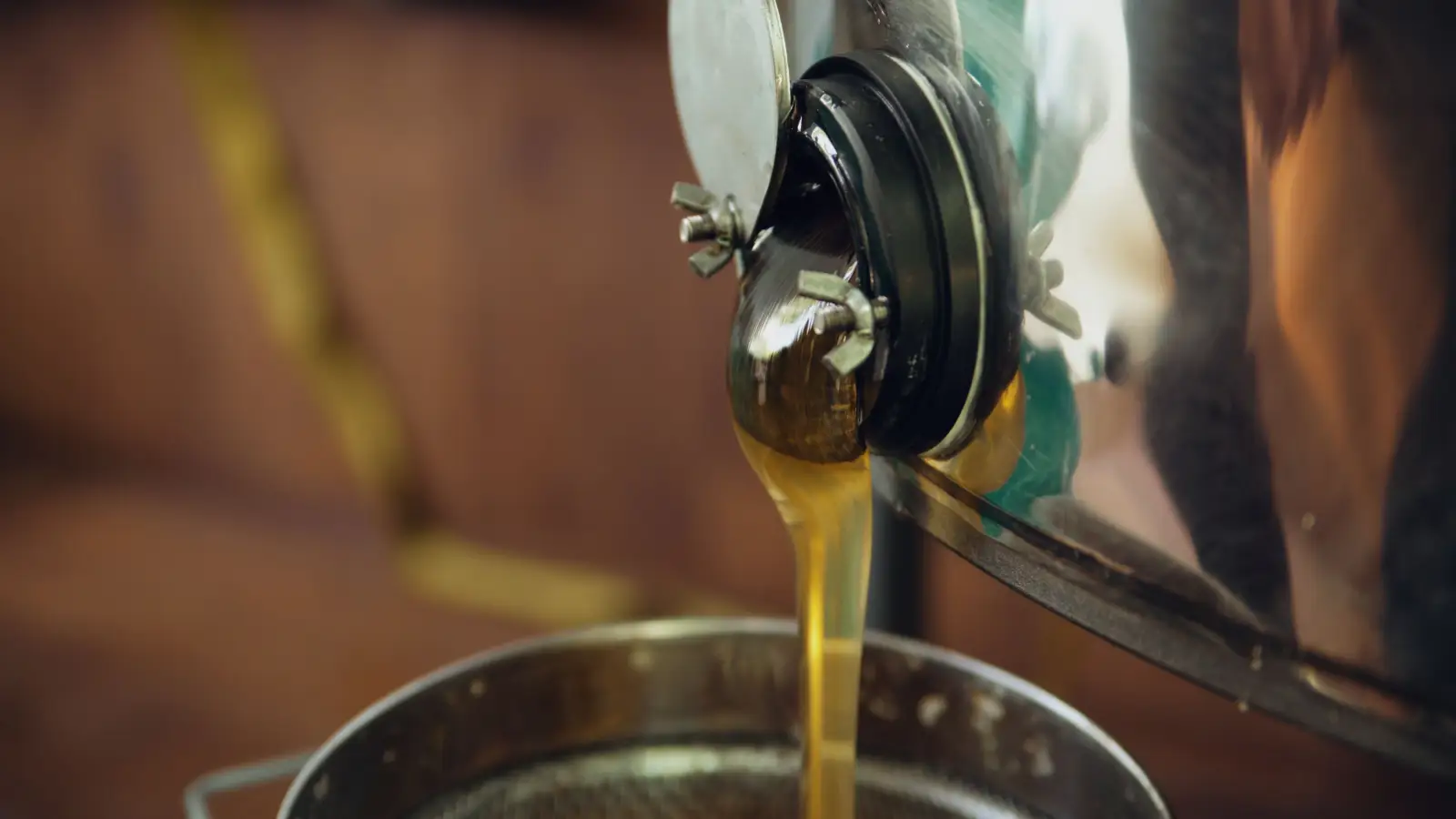
Water sneaks in from two directions: at harvest, if bees haven't sufficiently fanned the nectar, or after harvest, when a jar is opened in humid air. Honey is hygroscopic; it will absorb moisture from the headspace every time the lid is off. In a coastal kitchen with 70% relative humidity, that absorption can raise moisture content by a full percentage point over weeks of frequent use.
Osmophilic Yeasts and Temperature: How the Process Unfolds
Raw honey carries Zygosaccharomyces and other osmotolerant yeasts that survive in high-sugar dormancy. Once water activity edges upward, they shift to active metabolism, fermenting glucose and fructose into ethanol and CO₂. The same sequence occurs in any sugar-rich liquid left open, but honey's density conceals the early stages. Bubbles get trapped in the viscous matrix; foam develops slowly at the surface.
Temperature determines speed. The 15–30°C (59–86°F) range—standard room temperature—is the yeast's most active window. Below 4°C (39°F), metabolic activity halts almost completely. Above 40°C (104°F), yeast begins to die, though both extremes have practical limits: refrigerated honey crystallizes quickly, and heat degrades volatile aromatics.
After the yeast phase, acetic acid bacteria can convert ethanol into acetic acid, shifting the flavor from subtly alcoholic to vinegary. This two-stage spoilage is why a jar might progress from beer-like to sharp in a matter of days once fermentation is underway.
Detecting Fermentation: Signs in Order of Severity
Catch it early, and you have options. The signs escalate predictably:
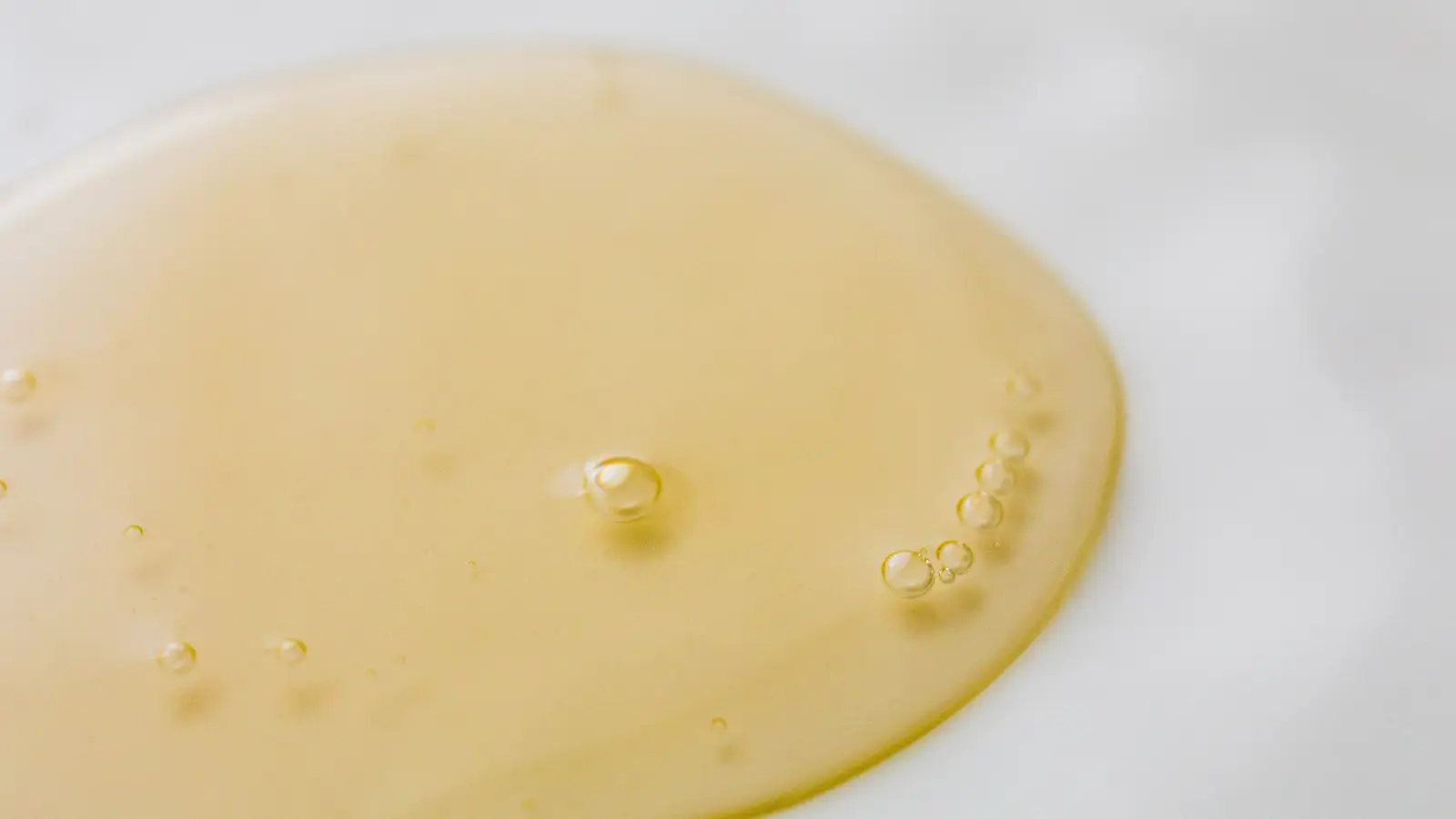
- Bubbles or foam that persist after the jar has sat undisturbed. They resemble the fine beads in champagne, often visible along the inner glass as the honey is rotated.
- An unfamiliar scent—yeasty, bready, or lightly alcoholic—replacing the honey's usual floral notes.
- A sharp, slightly boozy taste that overrides the sweetness. Later, an outright sourness emerges.
- Phase separation: a thin, runny layer above denser honey, caused by yeast activity reducing viscosity.
Do not confuse crystallization with fermentation. A grainy, solid texture without foam or off-odors is purely physical. But if foam crowns a crystallized jar or the liquid around the crystals tastes sour, fermentation is active.
The Prevention System: Moisture Control at Every Stage
A single chemical variable drives this process, so a small set of deliberate practices eliminates the risk without exotic equipment.
Test Moisture with a Refractometer
A honey refractometer, calibrated daily with distilled water, gives an unambiguous number. Aim for 17–18% at harvest or purchase. Commercial sellers often list moisture content; if you buy direct from a beekeeper, request the reading. A one-point difference sounds minor, but above 18.5%, the risk curve steepens rapidly.
Store in Glass, Not Plastic
Glass is an effective moisture vapor barrier. Polyethylene or PET jars, by contrast, allow slow water vapor transmission over months, especially in high-humidity environments. Transfer honey you intend to keep long-term into clean, absolutely dry glass containers with airtight lids. Avoid bare metal lids that can rust; use a plastic liner or a piece of beeswax paper under the cap to prevent condensation from forming corrosive spots.
Minimize Headspace Exposure
Every time the jar is opened, the headspace fills with ambient air. In a kitchen with frequent boiling, dishwashers, or simply high humidity, that air carries enough moisture to raise the honey's water content over many cycles. Scoop out what you need and reseal immediately. Do not leave the jar open while preparing tea. For persistent dampness, store the jar in a dry cabinet alongside a small container of silica gel—outside the jar—to cap the local humidity.
Refrigerate When Moisture Content Is Marginal
If you know the honey is at 18.5% or slightly above but shows no active fermentation, cold storage at 2–4°C (35–40°F) pauses yeast activity indefinitely. It also accelerates crystallization, so you'll need to rewarm portions gently—not above 40°C (104°F)—before use. This is a strategic trade-off, not a sign of failure.
Pasteurization as a Last-Defense Option
Brief heat treatment kills yeast spores outright without lowering moisture content. Commercial packers often use 72°C (161°F) for 15 seconds or a lower, longer hold. The cost is some loss of volatile aromas and enzymes, which is why raw-honey advocates avoid it. For a home user with proper moisture control, pasteurization is unnecessary; for a beekeeper whose harvest tested borderline, it can provide insurance.
Salvaging Honey That Already Shows Fermentation
A slight whiff or a few bubbles doesn't mean the jar is lost. The response depends on how far the process has gone:
- Early stage, no off-flavor: Heat the honey to 64°C (148°F) for 10–15 minutes to kill the active yeast, then skim the foam. Use it promptly in baking or everyday cooking; it's safe but no longer raw.
- Moderate sourness or alcohol notes: Accept the altered flavor. Incorporate it into barbecue sauces, bread dough, or ginger beer, where the tang and slight carbonation are assets rather than defects.
- Pungent vinegar scent and active fizz: The honey has effectively become a wild mead starter. Either dilute with water, add more sugar if needed, and attach an airlock for intentional mead making, or discard it. It won't serve as a sweetener.
Key Takeaways
- Fermentation occurs when honey's moisture content rises above roughly 18%, activating dormant osmophilic yeasts.
- High-fructose, liquid honeys face greater risk than high-glucose varieties that crystallize early.
- Early symptoms are bubbles, foam, and a yeasty or boozy aroma; later, sourness and separation appear.
- Prevention centers on a refractometer reading, airtight glass jars, and a cool, dry, low-exposure storage routine.
- Fermented honey at mild stages can be heat-stabilized; advanced stages work best in cooking or fermentation projects rather than as a raw sweetener.
Honey's stability is not a myth—it is a precise thermodynamic condition. Monitor the moisture number, and you control the outcome. If you store honey for months or years, a $30 refractometer is the single tool that eliminates guesswork and lets you act before a jar turns.