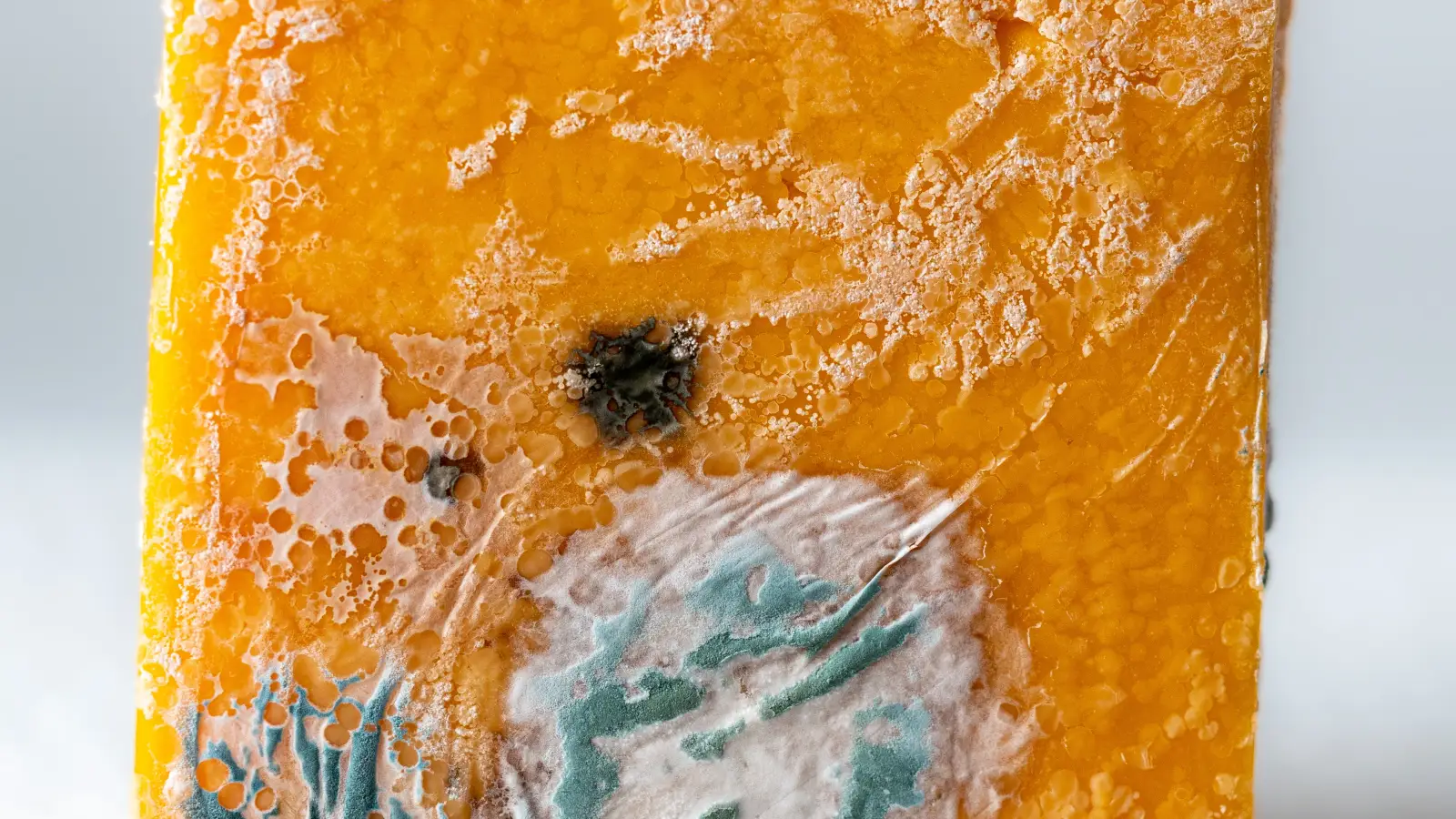
Mold in honey is uncommon, but when it shows up, you’ll see fuzzy patches, colored specks—green, black, or blue—or a tough mat that doesn’t break apart when you stir. Foam, pollen, and wax don’t do that. A food safety inspector’s rule is simple: if you spot any of those mold signs, discard the whole jar. The mycelium spreads invisibly, and there’s no safe way to salvage it.
The 5 Signs a Food Safety Expert Checks First
- Direct a bright light onto the honey surface.
- Hunt for white fuzz—cottony strands mean mold.
- Scan for green, black, or blue dots—mold colonies.
- Find a leathery or dense mat that stays solid when stirred.
- If you see only white bubbles that dissolve or tiny grains that sink, you’re looking at foam or pollen, not mold.
What an Inspector Actually Does: Step by Step
1. Inspect Under Bright Light
A flashlight or daylight reveals detail that a dim kitchen misses. Tilt the jar and check the edges—mold often starts where wax bits or air pockets sit. No fuzzy patches, no odd specks? Move to the next check.
2. Separate White Foam from Mold
Foam looks like a collection of individual bubbles. Stir it with a clean spoon; it thins out or vanishes. That’s harmless air whipped in during bottling.
Mold, by contrast, stays put. It has a cottony texture, doesn’t dissolve, and may peel up in one piece when you lift it. If you poke the spot and it’s fuzzy or refuses to break apart, treat it as mold.
Decision: bubbles that dissolve = safe. Fuzzy layer that doesn’t = discard.
3. Examine for Colored Specks
Tiny green, black, blue, or orange dots that don’t move when you tilt the jar are mold colonies. Scoop a small area with a spoon and view it against a white surface. Pollen grains look golden to brown and float or sink—they never form stationary, raised specks. If you see colored spots that stand still, they’re trouble.
4. Probe the Surface with a Utensil
Scrape the suspicious area lightly. Foam collapses. Crystallized honey crumbles. A mold mat feels slick or leathery and resists breaking—it may even stretch a little. If your spoon pulls up a cohesive film, stop and discard the jar.
5. Give It a Smell (Secondary Check)
Most pure honey smells sweet, floral, or waxy. Moldy honey often has a musty, stale, or damp-cellar odor. This check works best when paired with a visual clue. If you smell something off and you’ve already seen fuzz or specks, the decision is made: toss it.
Confirm Your Honey Passed Every Checkpoint
After each inspection stage, a safe jar should meet these conditions:
- After bright light: no cottony patches, no raised hairy spots—only clear liquid or uniform crystals.
- After foam test: white substance fully dissolves with stirring.
- After speck scan: only dust-like pollen grains that disperse; no stationary colored dots.
- After texture probe: spoon sinks through surface; no leathery pulling.
- After sniff: sweet, pleasant aroma; no musty or basement-like scent.
If all markers check out, the honey is safe.
When the Inspection Leaves Doubt
- You can’t decide after every check. A food safety inspector’s closing rule: when you’re uncertain, throw it out. The cost of a jar is nothing next to the risk of consuming mold toxins.
- The jar sat with a loose lid in a humid spot. Honey absorbs moisture, and added water kills its natural preservation. If you saw any fuzz and recall poor storage, discard immediately.
- You already stirred the suspicious patch in. Once mixed, you can’t visually separate mold from foam. Since you can’t confirm safety, the jar is no longer reliable—discard.
- You found a wax-like white film that isn’t fuzzy. Beeswax bloom can form on raw honey. Scratch it: if it feels waxy and crumbles, it’s harmless. Any fuzz at all means it’s mold, and you discard.
Common Questions About Honey Safety
Can honey mold make you sick?
Some molds create mycotoxins that can cause allergic reactions or illness. Honey’s low water content usually blocks mold, but visible growth signals moisture contamination. The only safe response is to throw the whole jar away—mycelium extends beyond what you can see.
Why is there white foam on my honey?
That foam is just air whipped in during extraction or filling. It’s safe and dissolves when you stir or let the jar rest.
Is crystallized honey the same as mold?
No. Crystals form naturally when glucose separates from water. The result looks grainy or white but has no fuzz, no specks, and no off odors. Gently warming the jar reverses it.
Can I scrape mold off and eat the honey underneath?
No. Mold mycelium can spread through the honey without being visible. Scraping off the top removes only surface evidence, not risk. Discard the jar.
Next Step: Store Honey to Block Future Contamination
You now have a clear field guide to tell foam, pollen, and wax from mold spores. The next logical task is to audit your other honey jars and lock down storage: keep lids tight, place jars in a cool, dry cupboard, and never insert a wet spoon. That prevents the moisture mold needs to grow.