DIY guides often reduce honey’s action to a single word: “antibacterial.” What that omits is a set of three parallel mechanisms — an enzyme reaction (glucose oxidase → hydrogen peroxide), a pH shift (to roughly 3.2–4.5), and a physical osmotic pull — that together explain what the mask does. The catch is that these mechanisms, well-documented in controlled lab settings, don’t map neatly onto a living face. The hydrogen peroxide production requires dilution to activate, the acidity is buffered by skin, and the osmotic effect weakens as the honey absorbs ambient moisture. The result is a mask with real, measurable activity — but not the sort that guarantees a visible cosmetic result.
A Mask on a Mild Breakout: What the First Ten Minutes Look Like
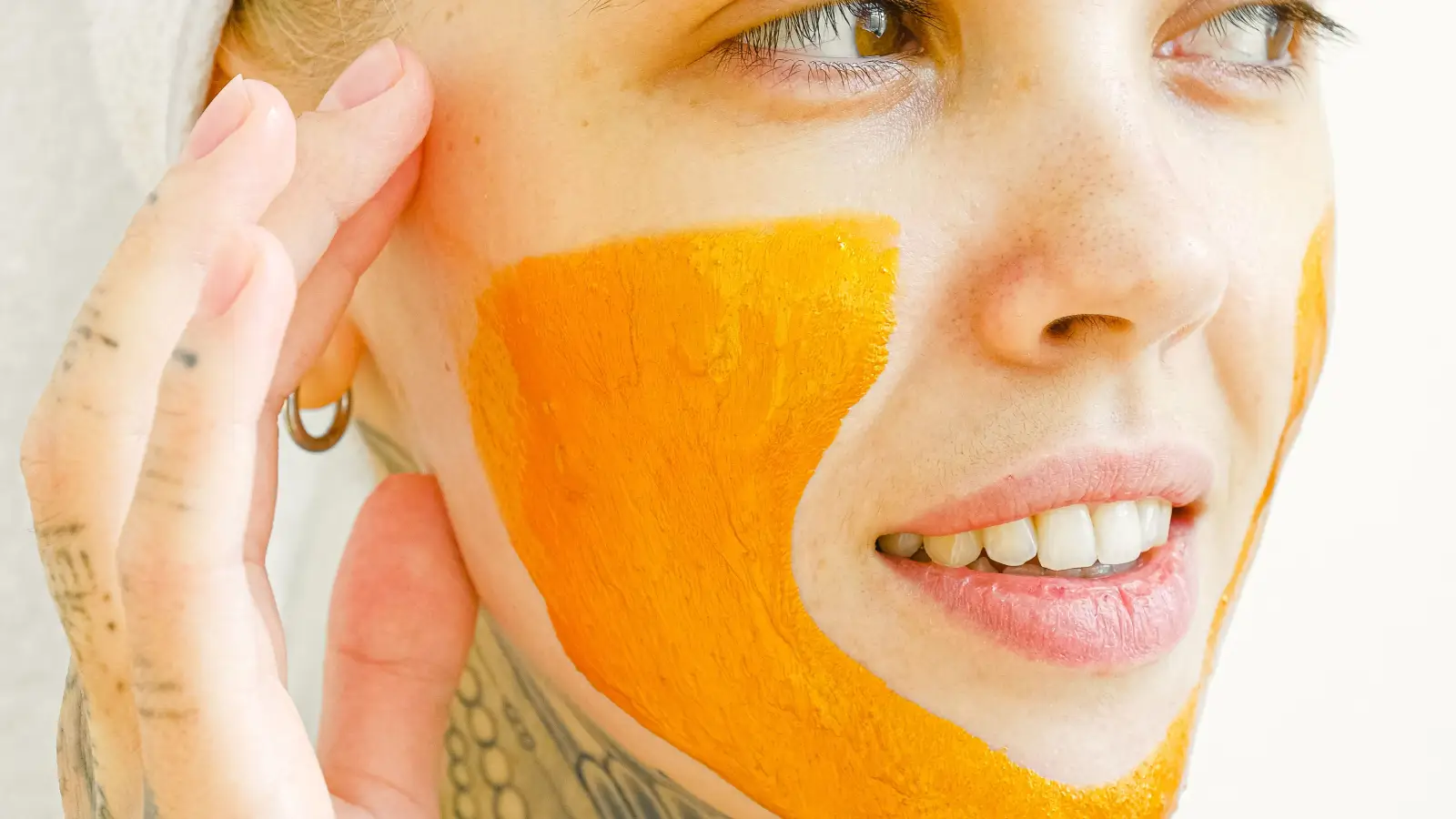
Imagine a person with oily, acne-prone skin scooping raw, unheated honey from a small apiary jar and smoothing a thin layer across their cheeks and chin. The texture is sticky, then tacky as the honey warms to skin temperature. A faint tingling starts — not a sting, just a subtle signal that something is happening. After twenty minutes they rinse; the skin looks momentarily calmer, the pimple maybe a shade less red, but the underlying bump is unchanged.
The honey in this scenario is raw, meaning it was never heated above hive temperature. That preserves glucose oxidase, the enzyme central to the antibacterial story. The moisture content sits around 17–18% — low enough to keep the enzyme dormant until it hits the face.
What’s Actually Driving the Activity While the Mask Sits
Glucose Oxidase Meets Skin Moisture — and Hydrogen Peroxide Appears
In the jar, glucose oxidase stays inactive because the sugar concentration is too high. Once the honey spreads into a thin film, it mixes with transepidermal water and the honey’s own moisture; the local water content can rise to 30–50%. That dilution unlocks the enzyme, which starts converting glucose into gluconic acid and hydrogen peroxide.
Laboratory experiments show that diluted honey can generate hydrogen peroxide at roughly 0.5–1.0 mmol/L within 30–60 minutes. That’s a low concentration — a 3% pharmacy peroxide solution delivers about 880 mmol/L — but it’s enough to inhibit bacteria like Staphylococcus aureus and Cutibacterium acnes in a petri dish over several hours. On skin, the contact time is shorter and the chemical environment is anything but static. Nobody has measured how much peroxide reaches a clogged pore, so the practical potency is a black box.
The pH Drop Creates a Surface That Bacteria Dislike
As gluconic acid builds, the pH of the watery honey film drops. Most raw honeys register between 3.2 and 4.5 out of the jar. On skin, where buffering capacity varies, the thin layer might settle around 4.0–5.0 for a while. Acne-associated bacteria such as C. acnes reproduce more comfortably at neutral to slightly alkaline pH; an acidic film can slow that growth. But once the mask is rinsed off, the skin’s own pH rebounds toward 5.5 within an hour. The window is narrow.
Osmotic Pressure Dehydrates Bacterial Cells by Force
Honey is a supersaturated sugar solution with a water activity typically below 0.6. When a bacterium lands in that film, water rushes out of the cell to balance the gradient, leaving it unable to reproduce or repair itself. The mechanism is purely physical — no chemistry needed, and it begins instantly. The weakness is that the honey film absorbs humidity from skin and air, gradually flattening the osmotic gradient until the pull is negligible. On a bathroom counter, that might take an hour; on a warm, sweaty face, much less.
What Lab Data Cannot Promise for a Face Mask
Each mechanism has been demonstrated in vitro — diluted honey in broth, agar plates, or wound models. But a face mask operates on a living, shedding, oily surface with its own microbiome, temperature swings, and a pH recovery system. The same osmotic force that dries a bacterium on glass does not necessarily reach a bacterium lodged deep in a sebaceous follicle. The hydrogen peroxide plume generated in a stirred beaker is not the same as the plume generated in a static mask layer. This is why rigorous cosmetic studies are sparse, and why the few that exist often use medical-grade honey at concentrations a home user would never apply.
Three Situations Where the Mechanisms Show Up — and Where They Don’t
Calming a Superficial, Inflamed Pimple
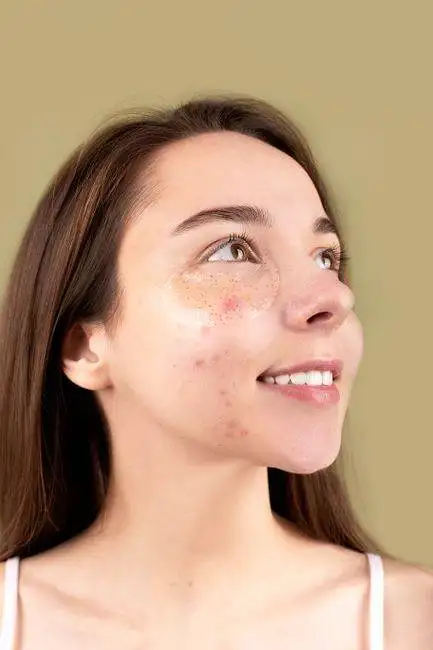
A 20-minute raw honey mask can temporarily reduce redness on a surface-level pimple. The osmotic pull may slightly flatten it, and the acidity can discourage further bacterial multiplication on the outer skin. The effect is mild and short-lived, comparable to a cool compress. Rinse thoroughly — leftover sugar can feed skin microbes later.
Soothing a Mild Sunburn
Here, honey’s humectant action keeps the burn moist, and the low pH may help stabilize the acid mantle. Antibacterial activity takes a back seat to the physical barrier. Choose a runny, high-glucose honey to spread without friction. Remove gently after 15–20 minutes. Avoid using raw honey on blistered or broken skin unless it has been sterilized — the risk of spore-forming bacteria like Clostridium botulinum is low but real.
Using Honey as a Wound Dressing
The strongest clinical evidence for honey’s antibacterial mechanisms comes from wound care, especially medical-grade Manuka honey or irradiated preparations standardized for methylglyoxal or hydrogen peroxide activity. For a minor scrape, a dab of raw honey can create a moist, slightly antimicrobial seal — but a non-adherent dressing is safer and more predictable. If infection signs appear, medical care outweighs any kitchen ingredient.
The One Mistake That Undercuts Most DIY Honey Masks
The assumption that any jar labeled “pure honey” will deliver the full trio of enzymatic, pH, and osmotic effects. Most supermarket honey has been heat-treated to delay crystallization; that process inactivates glucose oxidase. Without that enzyme, the hydrogen peroxide mechanism is gone. The honey remains acidic and osmotically active, so it isn’t useless, but it acts more like a sugar-acid syrup than a live antimicrobial system. A “pasteurized” label or a jar that has sat on a shelf for a year makes meaningful peroxide production on skin unlikely.
Why the Jar You Pick Changes Everything: Raw vs. Processed Honey
Raw, cold-packed honey from a local beekeeper almost always retains glucose oxidase activity for several months when stored cool and dark. Pour that honey into hot tea, though, and the enzyme denatures within minutes once the temperature passes 40–45 °C (104–113 °F). Processed honey may be flash-heated to 70 °C or higher during bottling, destroying the enzyme entirely. The physical properties — stickiness, sugar content, pH — remain similar, so the label can still call it “100% pure honey.” That is chemically correct but biologically missing the point for a face mask.
Manuka honey works differently: its non-peroxide antibacterial activity comes from stable methylglyoxal. That makes the enzyme issue irrelevant for Manuka, but its cost and potency mean it is rarely the jar someone reaches for in a casual DIY mask. When used, a thin layer is plenty, but the mechanism is not the glucose oxidase story.
Questions That Come Up When You Actually Try a Honey Mask
Does any honey actually fight acne bacteria?
Only raw, unheated honey with active glucose oxidase can generate hydrogen peroxide on skin — and even then, the concentration is orders of magnitude below what a dedicated topical acne treatment provides. Processed honey and most creamed varieties have lost the enzyme. The acidity and osmotic pull offer a gentle effect, but calling it “antibacterial” on a living face oversells the reality.
How long should the mask stay on to work?
Lab data show hydrogen peroxide production increases for roughly 30–60 minutes of dilution, but a face mask left that long turns sticky, pulls at the skin, and attracts dust. Fifteen to twenty minutes is a practical window; beyond that, the payoff is uncertain and the fuss increases.
Is honey safe for sensitive skin?
Generally yes, but the low pH and osmotic action can sting or irritate a damaged barrier — especially if the skin is dry, over-exfoliated, or dealing with active eczema. A patch test behind the ear for ten minutes is a low-risk way to check before covering larger areas.
Does honey work on cystic acne?
Cystic acne sits deep in the dermis, out of reach of any topical mask. The antibacterial and osmotic mechanisms affect the skin surface and the outermost follicle, so they may help surface bacteria and inflammation but will not address the root of a deep nodule. Relying on a honey mask for cystic acne delays the medical treatment that type of acne usually requires.
What This Means the Next Time You Reach for a Jar
The raw, unheated honey from the example earlier delivered something real because its glucose oxidase could wake up, the pH could shift, and the osmotic gradient could pull — all within a short exposure. When the honey is pasteurized or old, that enzymatic piece disappears, and the mask becomes little more than a gentle humectant with a bit of acidity. If the jar cannot verify that its enzymes are intact, expect less than the tutorial promised.