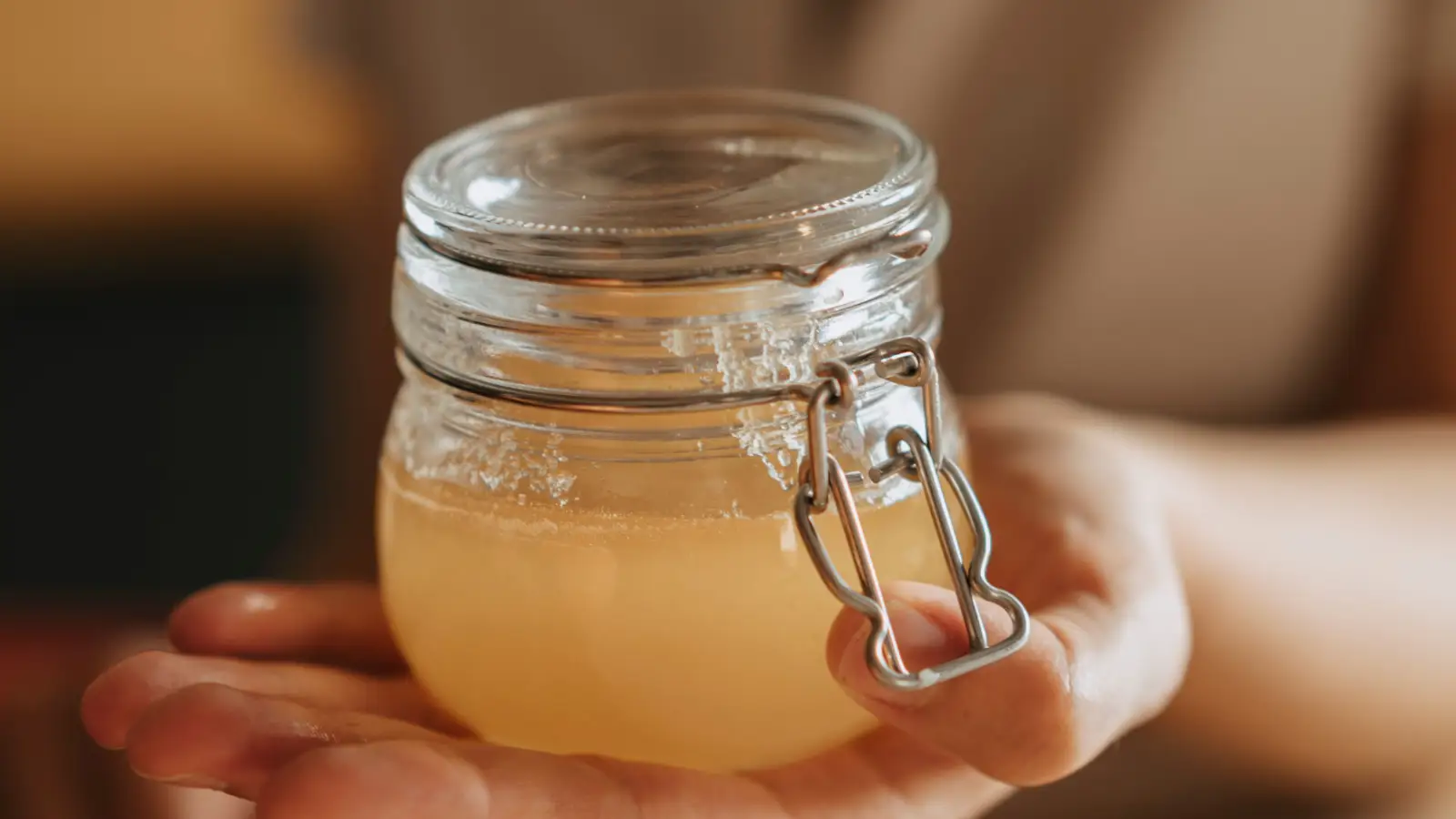
Honey keeps indefinitely when two numbers stay in check: moisture below 18% and temperature below 90°F. Glass jars enforce those limits. Plastic does not. Even food‑grade plastic allows humidity to seep through walls over time, and heat above 90°F softens the polymer enough to warp seals. The outcome is direct: glass‑stored honey stays clear, pourable, and free of sour, yeasty notes for months, while plastic‑stored honey risks fermentation and flavor loss.
The Protocol: Steps to Lock Out Moisture and Heat
Each step isolates one of the two failure points—moisture ingress or heat buildup.
- Measure moisture content with a refractometer, confirm a number below 18%
- Choose a glass jar with an airtight, non‑reactive lid
- Wash and fully dry the container before filling
- Fill the jar, leaving about ½ inch headspace to handle expansion
- Seal the lid snugly and place the jar in a cool, dark spot that stays under 90°F
- Check the jar monthly for condensation, crystallization, or off odors
Measure Moisture Content with a Refractometer, Confirm a Number Below 18%
Fermentation starts the moment moisture crosses 18%. A handheld honey refractometer gives that number in under a minute. Spread a drop of room‑temperature honey on the prism, close the cover, hold it to a light, and read the scale. The most common mistake is trusting a label—raw honey batches vary, and a ten‑dollar tool prevents a ruined jar.
Choose a Glass Jar with an Airtight, Non‑Reactive Lid
Glass is impermeable; plastic leaks humidity slowly but steadily. A jar with a metal lug cap or a thick plastic screw‑top fitted with a silicone seal stops moisture exchange dead. Pick a jar that previously held acidic food—it has already proven the lid won’t react with honey’s low pH. The error people repeat is grabbing a pickle jar and reusing its original lid. Those lids carry pickle residue and lose clamping force; they leak flavor and humidity.
Wash and Fully Dry the Container Before Filling
Any residual water pools at the surface and triggers local fermentation. Wash the jar in hot, soapy water, rinse, and dry upside down until no droplets remain. This takes about 15 minutes. A common shortcut—wiping with a damp dish towel—leaves a micro‑film of moisture, exactly what the protocol is designed to eliminate.
Fill the Jar, Leaving About ½ Inch Headspace to Handle Expansion
Honey expands with heat. Cramming a jar to the brim forces the lid to pop or leak when room temperature rises. Half an inch of headspace absorbs that movement without compromising the seal. Skipping this step explains why some stored jars suddenly look sticky around the rim even though the seal seemed tight.
Seal the Lid Snugly and Place the Jar in a Cool, Dark Spot That Stays Under 90°F
Temperatures above 90°F degrade enzymes and darken honey; above 100°F, delicate aromatics vanish within days. A closed pantry, cellar, or deep cabinet away from the stove works. Darkness is not optional—direct sunlight warms a glass jar past 90°F fast enough to undo every earlier step. The typical mistake is a sunny windowsill, chosen for convenience, that turns a storage jar into an incubator.
Check the Jar Monthly for Condensation, Crystallization, or Off Odors
Open the jar once a month. Droplets on the lid signal a failed seal or excess moisture. Crystallization is harmless, but when it arrives abruptly, the storage temperature likely dipped below 50°F; glass buffers those swings better than plastic. A sour, yeasty smell means fermentation—the batch must be used quickly or tossed. The only mistake here is ignoring the check. Early problems are fixable; ignored honey spoils permanently.
Final Check: Before You Close the Pantry Door
- Refractometer reading is in hand, below 18%
- Lid is tight and no moisture beads appear inside after 24 hours
- Storage spot is dark, consistently under 90°F, distant from any heat source
Printable Quick‑Reference Card
| Step | Action |
|---|---|
| Moisture check | Use a refractometer; target <18% |
| Container | Glass jar, airtight lid |
| Preparation | Wash, fully dry |
| Filling | Leave ½" headspace |
| Placement | Dark, cool, <90°F |
| Monthly audit | Inspect for condensation, crystals, smell |
Questions About Honey Storage That Go Beyond Glass vs. Plastic
Can I use a plastic squeeze bottle if I finish the honey quickly?
Yes, for honey consumed within two to four weeks, a clean plastic bottle in a cool cupboard works. Beyond that, even trace moisture ingress through the plastic wall can push moisture past 18% and start fermentation.
Does honey crystallize faster in plastic than in glass?
Yes. Plastic amplifies temperature fluctuations—cool nights followed by warm days trigger crystallization sooner. Glass dampens those swings, so crystals form more slowly.
Is it safe to store honey in the refrigerator?
Refrigeration is unnecessary and encourages crystallization because 40–50°F is right in crystal‑seeding range. If you must refrigerate, use a glass jar with a tight lid to block refrigerator odors, but expect grainy honey.
How do I know if stored honey has gone bad?
Fermented honey smells sour or yeasty, may bubble, and often separates into a thin watery layer. That indicates moisture exceeded 18% and yeast activated. It is safe to cook with in small amounts, but the flavor is ruined.
What if I don’t own a refractometer—any backup method?
A rough test: drip honey onto a dry paper towel. A wet ring spreading beyond the honey signals moisture likely above 18%. It lacks precision, but it catches risky batches before they enter a sealed jar.
One Habit That Cuts Storage Time in Half
Follow the protocol and your honey stays stable, unfermented, and full‑flavored for a full season. To make the whole routine faster next time, pre‑label several clean glass jars with the date and the refractometer reading. Fill, seal, and shelve in one motion—no marker hunting, no second‑guessing.