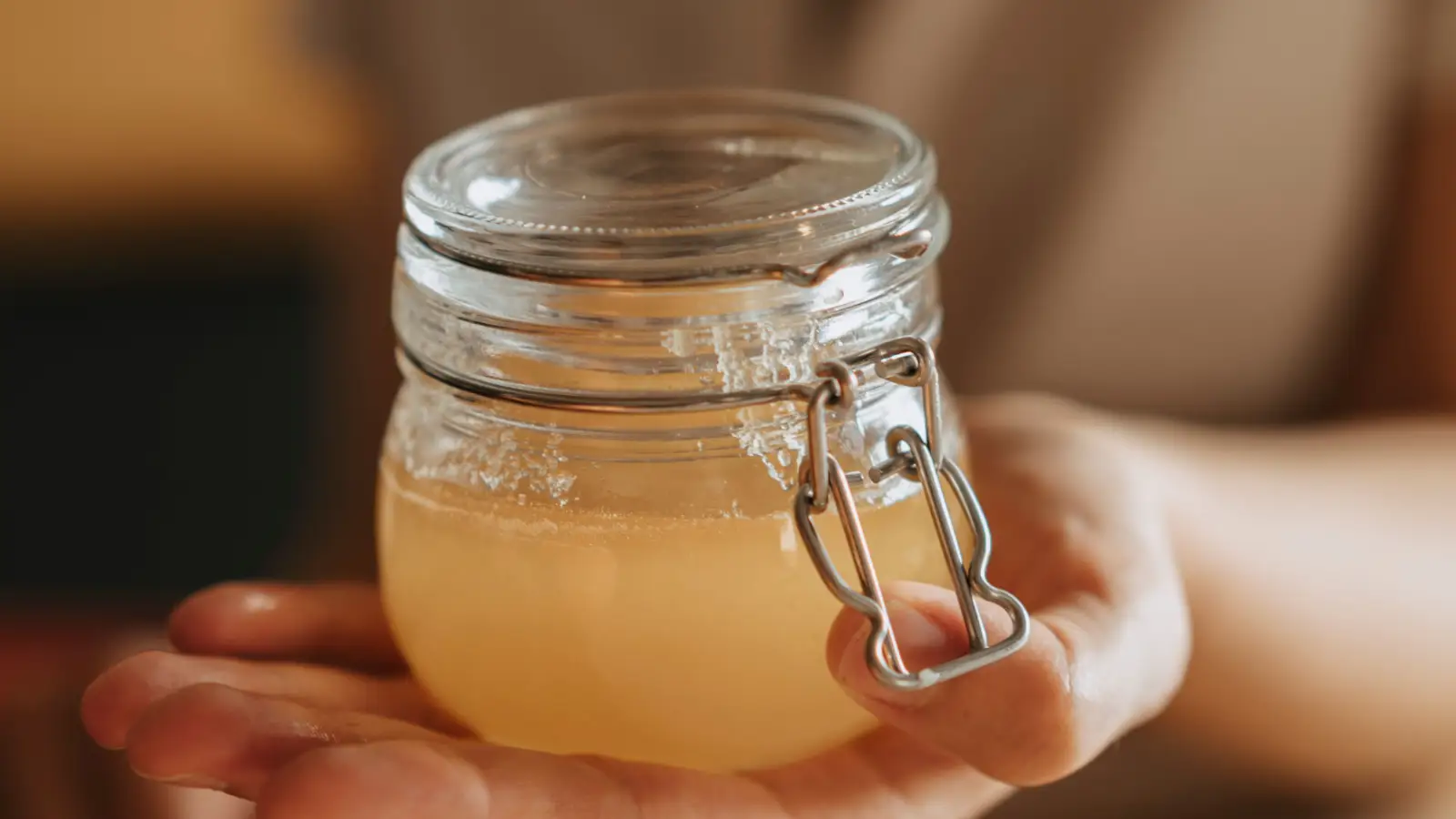
Crystallized honey is not spoiled. It is a physical change where glucose separates from the water and forms solid crystals. Crystallized honey can last indefinitely, but if its moisture content exceeded about 18%, the liquid that separates can ferment — producing a sour odor, foam, and off flavors. Knowing the difference between stable crystals and the early signs of spoilage prevents wasting a perfectly good product.
A Jar of Wildflower Honey, Weeks After Purchase
A jar of raw wildflower honey from a farmers' market sat in a cupboard. The label stated "unheated, unfiltered." When opened months later, the honey had turned into a thick, opaque mass with a sandy texture. The golden liquid was gone, replaced by a pale, spreadable solid. The sight often triggers alarm — but it matches exactly what the beekeeper anticipated. Raw honey at room temperature almost always crystallizes. It is a predictable transformation, not evidence of mishandling. The jar remained safe, still honey, and gentle warming would return it to a liquid state.
The Chemistry Behind the Crystals
To explain why that wildflower honey solidified rapidly, the composition — not its age — is what matters.
Glucose and Fructose: The Settling Game
Honey is a supersaturated solution: mostly glucose and fructose dissolved in roughly 17% water. Glucose is far less soluble than fructose. Over time, glucose molecules leave the solution and attach to one another, building crystals. The ratio of these two sugars varies by nectar source. Honey from glucose-rich blossoms — wildflower, canola, clover — can granulate within a few weeks. Those heavier in fructose, like tupelo or acacia, may resist crystallization for years. That farmers' market wildflower was simply high in glucose, so it turned solid quickly.
How Honey Anchors Its Crystals
Once the first glucose crystal forms, it acts as a seed. Other glucose molecules add onto it, creating a crystal lattice. In raw honey, tiny particles — pollen grains, wax fragments, even dormant yeasts — supply abundant nucleation sites. That is why unfiltered honey crystallizes faster than the heavily filtered, clear-poured variety on supermarket shelves. The "unfiltered" label on the jar signaled more particles, and they accelerated the process.
The Thin Line Between Crystallization and Fermentation
Crystallization itself poses no danger, but it can introduce a risk. As glucose solidifies, the remaining liquid becomes slightly more dilute in sugars, raising its water activity. If the honey's overall moisture content was already near or above the 18% threshold, that separated liquid can allow dormant yeasts to become active. Fermentation begins, producing alcohol, carbon dioxide, and a distinct yeasty, sour odor. The honey will taste off and may bubble. This spoilage is not caused by the crystals but by a pre-existing high moisture level.
Why Raw Honey Crystallizes Faster
Raw honey retains natural pollen, enzymes, and microscopic hive debris. Each particle offers a surface where glucose can start crystallizing. Commercial honey, heated and pressure-filtered to remove these particles, delays the process. The farmers' market jar, left alone, was primed to go solid — a feature, not a defect.
Three Real-World Encounters with Crystallized Honey
In the Back of the Pantry
A jar gets pushed behind cans and forgotten. When found, it is a solid block. Check the lid: no bulging, no hiss of escaping gas when opened. Smell it — sweet, floral, no sour notes. It is safe. To re-liquefy, place the sealed jar in a warm water bath (100–110°F), stirring occasionally. Do not boil the water or microwave; high heat destroys delicate enzymes and can scorch the sugars.
At the Bulk Bin or Co-op
You scoop thick, crystallized honey from a large container. The grainy texture adds body and spreadability. This honey is often labeled "raw" or "creamed." It needs no melting — spread it on toast, stir into oatmeal, or use it in baking. The crystals will dissolve in hot tea or batter.
On a Warm Windowsill
A jar left in sunlight may partially liquefy on top, leaving a liquid layer over solid honey below. That liquid now has a higher water content and can ferment if the honey was borderline. If the smell is normal, stir it and warm gently. If it smells yeasty or tastes sour, discard it.
Two Jars, Two Outcomes: When Crystals Signal Safety vs. Spoilage
Place two jars of the same batch of raw wildflower honey in a cupboard. One crystallized uniformly into a grainy, opaque mass; the other shows a layer of dark, runny liquid on top with tiny bubbles rising. The solid jar smells sweet and floral. The separated jar smells like bread dough or vinegar. The difference is not the crystals — it is the moisture content. The second jar likely absorbed moisture from a loose lid or was filled with honey that had a higher-than-average water content. Its crystals precipitated, leaving a watery layer that fermented. The first jar is safe; the second has degraded.
The Misconception That Costs People Good Honey: Crystallization Equals Spoilage
Many people discard crystallized honey under the assumption it has gone bad. The grainy texture is not decay, nor is it a sign of added sugar or poor quality. Crystallization is a purely physical change — like water turning to ice. The farmers' market jar illustrated that. The only reason to throw away crystallized honey is the presence of fermentation: a sour smell, foam, or an alcoholic tang. Without those, the honey remains edible and its sugars fully sweet.
Crystallized Honey: Common Questions
Does crystallized honey mean it's fake?
No. Rapid crystallization is more common in pure, raw honey. Honey diluted with syrups often stays liquid because its sugar ratios are altered. Crystallization can be a signal of authenticity.
Can I still eat crystallized honey?
Yes. It is safe and retains its flavor and nutritional properties. Many people prefer its spreadable texture. Gentle warming will return it to a liquid state if desired.
How do I fix crystallized honey?
Place the sealed jar in a bowl of warm water (not boiling). Stir occasionally until the crystals dissolve. Avoid the microwave, which heats unevenly and can damage sensitive enzymes. For larger containers, a warm room and time will work.
Does all honey crystallize?
Most honey will eventually crystallize if stored at room temperature. The speed depends on the floral source. Acacia or sourwood may stay clear for years; clover and wildflower often granulate within weeks.
Is crystallized honey less nutritious?
No. The sugars and enzymes remain unchanged. Any antioxidant or probiotic properties tied to the raw state persist after crystallization. Gentle heating to re-liquefy does not diminish them.
That wildflower jar, after a warm water bath, poured as golden and smooth as when it was first purchased. The transformation was never a problem — it was simply a phase.