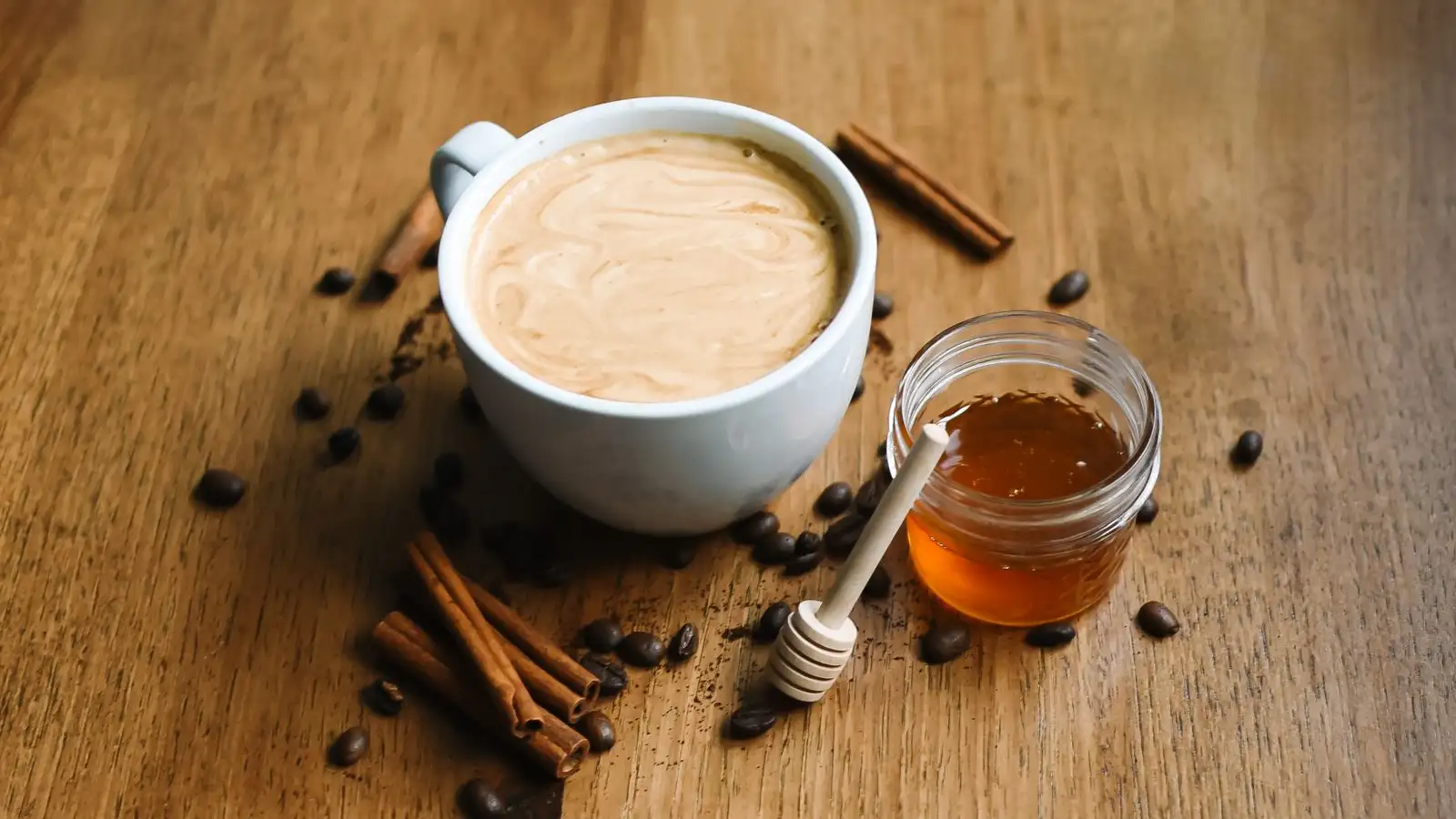
What changes when honey replaces sugar in a cake or cookie is structure, not sweetness. Honey arrives as a liquid with no crystals in it, so there is nothing in the bowl to cut air into the butter during creaming; the water it carries, roughly a fifth of its weight, slackens the dough and lets cookies spread wider before they set; and its acidity reacts with baking soda in a way the original formula never accounted for. The result is a denser, darker, more open crumb. The move that actually works is not full substitution but partial: replacing half the sugar, or less, keeps the structure the recipe was built around while the honey still does everything it does to moisture and depth.
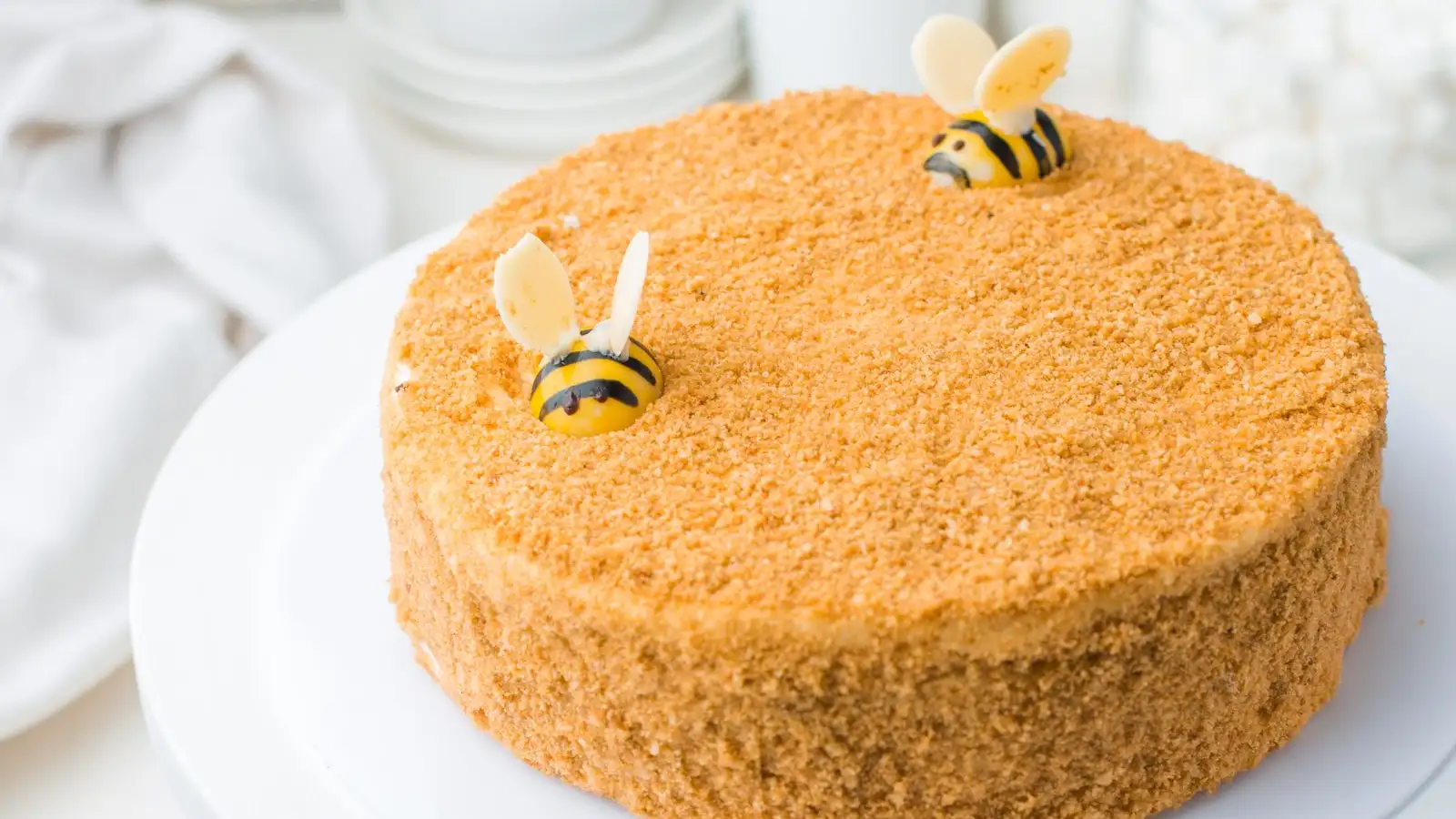
I always run the first version in a small bowl before committing a whole batch. One stick of butter, softened but not greasy, two tablespoons of honey, paddle on the stand mixer, medium speed. With granulated sugar there is a sequence you can hear and see: the mixture goes pale, the grain visibly breaks down, the volume climbs, the scrape of the paddle turns light and sloshy. With honey it never arrives. The honey folds into the fat and stays there, glossy, the same color it started. Four minutes in, it looks slicker than when it began and barely any bigger. Pinch a bit between your fingers and there is no grit, no air, just a smooth emulsion that feels like mayonnaise.
That is the whole problem in one bowl. Everything downstream follows from it.
Why creaming stops working once the crystals are gone
Granulated sugar is a pile of small, hard, angular crystals. When the paddle drives them through butter, they do not dissolve. They cut. Each cut opens a tiny cavity, and the fat immediately coats the walls of that cavity so it cannot close again. Thousands of those, and you have a foam: butter, air, and structure, all held in place by fat. That foam is the leavening in most cookie recipes and a good share of it in creamed cakes.
Honey is already a solution. Its sugars, mostly glucose and fructose, are dissolved in the water it comes with, so there are no edges to cut with and no crystals to open cavities. You can whip butter and honey until your arm gives out and you will get a very smooth, very shiny emulsion with almost no air in it. It looks like progress. It is not.
This is the part that gets skipped when someone says to swap honey in one-for-one and lower the oven. The swap does more than change how the baked thing tastes and browns. It removes the aeration step from a recipe whose entire architecture assumed that step would happen.
What the sugar was doing besides sweetening
Sugar tenderizes by competing with the flour's proteins for water, which slows gluten development. It also raises the temperature at which starch gelatinizes, so the batter stays fluid longer and the crumb has more time to expand before it locks into place. Push sugar out and pull honey in, and you go the wrong way on both. Honey's water is free water, and it goes straight to the flour, so gluten comes together faster while the dough also gets slacker. Slack and elastic at the same time is an unpleasant combination. There is also less crystalline sugar in the mix, so the starch sets earlier and firmer than the same recipe would with sugar.
That is a denser crumb arriving from two directions at once, before the oven is even involved.
The rise you did not ask for
Honey is acidic, around pH 3.9 from the gluconic acid it carries. Baking soda needs acid to produce gas. So if the recipe already pairs baking soda with buttermilk, brown sugar, or cocoa, honey adds a second acid source on top of what the formula planned for. You get more gas, released earlier, in a batter that has less structure to hold it.
I have pulled cookies out of the oven with big irregular tunnels running through them and a domed top that sank while it cooled. That is what it looks like. The gas showed up before the dough had set enough to keep it. If the recipe leans on baking powder instead, you do not get that boost, but the extra acidity still shifts browning.
For each cup of honey, about a quarter teaspoon of baking soda is the usual adjustment, and you cut back other liquid by roughly a quarter cup. I treat both as starting points rather than rules. Honey is not a standardized ingredient. Moisture content and acidity move around depending on what the bees were working and how the honey was handled, so I hold a couple tablespoons of flour or liquid back and add them after I see what the batter is doing.
Water, spread, and the cookie that will not hold its edge
Cookie dough is a shape that holds itself up until the fat melts. Honey's water is what breaks that. The dough is softer, the fat has less support, and the cookie starts flowing outward before the edge has a chance to set. Same recipe, same scoop, and the honey version lands a good half-inch wider with a thinner middle.
Chilling is the most useful fix, and it does two things at once: it firms the fat so the cookie holds its shape longer in the first minutes of baking, and it gives the flour time to hydrate fully so the dough is not still absorbing water while it bakes. Thirty minutes helps. Overnight is better.
Then there is the texture question people do not expect. A sugar cookie gets its snap from dissolved sugar recrystallizing as it cools. That lattice is what makes it crisp. Honey's glucose and fructose do not recrystallize that way. They stay a syrup. So a honey cookie stays chewy, and it stays that way for days. Not underbaked, not gummy, just chewy. You can fight that or you can decide it is the cookie you are making.
Drop the oven 25°F, too. Fructose browns at a lower temperature than sucrose, and a more acidic dough browns faster still, so the edges go deep gold while the middle is still raw if you keep the original temperature.
Denser, darker, moister: what the crumb actually does
In a cake, the loss of creaming means fewer nucleation sites for air. Sugar-creamed batters produce many small, evenly spaced air cells. Honey batters produce fewer and larger ones. So the crumb comes out dense in the sense of heavy, but open in the sense of big irregular holes. It does not look tight and fine, it looks coarse. Both things are true at once, and it confuses people who expect dense to mean closed.
Moisture is the other half of it. Honey holds onto water, so the crumb stays wet long after a sugar version would have dried out, and it darkens several shades from the fructose and the lowered pH. A honey cake that looks done at thirty minutes may still be liquid at the center. I start checking early and I go by the skewer, not the color.
Half is the number I keep coming back to
Full substitution makes a different cake. Partial substitution makes the cake you started with, only wetter and a little heavier. If I am working from a recipe written for sugar, I replace no more than half of it, often a third, and I keep the rest as granulated. The sugar I keep is the aerator. Half a cup of crystals still cuts air into the butter; the honey on top of it adds moisture, weight, and color without erasing the foam.
If you want to go all the way to honey, change the method instead of fighting the formula. Get the air from eggs rather than butter: whip whole eggs and honey together until they ribbon, fold in the flour, and you are working with a foam structure that does not care that the sugar crystals are missing. That is the honest path to a honey cake that is not simply a collapsed version of a sugar one.
Two habits I have picked up along the way. Weigh the honey, always. A cup of honey is a different weight depending on how warm it is and how long it has been sitting, and volume measures of something that sticky are hopeless. And if your honey has crystallized, that is fine to bake with. Warm it until it is liquid and uniform again, because partially crystallized honey means the sugar and water are not evenly distributed in the jar, and the same measurement twice will not give you the same dough.
The last thing to let go of is the idea that honey is a drop-in upgrade for a recipe. It is not. It is a different building material. Decide before you start whether you want the original structure with a hint of honey in it, in which case keep the sugar and add a tablespoon or two of honey, which sits under the threshold that changes anything, or whether you want a honey baked good with its own heavier, wetter, darker logic. Trying to have both is how you end up with a cake that fell and a cookie that puddled.