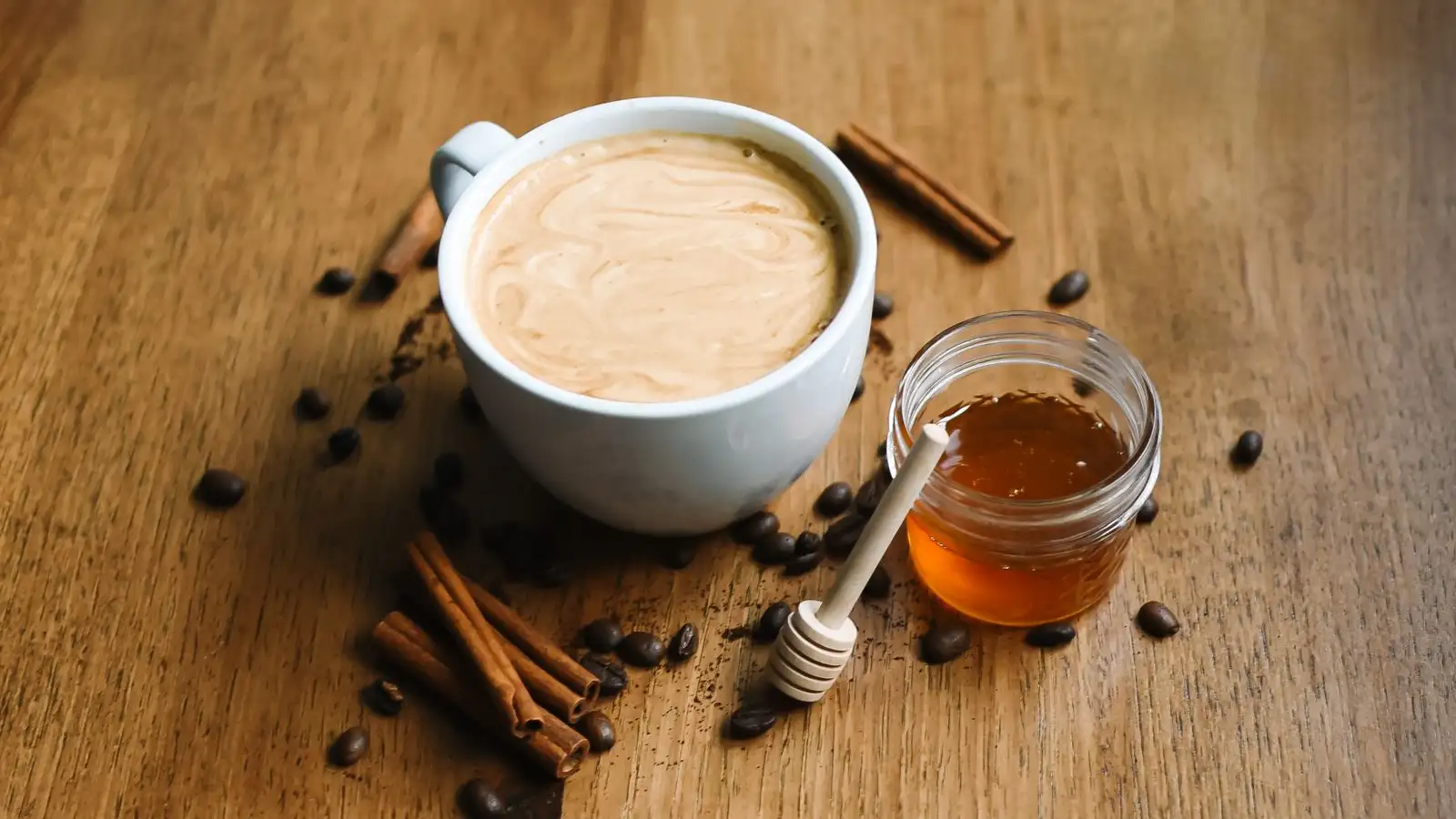
Honey keeps cookies, quick breads, and cakes soft for days because it is hygroscopic — it pulls water from the air around it and holds that water in the crumb — and that exact same pull is what turns biscotti, thin snap cookies, and meringues limp. That makes honey a texture decision before it is a flavor decision: it belongs in recipes that want lingering moisture and should stay out of the ones whose whole point is a crack or a snap.
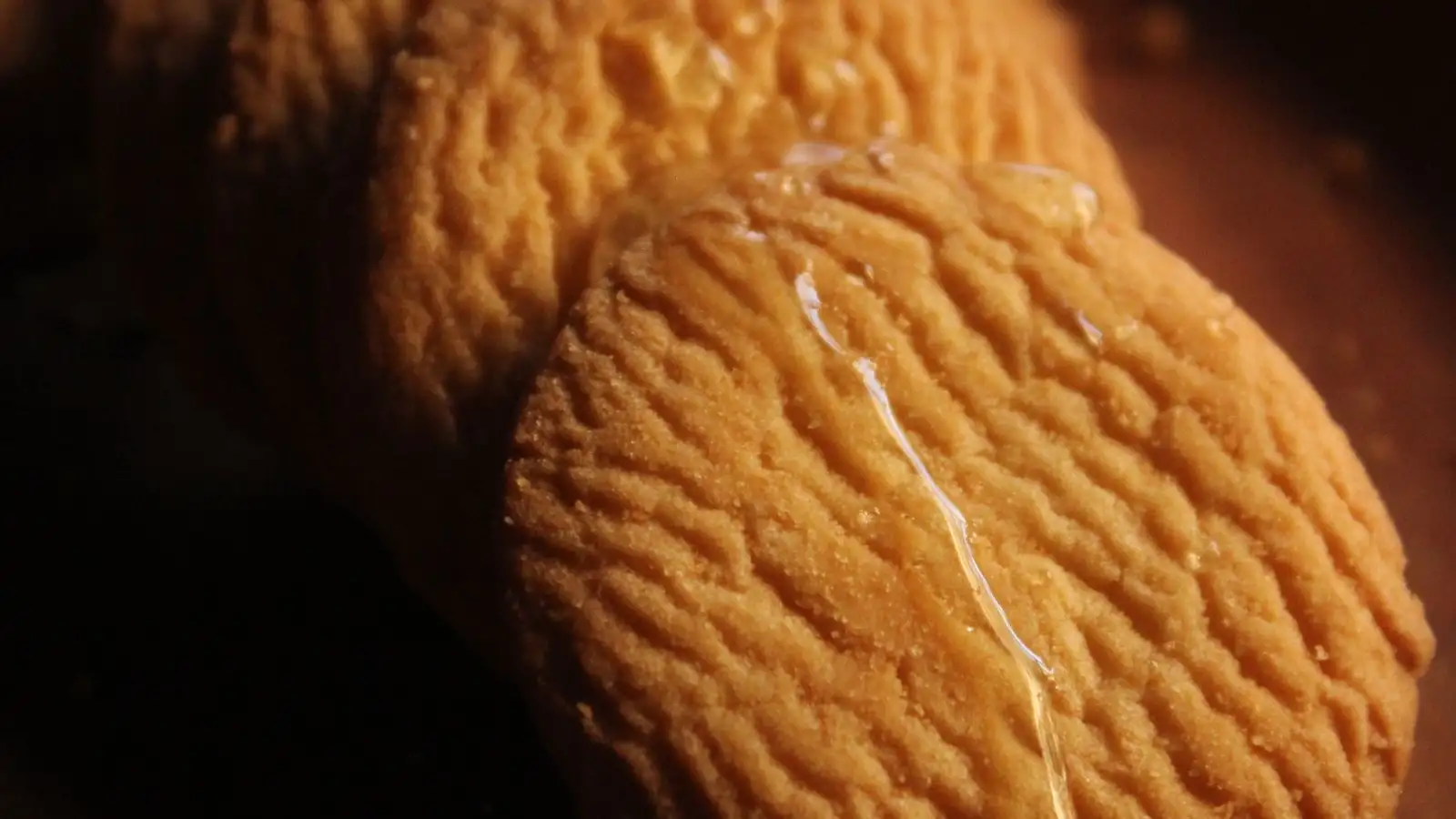
I cut into a honey-sweetened banana bread this morning that came out of the oven on Saturday. The knife goes through with almost no resistance, and the crust has gone soft enough that the blade doesn't crack it on the way in. Not raw — the crumb is set, it just gives. The same recipe made with brown sugar instead of honey would be firm by now, dry at the cut edges, crumbly at the corners. That gap isn't flavor or color. It's water, and honey is unusually good at keeping it.
Honey runs roughly 17 to 18 percent water by weight, and the sugars carrying it — mostly fructose and glucose — grab water molecules and don't let go easily. Fructose is the more aggressive of the two. Sucrose doesn't behave this way; it's dry, and as a bake cools it tends to crystallize, which pushes water out rather than holding it in. Swap honey in and you're adding two things at once: a little extra liquid, and a sugar blend that will keep pulling moisture from whatever air is around it for as long as the bake exists.
One honest limit before anything else. Honey does not stop staling. Starch still firms up, and a four-day-old honey loaf is not a fresh one. What honey changes is the other half of staling — the drying out — and that's the half you actually feel when you bite into something on day three.
Where honey is the whole point
Soft ginger cookies. Oatmeal cookies. Banana bread, honey cake, muffins, brownies you want fudgy instead of cakey. Honey-sweetened pound cake. Chewy granola bars, the kind that bend rather than shatter. Sandwich cookies with a honey filling.
These are recipes where done is a texture you're still eating days later. A soft ginger cookie made with honey is still soft on Thursday, and not because it's underbaked — because the water never fully left. In a quick bread or a cake, the honey holds moisture in the crumb and delays the dry, tight feeling that shows up first at the cut edges. That is the property working in your favor, and it's the reason a honey version of a recipe can taste like it was baked more recently than the sugar version sitting next to it.
Where the same property becomes a countdown
Biscotti. Tuiles. Lace cookies. Thin wafer cookies. Gingersnaps, if you mean the hard ones. Meringue kisses. Honey peanut brittle.
Brittle is the cleanest demonstration I know. Honey in a sugar syrup will still take you to hard crack, and the sheet sets up glassy and shatters when you break it. Then it sits. Within a day in a normal kitchen the surface goes tacky. Another day and the pieces start bending instead of snapping, and they weld themselves together in the tin. That is hygroscopicity doing exactly what it does inside a banana bread, except here it's the failure.
Meringues tell the same story. Honey meringues pipe fine and dry fine if you give them a long, low bake. Then they come out into room air and start pulling. Chewy at the edges first, then sticky, then glued to the parchment. You can slow that down with a longer dry and a sealed tin the moment they cool. You can't stop it.
The reason is structural, not a matter of being careful. A crisp cookie's snap comes from sugar sitting in a glassy, nearly water-free state and from a crumb dried almost all the way down. Honey brings invert sugars that hold water and it shifts the point at which the structure sets, so the cookie never gets all the way dry. You end up with something chewy in the middle and tacky on top, baked at a temperature and time that would have given you a snap with sugar. No amount of extra baking fixes it cleanly — push it far enough and you burn the outside before the inside dries.
The gummy middle, and the four adjustments that fix it
The most common honey failure isn't in a cookie at all. It's a wet, dense band through the center of a loaf or a cake. That isn't underbaking in the usual sense. Honey's sugars hold water tightly enough that the middle can't dry out the way a sugar batter's middle does, so it sets by starch and protein rather than by losing water. If the crust sets before the center does, the center stays where it is.
What I do about it:
- Cut back the other liquid. About a quarter cup less liquid for every cup of honey. A cup of honey carries two to three tablespoons of water on its own, and since it's sweeter than sugar, total sweetener can usually drop by a tablespoon or two per cup with nothing lost.
- Drop the oven temperature about 25°F and add time. Honey browns faster than sugar because of the fructose, so the color cue you normally trust fires early. Bake at the same temperature and you'll pull the loaf while the middle is still loose. Lower and longer gets the center set before the crust goes dark.
- Add a small amount of baking soda. Honey is acidic; about a quarter teaspoon per cup keeps the rise from going flat and helps the crumb set evenly.
- Cool completely before cutting. A honey loaf sliced warm gives you a gummy edge on every slice, and the honey gets blamed for the knife.
Expect the crust to soften faster than a sugar version's, too. The crumb wicks water outward into the crust as the loaf cools, and the crust's own sugars pull humidity from the room. A honey loaf's top goes from crisp to leathery within a few hours on the counter. If that crust matters to you, eat it the day it's baked.
Packaging is half the decision
Moisture migration is just water moving from a wet spot to a dry one. In a mixed box of cookies, the wettest item sets the humidity for everything else in the container. Honey-rich components are almost always the source. That's why a honey filling in a sandwich cookie moves into the wafer over a day and softens it, and why a honey cake sharing a tin will wreck a batch of biscotti.
So match the container to the texture you're protecting.
- Soft bake, soft goal: airtight. A honey-sweetened loaf or a soft cookie in a sealed container is noticeably softer than the sugar version at day three and day four. The container is holding the water the honey is pulling in.
- Crisp bake, crisp goal: something that breathes. A loose tin, a paper bag, or a container left cracked. Sealing a crisp cookie does the opposite of what you want — it traps the water the cookie is drawing out of the air with nowhere to go.
- Never both in one tin. If they have to share space, put the crisp ones in their own bag first.
How I decide before the flour comes out
One question, asked before anything is measured: is the texture of this recipe measured in hours or in days?
If it's days — a soft cookie, a loaf, a cake, a chewy bar — honey is close to a free upgrade. Trim the liquid, drop the heat, give it the extra time in the oven, and let it cool all the way before you cut it.
If it's hours — biscotti, meringue, brittle, anything you want to hear crack when you break it — honey isn't a substitution. It's a clock, and it starts the moment the bake leaves the oven.