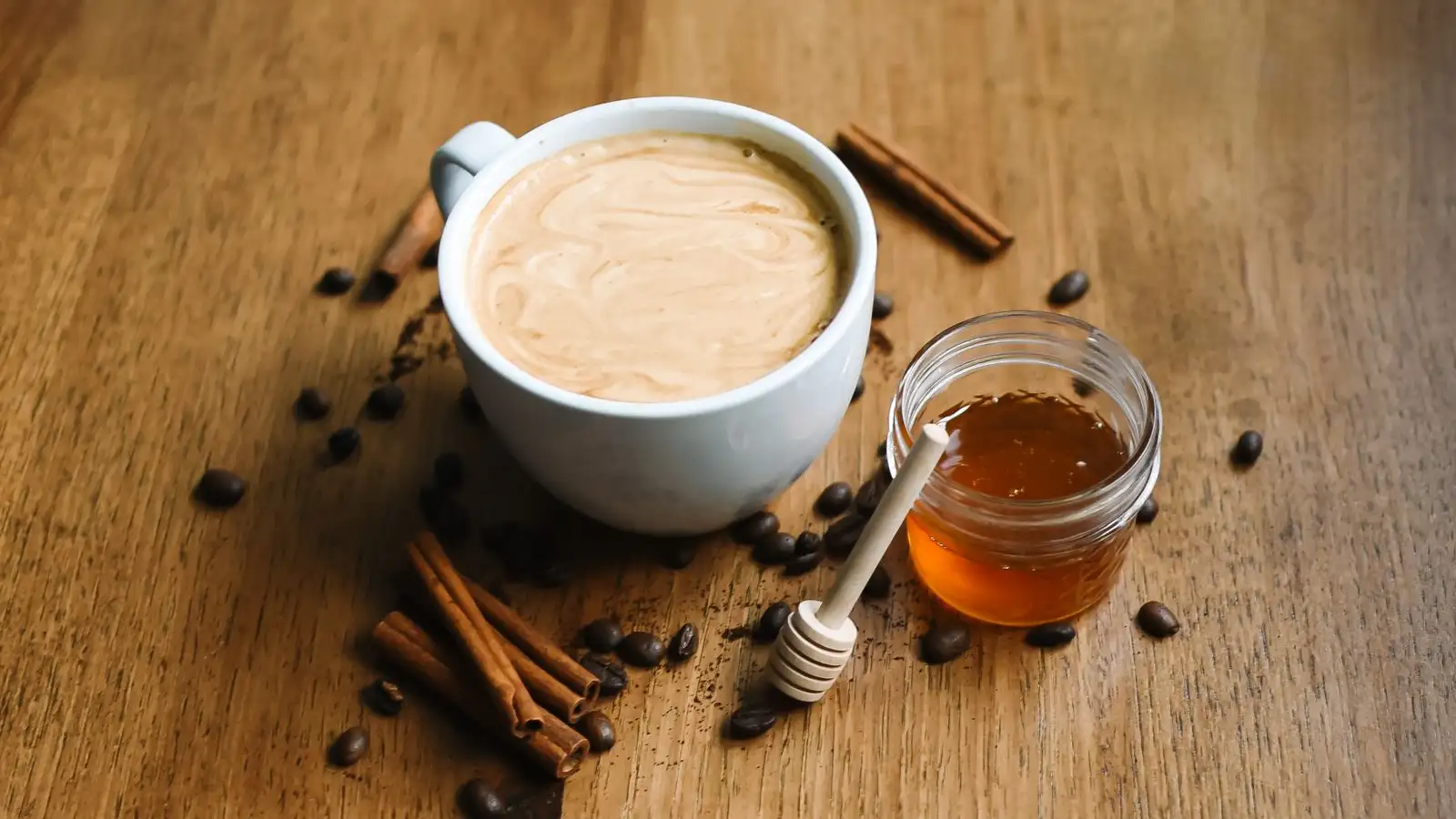
In candy making, when the honey goes into the pot matters more than how much of it goes in. Honey arrives carrying water and two sugars that do not crystallize the way sucrose does, and a candy cook is nothing but a controlled fight over both of those things: water leaving, sugar agreeing or refusing to set. Poured in at the start, honey fights that fight the whole way down. Stirred in near the end, it works with it. The same three tablespoons in the same recipe will give you a caramel that cuts clean or one that slumps off the spoon, and the only variable that changed is which side of the boil the honey landed on.
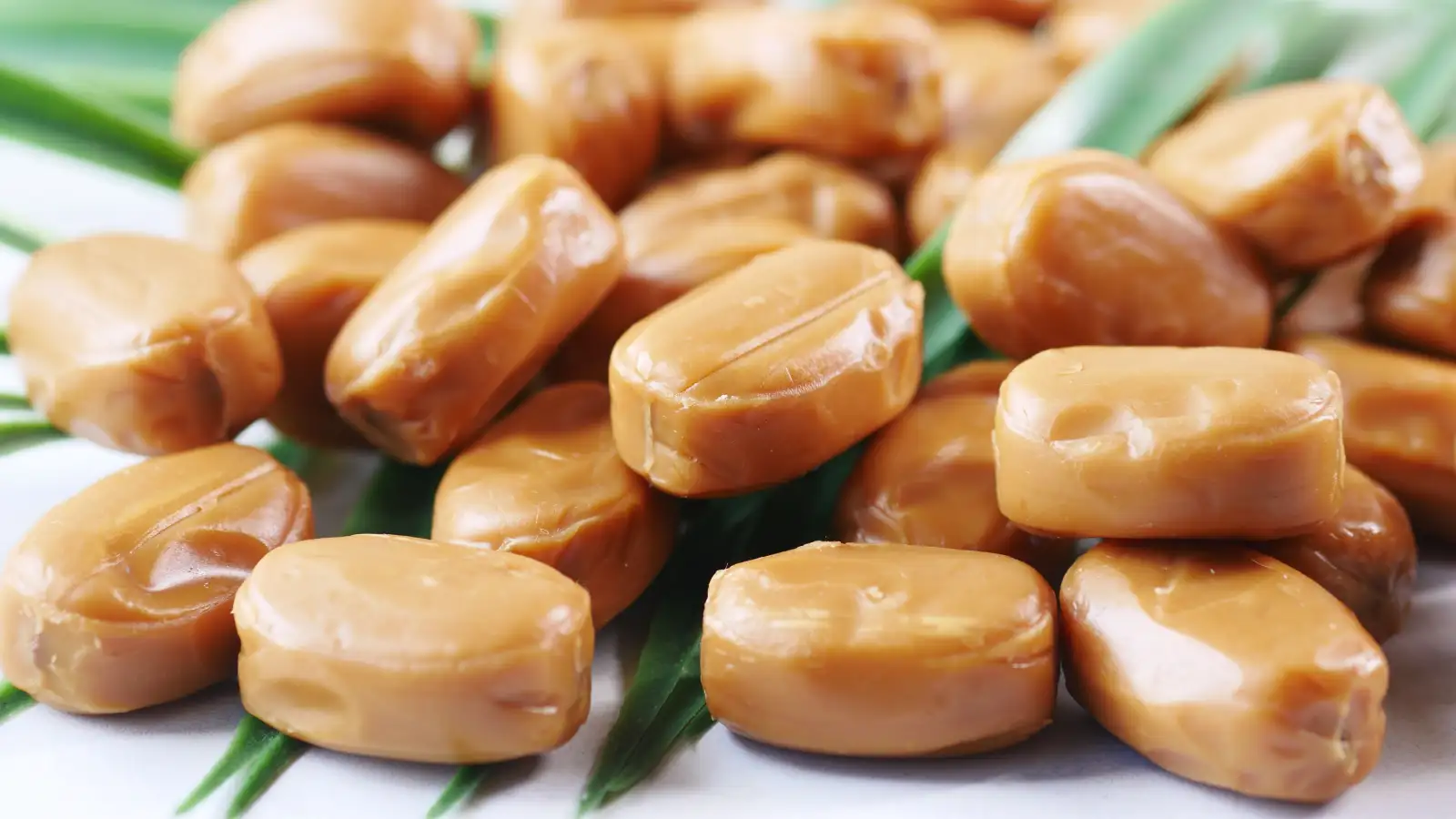
I keep a three-quart saucepan for this, which looks absurd for a batch that barely wets the bottom. It isn't. Honey foams the second it hits hot syrup, and the foam climbs fast enough that you want a foot of empty pot above it. The thermometer clips to the rim with its tip hanging in the liquid, never touching the metal floor, because bottom contact reads the burner instead of the candy and that error follows you all the way to the end. A wooden spoon, a bowl of ice water, a marble slab in the freezer. That is the whole setup.
What the syrup is doing while you watch it
A sugar syrup on the stove is a solution getting more concentrated, and its boiling point climbs as the water leaves. That is the entire logic of a candy thermometer. At a given boiling point the syrup holds a predictable percentage of sugar solids, and the old stage names are just those percentages with a texture attached: thread, soft ball, firm ball, hard ball, soft crack, hard crack. Roll a drop between your fingers in cold water and you can feel the stage before the number confirms it.
Honey does not slot into that scale cleanly, and it fails in two directions at once.
First, water. Honey runs somewhere between a sixth and a fifth of its weight as water, and that water has to go. Second, and more interesting, honey's sugars are mostly fructose and glucose, and fructose is genuinely bad at crystallizing. It will sit in a wildly supersaturated syrup and simply not organize itself into a lattice. Sucrose does the opposite. Sucrose wants to crystallize, and that urge is exactly what gives a hard candy its snap. So a batch with honey in it holds less crystallizable material, and less crystal means less set. That is the mechanical reason honey candy stays chewy instead of going glassy.
Then there is the part that took me longer to understand, because it never shows on the thermometer. Honey is acidic. Acid plus heat breaks sucrose into glucose and fructose, the same inversion a recipe does on purpose when it calls for a pinch of cream of tartar. So honey added early does not just contribute non-crystallizing sugars. It manufactures more of them out of the sucrose you were counting on. A long boil with honey already in the pot converts a slice of your setting sugar into non-setting sugar. You pull the batch at the number that worked last time, and it cools into something softer than the number promised.
Honey in at the start
Everything is calm for the first ten minutes. The syrup comes up, the bubbles get smaller and louder, the color swings from pale straw toward amber, and somewhere around 240 the smell shifts from plain sugar to something rounder and darker. That smell is the warning. The honey is browning while the batch is still climbing.
By the time the thermometer hits your target, three things have happened. You boiled off honey water you did not need to boil off. You inverted a portion of the sucrose. And you cooked the honey's aromatics down into a generic dark-sugar flavor that mostly tastes like molasses with ambition. The candy sets, technically. It sets soft. And if you try to fix it by boiling longer, you get darker before you get firmer. Eventually it firms up, but by then the honey flavor is gone and what you have is burnt-sugar candy with honey listed in the ingredients.
So an early pour is not wrong, exactly. It is a decision to make a dark, soft candy and to spend a lot of heat getting there. If that is the candy you want, do it deliberately.
Honey in near the end
This is the version I cook now. Sugar, water, and whatever glucose syrup or corn syrup the recipe already calls for go in first. Lid on for two or three minutes to let the steam wash down the inside wall of the pot, lid off, and no stirring from that point on. If crystals start climbing the side, a brush dipped in water and run around the rim knocks them back. Cook that syrup alone to five or ten degrees below your final target.
Then off the heat, and the honey goes in. It will hiss and foam and the smell changes completely, sharp and floral, the thing you actually bought. Stir it through with the spoon, put the pot back on the burner, and bring it up those last few degrees. In my kitchen, a caramel that sets at 248 with straight sugar wants roughly 252 to 255 to set the same way when honey is about a quarter of the sweetener weight. Treat that as a starting point rather than a rule. Thin honey and thick honey are not the same ingredient, and the finish drifts with them.
The gains are all in the timing. The honey spends three or four minutes above 240 instead of twenty, so it keeps most of its own flavor and picks up very little color. And the water it carries only has to leave from that moment forward, so the second boil is short and the finish stays controllable.
The cost is that you cannot walk away once the honey is in. The gap between firm ball and scorched is narrower with honey than with straight sugar, because those sugars brown faster as the batch thickens. Stand there.
Test the cold candy, not the hot syrup
A thermometer is a measurement of water content disguised as a temperature, and it does not know how much of your syrup is fructose. The cold water test still helps confirm the stage. But the test that actually matches a honey batch is the plate test: spoon a little onto a cold plate or a piece of marble pulled from the freezer, let it sit until it is room temperature, then chew it. Hot syrup always feels stringier and softer than the cooled candy will be. Honey syrup lies in a different direction. It reads done and cools into something slacker than you expected, which is how a batch that hit 250 ends up drooping over the edge of the pan.
Where honey works, and where it can't
Honey is at home anywhere the target texture is a chew rather than a snap. Nougat is the clearest case. Nougat is deliberately a non-crystalline, aerated sugar mass, and honey is already non-crystalline, so it does not have to be fought. Chewy caramels, taffy, softer nougat-style bars, same logic. The honey is not a substitution there. It is what the candy was always trying to be.
Hard crack is a different story. Lollipops, brittle, pulled sugar, anything that needs to ring when you tap it. Two things go wrong. The sugars in honey will not build a rigid lattice, so the best you get is a stiff, faintly plastic slab instead of a glass. And fructose grabs water out of the air, so even a piece that sets hard will go tacky and then soft within a day if it sits uncovered. A honey hard candy is not a hard candy that is slightly off. It is a candy whose set is borrowed against the humidity in the room.
Which is also why anything with honey in it needs to be wrapped and stored sealed. Parchment or wax paper, individually twisted, then a tin with a lid. A tray of honey caramels left out on the counter overnight will be a tray of honey puddles by morning, and no finishing temperature prevents that.
The dial you actually have is not the amount. A recipe with a third more honey and a finish temperature five degrees higher lands somewhere close to the original batch. The same recipe with the same honey added at the start does not, and no extra boil rescues it without turning the honey into dark caramel along the way. Decide when the honey goes in first. Decide how much second.