Yes, you can absolutely learn to tell honeys apart by their look, smell, and taste alone—and you don’t need a lab. This guide hands you a full sensory training system that makes identification feel like a skill you build, not a trivia fact you memorize. You’ll use a simple color- aroma-mouthfeel sequence and a flavor wheel that sorts honeys into fruity, floral, woody, earthy, and spicy camps. All you need are a few jars of honey and your senses.
By the time you finish these steps, you’ll have a repeatable method you can pull out any time you face a new varietal, from the palest acacia to a near-black buckwheat.
What You Need to Get Started
The kit is almost embarrassingly simple:
- 3–5 distinct monofloral honeys—grab an orange blossom, a clover, a buckwheat, a lavender, and maybe a manuka if you’re feeling adventurous.
- Small tasting spoons, the kind you’d use for a flight of ice cream.
- Plain crackers or a slice of mild bread to clean your tongue between tastes.
- A glass of room-temperature still water.
- A white index card, plate, or sheet of paper—critical for seeing true color without the jar’s tint.
- A notebook and a pen. Jotting impressions will save you from forgetting that fleeting jasmine note later.
Make sure nobody at the table has a honey allergy, and wait at least an hour after a heavy meal or anything spicy before you start.
How to Identify Honey by Sight and Taste, Step by Step
1. Clear Your Palate and Line Up the Jars Lightest to Darkest
Rinse your mouth with water and bite into a bit of unflavored cracker. Arrange the open honey jars in a row, moving from the palest straw to the deepest mahogany. This sequence keeps a dark powerhouse from bulldozing your taste buds before you’ve met the delicate ones. A calm, quiet kitchen corner works better than a busy room full of cooking smells.
2. Check Color and Clarity Against Plain White
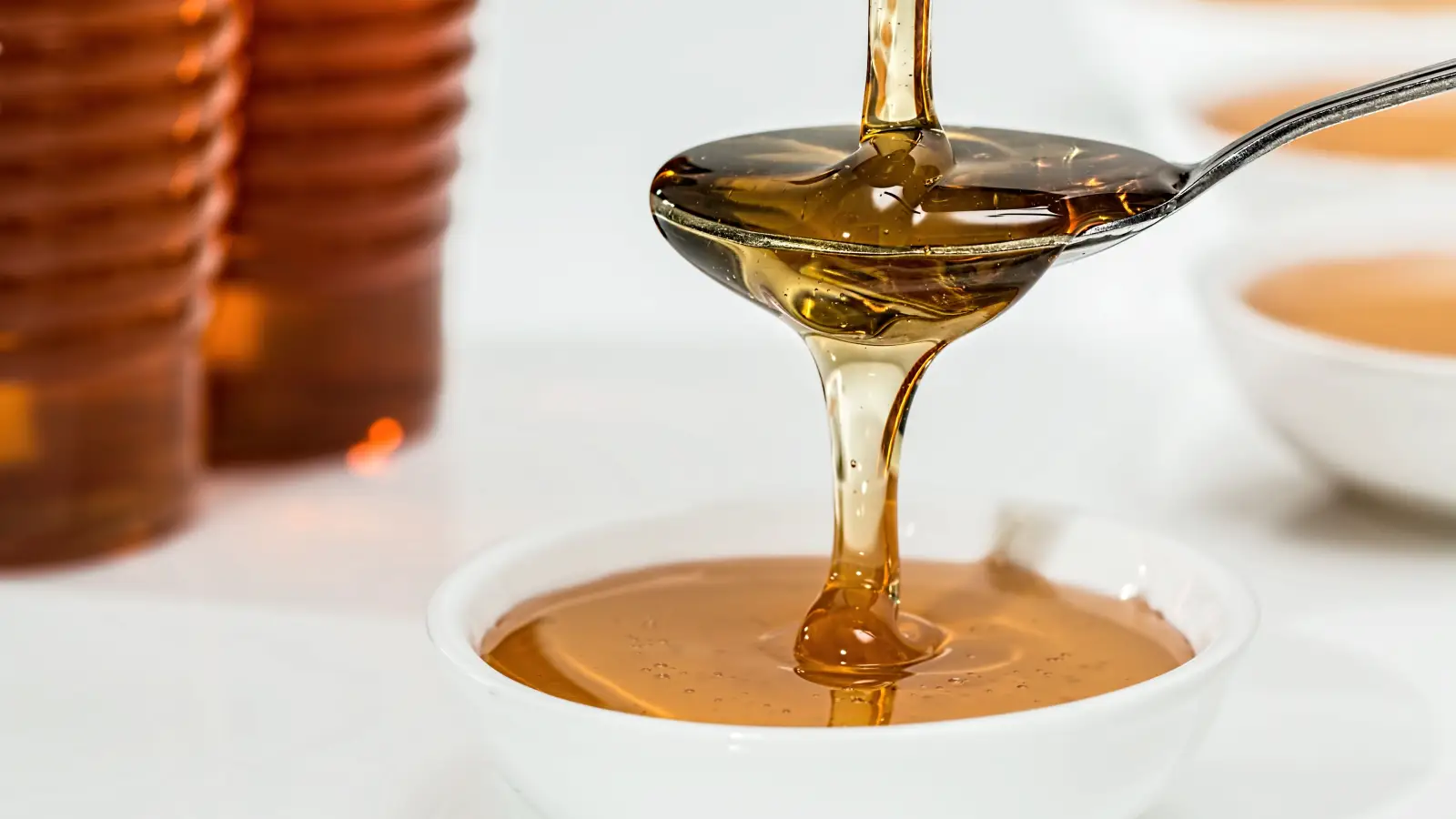
Spoon a small dollop of each honey onto the white card or plate. Now the real shade shows up—no amber glass distortion. Look for soft gold, pale lemon, deep amber, or reddish brown. Notice if the honey is glass-clear, slightly hazy, or opaque. For example, acacia often stays transparent and runny for a long time, while dandelion honey rapidly turns opaque and grainy. Those small visual clues start narrowing the field.
3. Warm It Up, Then Smell Without Stirring
Cold honey guards its scent. Warm the jar by cupping it in your hands for half a minute, or stand the open jar in a bowl of warm water for a minute. Now bring it close and inhale gently several times, keeping the surface still—no swirling. The top notes that float off first tell you a lot: a bright citrus ping points toward orange blossom, a medicinal edge suggests manuka, a caramel-malt aroma lands in the woody camp. Let your instinct name what it smells like, even if the word sounds silly at first.
4. Taste Layer by Layer, Then Slot It into a Flavor Category
Take a small half-spoon and let the honey melt on your tongue—don’t rush to swallow. Pay attention to three moments:
- First hit: what strikes the tip? A sweet-citrus zing, a soft floral sweetness, a malty richness?
- Middle notes: as it warms, does it bloom into a fruity burst, a woody depth, or a little spicy tingle?
- Aftertaste: what hangs around? A clean, vanishing finish signals a light floral honey; a lingering molasses note or slight bitterness hints at a darker, more intense type.
As you taste, assign the honey to one of these flavor groups: floral (jasmine, lavender), fruity (berry, apple, citrus), woody (caramel, toffee, malt), earthy (hay, mushroom, damp soil), spicy (cinnamon, pepper, anise), and fresh/herbal (mint, eucalyptus). This grouping becomes your tasting wheel.
5. Map the Mouthfeel: Viscosity, Grain, and That Cool or Warm Tingle
Mouthfeel often gives away what flavor alone cannot. Roll the honey around your tongue and notice:
- Thickness: a buckwheat coats your whole mouth, while some linden honeys feel slim and almost watery.
- Smooth or gritty: freshly extracted honey is silky, but varieties like ivy or dandelion grain up fast, leaving fine crystals you can feel.
- Sensation: a faint menthol coolness often means eucalyptus; a subtle warmth might point toward a robust, dark honey.
Match these texture notes to your flavor categories and you’ll be shockingly close to the right name.
6. Compare Side by Side and Draw a Quick Tasting Wheel
Now go through the other jars with the same steps and place them next to each other. Jot down the dominant flavor category for each. Sketch a simple circle divided into six wedges—floral, fruity, woody, earthy, spicy, fresh/herbal—and write each honey’s name in its spot. You’ll instantly see how a bright citrus honey sits miles away from an earthy, malty one. This visual map locks in the identification and makes your next tasting session twice as fast.
Common Sensory Mistakes That Throw Off Identification
Rushing Straight to Flavor Before You Look or Smell
Skipping color and aroma is like walking into a concert and covering your ears until the chorus. That dark, molasses-scented honey is probably buckwheat; taste it alone and you might just think “strong dark honey.” Run the sequence in order—it’s free information.
Smelling a Chilly Jar Without Warming It First
Volatile aromas need a little heat to lift off. A cold jar can smell almost mute, tempting you to label it “mild” or “boring” when in fact it’s just sleeping. A minute of warmth wakes it up.
Scrubbing Your Mouth with Mint or Coffee Between Samples
Mint, coffee, or lingering spice residue can cling to your taste buds and mask the shy floral notes. Stick to plain water and a plain cracker. That’s all you need for a clean slate.
Thinking Color Alone Nails the Type
Dark does not equal buckwheat every time, and light isn’t always clover. Chestnut is dark and nutty-bitter; manuka is dark and medicinal. Color gives you a range. Use the rest of the steps to pinpoint.
Powering Through Too Many Honeys in One Sitting
After about five or six samples, your palate starts blending everything into a generic “sweet.” Cap a session at five and walk away for a few hours. Come back fresh and those subtle differences snap back into focus.
Dismissing Crystallization as “Gone Bad”
Crystallization is normal for raw, unfiltered honey—not a flaw. Some honeys, like dandelion or garlic honey, crystallize practically as soon as they’re jarred. If you find a grainy texture, note the crystal size and see if it matches a known fast-crystallizer. That clue can seal the ID.
When Standard Steps Need a Twist: Alternative Tasting Sequences
Start with the Darkest, Most Intense Honey First
If your palate feels sluggish and the delicate honeys barely register, flip the order. Lead with that potent buckwheat or manuka—it wakes everything up like a splash of cold water. Then rinse thoroughly and move to the lighter jars. Suddenly the subtle floral notes pop.
Dilute a Small Sample in Warm Water
Some honeys guard their scent stubbornly. Put half a teaspoon in a cup of body-temperature water and stir. The warm liquid loosens the aromatic compounds and stretches the flavor arc into something you can sip slowly, almost like tea. This trick often reveals floral notes that stay hidden in the straight syrup.
Frequently Asked Questions About Identifying Honey
Can I reliably identify a honey just by its color?
No. Color sets the general expectation—light honeys lean milder, dark ones bolder—but many varietals share similar hues. A pale honey could be acacia, orange blossom, or fireweed; you need the aroma and taste to separate them.
Does raw honey taste different from processed honey?
Absolutely. Raw honey keeps pollen, enzymes, and those delicate volatile aromas that heating strips away. Pasteurized honey often tastes flat and may carry a subtle caramel note from the heat, which can blur the true floral fingerprint.
What does spoiled honey look or smell like?
Honey rarely spoils, but if it ferments from high moisture, you’ll notice a frothy surface, a yeasty or faintly alcoholic smell, and a sour tang. Properly stored, honey can last indefinitely without spoiling.
How can I train my palate for honey tasting more effectively?
Keep a tasting notebook. Every new honey gets the full sequence of looks, smells, tastes, and mouthfeel notes. Over weeks and months, you build a taste library in your head. Tasting alongside a simple flavor wheel and checking against known monoflorals speeds this up dramatically.
Is darker honey always bolder in flavor?
Usually, yes, but exceptions exist. Chestnut is dark, bitter, and bold; avocado honey is very dark yet surprisingly smooth and rich rather than overwhelming. Conversely, light honey can be intense: eucalyptus honey can be pale amber but pack a piercing, medicinal punch.
Now you have a complete sensory toolkit for identifying honey types just by looking and tasting. Grab three new monofloral jars this week, set up a small tasting station, and start filling in your own flavor wheel. Practice regularly and soon you’ll name a lavender versus a linden without ever peeking at the label.