Beekeepers classify honey by which nectar source dominated the bees’ foraging. That puts all honey into two groups: monofloral (one plant species dominates) and polyfloral (a blend). Classification is not a marketing decision made after harvest—it is a direct result of bee flight paths, bloom timing, and how precisely the beekeeper times the harvest.
The Two Honey Families and the Foraging Forces Behind Them
A honey’s family is settled inside the hive long before a label is printed. When a colony works a single, heavy nectar source repeatedly, the beekeeper gets a monofloral crop. When bees have access to a mix of overlapping blooms, the result is polyfloral. The family is not something anyone assigns; it’s a record of what the foraging radius delivered.
Three forces control that outcome. Botany dictates which plants are present, how much nectar they produce, and their pollen output. Season fixes the start, peak, and end of each flow. Beekeeper timing—when clean supers are put on and pulled off—determines which nectar ends up in the jar. Together, they form a predictable system. This article walks through that system as a four-step Nectar-Dominance Model anyone can apply.
First: The Forage Window—Which Nectar Sources Are Available
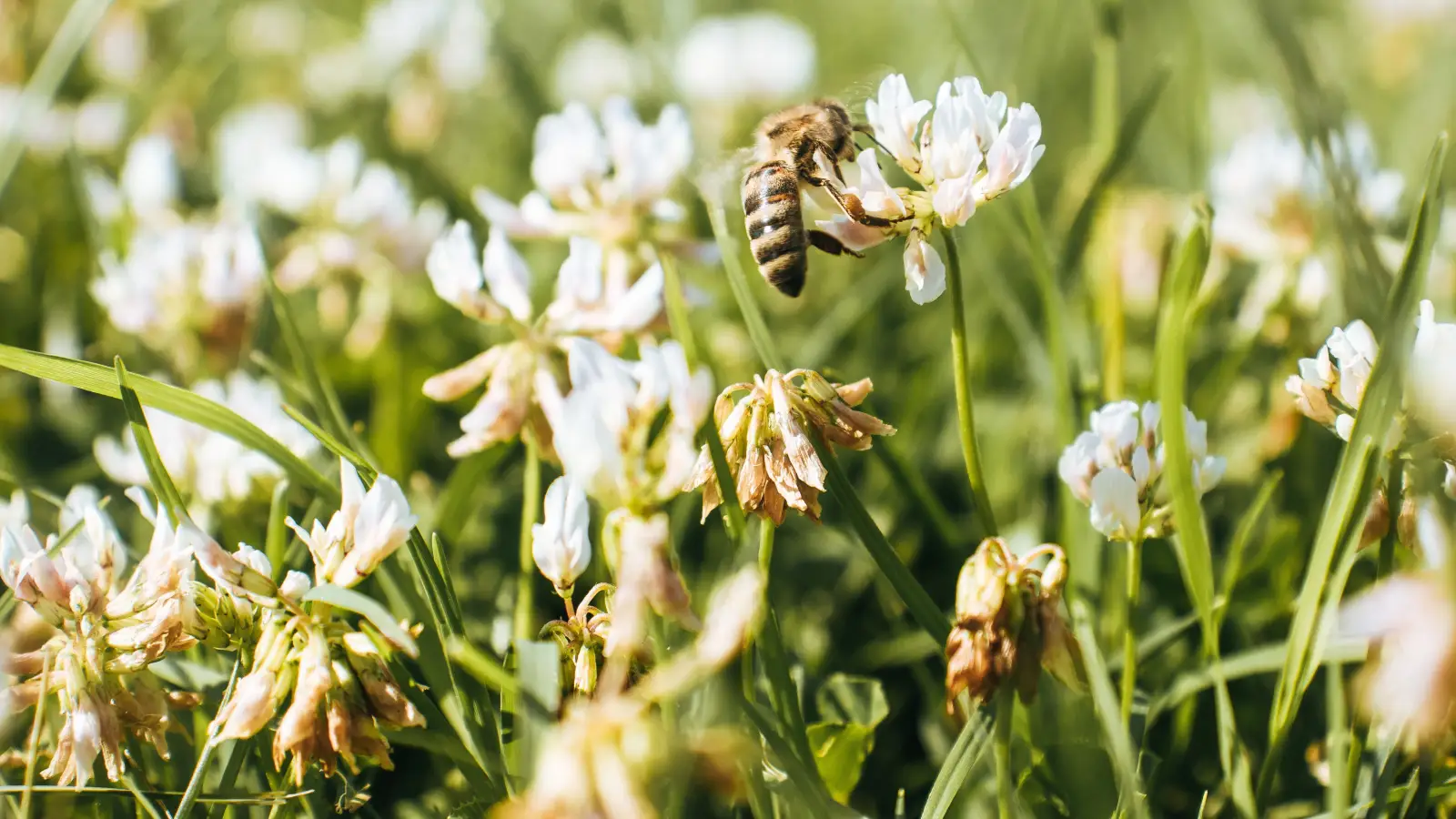
A colony typically forages within 1 to 5 miles, zeroing in on the richest patches. The first requirement for a monofloral honey is a dense, uniform bloom within that radius. Orange groves in Florida, tupelo swamps in Georgia, lavender fields in France—these are the kinds of concentrated nectar sources that dominate a hive’s intake.
Done right, this step means the beekeeper has a solid bloom calendar and knows the approximate nectar contribution of every major plant in the area. It also means spotting overlaps early. If two strong nectar sources bloom at the same time, polyfloral honey is the likely result, no matter what steps follow.
Second: The Beekeeper’s Timing—Supers and Extraction
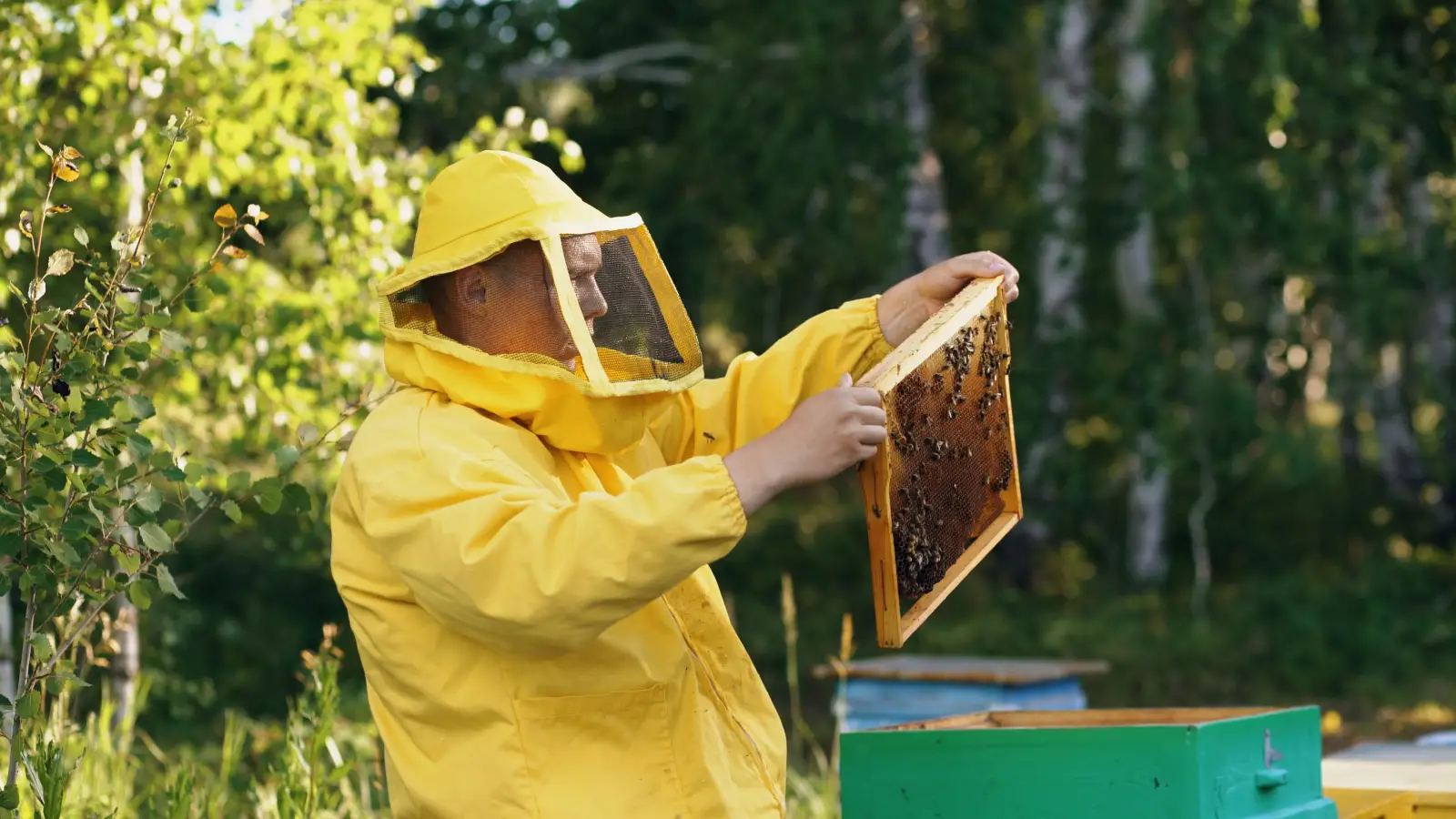
Once a target nectar source is identified, the beekeeper’s job is to capture it cleanly. The standard move is placing empty honey supers just before the bloom opens. Any honey already in the hive from an earlier flow gets removed so the new nectar isn’t diluted.
Extraction timing is just as critical. Pulling frames too early risks high moisture; pulling too late lets the next wave of blooms start filling combs. A beekeeper aiming for monofloral basswood, for example, will harvest within a few days after the petals drop, well before clover ramps up. When this step is executed precisely, the honey carries a single, clear floral signature.
Third: Pollen Analysis—Confirming the Dominant Nectar Source
Timing and intent are not enough. Pollen analysis, or melissopalynology, is the method that checks what the bees actually collected. A lab counts pollen grains in a honey sample and identifies the species. The result shows the real foraging choices, not just the ones the beekeeper expected.
A common benchmark is at least 45% pollen from the target species, but this number is not universal. Some plants—black locust, tupelo—shed very little pollen while producing abundant nectar. Their monofloral honeys can show far lower pollen percentages and still be genuine. Getting this step right means interpreting the lab report alongside local pollen-coefficient knowledge, not just checking a box.
Fourth: Thresholds and Labeling—When a Honey Qualifies as Monofloral
Labeling rules vary. The Codex standard says honey may be labeled by floral source if it comes wholly or mainly from that plant and matches its sensory and microscopic profile. The U.S. FDA does not specify a pollen percentage for monofloral claims. In practice, responsible packers combine pollen counts, sensory evaluation, and harvest documentation to back their label.
A credible monofloral claim therefore pulls together the three earlier steps: a forage plan, a clean harvest window, and a lab result consistent with that plan. When these align, the label stands. When they don’t, the product is polyfloral—not a downgrade, but an accurate description of mixed nectar sources.
Applying the Model: A Basswood Harvest from Start to Finish
Imagine a beekeeper in Wisconsin whose apiary sits near a dense stand of American basswood. Bloom opens in late June and lasts about ten days. The beekeeper checks local reports, then places clean supers as the first buds crack. Any earlier honey is extracted separately.
Bees work the basswood hard. As the bloom fades, white clover starts appearing in nearby pastures. The beekeeper pulls supers three days after petal drop. The extracted honey is light amber, mild, with a faint minty note. A lab sample returns 48% Tilia pollen, plus traces of clover and other minor pollens. Based on the local pollen coefficient for basswood, that percentage confirms the honey is predominantly basswood nectar. It gets labeled monofloral and sold accordingly.
Wait another ten days, and clover nectar would dominate the next frames, turning the crop polyfloral. The entire classification turned on a narrow harvest window.
Where Classification Fails: Three Common Missteps
Assuming Dominance from Proximity
Hives placed next to a buckwheat field do not guarantee buckwheat honey. Bees may also cover a nearby goldenrod-filled meadow. Without pollen analysis, the beekeeper risks selling a mixed honey under a single-source name. The result is a mislabeled product and, in markets where varietal honey earns a premium, money left on the table.
Delaying Harvest Past the Flow
Every nectar flow has a tail. When the target flowers stop yielding, the colony instantly switches to the next bloom. Extracting late merges two flows into one batch, flattening the distinctive aroma and flavor. The honey becomes “generic wildflower” instead of the distinct single-source product the beekeeper intended.
Ignoring Pollen Grain Variability
A honey may show only 35% of a target pollen and still be overwhelmingly that nectar—if the plant naturally produces few pollen grains. Tupelo and acacia are prime examples. Discarding a batch because it fails a rigid 45% rule without checking the species’ typical pollen profile can throw away a legitimate monofloral harvest. A lab number is only useful if it’s read with species knowledge.
Quick Reference: Nectar-Dominance Classification at a Glance
| Step | What It Determines | Key Action |
|---|---|---|
| First: The Forage Window | Potential dominant nectar source | Map bloom calendar and apiary location |
| Second: Beekeeper’s Timing | Purity of collected nectar | Add empty supers before bloom; extract before next flow |
| Third: Pollen Analysis | Actual floral composition | Send sample for melissopalynology; interpret counts with species context |
| Fourth: Thresholds & Labeling | Whether honey qualifies as monofloral | Compare data against standard (e.g., ≥45% target pollen) and sensory profile |
FAQ: Questions About How Honey Gets Its Type
How do beekeepers know which flowers bees visit without watching every trip?
They don’t watch every trip. A honey sample sent to a lab for pollen analysis reveals the plant species present and their relative amounts. That’s the standard method for reconstructing foraging behavior after the fact.
Can honey be both raw and monofloral?
Yes. Raw refers to processing—the honey was not heated above hive temperatures. Monofloral refers to nectar source. The two categories are independent, and many specialty producers sell honey that is both.
What is the most common monofloral honey in the United States?
Clover honey leads in volume, flowing from large clover pastures across the Midwest and Plains. Orange blossom, tupelo, and sourwood are regionally prominent.
Does monofloral honey always taste stronger than polyfloral?
Not necessarily. Mild monofloral honeys like basswood or fireweed exist alongside intense ones like buckwheat. Polyfloral honeys can be complex but not always bolder. Flavor is driven by plant species, not by whether the honey is single-source or blended.
Why do some monofloral honeys cost significantly more?
Rarity is the main driver. Honeys tied to a short, specific bloom window—like tupelo’s two-week flow in the Apalachicola basin—demand precise timing and yield limited volume. That scarcity, plus distinctive flavor, commands a higher price than widely available clover honey.
Conclusion: Start with the Bloom Calendar
Honey classification follows a four-part sequence: forage dominance, clean harvest timing, pollen verification, and threshold matching. The most useful first step for anyone who wants to understand a honey’s type is to look at the bloom calendar—identify which nectar sources were active when the bees were working, and the rest of the classification logic falls into place.