Most people open a jar of clover honey without a second thought—it’s the default on grocery shelves, the one in the bear‑shaped bottle, the honey that just is. But that everyday presence hides a set of properties that make clover honey a uniquely reliable ingredient, not a bland stand‑in. By the end of this guide, the mild flavor, specific sugar profile, and slow crystallization of clover honey will read like a set of kitchen tools: a predictable sweetener that bakes consistently, stores gracefully, and does exactly what you ask of it.
The Flavor That Gives Bakers a Clean Canvas
Describing clover honey as “just sweet” misses the point. A quality jar carries a light floral lift and a clean finish, without the sharpness of wildflower or the malt of buckwheat. That quiet character is what lets it step into any recipe without throwing the flavor off balance.
When a Honey Keeps Its Voice Down, Everything Else Can Speak
Orange blossom honey can make an elegant vanilla cake taste like a glass of orange juice. Buckwheat honey will decide a gingerbread is really about the honey. Clover honey steps back. In a vinaigrette, it softens acidity without adding a competing note; in a marinade, it helps meat brown without coating the palate. For a baker who wants the honey to do the technical work but not announce itself, that restraint is a genuine advantage.
A Side‑by‑Side Taste That Reveals the Value
Try clover next to a dark wildflower and the difference is immediate: the wildflower throws pepper and resin, the clover stays clean. The takeaway is not that clover is simple—it’s that you can trust it not to wrestle with the rest of the ingredient list. In a kitchen that turns out scones on Saturday and a quick glaze for roast chicken on Tuesday, that predictability is worth more than a one‑note showstopper.
The Fructose‑Glucose Equation That Keeps the Jar Pourable
All honey is a supersaturated sugar solution, but the particular blend of sugars inside clover honey is what keeps it liquid when other honeys have already turned solid. The numbers that matter: roughly 38% fructose and 31% glucose, with the rest being water, a little sucrose, and trace enzymes.
Why the Ratio Matters More Than the Label
Glucose crystallizes easily; fructose does not. Honeys that push above 35% glucose—canola, ivy, or even some goldenrod honeys—will granulate within weeks. Clover’s lower glucose load keeps it flowing for six months to a year in a cool pantry. For the person who uses honey once a week in tea or drizzled on oatmeal, that means no wrestling a solid block out of a jar.
The Hidden Helpers: pH and Water
Clover honey lands at a pH around 3.9, and its water content is usually held under 18% by careful packers. That combination makes it hostile to spoilage even before the sugar content seals the deal. Better still, the lower the water content, the slower the crystallization, so a well‑handled clover honey offers both a long liquid life and safety without any treatment beyond a closed lid.
Keeping Your Clover Honey Pourable: Storage and Crystallization
Crystallization is natural and reversible—it’s a sign the honey is real, not ruined. Still, a few simple habits determine whether you’re reaching for a spoon or a warming bowl.
Three Habits That Push Granulation Faster
Temperature is the main dial. Room temperature, around 70°F (21°C), keeps crystals at bay. Slide the jar into the refrigerator and granulation can happen in a matter of days. Air is another factor: each time you twist off the lid, floating particles and a little moisture slip in, providing seeds for crystals to grow. A jar with a tight seal and quick use after opening keeps that disruption low. Raw, unfiltered clover honey holds pollen grains that act as crystallization nuclei; filtered honey stays liquid longer for those who prize pourability over the most nuanced flavor.
What to Do When the Jar Goes Solid
A microwave is the enemy here—the fast, uneven heat scorches sugars and burns off the floral aromatics that make clover honey worth using. Instead, set the closed jar in a bowl of warm water, no hotter than 110°F (43°C), and stir a few times. The crystals dissolve gently, and the honey returns to a liquid state without cooking. Do this as many times as needed over the life of the jar.
How Long a Jar Really Lasts
A sealed, well‑produced clover honey stays safe for years. Once opened, it’s ideal within two to three years for the freshest taste, though it won’t become unsafe past that. The only red flag is fermentation: a yeasty smell or a thin foam on the surface means moisture crept above 20% and spoilage began. That jar goes in the compost, not the cupboard.
Clover Honey in the Mixing Bowl: Baking, Glazes, and Marinades
This is where clover honey stops being a sweetener and starts behaving like a consistent baking ingredient with measurable effects on moisture, browning, and texture.
Substituting Honey for Sugar the Predictable Way
You can swap clover honey for granulated sugar weight‑for‑weight, but two adjustments keep the recipe on track. Reduce the total liquid by about 3 tablespoons per cup of honey, and drop the oven temperature by 25°F (14°C). Honey’s fructose caramelizes faster than sucrose, so browning happens faster and the lower temperature prevents a scorched crust. Because clover honey has no strong flavor to interfere, these tweaks work transparently in everything from chocolate chip cookies to lemon loaves.
Why Honey‑Sweetened Breads Stay Tender Longer
Honey is hygroscopic—it pulls moisture from the air and holds it inside the crumb. That’s the mechanism that gives honey‑sweetened muffins and quick breads an extra day of softness. Clover honey’s particular fructose‑to‑glucose balance distributes that moisture evenly without turning the loaf gummy. For a home baker who sends weekend loaves to friends, that extra shelf life is a tangible plus.
The Quiet Role in Savory Cooking
It dissolves cleanly into a warm vinaigrette, softening the vinegar without any sticky aftertaste. Brushed over chicken thighs mid‑roast, it helps the skin brown deeply while adding a whisper of sweetness that rounds out salt and smoke. Dinner rolls brushed with a thin coat of clover honey right out of the oven pick up a bakery‑window shine and a gentle taste that doesn’t fight the soup.
A Note on Yeast Doughs
Raw clover honey contains a small amount of the enzyme glucose oxidase, which produces hydrogen peroxide—a natural antimicrobial. In most commercial honeys that have been lightly filtered or heated, this activity is negligible and won’t slow yeast fermentation. But bakers who rely on long, cold proofing often prefer filtered clover honey to eliminate any variable that could suppress yeast. It’s a small detail that tips the scale toward consistency.
What a USDA Grade Can and Cannot Promise
Grade A is a processing standard, not a guarantee of floral source or raw quality. The USDA scores honey on clarity, absence of defects, and flavor—a clear, defect‑free, mild honey earns the high score. That describes a beautifully processed supermarket clover, but it doesn’t measure whether the honey still carries the full aromatic signature of the clover field.
The Invisible Cost of Perfect Clarity
To remove every speck, Grade A honeys are often heated above 140°F (60°C) and forced through fine filters. That heat strips delicate volatile compounds and denatures enzymes that raw honey enthusiasts value. The filtration removes pollen grains—the botanical fingerprint—so you lose the trace that proves the honey came from clover blossoms and not a blend of odds and ends. A raw, unfiltered clover with a slight pollen haze might land a Grade B, yet it can carry way more character.
Reading “Clover Honey” on a Label with Clear Eyes
U.S. regulations don’t demand 100% clover nectar; the honey just needs to be predominantly from clover blossoms. A small apiary might guarantee over 90% purity, while a mass‑market brand could include alfalfa, canola, or wildflower to hit its volume. If the goal is a honey that behaves the same batch after batch, a single‑origin clover from a named producer gives you that consistency far better than a multi‑country blend.
How to Choose a Clover Honey That Does the Job Right
The label can point you toward the jar that holds the right balance of liquid life and flavor for your kitchen.
Country of Origin and the Blend Puzzle
A label that lists “Product of USA” alongside “Product of Argentina” or “Product of India” signals a blended honey. Blenders aim for smooth uniformity, but that uniformity may come from mixing honeys with different sugar profiles and floral sources. A single‑origin, USA‑only clover honey stacks the odds in favor of the mild flavor and slow crystallization these pages describe.
Matching the Processing Level to Your Plan
- For the longest liquid life and worry‑free yeast doughs: filtered, Grade A clover honey is your friend. It stays clear for months and introduces minimal particles that seed crystals.
- For the fullest flavor and enzyme benefit: go raw and unfiltered. Expect a shorter liquid window—perhaps three to six months—and be ready to warm the jar when it stiffens.
- For everyday baking that splits the difference: a “strained” or lightly filtered clover honey keeps enough character to taste interesting while staying liquid long enough for a home baker’s pace.
What Not to Bother Testing at Home
The spoon‑drip, the thumb‑test, the match‑on‑a‑honey‑coated‑wick—none of these reliably catch adulteration. Real assurance comes from a transparent supply chain: a True Source Certified seal, a farm name and location on the label, or a jar bought from a beekeeper you can speak with in person.
A Quick Look: Clover Honey Alongside Other Common Honeys
| Honey Type | Flavor Intensity | Crystallization Speed | Best Baking Use | Notable Trade‑Off |
|---|---|---|---|---|
| Clover | Low, floral | Slow (6–12 months) | Any recipe where honey should stay in the background | Heavily filtered versions can taste flat |
| Orange Blossom | Medium, citrusy | Moderate (3–6 months) | Citrus cakes, fruit glazes | Can curdle dairy if added cold |
| Wildflower | Variable, sometimes peppery | Moderate | Hearty breads, barbecue sauces | Flavor shifts from batch to batch |
| Buckwheat | Strong, molasses‑like | Fast (1–3 months) | Gingerbread, dark rye, strong marinades | Overpowers delicate baked goods |
| Manuka | Earthy, medicinal | Fast (1–2 months) | Specialty recipes, wellness teas | Cost is many times that of clover |
Clover honey’s row shows the pattern: steady performance year‑round, no unwelcome surprises, and the lowest barrier to entry for anyone who wants a honey that melts into the background of a recipe without disappearing entirely.
Questions That Come Up About Clover Honey
Is clover honey pure honey?
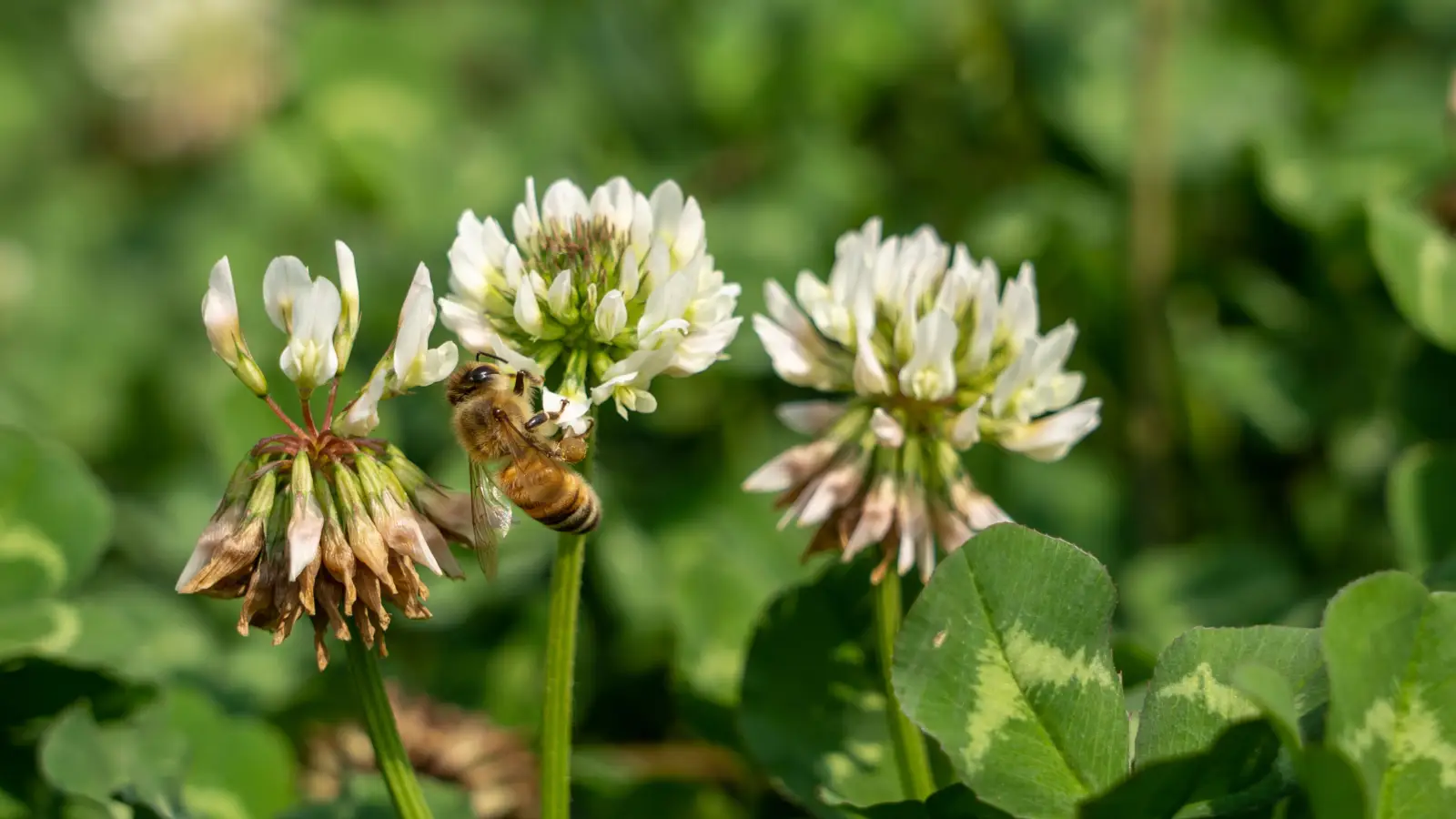
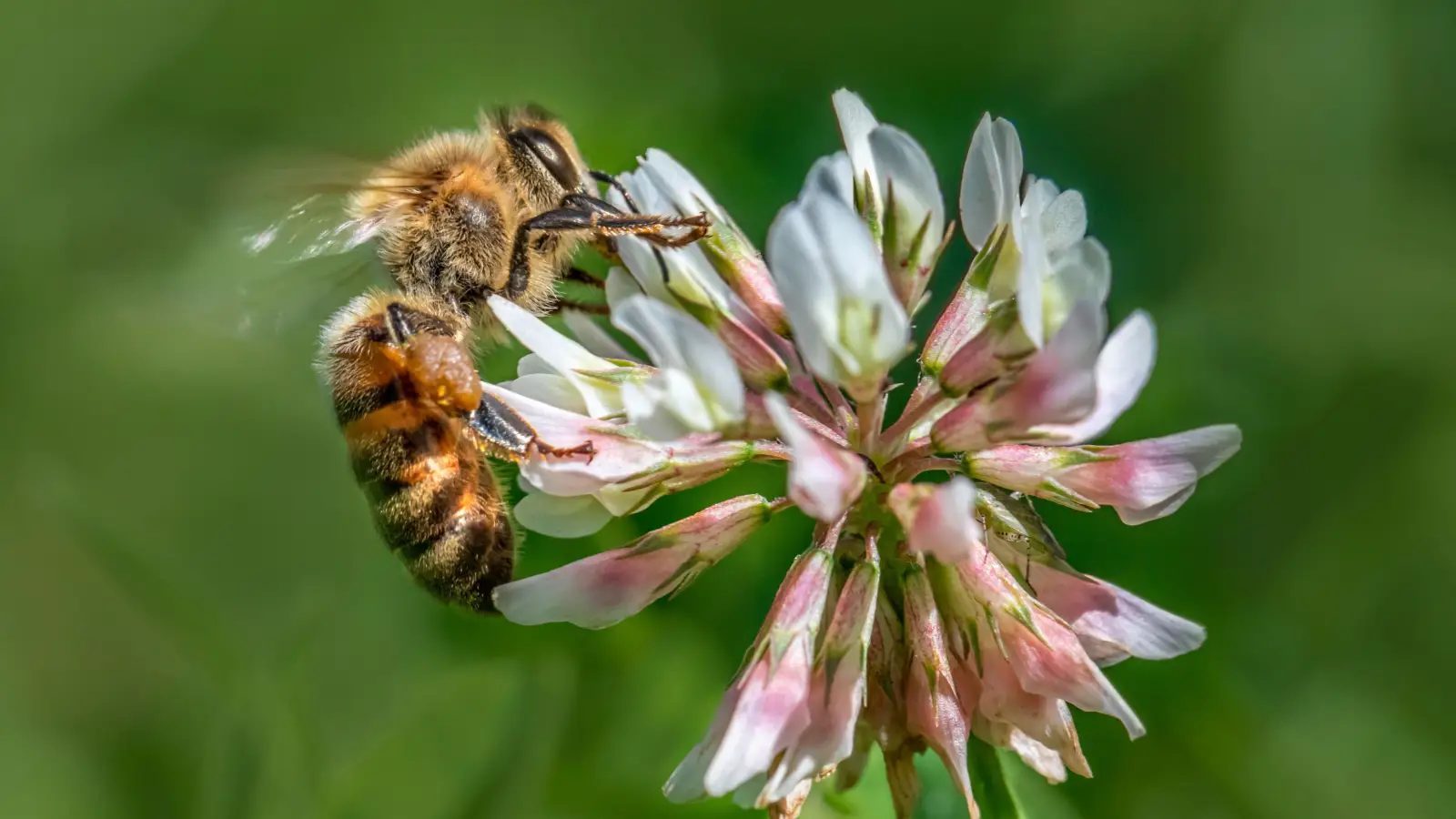
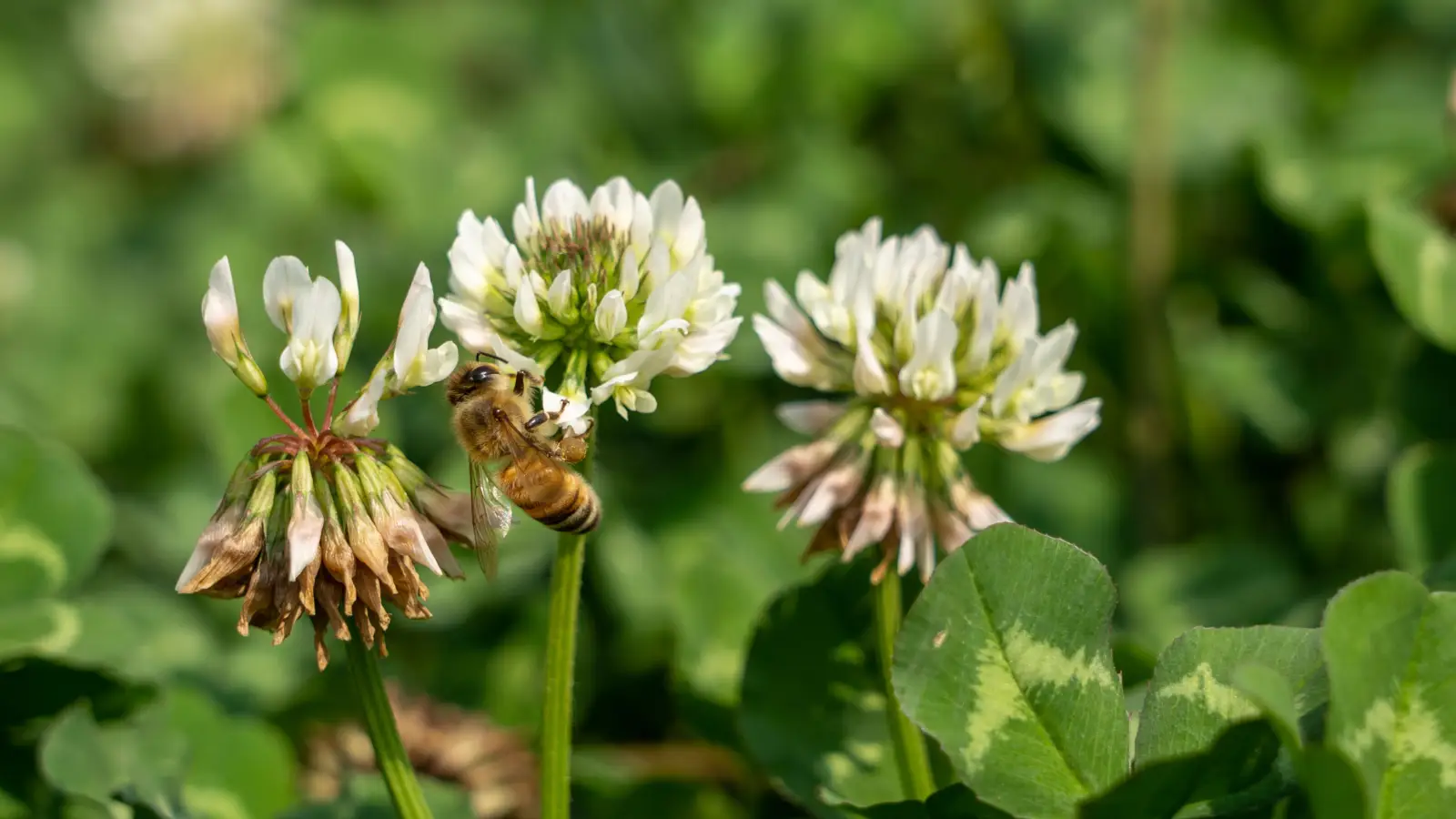
Yes. Clover honey is genuine honey made from the nectar of clover flowers, mostly white Dutch clover and alsike clover. As long as the jar says “honey” with no added syrups, it’s 100% honey, though it may include nectar from other plants unless labeled as a single‑floral.
Why is clover honey so inexpensive?
Its abundance drives the price down. Clover blankets pastures across much of North America, and bees collect vast quantities every summer. That low cost reflects supply, not low quality—many exceptional pure clover honeys cost less than rare monoflorals simply because there’s more of them.
Does clover honey spoil?
No. Under normal, dry storage honey doesn’t spoil because its low water activity and acidity stop microbes. It can darken and fade in aroma over many years, and it will ferment if water content climbs above 20%, but a properly sealed jar remains safe indefinitely.
What does a Grade A rating mean for clover honey?
Grade A is the highest USDA grade, awarded to honey that is crystal‑clear, defect‑free, and mild in flavor. It tells you about how the honey was processed, not about its source or nutritional profile. A raw clover honey with a slight haze could fall into Grade B yet offer a richer taste and more active enzymes.
How can I be sure my clover honey is authentic?
Ignore the kitchen‑counter tests. The real safety net is a transparent supply. Look for a True Source Certified label, buy from a local beekeeper whose name is on the jar, or choose a single‑origin honey with a specific apiary location. Authentic clover honey will eventually crystallize; a jar that stays perfectly runny for years without thickening may contain added syrups.
Key Points to Take from This Guide
- Clover honey’s clean, mild flavor makes it the most adaptable sweetener for baking because it never fights other ingredients.
- Its natural sugar balance—roughly 38% fructose and 31% glucose—keeps it liquid much longer than honeys with higher glucose levels.
- Keep clover honey in a sealed jar at room temperature; refrigeration speeds up crystallization dramatically.
- When swapping honey for sugar in recipes, cut the liquid by about 3 tablespoons per cup of honey and lower the oven temperature by 25°F to manage browning.
- USDA Grade A describes processing clarity, not floral purity; a raw Grade B clover honey may be more aromatic and less processed.
- For the best mix of liquid stability and genuine flavor, choose a single‑origin, lightly filtered clover honey.
- Crystallization is normal and harmless; warm the jar gently in water to restore it to a liquid state.
Your Pantry’s Quiet Anchor
Clover honey earns its place not by shouting, but by showing up reliably for whatever the recipe demands. The next time that familiar golden jar sits on your shelf, try seeing it as a precision ingredient—a sugar solution tuned by nature to stay pourable longer, blend invisibly, and hold a cake’s softness better than white sugar. The most useful thing you can do is put it to work: pick one recipe that leans on those traits—a honey whole‑wheat sandwich loaf or a batch of granola where the clover honey coats the oats evenly without burning—and taste exactly what predictability adds to the plate.