You clicked because you want to know if that jar of local clover honey is doing anything for your allergies—or just costing you time. Clover honey won't desensitize you. The pollen in it is sticky, heavy, and insect-borne, practically the opposite of the wind-borne dust that makes you sneeze. Any relief you've felt is your brain's placebo handiwork, and leaning on honey instead of a real treatment plan is a gamble that lets your allergy season win.
The Pollen Inside Clover Honey
What type of pollen is in clover honey?
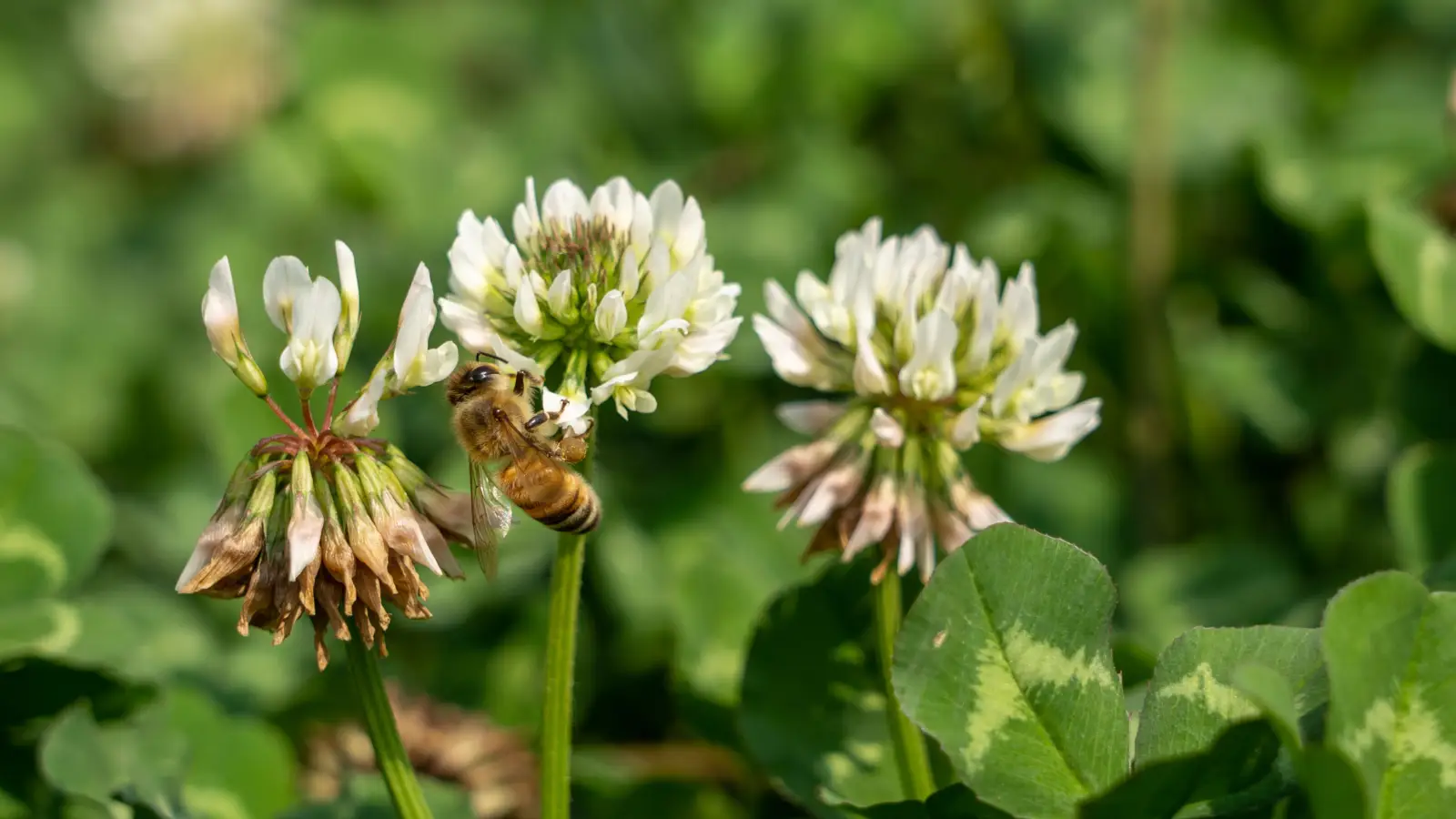
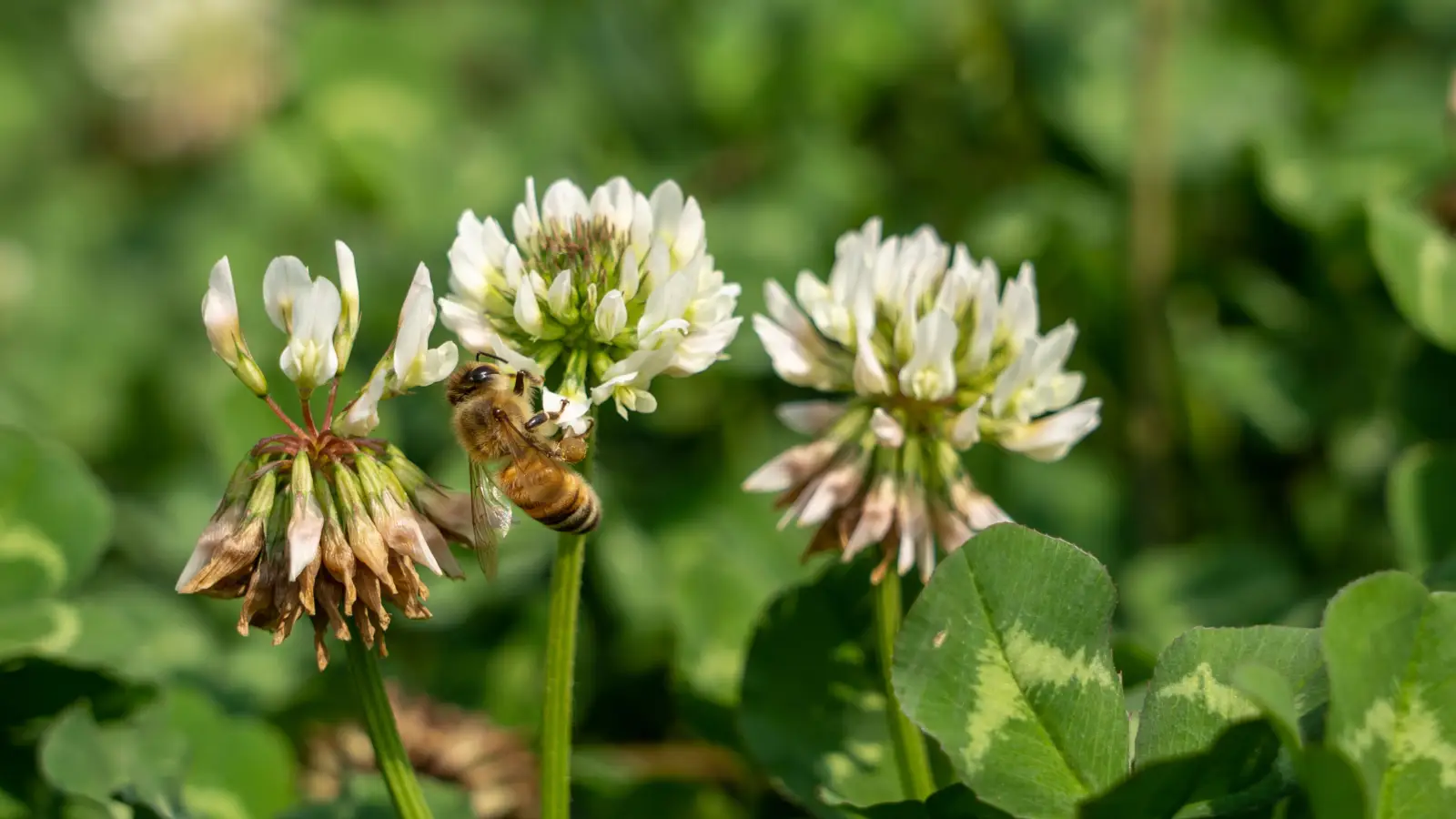
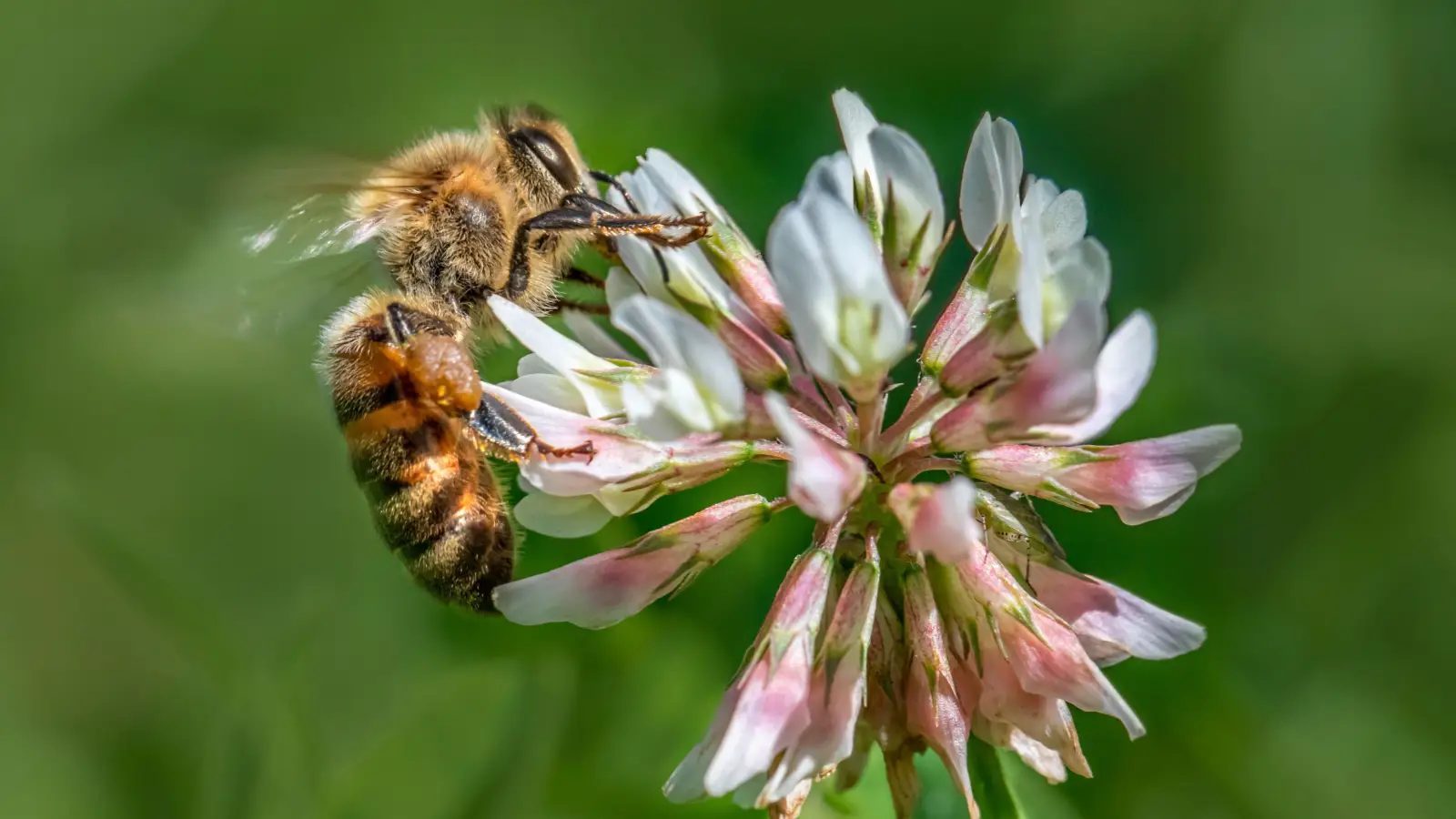
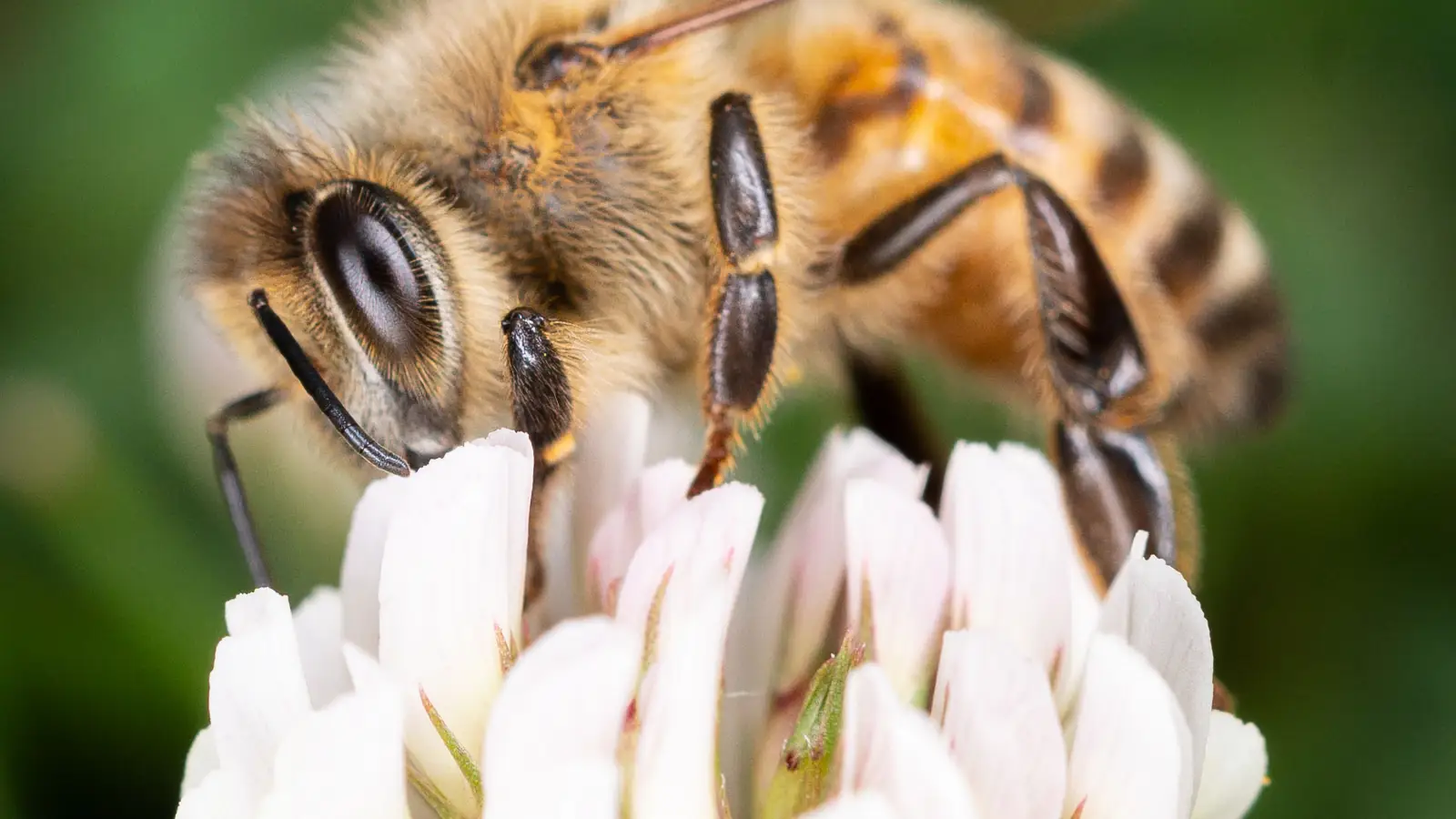
Almost exclusively clover pollen grains—from white clover (Trifolium repens) and red clover (Trifolium pratense). These grains are built for hitchhiking on bees: waxy, sticky, and roughly 100 microns across. They're not designed to float, and they don't.
What does entomophilous mean when talking about pollen?
Entomophilous plants are those that need insects to move pollen from flower to flower. Their pollen is heavy, sticky, and nutrient-rich—a meal for bees, not an airborne invader. This is the direct opposite of anemophilous pollen, the dry, microscopic stuff that ragweed and grasses launch into the breeze by the billions.
How does clover pollen differ from the pollen that causes seasonal allergies?
Allergy-inducing pollen is anemophilous: it's tiny (10–40 microns), dry, and buoyant enough to travel for miles. Clover pollen is entomophilous: big, sticky, and fast-falling. The stuff that triggers your hay fever almost never comes from insect-pollinated flowers like clover. Eating it in honey is like trying to vaccinate yourself against a bullet by swallowing a pebble—the shape is wrong in every practical way.
Can clover pollen even trigger allergic rhinitis?
Not by breathing it. Clover needs a direct physical introduction—like a gardener crushing flowers bare-handed—to provoke a reaction. If you're not rubbing your face in clover blossoms, your seasonal symptoms are being driven by airborne pollens your clover honey cannot possibly train your body to ignore.
Why Local Honey Fails as an Allergy Treatment
Why do people think local honey helps allergies?
The pitchbook is clean: bees carry local pollen, honey contains that pollen, you eat the honey, you get a low-dose exposure, your immune system adapts. It sounds like logic, which is why it spreads. But the gap between that logic and real immunotherapy is the difference between a home recipe and a pharmaceutical protocol. The myth persists because it feels empowering—and because placebo relief reinforces the story.
Is there any clinical evidence that local clover honey relieves allergies?
None that holds up. The most frequently cited trial, from 2002 in the Annals of Allergy, Asthma & Immunology, gave participants local unpasteurized honey, commercial honey, or a placebo. After months of symptom tracking, the groups were indistinguishable. No rigorous replication has overturned that result. Honey is a food—not a desensitization agent—and the data agree.
Can eating honey act like sublingual immunotherapy for pollen allergies?
No. Sublingual immunotherapy (SLIT) uses pharmaceutical-grade, standardized extracts of whichever pollen actually triggers your allergies—grass, ragweed, birch—held under the tongue long enough for mucosal absorption. Honey delivers variable, broken-down clover pollen proteins through stomach acid. One is a controlled medical intervention; the other is breakfast. They aren't in the same category.
What's the actual immunotherapy process for grass or tree allergies?
First, an allergist identifies your triggers through skin-prick or IgE blood testing. Then they prescribe a multi-year protocol: either subcutaneous injections or FDA-approved sublingual tablets (like Oralair or Grastek) containing precisely dosed allergen extracts. This builds genuine immunologic tolerance by repeatedly exposing your immune system to the exact proteins it overreacts to—not a cousin protein from a non-allergenic flower.
The Placebo Effect and What to Do Instead
What is the placebo effect, and how does it explain honey and allergy relief?
When you expect relief, your brain can lower the volume on subjective symptoms—a stuffy nose feels less acute, itchy eyes seem calmer. That's real, and it happens without any active drug. Local honey's track record of "working" is almost entirely this phenomenon, amplified by glowing testimonials and the powerful ritual of a daily teaspoon. But it doesn't change your immune system's hyperreactivity to grass pollen.
Could relying on local clover honey actually make your allergies worse?
Not directly—clover honey won't launch a new allergic reaction in most people. But it can make things worse by deferring the right steps. Every season you spend self-treating with spoonfuls of honey is a season you aren't seeing an allergist, getting tested, or starting a therapy that actually remodels your allergic response. The hidden cost is measured in months of avoidable symptoms.
Does eating large amounts of local clover honey carry any direct risk?
For most people, the risk is negligible. The exception is a genuine IgE-mediated allergy to bee products or honey itself—uncommon but real. That can include oral itching, swelling, or gastrointestinal upset. For allergy sufferers without that specific sensitivity, the real risk isn't anaphylaxis; it's the opportunity cost of hanging a treatment plan on a myth.
What should you try instead if you suspect allergies?
Schedule allergy testing. Once you know exactly which pollen is the problem, you can follow evidence-based management: nasal corticosteroids, antihistamines, avoiding peak pollen hours, and—for long-term relief—allergen immunotherapy prescribed by a board-certified allergist. Enjoy clover honey on toast for its taste, not as a medical strategy.
Quick Answer Index
| Question | One-Line Answer |
|---|---|
| What type of pollen is in clover honey? | Heavy, sticky entomophilous pollen from clover blossoms. |
| What does entomophilous mean when talking about pollen? | Insect-pollinated; pollen is too heavy to become airborne. |
| How does clover pollen differ from allergy-triggering pollen? | It's large and sticky, not small and wind-borne like ragweed or grass. |
| Can clover pollen even trigger allergic rhinitis? | Rarely—only with direct plant contact, not by inhalation. |
| Why do people think local honey helps allergies? | It sounds like natural microdosing, mirroring immunotherapy logic. |
| Is there any clinical evidence that local clover honey relieves allergies? | No; controlled studies show no symptom improvement over placebo. |
| Can eating honey act like sublingual immunotherapy? | No—it's the wrong pollen at unknown doses, digested, not absorbed. |
| What's the actual immunotherapy process for grass or tree allergies? | Standardized allergen extracts delivered over years via injection or FDA-approved tablets. |
| What is the placebo effect, and how does it explain honey and allergy relief? | Belief alone can reduce perceived symptoms, mimicking real relief. |
| Could relying on local clover honey actually make your allergies worse? | Indirectly—by delaying proven testing and immunotherapy. |
| Does eating large amounts of local clover honey carry any direct risk? | Rarely, except for those allergic to bee products; the main risk is lost time. |
| What should you try instead if you suspect allergies? | Get tested, then use avoidance, medication, or actual immunotherapy. |