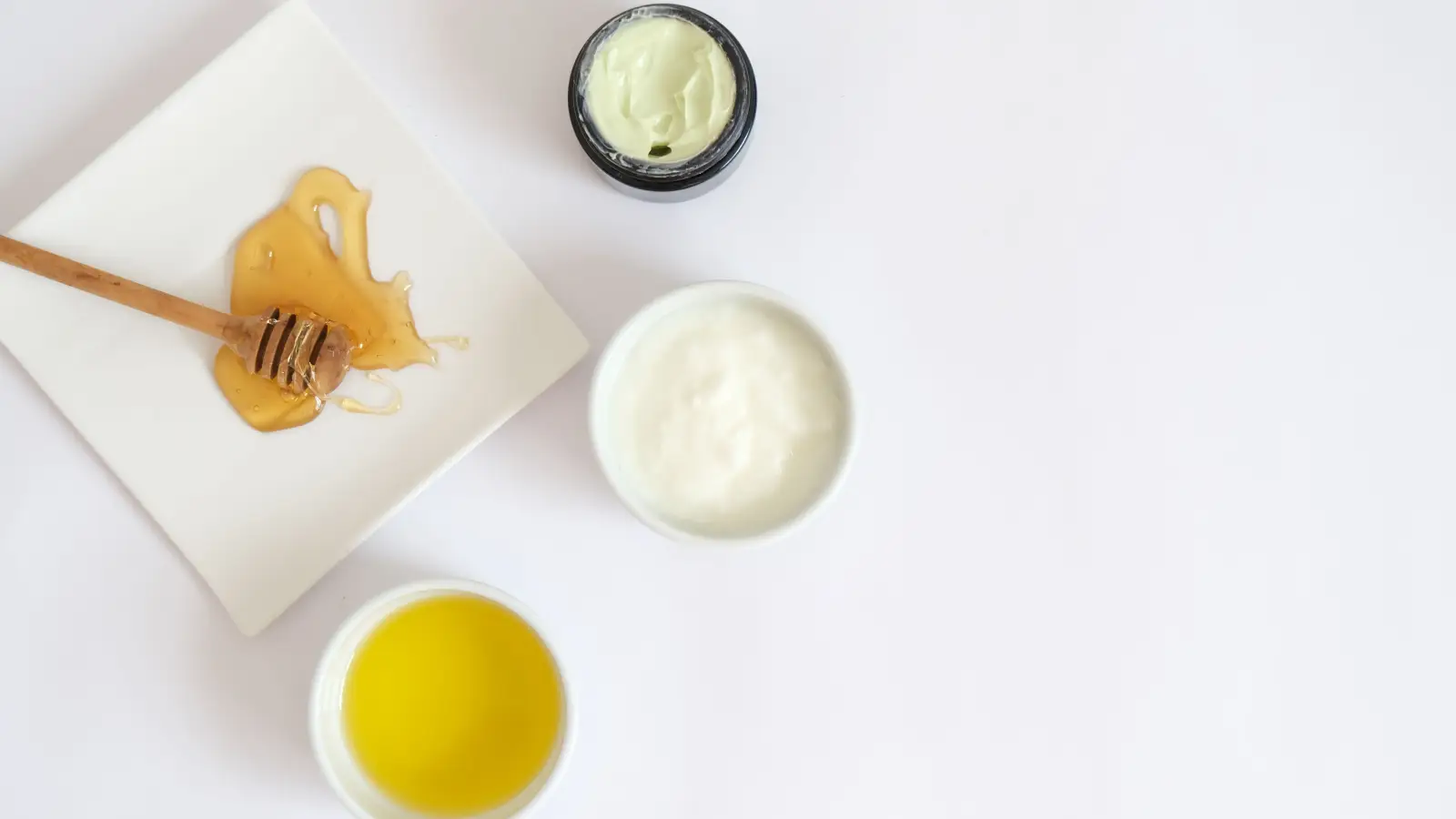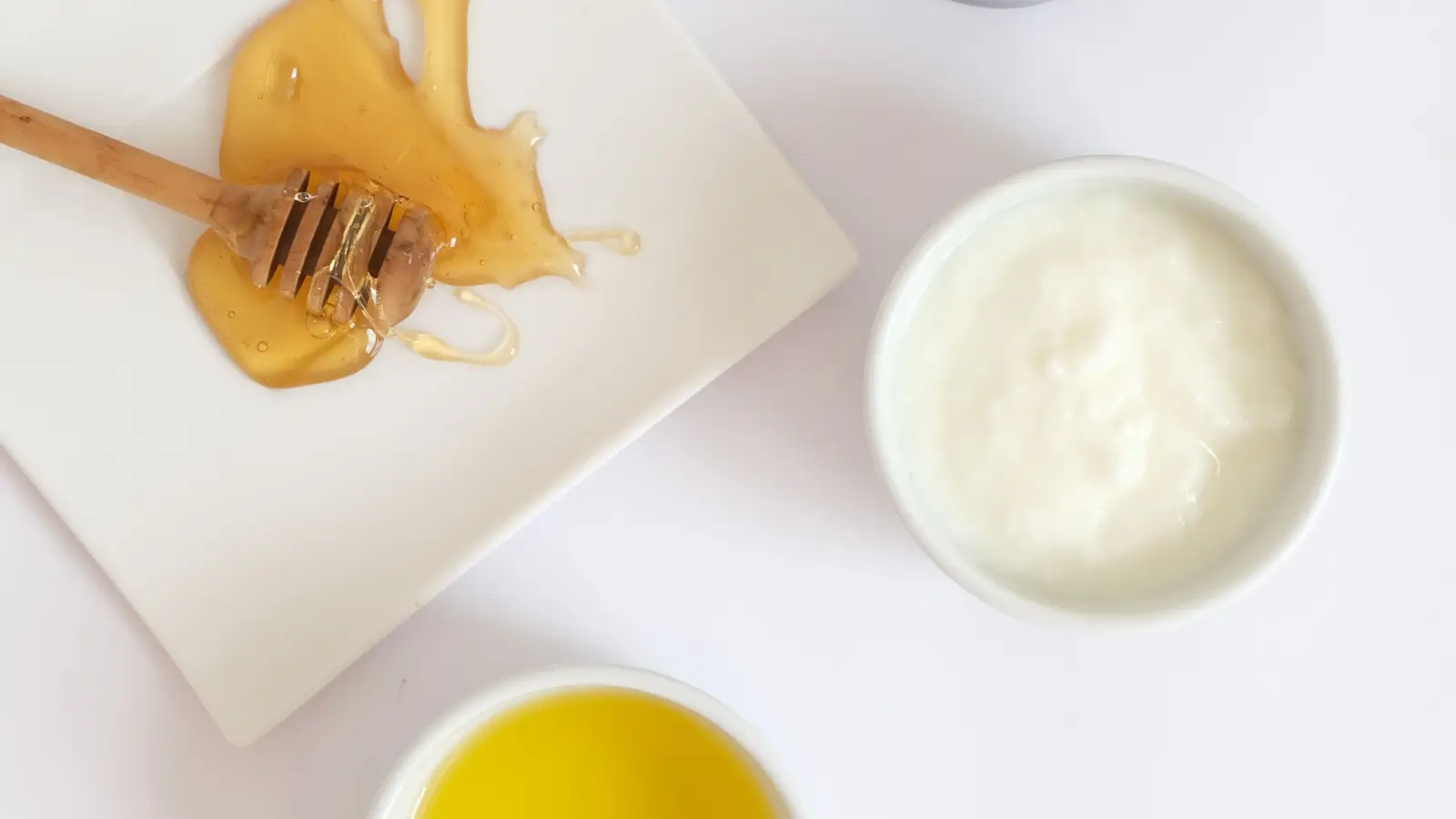
Honey draws water from the air, quiets down inflammation, and naturally lands at a pH that healthy skin recognizes as friendly. What gives it direction—toward mattifying shine, filling parched creases, or gently lifting dull surface cells—is what you mix into the bowl. The five recipes that follow each pair honey with ingredients chosen to solve one specific skin concern, and every combination was built with an eye on keeping the final mixture inside the skin’s comfort zone of pH 4.5 to 5.5.
The Oil-Balancing Mask for Shiny, Congested Skin
Bentonite clay and honey are a study in opposites that work: the clay’s negative charge pulls excess sebum from pores, while honey holds a measured amount of moisture in place—enough to hydrate, but never enough to feel greasy. The problem with mixing bentonite and water alone is the alkaline shock, often pushing pH above 8 and leaving skin tight and vulnerable. A spoonful of raw honey and a splash of apple cider vinegar bring the whole mixture back into safe territory.
Combine one teaspoon of bentonite clay with one teaspoon of raw honey and add apple cider vinegar—start with half a teaspoon and increase until the paste spreads easily. Lavender essential oil can be included as a single drop if skin tolerates it, but those with very reactive complexions should leave it out. Spread a thin layer, wait 10 to 12 minutes without letting the mask fully dry and pull, then rinse with lukewarm water. Expect less shine, but also less of the overcompensating oil production that follows harsh, alkaline treatments.
The Rich Moisture Mask for Flaky, Parched Patches
Dry skin is often dry long-term—not just thirsty, but missing the lipid layer that traps hydration. Honey acts as the moisture magnet; mashed avocado contributes fatty acids and a soft cushion of vitamin E; and finely milled oat flour smooths and calms. Avocado’s natural pH sits around 6.5, but honey’s acidity (roughly 3.9 to 4.5) eases the blend down to about 5.0 to 5.5, where tight skin can relax.
Mash a quarter of a ripe avocado until no lumps remain, then blend in one tablespoon of raw honey and a teaspoon of colloidal oatmeal or oat flour. If the skin feels unusually tight, add a few drops of rose water. Apply generously and keep the mask on for 15 to 20 minutes. Removing it with a soft, damp cloth feels kinder than scrubbing. In low-humidity seasons or air-conditioned rooms, follow up with a thin sweep of squalane or another non-comedogenic oil to lock the water in once the mask is rinsed away.
The Calming Mask for Redness and Reactive Skin
When skin flushes at the lightest touch, the priority is lowering stimulation, not correcting a flaw. Aloe vera gel, colloidal oatmeal, and honey all sit inside a narrow pH band—4.5 to 5.5—and each brings a different form of quieting. Aloe cools; oatmeal reinforces the barrier; honey delivers the moisture without asking the skin to adjust to an unfamiliar environment.
Use one tablespoon of fresh aloe vera gel (or a pure store-bought version with no added alcohol), one tablespoon of raw honey, and half a teaspoon of colloidal oatmeal. Stir until smooth. The mixture will be thin, so a fan brush helps keep it on the face. Leave it for 10 to 15 minutes, then rinse with cool water. During a flare-up this mask can be used up to three times a week, but a patch test on the inner arm is the sensible first step with any new ingredient.
The Brightening Polish for Dull, Uneven Skin
Plain yogurt contains lactic acid, a gentle alpha-hydroxy acid that loosens the connections between dead surface cells. Honey protects the fresh layer underneath by drawing water in, and a small amount of finely ground rice flour provides a soft physical lift for the debris that is already ready to shed. The yogurt’s acidic pH (4.0 to 4.5) keeps lactic acid active, while honey buffers the blend so it doesn’t tip into irritation.
Mix one tablespoon of full-fat plain yogurt (Greek yogurt works, though a teaspoon of warm water will help thin it) with one tablespoon of raw honey and half a teaspoon of rice flour. A pinch of turmeric can brighten further, but it may leave a temporary tint on fair skin. Massage lightly onto damp skin with circular motions, let the mask sit for 8 to 10 minutes, then rinse thoroughly. Sunscreen is non-negotiable afterward—freshly exfoliated skin absorbs UV more readily for at least a day.
The Firming Mask for Fine Lines and Slackness
Egg white tightens as it dries, creating a temporary lifting effect that smoothes the surface. On its own, its high alkalinity—around pH 9—can stress the skin. Raw honey pulls that pH down toward 5.5 to 6.0, and a handful of rosehip oil drops bring in fatty acids and antioxidants that work over time, not just minutes.
Whisk one egg white until frothy, then fold in one tablespoon of raw honey and four drops of rosehip seed oil. Apply a smooth layer, keeping clear of the eye area, and stay still while the mask sets—movement can cause tiny tears in the film. After 10 to 12 minutes, rinse with cool water and pat dry. The firming is short-lived, but the deep hydration and antioxidant support add up with consistent use.
At-a-Glance: What Each Mask Delivers
| Skin Concern | Key Pairings | Approx. Final pH | Primary Action |
|---|---|---|---|
| Excess Oil | Honey, bentonite clay, ACV | 5.0–5.5 | Absorbs sebum, prevents rebound oil |
| Dry Patches | Honey, avocado, oat flour | 5.0–5.5 | Deeply hydrates and replenishes lipids |
| Redness / Sensitivity | Honey, aloe vera, colloidal oatmeal | 4.5–5.5 | Soothes and reinforces the moisture barrier |
| Dullness | Honey, yogurt, rice flour | 4.0–5.0 | Exfoliates and brightens |
| Fine Lines | Honey, egg white, rosehip oil | 5.5–6.0 | Temporarily firms and delivers antioxidants |
How to Match a Mask to Your Skin’s Condition Today
Skin doesn’t read labels. Pick the mask based on what you see and feel this morning.
- If a blotting sheet comes away nearly clear but the T-zone shines by noon, the oil-balancing mask is the smarter choice.
- If cheeks feel tight ten minutes after washing, or foundation catches on dry patches, reach for the rich moisture mask.
- If a light touch leaves a pink mark that stays, the calming mask asks the least from an already over-burdened barrier.
- If the face looks flat and gray despite enough sleep, the lactic acid boost in the brightening polish can nudge cell turnover forward.
- If fine lines appear deeper after a stressful week, the firming mask offers a time-buying smoothness before an event—just keep expectations realistic about how long it lasts.
FAQ
Can I use honey on acne-prone skin?
Raw honey’s natural acidity and low-level peroxide activity can be helpful for blemish-prone skin, but it won’t replace targeted acne care. If breakouts are cystic or actively inflamed, skip heavier masks and test any honey recipe on a small patch first—some congested skin reacts unpredictably to sugars.
How often can I apply a DIY honey mask?
Two to three times a week is reasonable for most of these. The brightening polish, because it exfoliates, should stay at once or twice weekly. The calming mask, free of actives that thin the skin, can be used more often during a period of irritation.
Do I need pH strips to make these safe?
The proportions are designed to fall naturally into a skin-safe range, so strips aren’t essential. But if you enjoy the science side of skincare, a small set of narrow-range test strips (pH 4–7) is an affordable way to confirm results or tweak a recipe.
Can I store leftover mask in the fridge?
These recipes are fresh and preservative-free. Any mixture that isn’t used immediately should be thrown away. Make only enough for one application.
A Balanced Base Makes the Difference
Every mask on this list gets its adaptability from honey’s naturally acidic, water-loving structure. It’s the buffer that keeps clay from over-stripping, yogurt from over-acidifying, and egg white from over-alkalizing. The calming mask is the safest entry into DIY skincare, but the real takeaway is that skin concerns shift—someone might need the oil-balancing mask midweek and the moisture mask by Saturday. Understanding why a combination works, not just how to mix it, is what separates a sticky kitchen experiment from a treatment that actually answers what the skin is asking for.