You open the jar and something doesn’t check out. The honey still looks clear and golden—no mold, no discoloration—but there’s an off odor and maybe a thin white foam on top. That’s fermentation, and it happens when moisture sneaks in and wakes up the natural yeasts. Honey lasts forever only if the water content stays below about 18%. Spot the early signs, act fast, and you save the jar. Wait until it tastes sour or pours like water, and you’ve lost it. This piece trains you on precise sensory checks—foam, alcohol smell, sour flavor—and a quick moisture drop test so you stop fermentation before the honey turns unusable.
Stop Fermentation Right Now: The 3‑Step Salvage Protocol
If you see foam, smell a yeasty or alcoholic note, or notice active bubbles—and the honey still tastes mostly sweet—you can halt the process. Most fermentation starts with moisture above the safe limit. Follow these steps without delay.
- Determine if it’s still worth saving. Place a tiny amount on your tongue. If the dominant note is sweet with only a slight tang, move to the next step. If the taste is distinctly sour or vinegary, discard the jar. That acid change is irreversible.
- Heat to kill the yeast. Transfer the honey to a clean, heat‑safe container with room for expansion. Set the container in a pot of water on the stove. Monitor the water temperature with a kitchen thermometer—keep it between 140°F and 150°F (60°C–65°C) and hold for 30 minutes. Do not let the water boil; that scorches the honey.
- Skim the foam and cool. Remove the jar, let it rest at room temperature. Any remaining foam will rise to the surface. Skim it off with a clean spoon. The honey is now stable but must be stored correctly going forward, or it will ferment again.
The 5 Signs of Fermentation and What Each One Tells You
Fermentation progresses in clear, fixable stages. Recognizing the sign early makes the difference between a salvaged batch and a wasted one.
Sign 1: A Layer of White Foam on the Surface
What causes it. Yeast eating sugars releases carbon dioxide and ethanol. In thick honey, the gas forms a bubbly foam on top. Some raw honeys develop a harmless thin white film from air bubbles during bottling, but fermentation foam is thicker, spongy, and grows over a day or two.
How to confirm. Tilt the jar slowly. Real fermentation foam tends to cling to the glass and may reveal fine bubbles rising from below. If there’s a mild yeasty smell with it, that’s the clincher. No smell and no change over 48 hours points toward simple air entrapment.
Exact fix. This stage is fully recoverable. Use the gentle heat method described above. The foam lifts off after heating and can be skimmed away cleanly.
Sign 2: An Alcoholic or Yeasty Smell
What causes it. Even trace ethanol has a sharp, obvious scent different from honey’s natural floral notes. This often shows up before any visible change.
How to confirm. Open the jar, wait a few seconds, then inhale just above the opening. A beer‑like, bread‑dough, or overripe fruit odor means fermentation is active. If you have a fresh jar of the same honey, compare them side by side.
Exact fix. Heat immediately to 140°F–150°F for 30 minutes. The alcohol smell may fade mostly; any leftover traces won’t affect baked or cooked dishes.
Sign 3: A Sour or Vinegary Taste
What causes it. Given time, acetobacter converts the ethanol into acetic acid—same process that sours wine into vinegar. The flavor turns acidic and the honey’s floral complexity is destroyed.
How to confirm. Taste less than a pea‑sized drop. A sharp, puckering bite beyond a faint tang means the pH has dropped too far. At this point, the honey is spoiled for any purpose where its original flavor matters.
Exact fix. No repair. Heating kills the microbes but the sourness stays. Some people blend it into marinades or use it for mead where acidity is an asset, but for direct eating, bin it. The moisture‑test drop on a plate (more below) will show why it got this far: expect the honey to spread into a thin puddle rather than hold a tall bead.
Sign 4: Bubbles Rising Through the Honey
What causes it. Carbon dioxide forms tiny persistent bubbles visible when you move the jar. This can happen with or without foam.
How to confirm. Hold the jar to light and rotate slowly. Look for columns of pinpoint bubbles rising from the bottom or edges. Occasional large bubbles that pop quickly are just trapped air; fermentation bubbles multiply over hours.
Exact fix. The decision rides on taste, not bubble count. Sweet taste? Heat it. Sour taste? Discard as in Sign 3.
Sign 5: Noticeable Thinness or Runny Texture
What causes it. Yeast metabolism breaks down sugars, making the honey pour like thin syrup. This shows up after significant fermentation.
How to confirm. Tilt the jar and watch how the honey moves. Dip a spoon and lift—the stream will be fast and thin instead of thick and ribbon‑like. Compare to a reference jar if you have one.
Exact fix. This sign almost always coincides with off‑flavors. The honey won’t regain its body. Use small amounts where runniness and tang are acceptable (glazes, baking), but don’t expect a return to fresh quality.
Test Moisture at Home with a Simple Drop Observation
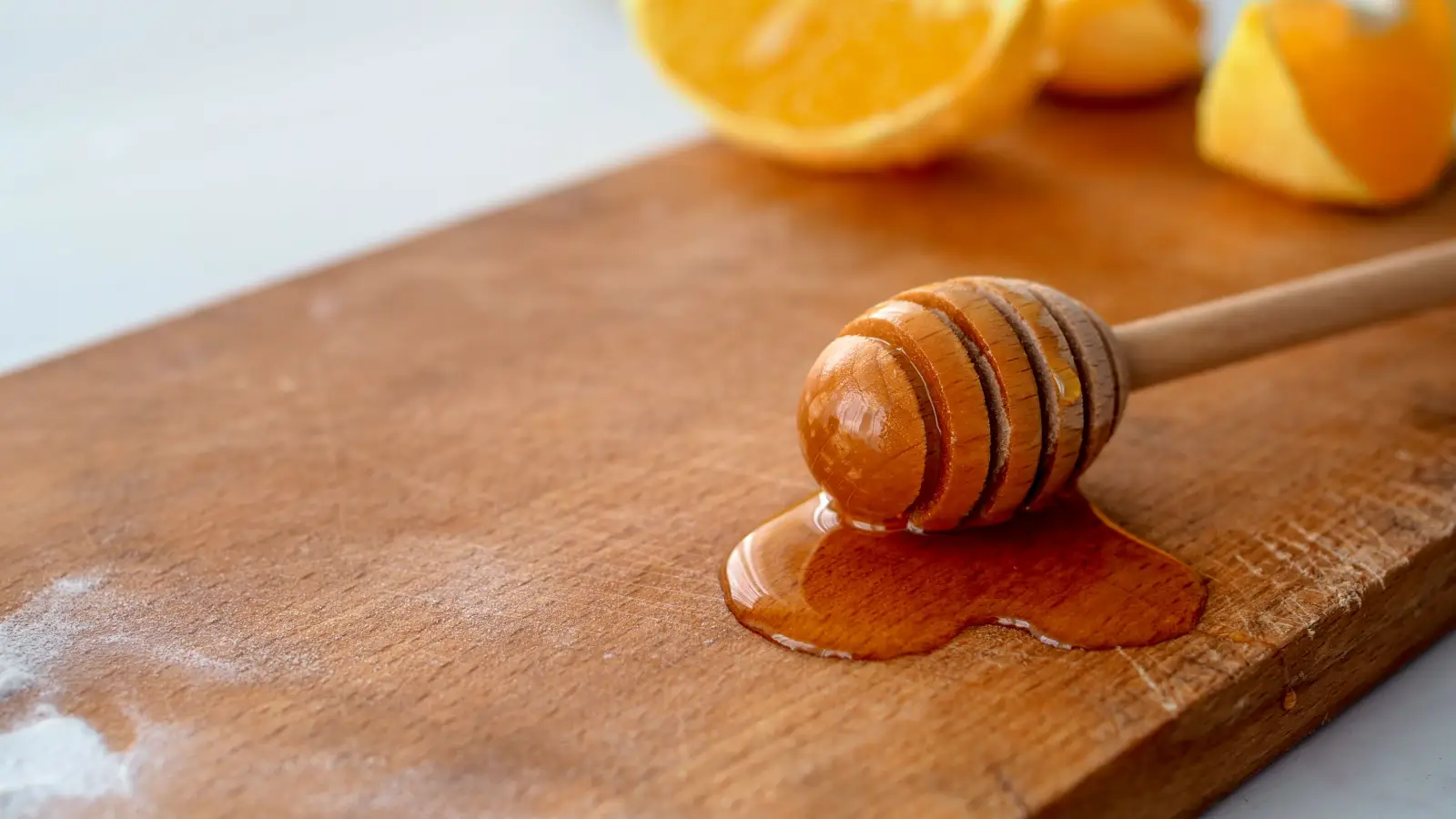
Before reaching for equipment, try this. Place one drop of the honey on a clean, dry white plate. Leave it for one minute. Properly cured honey holds a domed bead that barely spreads. If the drop flattens into a wide thin puddle, the water content is above the safe zone (roughly 18–19%). This doesn’t give you a lab number, but it tells you exactly why fermentation found a foothold.
When Fermentation Is Too Advanced and Other Edge Cases
Rarer spoilage forms exist. Recognize them to avoid wasted time and risk.
Surface mold. Honey’s low moisture normally blocks mold, but if the jar sat open in a humid kitchen for days, mold can appear as green, gray, or black fuzzy spots sitting only on top. Unlike foam, mold doesn’t disperse into the honey. Toss the entire jar—mycotoxins are possible and honey’s density doesn’t confine them to the surface.
Heat‑damaged honey from extended storage. Stored for months above 80°F (27°C), honey darkens, enzymes degrade, and hydroxymethylfurfural (HMF) rises. It’s not fermentation, but the flavor becomes harsh and caramelized. Safe but unpleasant; use only in heavy‑flavor recipes that mask the bitterness.
High moisture without fermentation. Some commercial pasteurized honey has its yeast killed. If the seal breaks and moisture enters, you get a watery, flat product that never bubbles or sours but loses character. No fix; replace it.
How to Store Honey So Fermentation Never Starts
Prevention is the only practical strategy. Once yeast activates, you’re in damage control.
- Seal it tight. Honey pulls moisture from the air. Every second the jar is open in a humid room raises surface moisture. Close the lid immediately after use.
- Store cool and dry. Keep honey between 50°F and 70°F (10°C–21°C). Avoid cupboards above the stove or fridge—refrigeration speeds crystallization but won’t cause spoilage.
- Use dry utensils only. A clean, dry spoon every time. A single drop of water, tea, or juice can create a moisture pocket that yeast exploits.
- Check raw honey batches. If you buy from small producers or keep your own hives, a basic refractometer (cost around $15–$25) tells you the exact moisture level. Any batch over 18.5% should be refrigerated or used within weeks.
- Pasteurize if storing for years. For moisture‑rich raw honey you intend to keep long‑term, heat to 150°F for 30 minutes. This kills yeast and stabilizes the batch, but heat destroys some enzymes and delicate aromas. Choose this only for baking honey, not premium raw honey.
Frequently Asked Questions
Is crystallized honey spoiled?
No. Crystallization is natural glucose precipitation, not spoilage. Crystallized honey never foams, smells like alcohol, or tastes sour unless it’s also fermenting. To reliquefy, warm the jar in water not exceeding 110°F (43°C) and stir occasionally.
Can you fix honey that tastes sour?
No. Sourness means acetic acid has built up. The flavor is permanently changed. Use it in dressings or braises where acidity fits, but it won’t return to sweet honey.
Is it safe to eat honey that smells like alcohol?
If the smell is mild and the taste still sweet with a faint tang, it’s safe for most people after heating, which drives off ethanol. Anyone with a weakened immune system should discard to be safe. Small taste and smell checks are your reliable guides.
Why did my honey ferment even though the lid was tight?
High moisture was present from the start. Many raw honeys are sold unpasteurized with moisture near the fermentation threshold. A sealed jar can’t stop yeast inside. Test moisture before long storage to avoid this.
How can I test honey purity with a moisture test?
The drop‑on‑a‑plate test reveals water content, not purity. Purity (added sugars) requires different lab methods. For spoilage risk, moisture is what matters.
Next Steps When Honey Can’t Be Saved
If the taste is sour, mold is present, or the honey has turned thin and flat, discard it. Compost if possible. For home‑harvested honey that failed, reach out to a local beekeeping association to troubleshoot moisture management during extraction and bottling. When buying your next jar, choose a supplier who tests moisture and labels harvest dates—especially if you plan to store it for more than a year.