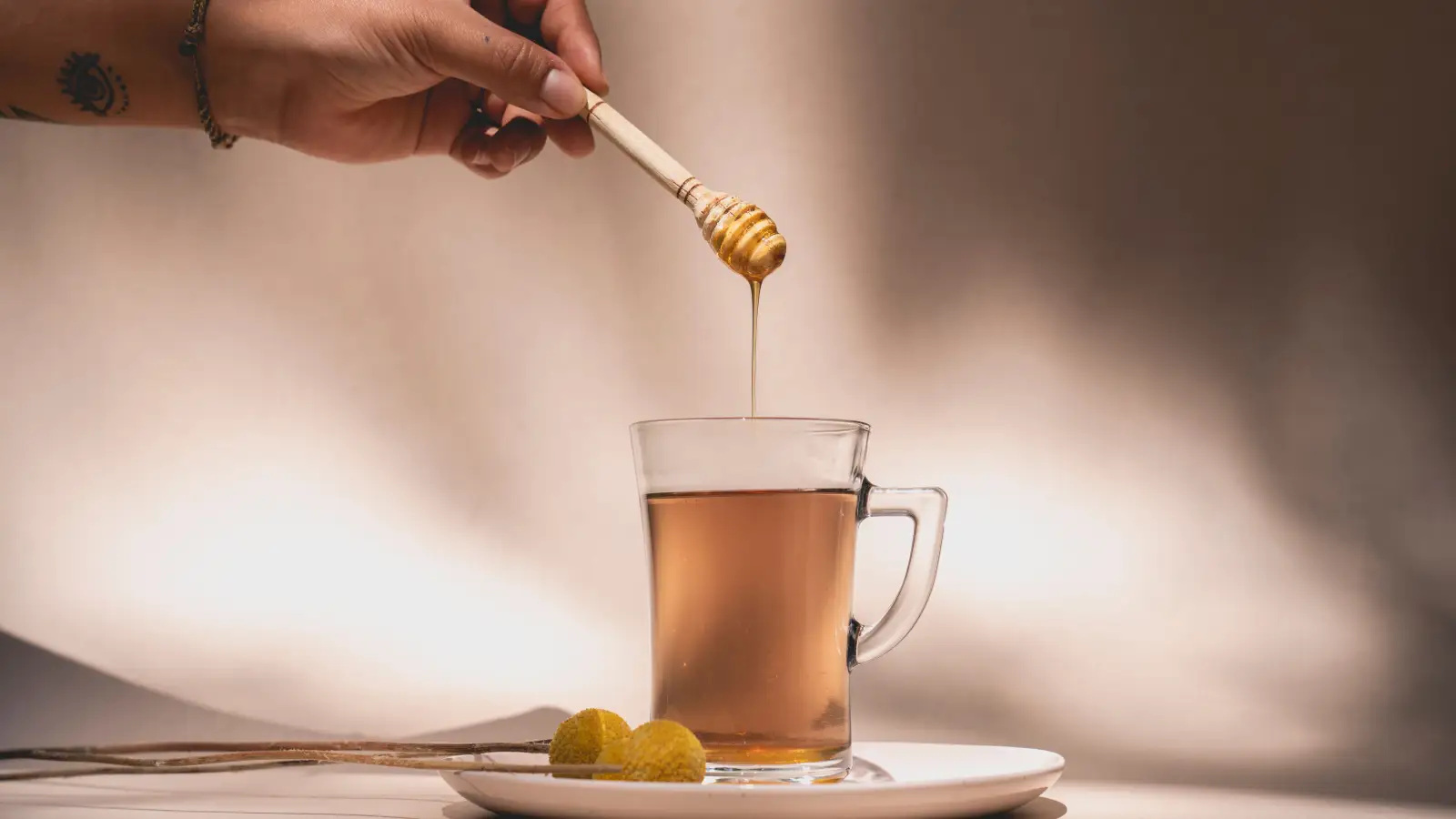
When someone types "How Researchers Validate the Real Health Benefits of Honey" into a search bar, they are not asking for a list of feel-good home remedies. They are asking for a boundary line: which claims hold under scrutiny and which dissolve when tested. Researchers draw that line by tracking honey’s bioactive compounds—phenolic acids, flavonoids, enzymes, methylglyoxal—through a chain of evidence. They measure chemical activity in the lab, run controlled trials where human outcomes are the endpoint, and discard anything that cannot survive replication. So far, antioxidant assays and pediatric cough trials constitute the hard floor of what can be called validated. Most other health claims remain unanchored speculation.
The Phenolic and Enzymatic Load That Defines Honey’s Bioactivity
Honey is a chemically inconsistent food, and that inconsistency drives the validation problem. Floral source, climate, soil, and processing all shift its phenolic and enzymatic content enough that a single batch of buckwheat honey can contain triple the total phenolics of a batch of acacia. Researchers bypass this confusion with analytical chemistry: high-performance liquid chromatography (HPLC) quantifies individual flavonoids like quercetin, kaempferol, and chrysin alongside phenolic acids such as caffeic and p-coumaric acid. When a study fails to publish that profile, it effectively reports on an unknown substance—and any health claim tied to it is impossible to replicate or falsify.
What gets validated therefore becomes specific to a honey type, not to "honey" as a category. Dark monofloral honeys—chestnut, heather, buckwheat—consistently show the highest phenolic loads, while light floral honeys sit near the bottom. This is not subtle. It is a threefold to fivefold gap that determines whether an antioxidant study even reaches a biologically interesting threshold. The logical extension is that broad statements such as "honey is rich in antioxidants" are scientifically meaningless without the source attached.
Why Glucose Oxidase Matters More Than People Assume
Hydrogen peroxide, produced by the enzyme glucose oxidase when honey is diluted, constitutes the bulk of honey’s non-peroxide antimicrobial activity. The enzyme works under the same diluted conditions that exist in a wound bed or on a throat, generating peroxide at levels that inhibit Staphylococcus aureus and Escherichia coli without killing mammalian tissue. Researchers validate this mechanism by measuring peroxide generation over time while simultaneously determining the minimum inhibitory concentration (MIC) for target pathogens. The correlation is direct, and it reveals a dependency that many wellness narratives miss: heat, filtration, and prolonged storage degrade glucose oxidase, making raw, unprocessed honey more active in the lab than its pasteurized counterpart. A comprehensive 2021 review in Frontiers in Microbiology rated the peroxide-based effect as bacteriostatic, not bactericidal, meaning it halts growth rather than sterilizes. That distinction matters when someone expects honey to function as a systemic antibiotic.
Measuring Radical Scavenging: The ORAC, FRAP, and DPPH Assays Explained
Antioxidant validation in honey research relies on three standard in vitro assays that each probe a different chemical mechanism. ORAC quantifies peroxyl radical quenching, a pathway that mimics lipid oxidation in the body. FRAP measures ferric iron reduction, essentially the electron-donating power of the sample. DPPH records how efficiently a honey extract neutralizes a stable free radical. A 2020 study analyzed 57 monofloral honeys across all three assays and found that dark honeys ranked highest, but the relative positions of individual honeys shifted by up to 15 places depending on the assay chosen. That shift is not a flaw—it confirms that honey contains a mix of antioxidants with complementary actions.
The gap between assay and health claim opens when an antioxidant value is cited in isolation. The USDA retired the ORAC database for foods because in vitro capacity does not predict in vivo effect with any reliability. A honey may dismantle a free radical in a test tube, yet when swallowed, its phenolics are glucuronidated, sulfated, and methylated by intestinal and liver enzymes before reaching systemic circulation. Human studies that tracked plasma antioxidant capacity after honey intake have found small, transient bumps that return to baseline within hours. The validation chain therefore snaps at the bioavailability step, which is why a label touting "high antioxidants" cannot be read as equivalent to "high in vivo protection."
Clinical Trials for Nocturnal Cough: Why Honey Outperforms Placebo and Dextromethorphan
The pediatric cough data stand out because they satisfy the criteria that other honey health claims fail: repeated randomized controlled trials, a plausible mechanism, and an outcome measured directly in the human population of interest. The 2007 trial by Paul et al. gave 105 children with nighttime cough a single dose of buckwheat honey, dextromethorphan, or nothing. Parents consistently rated honey as the most effective at reducing cough frequency and severity. Subsequent studies using eucalyptus honey and a 2021 Cochrane review covering 899 children across six trials confirmed the pattern: honey probably outperforms no treatment and is at least as effective as over-the-counter cough suppressants, with fewer adverse events.
Mechanistically, the explanation does not rest on one magic molecule. The syrup’s viscosity physically coats the pharyngeal mucosa, damping irritation. The sweetness triggers reflexive salivation and airway secretion. Hydrogen peroxide and, in specific honeys, methylglyoxal may reduce local bacterial load, though that pathway has not been directly tested in the cough trials. The World Health Organization now lists honey as a potential demulcent for pediatric cough, with the non-negotiable caveat that it is contraindicated for infants under 12 months because of Clostridium botulinum spore risk.
The validation here is strong but narrow. All positive trials used dark, phenolic-rich honeys or eucalyptus honey. Standard blended supermarket honey has not been tested for this indication, and the extrapolation is not justified.
When Honey Gets Sold as a Cure-All: Examining Weak Evidence for Allergy Relief, Weight Loss, and Gut Health
A durable habit in honey marketing is the transformation of an untested hypothesis into a confident health claim. Three recurring claims—allergy desensitization, weight loss, and prebiotic gut effects—exemplify the gap.
Local Honey for Seasonal Allergies: Plausible Mechanism, No Reliable Trials
The logic that trace pollen in local honey could desensitize the immune system is reasonable, but the experiment was done. A 2002 study randomized allergy sufferers to receive local unfiltered honey, nationally distributed filtered honey, or corn syrup placebo. No group differed from placebo on any symptom metric. The reasons are not mysterious. The pollen that triggers allergic rhinitis is almost entirely anemophilous—grass, ragweed, birch—while the pollen in honey is overwhelmingly from insect-pollinated flowers. Even when windborne grains contaminate the honey, the dose is orders of magnitude below the microgram quantities used in proven sublingual immunotherapy. Without a positive trial, the claim is invalid.
Honey for Weight Loss: Confounding Satiety with Metabolic Effect
Honey’s glycemic index ranges from about 32 (acacia) to 87 (certain multifloral honeys), and the claim that this makes it a weight-friendly sweetener ignores a core calorie reality. Honey delivers roughly 4 kcal per gram, essentially the same as table sugar. A systematic review in Nutrition Reviews (2021) analyzed substitution trials and found that any weight loss resulted from lower total calorie intake, not from a unique property of honey. Adding honey to a diet without controlling calories does not reduce body weight or improve metabolic markers. The phrase "natural sweetener" is not a metabolic free pass.
Gut Health and Prebiotic Claims: Hints from Rat Studies, Little Human Data
Oligosaccharides in honey can stimulate Bifidobacterium growth in a fermentation flask. That finding does not scale. Honey’s oligosaccharide content hovers around 1–2% by weight—trivial compared to established prebiotics like inulin-rich chicory fiber. Human studies are scarce, small, and underpowered to detect clinically meaningful microbiota shifts. Classifying honey as a gut health intervention based on available evidence is premature.
What Every Jar of Honey Cannot Do: Limits of Current Science and Safety Notes
The translation gap between in vitro and in vivo is the sharpest limit in honey research. Studies showing that honey extract inhibits colon cancer cell proliferation typically use concentrations of phenolic compounds that are unattainable through oral consumption. Hepatic and microbial metabolism converts most phenolics into conjugated forms that differ in structure and often in activity from the parent molecules tested in a petri dish. A laboratory effect is not a clinical result; it is, at best, a screening tool for further investigation.
Funding patterns add another wrinkle. A substantial volume of honey research draws support from beekeeping associations or honey marketing boards. That does not invalidate the work, but it demands scrutiny of study design and reporting—particularly when a single brand is elevated without head-to-head comparisons against other high-grade honeys. Independent systematic reviews that aggregate data across funding sources offer the firmest ground for conclusions.
The safety picture is clearer. Infant botulism risk is well documented and non-negotiable. Allergic reactions are possible in individuals with bee protein sensitization. And as a free sugar, honey falls under the same daily cap recommended by the American Heart Association: 6 teaspoons for women, 9 for men. That dosage constraint renders many research regimens—where participants consumed 50 grams or more per day—unsustainable for routine preventive use.
Key Takeaways
- Two benefits have survived repeated validation: antioxidant activity in specific dark honeys (measured through chemical assays, with open questions about in vivo relevance) and nocturnal cough reduction in children over one year (supported by multiple randomized trials and a Cochrane review).
- Without the botanical source on the label, health claims about "honey" are ambiguous to the point of being unfalsifiable. The scientific baseline requires HPLC-level quantification of phenolics and an explicit statement of the honey’s floral origin.
- In vitro antioxidant numbers do not transfer directly to human health. Systemic exposure to honey’s phenolic aglycones is low and transient, which explains why plasma antioxidant studies have been underwhelming.
- Allergy relief, weight loss, and gut health claims are not supported by controlled human evidence. The few rigorous trials that exist for allergy desensitization are null.
- Safety constraints are fixed: zero honey for infants under 12 months; treat honey as an added sugar subject to daily limits for everyone else.
Frequently Asked Questions
Can honey cure seasonal allergies?
No. The only randomized trial testing local honey for pollen allergies found no difference from placebo. The pollen in honey is predominantly from insect-pollinated flowers, not the wind-dispersed pollens that cause most seasonal hay fever.
Is raw honey healthier than processed honey?
Raw honey retains glucose oxidase that generates hydrogen peroxide, giving it greater antimicrobial potential in laboratory tests. However, the practical health advantage for a person consuming a teaspoon of honey is small. In the gut, peroxide does not survive stomach acid, and any phenolic advantage from rawness is modest compared to the overriding effect of botanical origin.
How much honey is safe daily?
The American Heart Association guideline classifies honey as an added sugar; women should stay under 6 teaspoons and men under 9 teaspoons per day. Consuming more displaces nutritious calories without delivering essential nutrients.
Does honey help with acid reflux?
Anecdotal reports suggest honey coats the esophagus and may soothe irritation, but no randomized controlled trial has tested honey as a treatment for gastroesophageal reflux disease. The viscosity of honey could theoretically add to LES pressure in susceptible individuals, making it a neutral or even slightly negative variable.
Is manuka honey clinically superior for wound healing?
Manuka honey with a verified Unique Manuka Factor (UMF) rating of 10 or higher is the most studied honey for wound care and has been incorporated into medical-grade wound dressings. Its effectiveness is linked to methylglyoxal, which provides stable, non-peroxide antimicrobial activity. For oral consumption, the evidence for manuka over dark, high-phenolic honeys is weaker outside the antimicrobial context.
The durable principle is this: a claim about honey’s effect on the body becomes credible only when the study measured it in actual bodies, under controlled conditions, with the exact honey type specified. If those elements are missing, the claim is a hypothesis waiting for a test. The single most productive action a reader can take is to check the floral source and trial type behind any honey health headline. That habit filters out most of what does not qualify as validation.