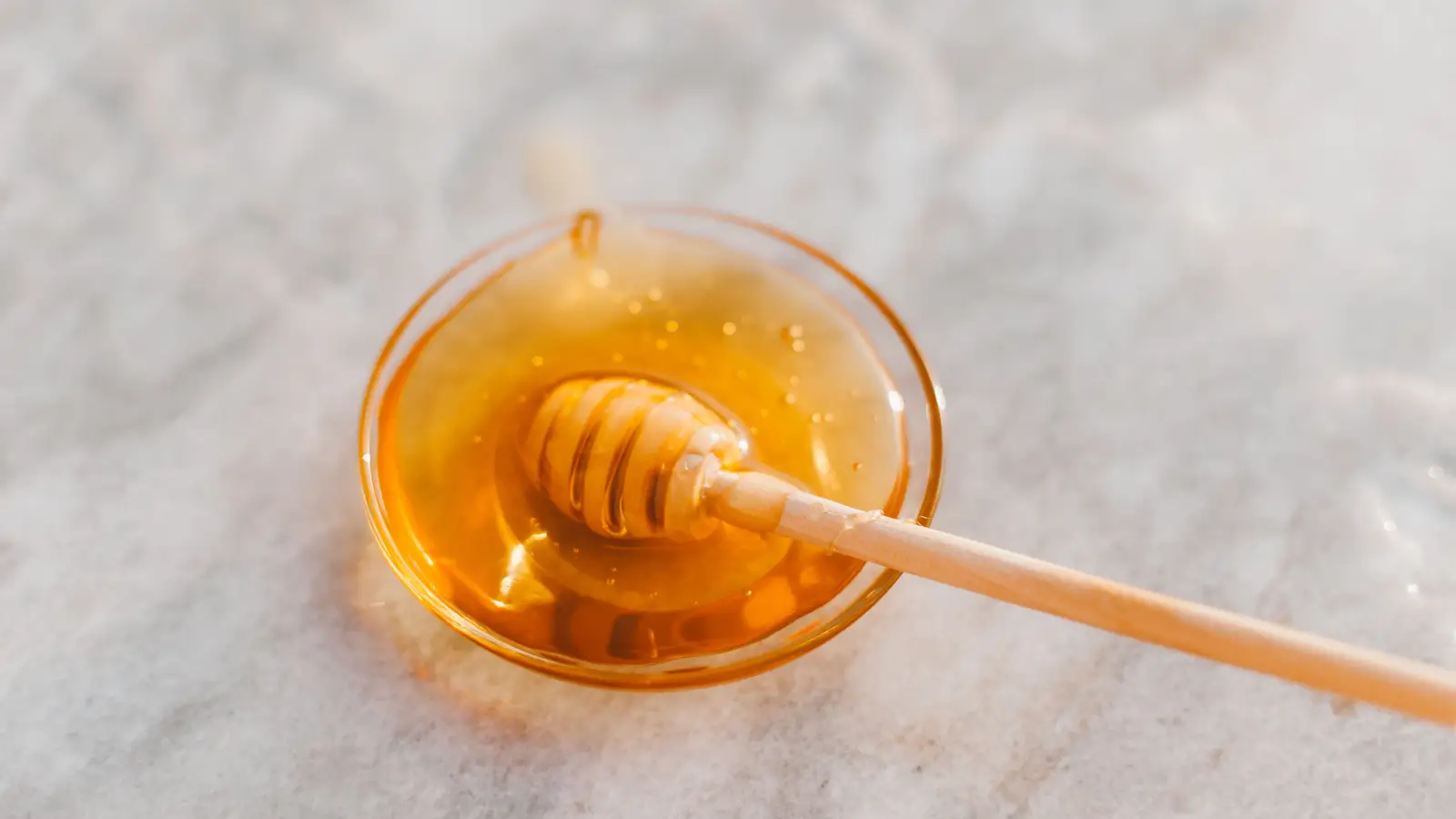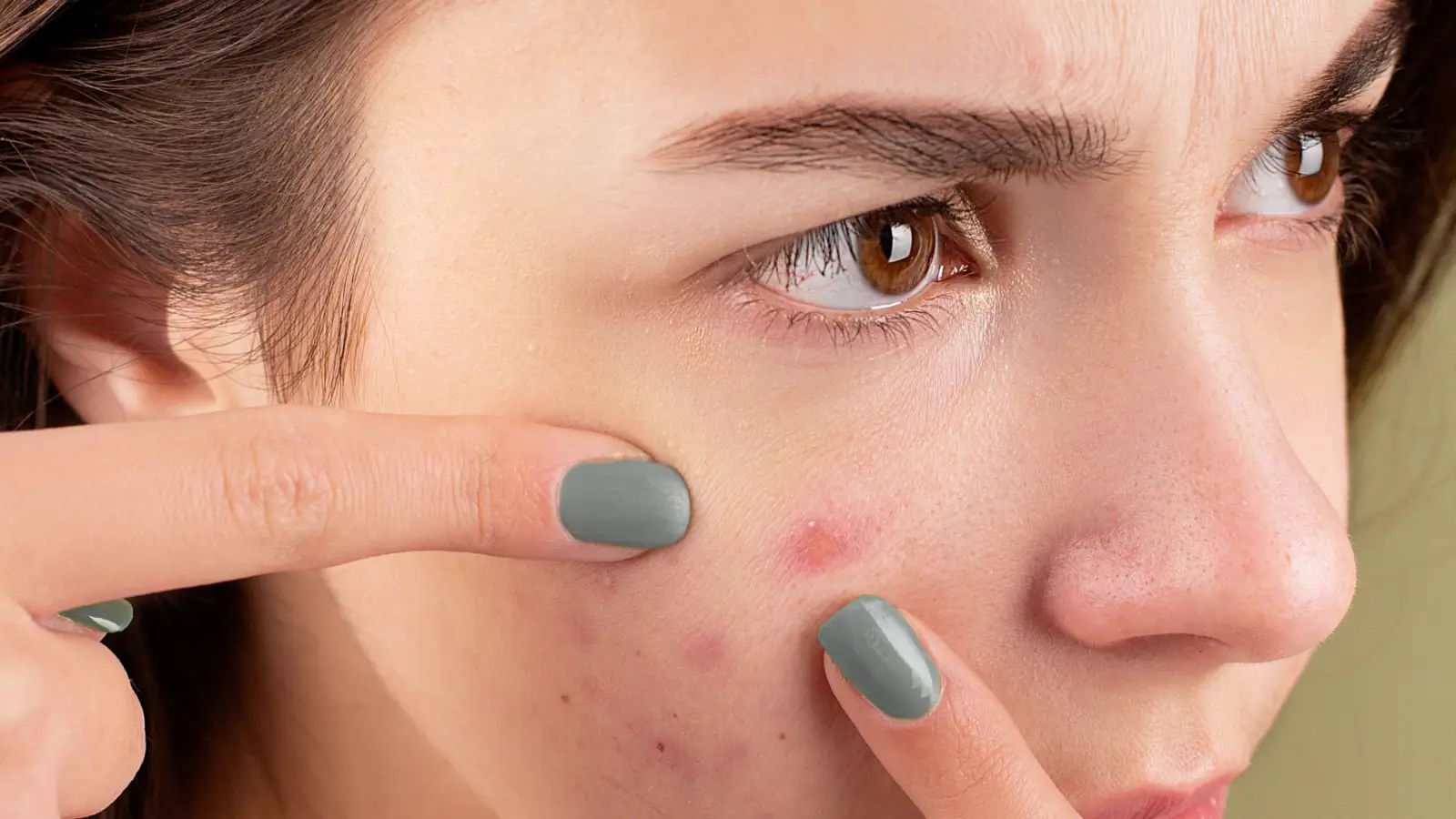
Most honey-for-acne advice reduces the mechanism to “it kills bacteria.” That thinning hides the relevant details: honey fights Cutibacterium acnes through two chemically distinct routes, and which route dominates depends on dilution, pH, and whether the honey came from a Manuka field or a mixed wildflower source. The first route is hydrogen peroxide, generated by bee enzymes when honey gets watered down. The second is methylglyoxal (MGO), a stable, non-peroxide compound concentrated in certain New Zealand Manuka honeys. Together they disrupt bacterial function while simultaneously dialing down the inflammatory signals that turn a clogged pore into a painful nodule.
Hydrogen Peroxide Activity Is a Dilution- and pH-Dependent Reaction
Honey’s peroxide system begins with glucose oxidase, an enzyme bees deposit into nectar. In the jar—undiluted and sharply acidic (pH 3.5–4.5)—that enzyme sits almost still. Add water, and it wakes up: glucose converts to gluconic acid and hydrogen peroxide. This is exactly the environment a face mask creates when honey blends with water, aloe, or the skin’s surface moisture.
The catch is that glucose oxidase prefers a pH around 6.1. Honey’s own acidity and the mildly acidic skin surface (roughly pH 5.5) will brake the reaction, so peroxide releases as a slow trickle rather than a spike. Laboratory work dating back to the 1990s tracked this: honey diluted to 30–50% built up enough peroxide to suppress Staphylococcus aureus within an hour, and more recent assays show the same against C. acnes. The peroxide, however, is fragile. Light, heat, and time break it down, meaning the window of strongest antibacterial activity is a few hours.
Methylglyoxal in Manuka Delivers pH-Stable Killing Power
Manuka honey carries a different payload. Methylglyoxal forms from dihydroxyacetone in the nectar of Leptospermum scoparium and remains active irrespective of pH shifts. That matters for acne because both skin and honey are acidic, yet MGO doesn’t care—it keeps working.
A 2010 study in the Journal of Antimicrobial Chemotherapy found that Manuka honey with an MGO level of 550 mg/kg still killed C. acnes after researchers neutralized all peroxide with catalase. Another investigation tracked biofilm inhibition: a 10% (w/v) Manuka solution slashed C. acnes biofilm formation by over 80%. Because MGO is small and lipophilic, it crosses bacterial membranes and damages DNA and proteins directly, without needing the enzymatic cascade peroxide depends on.
Practically, this means Manuka maintains antibacterial action even in acidic, low-moisture conditions that would stall the glucose oxidase system entirely. It’s not that MGO is stronger per se; it’s more predictable when application conditions aren’t tightly controlled.
Dilution: A Balancing Act Between Two Pathways
The choice of dilution determines which system carries the load. A raw wildflower honey mask leans almost entirely on peroxide. Dilution jump-starts the enzyme, but go too far—say, 10% honey—and the peroxide concentration falls below what’s needed to inhibit bacteria. The effective range from in vitro work lands at roughly 30–50% honey in water.
Manuka changes the arithmetic. MGO concentration also drops with dilution, but because MGO is far more potent per molecule than hydrogen peroxide, even a 10–20% solution of a high-grade Manuka (MGO 550+ or UMF 15+) retains useful antibacterial activity. A 2016 survey of 40 Manuka samples confirmed that non-peroxide activity was the dominant antibacterial driver at skin-relevant pH when honey was thinned to 15–25%.
The takeaway: for mild-to-moderate acne, a raw enzyme-intact honey mixed 1:1 with water can activate enough peroxide. For persistent cystic acne, a high-MGO Manuka with just enough water to make it spreadable (around 20%) will lean on MGO, with any residual peroxide as a secondary contributor.
Honey’s Anti-Inflammatory Compounds Calm Acne Lesions Directly
Bacteria are only half the problem. The redness and swelling of a pimple stem from the body’s own inflammatory response. Honey contains flavonoids—chrysin, galangin, pinocembrin—and phenolic acids that block cyclooxygenase-2 (COX-2) and lipoxygenase, the same enzyme pathways targeted by some anti-inflammatory drugs.
In dermal healing models, Manuka honey applied to inflamed tissue lowered prostaglandin E2 and neutrophil counts within 24 hours, an effect linked to methyl syringate and other phenolics. This anti-inflammatory channel is present in both Manuka and non-Manuka honeys, though Manuka’s unique floral source tends to boost its phenolic density. The practical result is a reduction in lesion redness without the harsh drying that retinoids and benzoyl peroxide often bring.
Practical Guidelines—and a Heap of Caution
Lab results don’t transplant directly onto human skin, where sebum, variable pH, and barrier integrity interfere. Keep these points in mind:
- Honey integrity: Only raw, unheated honey retains functional glucose oxidase. Pasteurized supermarket honey has lost the enzyme and won’t produce meaningful peroxide. Look for “raw” or “cold-extracted” on the label.
- Manuka grading: Verify an MGO number (at least 250 mg/kg; 550+ for consistent antibacterial depth) or a UMF rating of 10+ (≈MGO 250) to 15+ (≈MGO 550). Purchase from UMF-licensed producers.
- Dilution ratios: For peroxide-reliant honey, 1 part honey to 1 part water or aloe gel, used immediately. For Manuka, apply a thin layer with minimal added water to preserve MGO contact time.
- Application duration: 15–30 minutes is enough. Longer contact doesn’t scale the benefit and leaves sugar residue that can clog pores.
- Safety: Honey is not sterile. Never use it on broken skin or open wounds unless it is medical-grade and gamma-irradiated. Intact facial skin is a lower-risk surface, but Clostridium botulinum spores remain a possibility. Anyone pregnant, immunocompromised, or treating a child should consult a dermatologist first. A 24-hour patch test on the jawline before full-face use is mandatory.
A Quick-Reference Comparison of the Two Mechanisms
| Factor | Peroxide-Based Honey (most raw floral honeys) | Methylglyoxal-Based (Manuka honey) |
|---|---|---|
| Key active agent | Hydrogen peroxide (enzymatically generated) | Methylglyoxal (MGO) |
| pH sensitivity | Highly sensitive; inactive at pH <4, optimum ~6.1 | Largely pH-independent |
| Dilution effect | Requires dilution to activate; 30–50% honey optimal | Activity stays strong even at 10–20% solution |
| Stability | Degrades within hours; heat/light sensitive | Stable over time; heat-resistant |
| Anti-inflammatory support | Moderate flavonoids; effective but variable | Rich methyl syringate and high phenolic content |
| Best scenario | Mild-to-moderate acne, DIY masks where dilution is controlled | Stubborn or cystic acne, when consistent potency is needed |
Key Takeaways
- Two parallel antibacterial systems operate in honey: enzymatic hydrogen peroxide and the stable methylglyoxal unique to Manuka.
- Peroxide activity fires up with dilution but slows sharply in the acidic ranges of raw honey and skin.
- Methylglyoxal remains potent regardless of pH, so Manuka honey can kill C. acnes even when peroxide output is negligible.
- Dilution must balance activation (for peroxide) with concentration (for either agent); 30–50% for peroxide honeys, as low as 10–20% for high-MGO Manuka.
- Both honey types suppress acne inflammation through COX-2 and lipoxygenase inhibition, an effect that continues independent of the antibacterial pathway.
Frequently Asked Questions
Can I leave honey on my face overnight?
No. Extended contact raises the risk of clogged pores from sugar residue and can irritate sensitive skin. A 15- to 30-minute mask is the safe window.
Is Manuka honey always better than regular honey for acne?
Not always. A well-diluted raw polyfloral honey can handle mild acne through peroxide action, but Manuka’s pH-stable MGO gives it an edge when acidity or processing would cripple the peroxide system.
How do I know if a Manuka honey has enough MGO?
The label should display an MGO number (e.g., MGO 250+) or a UMF rating (UMF 10+ ≈ MGO 250). Buy only from UMF-licensed producers, who submit to independent testing.
Can honey make acne worse?
Yes—if used undiluted on oily skin and not rinsed fully, the sugar residue can feed other microbes or clog pores. Proper dilution and thorough removal with a gentle cleanser reduce this risk. Patch testing is non-negotiable.
Does honey help with acne scars?
It can aid the fading of fresh post-inflammatory marks by lowering inflammation and supporting tissue repair. It won’t fill in atrophic (pitted) scars. Consistent use over weeks may lighten hyperpigmentation.
The Bottom Line
The reason honey works against acne isn’t a one-note “antibacterial” label. It’s that honey operates two separate antimicrobial programs, each with its own trigger conditions and strengths. Hydrogen peroxide ignites with dilution but wilts in acidity; methylglyoxal endures across pH but depends on Manuka sourcing. Understanding which pathway you’re leaning on—and testing the honey’s actual enzyme and MGO status—is the difference between a well-calibrated treatment and a sticky gamble. Start with a patch test, verify the honey’s origin and grade, and treat it as a supplement to, not a replacement for, professional dermatological care.