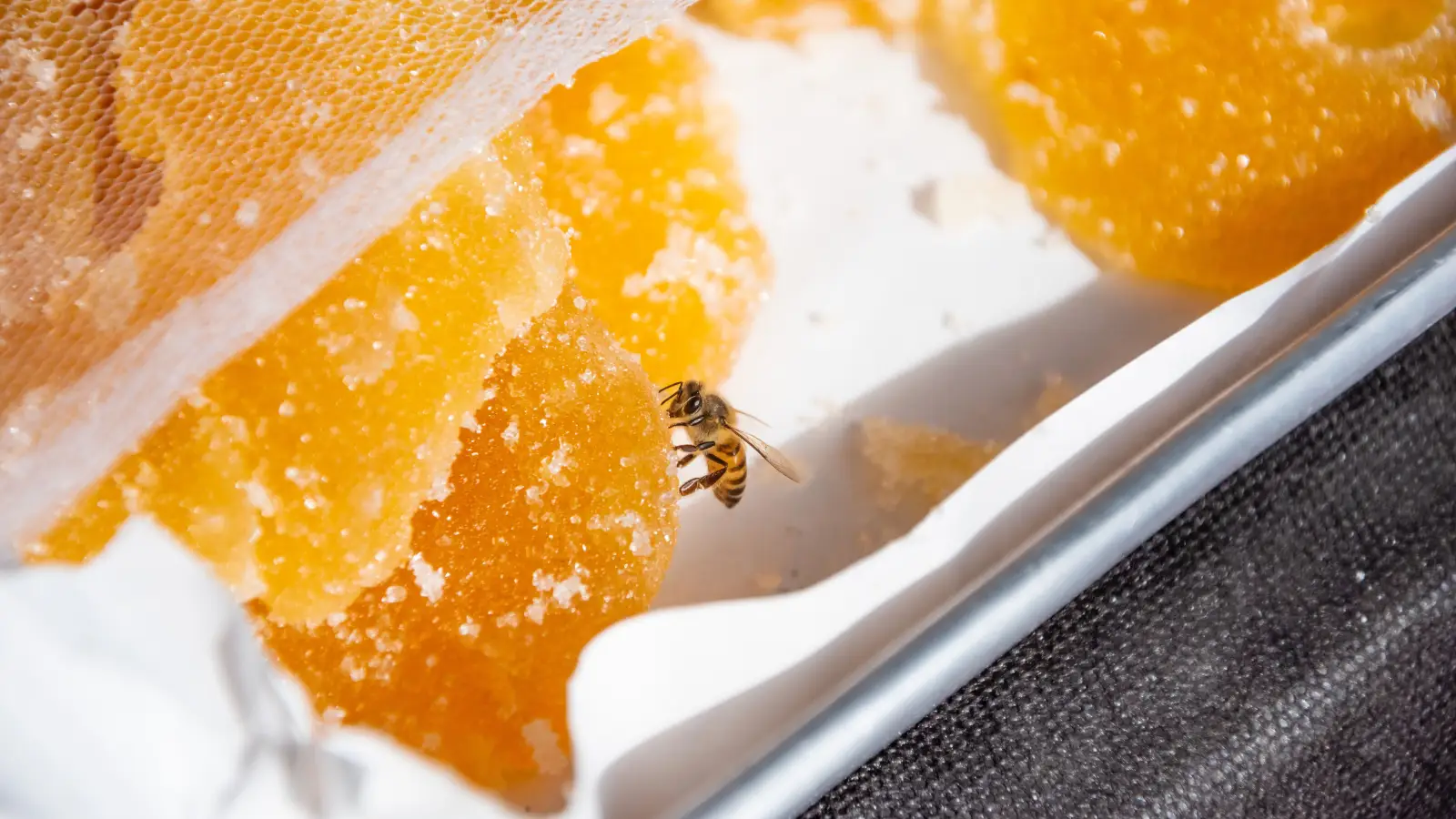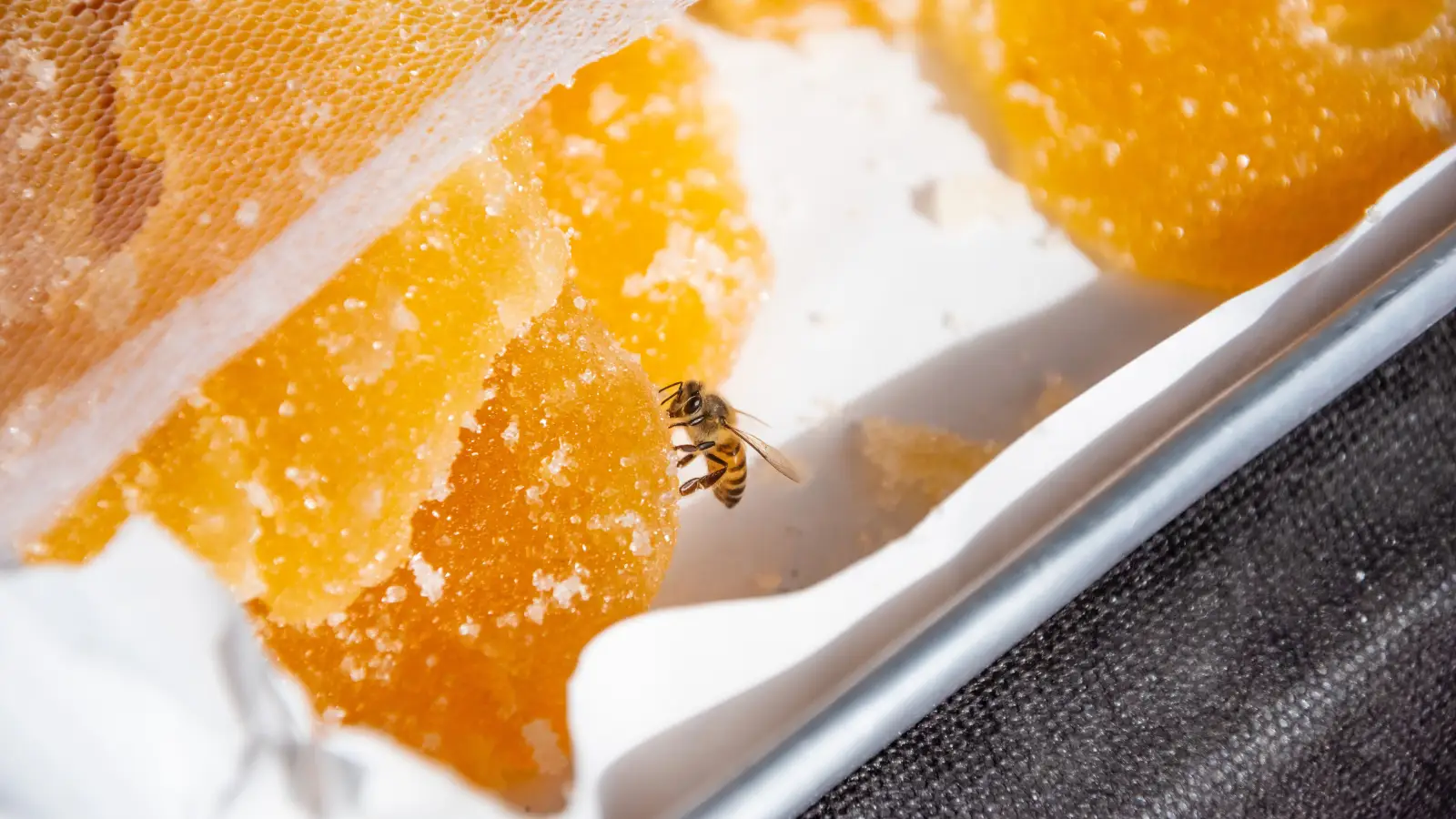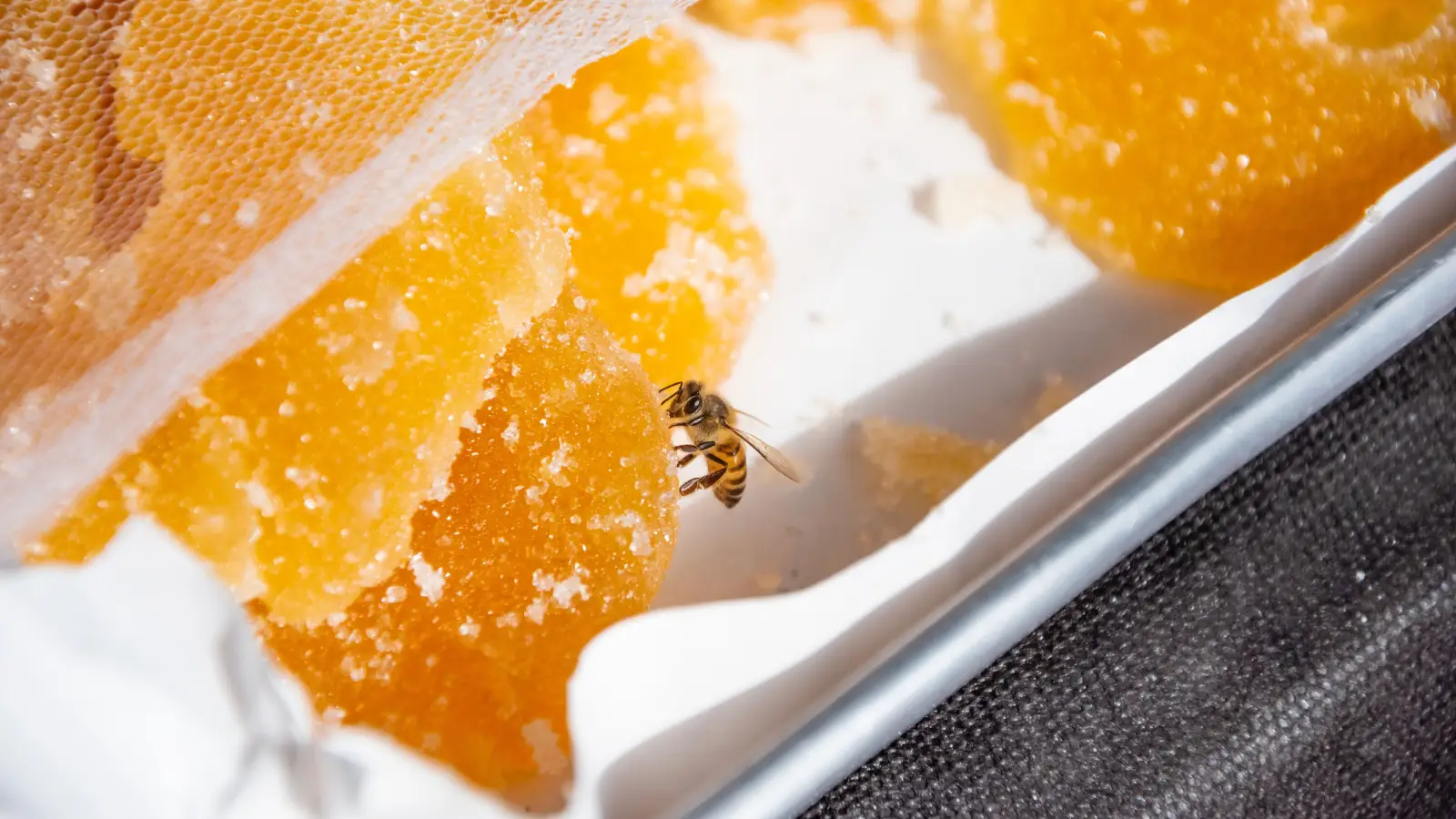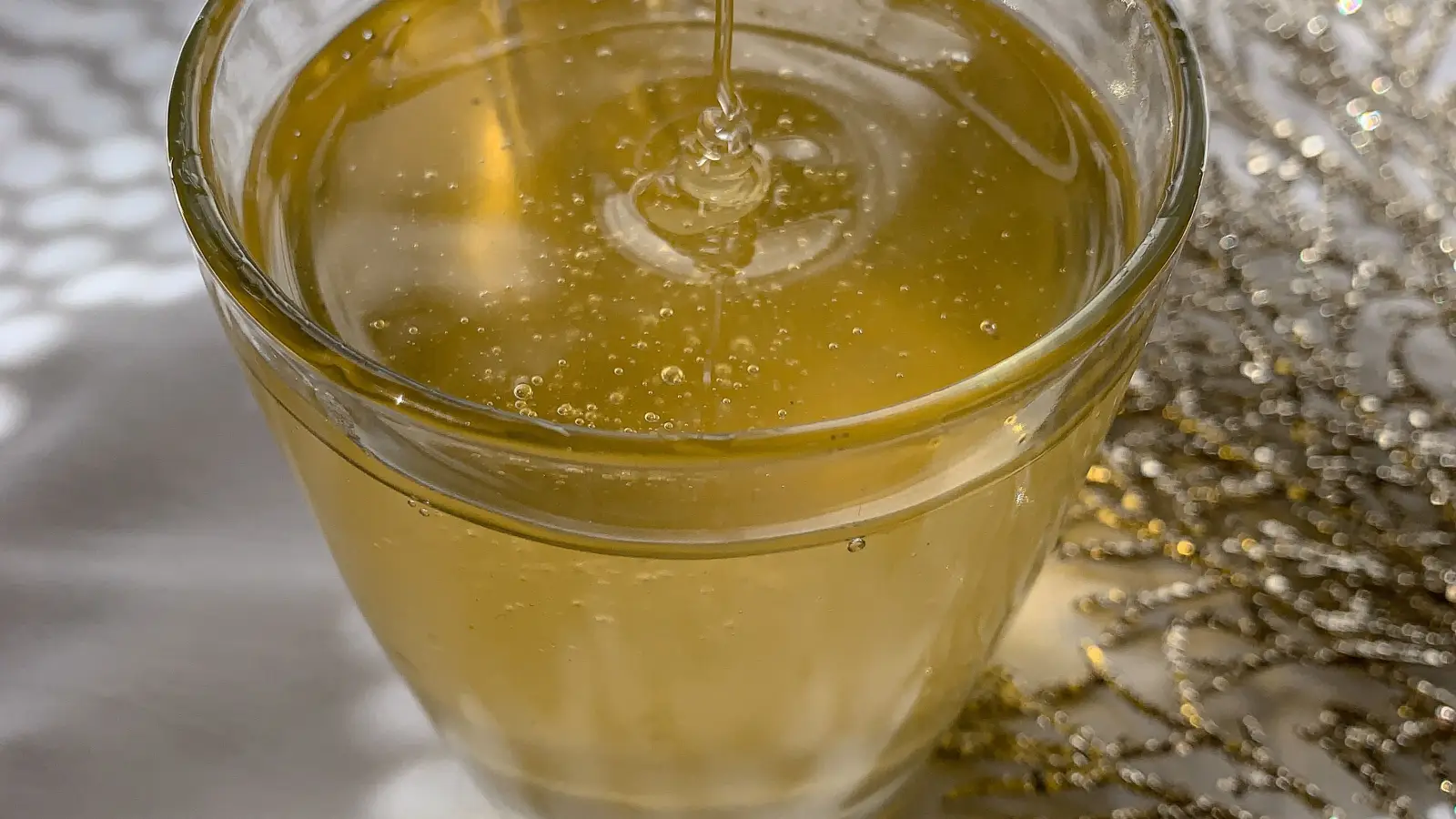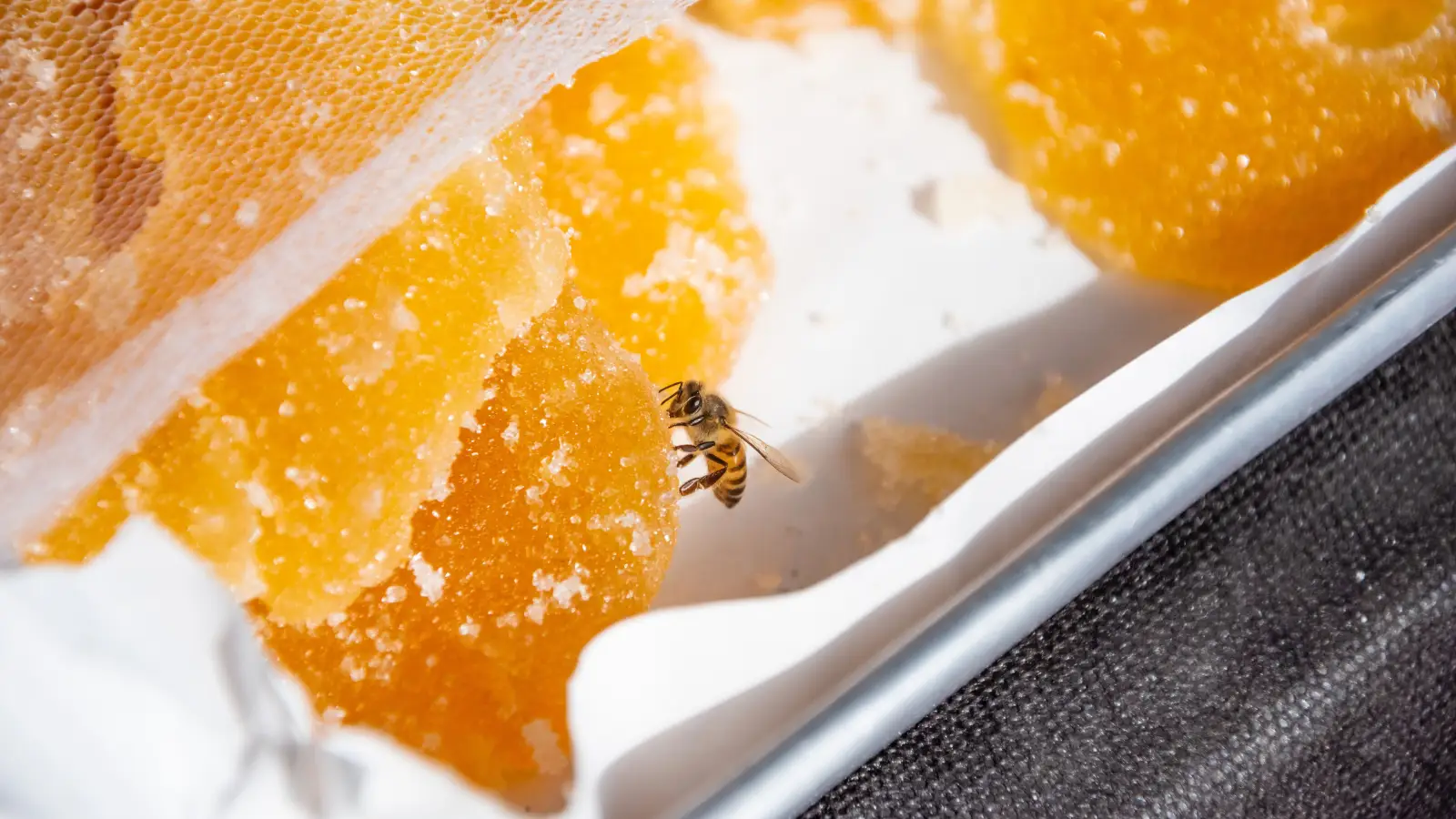
The difference between a honey that sets solid in a week and one that stays pourable for years is not total sugar content—it is the specific ratio of glucose to fructose. The glucose-to-fructose ratio controls crystallization speed: when glucose dominates and the temperature hovers between 10°C and 15°C, crystals nucleate and grow rapidly; when fructose leads, the mixture resists solidifying. Fructose functions as a solvent by keeping glucose molecules dispersed longer, so two honeys with the same total glucose can behave in opposite ways if their fructose levels differ.
Decoding the Sugar Balance That Triggers Crystals
Honey is a supersaturated solution of sugars in water, existing in a metastable state. Glucose has a solubility of about 1 g/mL at room temperature; fructose, about 4 g/mL. When the glucose fraction exceeds the solution’s carrying capacity—a threshold that shifts with the total fructose present—the excess precipitates as glucose monohydrate crystals. The fructose effectively expands the solution’s tolerance for glucose, delaying nucleation. This is why a honey with 30% glucose and 40% fructose can remain fluid for months while one with 30% glucose and 30% fructose granulates quickly. Beekeepers historically noticed this in varietals: clover sets faster than orange blossom, which sets faster than tupelo. Systematic work mid-20th century, particularly by USDA researcher Jonathan W. White, proved that the G:F ratio, alongside water content, predicts crystallization tendency with high reliability.
The Chemistry and Physics Behind Crystallization Speed
Why One Sugar Crystallizes and the Other Doesn’t
Glucose in water crystallizes as the monohydrate, forming sharp, interlocking crystals that give crystallized honey its gritty mouthfeel. Fructose, with roughly four times the solubility, stays in solution unless temperatures drop well below freezing. In most honeys, glucose ranges from 25% to 40% by weight, fructose from 30% to 45%. The ratio can span from a fructose-heavy 0.7:1 (e.g., tupelo) to a glucose-heavy 1.8:1 (e.g., rapeseed). Empirical evidence shows that a ratio above 1.3:1 almost guarantees granulation within months, while below 1.0:1 can keep the honey liquid indefinitely, provided water content is not abnormally low.
How Different Flowers Produce Different Ratios
The plant’s nectar determines the starting sugar profile. Invertase enzymes in the flower convert sucrose into glucose and fructose, but the resulting proportion is species-specific. Rapeseed (canola) produces honey with a G:F near 1.5:1; this honey can crystallize within 24–48 hours of extraction. Clover, at roughly 1.3:1, may take a few weeks. Alfalfa, sunflower, and cotton also sit in the rapid-crystallization zone. Acacia (black locust) and tupelo sit firmly below 1.0:1, often with ratios around 0.7–0.8:1, making them highly resistant to granulation. Sage, sourwood, and wildflower blends fall in between. This spectrum is not subtle—a 0.2 change in the ratio can mean the difference between a honey that stays clear through winter and one that turns opaque in a month.
Temperature’s Dual Role: Speeding Up or Holding Back Crystals
Crystal growth is a kinetic process. At 10–15°C (50–59°F), molecular motion is sufficient for glucose molecules to collide and organize into lattice structures, but thermal energy is low enough that newly formed crystals don’t quickly redissolve. Above 25°C (77°F), the solubility of glucose increases and existing crystals begin to melt. Below 5°C (41°F), viscosity rises sharply and molecular diffusion slows, halting crystal growth. This is why a honey with a borderline ratio—say 1.2:1—may stay liquid in a summer kitchen but granulate rapidly in an autumn pantry. Refrigeration (around 4°C) can preserve fluidity almost as effectively as freezing, though freezer storage risks condensation and fermentation upon thawing.
Water Content: The Third Variable That Splits the Difference
Water content adds a critical modifier. Honey is hygroscopic and typically contains 15–19% water. Lower water means a higher concentration of sugars, pushing the solution further into supersaturation and reducing the time before glucose crystals appear. At 16% water, a high-glucose honey can set within days; at 19%, the same honey might take weeks. But the trade-off is microbial stability: honey above 18% water can ferment. The interplay is such that a low-water, high-fructose honey can remain liquid for years without spoiling, while a low-water, high-glucose honey turns into a hard block. This explains why raw, unheated honeys with low moisture and a high glucose ratio are often sold in creamed form intentionally—to control texture before the consumer gets a rock-solid jar.
Practical Situations Where Ratio Counts—and Where It Can Be Ignored
When You Want a Honey That Stays Liquid for Drizzling or Presentation
When the use case demands fluid honey—drizzling over cheese, pouring into tea, or displaying in a clear jar—the glucose ratio is a practical selection tool. Acacia, tupelo, fireweed, and certain sage honeys reliably have fructose-dominant profiles. If storage conditions are cool, even these may eventually form a few crystals, but the process is slow enough to be manageable. Understanding this ratio lets a buyer avoid the disappointment of opening a gift jar only to find a solid mass.
When Crystallization Doesn’t Change Anything You Care About
Crystallization has no impact on flavor, sweetness, or nutritional value. In baking, cooking, or mixing into hot drinks, the honey liquefies on contact with heat. For cold applications like salad dressings or spreads, crystallized honey can be stirred into a smooth, spreadable consistency that many find appealing. In these contexts, the glucose-to-fructose ratio is irrelevant—purchasing decisions can be based solely on taste profile and cost.
Key Terms That Fit Together with Crystallization
- Supersaturation – A metastable condition where a solution holds more dissolved solid than equilibrium allows; the driving force behind crystal formation.
- Glucose monohydrate – The crystalline form that precipitates from honey, characterized by a white, solid texture.
- Fructose – The highly soluble sugar that inhibits glucose crystallization by increasing the solution’s overall capacity.
- Nectar source – The botanical origin whose enzymatic activity produces the initial G:F ratio that dominates the honey’s long-term behavior.
How Beekeepers and Scientists Came to Understand the Ratio
Beekeepers for centuries tracked which honeys set quickly without knowing the chemistry. The isolation of glucose and fructose in the 1800s set the stage, but systematic understanding emerged in the mid-20th century. The USDA’s work, particularly by Jonathan W. White, analyzed hundreds of American honeys, compiling sugar profiles and correlating them to granulation rates. That research established the G:F ratio as the primary predictor, and it remains the foundation for modern honey classification and storage guidance. Today, high-performance liquid chromatography allows any lab to measure the ratio in minutes, but the principle hasn’t changed.
Common Questions About Honey Solidifying
Why does my honey crystallize in the jar even though it’s sealed?
The seal only prevents contamination; it does not fix the sugar solution at equilibrium. Crystallization is a physical process driven by supersaturation and temperature. In a sealed jar, glucose molecules can still find nucleation sites—pollen grains, air bubbles, or microscopic cracks in the glass—and begin forming crystals. The airtight seal doesn’t interfere.
Is crystallized honey a sign of adulteration?
No. Pure honey crystallizes naturally. Adulteration with high-fructose corn syrup or other sugars actually shifts the ratio toward fructose dominance, making crystallization less likely. So a honey that rapidly granulates is more likely to be unadulterated.
Can I permanently stop honey from crystallizing?
Not without changing the sugar composition. You can delay crystallization indefinitely by storing honey at a warm-enough temperature (above 25°C) or in the refrigerator. But the underlying ratio will eventually cause crystals if conditions permit, though for very low-glucose honeys, ‘eventually’ can mean a decade or more.
Does heating honey to reliquify it damage the beneficial enzymes?
Yes, if the temperature exceeds roughly 45°C (113°F), heat-sensitive enzymes like diastase and invertase begin to degrade. A water bath held at 40–45°C effectively dissolves crystals while preserving most enzymatic activity. Microwaving can create local hotspots exceeding 60°C, causing rapid enzyme loss.
Why did my supposedly non-crystallizing honey still set?
Even low-glucose honeys contain some glucose. Acacia honey, for example, may have a trace of glucose from cross-contamination during extraction or from a small percentage of other nectar sources. If stored in a cool basement, those glucose molecules can nucleate slowly. Tupelo is among the only honeys with glucose low enough to essentially never granulate under normal conditions.
Your Next Question: Can You Reverse Crystallization?
Now that the mechanics of the G:F ratio are clear, the next step is how to return a crystallized honey to liquid and whether repeated heating damages it over time. Since the ratio remains unchanged, the honey will tend to recrystallize at the same rate each time. Managing the process is a matter of selecting a varietal with a more favorable ratio or adjusting storage conditions permanently.